
Harvard Soph Sees Upside of Bubble Bursting
Maybe those Harvard kids are kinda smart. We opened this editorial by sophomore Charles Drummond expecting a chuckle and nothing more. Turned out, the guy has a point, seeing the silver lining of a real estate market correction: There is another bubble that I hope will burst very soon—the ugly housing bubble. If you’ve ever…


Maybe those Harvard kids are kinda smart. We opened this editorial by sophomore Charles Drummond expecting a chuckle and nothing more. Turned out, the guy has a point, seeing the silver lining of a real estate market correction:
There is another bubble that I hope will burst very soon—the ugly housing bubble. If you’ve ever had the misfortune of visiting an upper-middle class subdivision, you know exactly what I’m talking about. Once you’ve found a subdivision that sounds like a WASPish Connecticut country club, you’ll be perfectly prepared to take in the grotesqueness of your surroundings. A guidebook, however, is entirely unnecessary. These subdivisions are filled with the easily identifiable domicile sometimes referred to as the McMansion. The McMansion design seems to me to have been originally conceived as an anesthetized imitation of the past, a sort of fairy-tale version of grandeur meant for mass consumption. As such, it is inevitably an artistic failure.
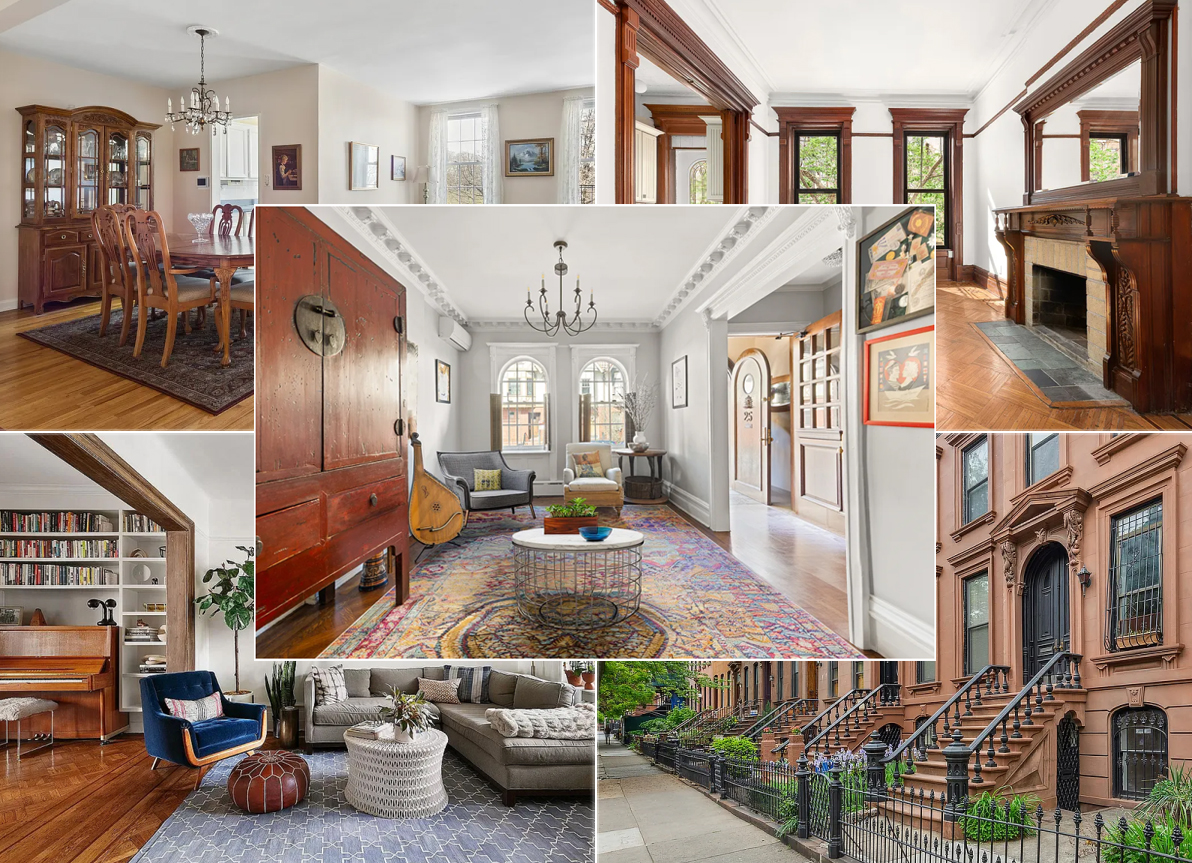
Luckily for him, this guy isn’t in a glass house throwing stones. He happens to currently reside in Adams House, which has arguably the best architectural bones of any of Harvard’s residential colleges.
The Ugly Housing Bubble [Harvard Crimson]

David, not every house in Levittown is an original Levitt – nothing in that article mentioned that it was. And if you noticed, that house didn’t hold up so well – they needed to redo it. Those people were just dying to get into a house, not necessarily a Levitt house.
And no one is saying that the same “conspicuous consumption” argument can’t be used against brownstone owners of the 1800s or now – clearly, it can, or this website wouldn’t exist. My only comment on McMansions is that I generally find them to be ugly and without personality. And I’m entitled.
Sylvia – the “the cultural mindset behind Mcmansions” is EXACTLY the same as behind Brownstones – so all I am saying is that if people looked at themselves and their own lifestyles with a little less self-righteousness and some historical perspective they might be a little more pleseant to be around and far less judgemental.
I am certainly no fan of suburban sprawl and would welcome restrictions on density that prevents this type of development from wiping out all our open land but that being said everyone cant fit in 19th century row houses either. Which means that the 300million of us (and growing) are going to have to live somewhere – yet virtually every new type of building built is critisized here as being too big, too ugly, too cheap etc, etc, etc.
I mean everyone bemoans ‘Feder’ buildings and Yente is here attacking people for installing central air and in the same paragraph talking about the enviromental cost of A/C, she speaks condensendingly of sheetrock construction, which is far more efficient in all ways to plaster – manufacture, installation, and insulation.
Question – Sylvia with your (IMHO way overstated) predictions on the future, I assume you are vocal supporter of as much density as possible at Atlantic Yards (it being above a huge mass transit hub and all)?
I despise McMansions mainly for environmental purposes (and I think they’re ugly), but there were some good points made about the brownstone owners of today (yes, many on this board). My pet peeve is central air. I hear that thrown around alot here. What I want to know is this: are you people ripping out original plaster walls to run the ducts or was your detail previously destroyed? My parents have central air…but they live in Florida! It’s hot 2 months of the year here….whaddya need central a/c for??!! Ok, if you want to do it in your own sheetrock house, but people, please quit putting down brownstones if they don’t have it! Not everyone wants to destroy their plaster as well as the environment! Ok, that’s my rant for today. Whew, good to get it off my chest.
Since when does Islam have anything against McMansions?
Some people may be dying to live in a Levitt house, but more people are dying to buy them and tear them down or totally remodel them. It’s happening all over in my mom’s neighborhood (a Suffolk County Levittown imitation from the early 1960’s); virtually every house in the development has been remodeled to such an extent that it no longer resembles in any respect its original self, or been demolished to be replaced by an overgorwn horror that virtually takes up the (pathetically tiny) 1/4 acre lot.
The houses that haven’t been remodeled (like my mom’s) are anomalies in the neighborhood and have not aged well at all.
“Now no one knows what the world will be like in 100yrs but assuming we are not living in an Islamic state or that global warming hasnt turned our planet uninhabitable or that fuel costs doesnt make the studio apartment the only viable housing unit – 21st century McMansions will still be standing strong. ”
I don’t know what to say about the Islamic state idea (I guess all things are possible and pigs may fly), but the other two scenarios seem to be virtually inescapable at this point.
And the reason for that is the cultural mindset behind Mcmansions: a willfully blind consumerist culture built on the myth of permanent economic growth. The idea that somehow the American empire will last forever, that we can cut down all our remaining trees to create massive subdivisions far from towns, that oil will never run out, that our natural resources run on the same principle of supply and demand that our economy does. Or that, as often stated on this blog, the value of real estate can only go up.
About studio apartments being the only viable housing unit: I assume you’re talking about for heating purposes. But honestly, I don’t see how cities in general, in their current configuration, are going to survive, if fuel prices rise even relatively modestly. Our whole system of supplying cities with food relies on the trucking and mega-farm industries, which themselves use vast quantities of oil(for fuel, plastic packaging and petrochemical fertilizers, among other uses).
We’re very close to reaching the point where demand for oil outstrips global production (the MOST conservative estimates say that will happen within 30 years). I think McMansions don’t stand a chance.
Just my two cents.
Actually some people are dying to live in a Levitt house:
http://www.nytimes.com/2006/10/15/realestate/15lizo.html?ex=1163307600&en=41a0779a67be4580&ei=5070
And the point is, if these early examples of light-frame construction (like McMansions) were such absolute crap (and for sure they werent high quality), then they wouldnt have risen nearly as much – inflation or not.
My point is that people (in general and the people on this board in particular) love to be so judgemental – i.e. “that building is crap”; “look at those people w/ their neuvo-rich McMansions”; “Conspicuous consumption”; etc, etc, etc – yet virtually all these judgements could be just as easily layed against the Brownstone owners of today and/or the 19th century.
David, I see your point to a degree, although as to “valuations still rising, much of that is due to normal inflation – not because people are dying to live in a Levitt house. Funny enough, I actually know people who bought an original – it’s so tiny and poorly laid out that it’s actually not practical. But because it’s an original, they cannot change it and are stuck there (as an aside, this is the kind of thing about the “housing boom” that pisses me off – people so crazed to buy that they make a mistake like that – and these are not people with money who can afford to take a loss on property).
And Ballin, you make another point – of course brownstones don’t need those things. We live in a society driven by consumption and wants, not needs.
So according to the article the housing bursts or fizzles out and no more McMansions will be built. But will that stop other ugly stuctures from being built? What would some Harvard student like this have said about the aesthetic and artistic quality of any of the Levittowns developed after WWII? Those cookie cutter Levittown houses filled a real housing need in spite of there visual short comings and they offered people the concept of being able to live the American dream. And today’s McMansion owners aren’t the excessively wealthy people to which the article refers. They are only buying into the idea of excessive wealth, much like Levittowners bought into the idea of the Suburban paradise. It seems like this Harvard student doesn’t know junk about the housing market and is only upset that some some people can’t tell the difference between McManisons and the real mansions.