
Rich Owners 1, Rent-Stabilized Renters 0
While affordable housing advocates had reason to cheer last week with HUD’s blocking of the sale of Starrett City, they may have bigger problems in the long run from a smaller appeals court ruling that was handed down last month in the long-standing case of the East Village family that has been trying to clear…


While affordable housing advocates had reason to cheer last week with HUD’s blocking of the sale of Starrett City, they may have bigger problems in the long run from a smaller appeals court ruling that was handed down last month in the long-standing case of the East Village family that has been trying to clear an entire 15-unit building in the East Village for its personal use. Alistair and Catherine Economakis bought the building at 47 East Third Street in 2003 and told tenants that their rent-stabilized leases would not be renewed; they started eviction proceedings against the six hold-outs in December of that year. After several rounds of suits and appeals, an appellate court in Manhattan ruled in February that the clear and unambiguous provisions of both the Rent Stabilization Law and Code permit an owner to recover an unlimited number of stabilized units for personal use and occupancy without D.H.C.R. approval. The implications of this could be quite profound, it seems to us, given that there are over 200,000 rent stabilized units in Brooklyn alone. Basically, there’s a huge arbitrage play for anyone with the financial means to buy and convert a rent-stabilized building. Does anyone know if this applies by extension to rent control? If so, what about SROs? Would this remove the necessity for a Certificate of Non Harrassment in the case of personal use?
Revising the Limits on ‘Personal Use’ [NY Times]
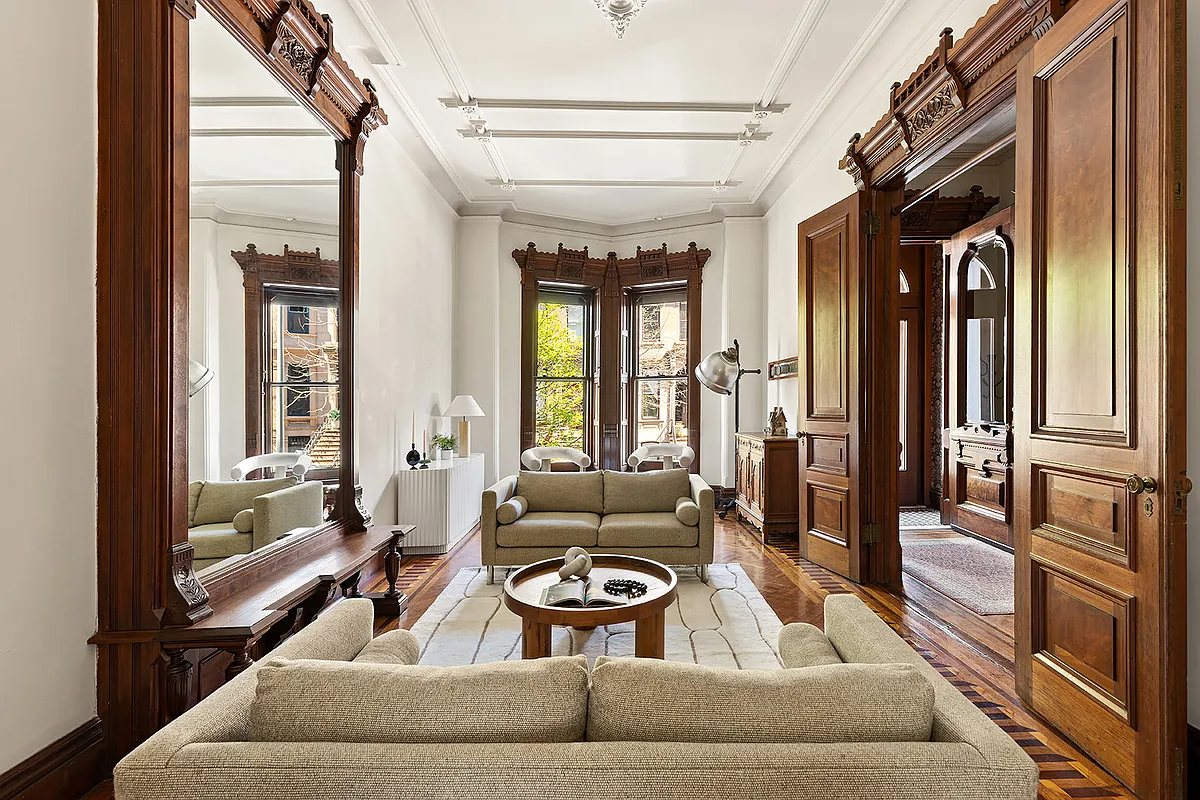
Photo by alaspoorwho



The current system is broken, yeah, but protections for people who don’t make a fortune *definitely* make sense.
I’m a poor-ass college student. After much travail, stabilization hooked me up with a $1300 2-bedroom, in a good neighborhood in Brooklyn. I make maybe $21K wage-slaving (maybe a little more from freelance gigs), so paying $650 is still pretty squeaky, but certainly doable if I’m careful with my cash.
That said, I realize that this is mostly my own doing. But let’s not pretend my landlord isn’t doing OK on this deal — this isn’t new construction, and they’re certainly not paying much to finance a building they bought back in the 70s. My rent stays a tick low (around here, you’d expect more like $1500, $1600 for this place) and Brooklyn gets to keep a stable middle-class presence. (Assuming I one day manage to become middle class, yeah…)
The system needs an overhaul. But if you just threw it away right now, I’m down to living three to a little room in a walk-up apartment — what’s that about? There’s definitely got to be a middle ground that’s still good econ policy.
Anon 12:27pm,
Just pigbacking on your comments, I wonder what posters believe renters should make in order to afford a $2000 apartment?
I thought that the easiest eviction for personal use is for RS tenants. For RC tenants it’s much more difficult, and I think for elderly RC tenants (which I guess is most of them), it’s extremely difficult.
I’m not sure how long you need to hold the property in order to subdivide and rent it out again. I’d love to see more info from anyone who knows.
In response to the other question in the original post, I think the non-harrassment rules for SRO tenants are distinct from the occupancy/personal use issue the Economakis’ family dealt with. So, I don’t think this will change the rules regarding SRO conversions. (After all, even before this decision, owners always had the right to evict tenants in order to make personal use — as the other poster pointed out, this was really a questions of whether DHCR needed to be involved because of the rent-control status.)
I do think there is a significant chance that there will be some legislative response to this ruling, especially if there is another similar type case (multiple tenants in tenement building evicted to permit owner to create a personal living space with more than 8 or 10,000 sq. feet).
I am against rent control or stabilization. But if you are going to have it at least do it right. It should be based on a percentage of income rather than a fixed amount. I have no problem with someone who only makes 35k a year paying 500 a month but the problem is that a lot of the current tenants in these place are making a lot of money and should have to pay market prices like everyone else.
To Middle Class Renter and Donatella and others discussing rent regulation: I agree that there are problems with the current system of rent regulation, but I don’t believe that means we should abolish protections for middle and working class individuals who cannot afford to purchase a home. Do people know what it’s like to be evicted from your home? Imagine it for a moment. Donatello opines that it’s wrong to argue the prons and cons of rent regulation from “a moral perspective…. give me a break,” but I think it is a moral issue. I don’t think that just because I can buy a property means I should have the right to displace people. And I also think (and know from experience) that it’s possible to successfully invest in real estate and act responsibly towards the people who live in the property one is lucky enough to be able to buy. Not only is it possible but it feels a hell of a lot better all around.
Middle-Class Renter and anyone pro-rent regulation. Rent regulation is bad b/c it has the opposite of the desired affect. The reason why rents are so high in nyc (and much more so than other major cities) is b/c of rent regulation. I am not going to explain why this is the case b/c its too complicated for this forum but if you don’t believe me pick up any freshman econ. textbook and lookup shortages and you will see a case study of NYC rent regulation laws! Economists don’t agree on anything but this is one issue that 99.9% of economists do agree about.
Also while this case is a step in the right direction this is certainly not a huge win. I looked up the laws on this a while back and anyone doing this must live (or at least not rent out) the units for at least 2 years. Furthermore the law doesn’t makes exceptions for renters that are over 65. Those people can not be evicted.
the truly rich have very little income
Income caps only apply once a unit is priced over $2,000. As a result, the cheaper the rent, the longer the subsidy. i.e. Assume 4% annual rent increase for Household making $175k and paying $1,000 rent. It would take 18 years for the unit to be de-controlled or de-stabilized.