
Rich Owners 1, Rent-Stabilized Renters 0
While affordable housing advocates had reason to cheer last week with HUD’s blocking of the sale of Starrett City, they may have bigger problems in the long run from a smaller appeals court ruling that was handed down last month in the long-standing case of the East Village family that has been trying to clear…


While affordable housing advocates had reason to cheer last week with HUD’s blocking of the sale of Starrett City, they may have bigger problems in the long run from a smaller appeals court ruling that was handed down last month in the long-standing case of the East Village family that has been trying to clear an entire 15-unit building in the East Village for its personal use. Alistair and Catherine Economakis bought the building at 47 East Third Street in 2003 and told tenants that their rent-stabilized leases would not be renewed; they started eviction proceedings against the six hold-outs in December of that year. After several rounds of suits and appeals, an appellate court in Manhattan ruled in February that the clear and unambiguous provisions of both the Rent Stabilization Law and Code permit an owner to recover an unlimited number of stabilized units for personal use and occupancy without D.H.C.R. approval. The implications of this could be quite profound, it seems to us, given that there are over 200,000 rent stabilized units in Brooklyn alone. Basically, there’s a huge arbitrage play for anyone with the financial means to buy and convert a rent-stabilized building. Does anyone know if this applies by extension to rent control? If so, what about SROs? Would this remove the necessity for a Certificate of Non Harrassment in the case of personal use?
Revising the Limits on ‘Personal Use’ [NY Times]
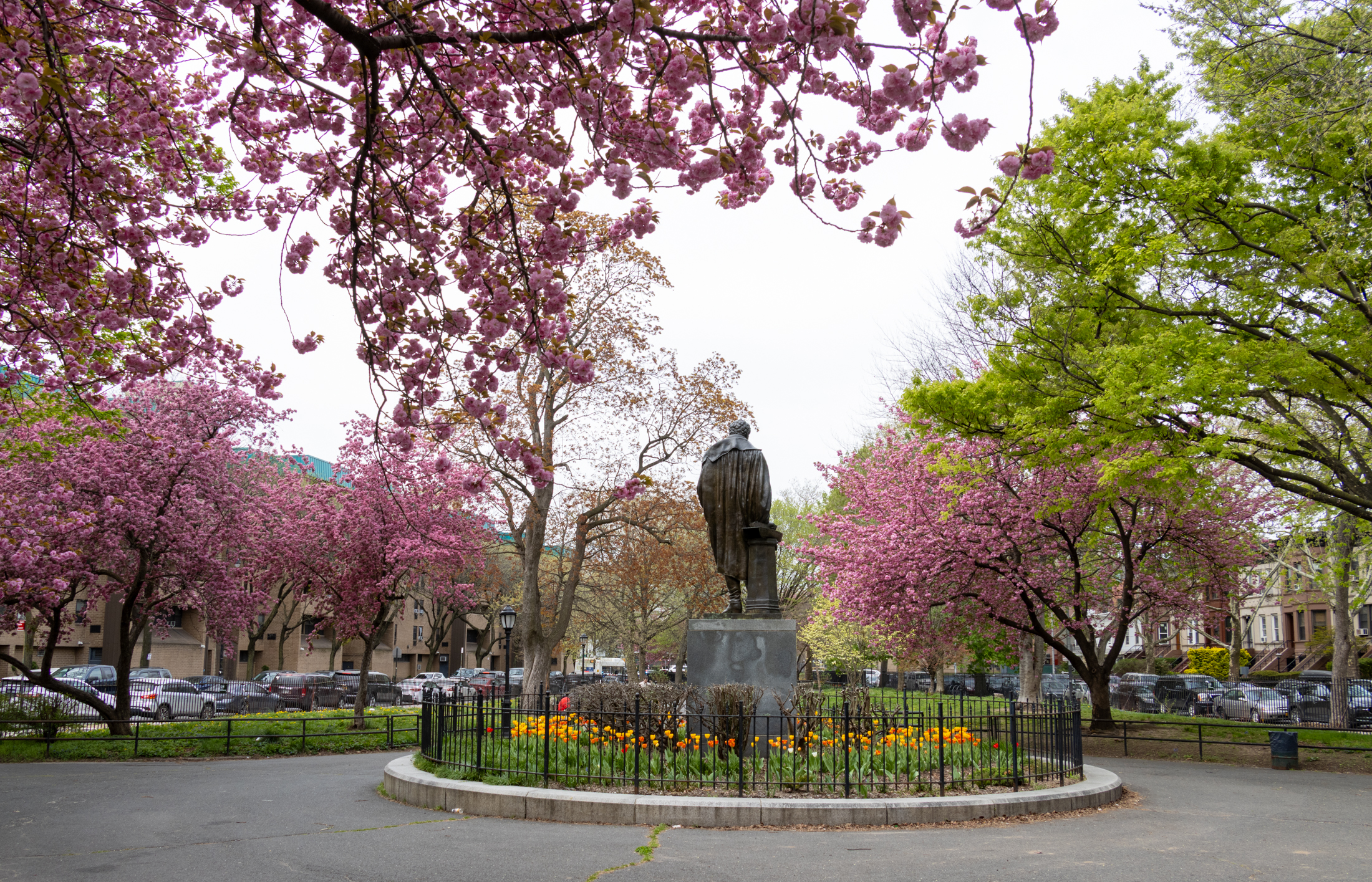
Photo by alaspoorwho

Regarding the comment by Eryximachus
This building was never a one family house. It was always a 15 unit old law tenenment and a multiple family dwelling, with airshafts and two store fronts.
And not everyone works on Wall St, in many professions people are lucky to get a 2-3% raise, with no perks. Some people don’t have the luxury of being able to buy something.
Um, do you have some support for the claim that rents in Boston have gone down 25-35%? I have read a couple of studies that show exactly the opposite. I would be interested to see these figures. Could you post a source?
Under the current NYC rent regime, Landlords have a direct incentive to put money into their buildings. When they do, they can increase the rent by 1/40 of their costs (this is an increase above the allowed annual increases). After the 40 months it takes to pay off these expenses (or maybe a few more to take into account the time value of money) the rent does not revert, it stays at the increased level. This is the reason why so many landlords have been replacing the windows in the building. Not only does it save heating costs, but they can permanently increase the rents.
I’m not about to defend the current rent regulation laws, but I wanted to point out that not all economists agree that rent regulation is bad. Almost all economists agree that strict price controls are bad, but if you ask them if a system where new construction is exempt and rents are allowed to be increased annually for various reasons, you get a much different answer. The latter type of system just doesn’t work as nicely in Econ 101.;^)
It’s also interesting to note that the difference between market rents and rent regulated rents is only significant in prime Manhattan and Brooklyn Heights. In almost all of the outer boroughs, there is a neglible difference between market rents and rent regulated rents (I know, I know, I should post a source for this, but I don’t have the time or inclination at this hour to dig through my stuff and find that article). One interesting implication of this is that if rent regulation went away tomorrow, rents would not increase substantially in most of the outer boroughs. In prime Manhattan, however, the increase would be significant. I’ve always contended that this is primarily a Manhattan problem.
One of these days rent regulation in NYC will be overturned like it was in Boston (where rents have decreased 25-35%) since decontrol.
You folks who claim poor people need a break, are right. They should get tax breaks, food stamps, free government medical care, free education, and perhaps rent subsidies from the city, but private landlords should not have to pay their rent like they do in NYC.
It costs a fortune to properly maintain old tenement buildings, and whoever claims otherwise is plain wrong.
Eryximachus, Are you kidding me? Yep, let’s kick out all the old, the infirm and the poor so the young trustfunders can take over their apartments.
Who will serve you your coffee and ring up your purchase at the drugstore so on and so on if affordable housing is not regulated? If it’s not, all the poor people will have to follow the old people moving somewhere else….
Yes, of course value is directly related to income (do a search for capitalization rates).
Rent stabilized buildings are actually considered “safe” investments because the rents are so low – it is an alternative to government bonds.
Rent control only hurts other renters, especially young renters. The elderly and the infirm, who elsewhere in the country would relocate to a part of the country they can actually afford stay in the city, wasting housing.
Apartments, historically, are for people just starting out. Not in NYC, where most rent stabilized tenants in Manhattan are over 50.
They also hurt other tenants in buildings as landlords will do ANYTHING to keep expenses low, as long as it is legal. This is why most NYC apartment buildings are dumps – the landlord simply can’t afford to maintain the building.
You’re a major idiot 9:30 to think that laws would be overturned.
They have been around forever and upheld.
Boy, I really love this. Landlords whining about the tenants they make money off of. face it- being a landlord is a business. that’s been well-established and it’s also been well-established that landlords get breaks- tax breaks, subsidies, abatements. Well why should that be? we practically throw money at developers (and even other people’s property) at them- yet we are complaining about tenants having affordable housing? And FYI- affordable housing means for the tenant. It’s not a promise to the landlord. And it isn’t as if a landlord buys property without seeing it or finding out the facts before the purchase.
So who needs more protection? Landlords or tanants? I bet tenants. And there is a moral component that factors in- like it or not, they type of socoety we are, the sucess of a society is really reflected in how well it takes care of its weakest or most vulnerable. fix the system- but stop blaming the tenants for its problems. I’m not saying there aren’t those who take advantage, but that pity the poor landlord crap is exactly that- crap.
Anon at 9.30
You prove my point. You bought low, taking advantage of government price controls that depressed the cost of your building. You gambled (or invested money hoping) that the price controls would disappear and raise both the value of your property and your rental income. I don’t have a problem with your having done that. It’s just that it hasn’t worked out the way you wanted and now you’re complaining about the system you were ok with when it kept your cost low. It’s like you invested in Betamax. I’d feel and do the same as you if I were in your shoes. Please just have some perspective.
i do agree with the anti-RS/RC contingent, i really do … however –
“This ensures that although many new residents and business enter these neighborhoods, the old ones that made it hip and desirable in the first place are usually able to stay as well..so things don’t get completely sanitized, homogenized, unaffordable and downright lame..(as happens in NY)”
yes. ah, shite, what’s the answer? damned if i know.