
First Vote on Stabilized Rent Leaves Room for Freeze or Hike
The Rent Guidelines Board voted to consider increases of 0 percent to 4 percent for rent-stabilized apartments and lofts.

The New York City Rent Guidelines Board advanced preliminary rent ranges on Thursday evening. Photo by Lloyd Mitchell
by Adam Daly, amNY
Will it be a freeze or a squeeze?
The New York City Rent Guidelines Board advanced preliminary rent ranges on Thursday evening that could allow a freeze for the city’s more than 2 million rent-stabilized tenants — but left open the possibility of another increase, setting up a June vote that will test Mayor Zohran Mamdani’s central campaign promise.
The board voted to consider increases of 0 percent to 2 percent on one-year leases and 0 percent to 4 percent on two-year leases for rent-stabilized apartments and lofts. The final vote is scheduled for June 25, with four public hearings in between.
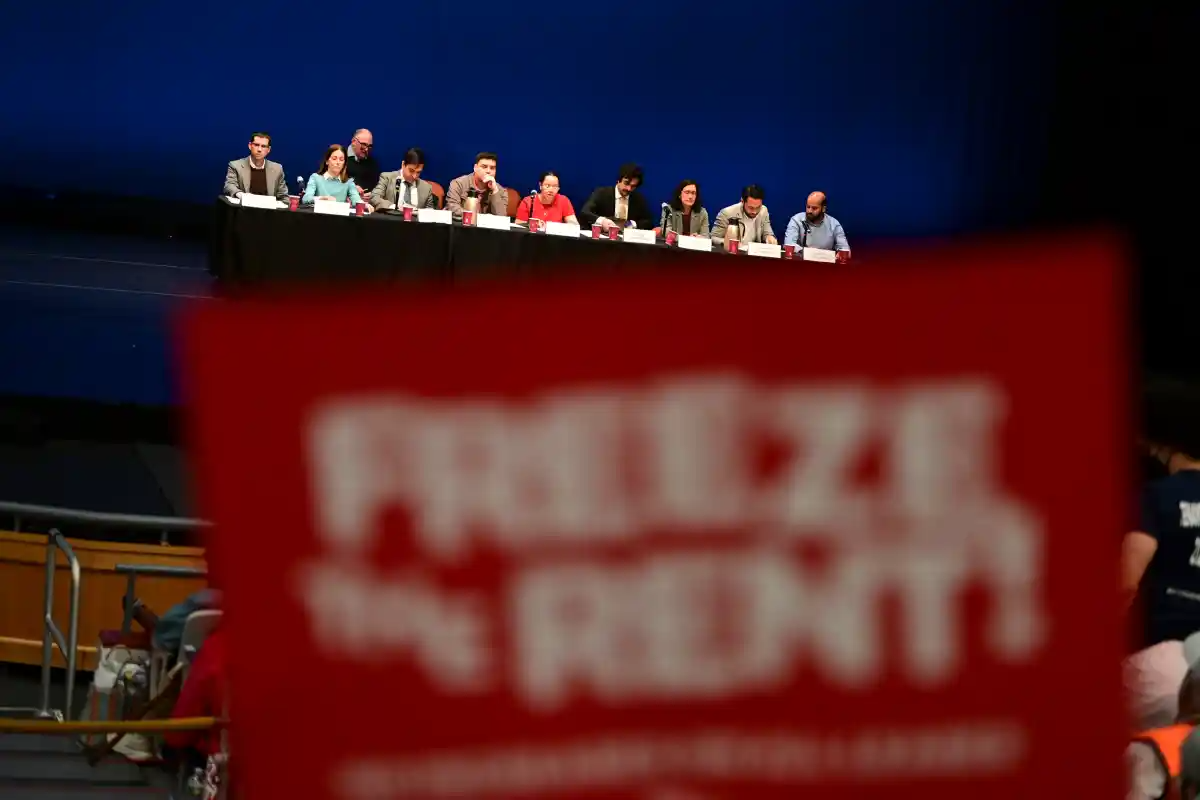
The preliminary range is far lower than what advanced under former Mayor Eric Adams — yet the outcome of the May 7 vote satisfied neither side.
Tenant organizers said the preliminary rent ranges fell short of what they wanted amid the rising cost of living, while landlord groups said the board ignored the data on rising operating costs and financial distress in older, heavily rent-stabilized buildings.
Thursday’s vote was the first major test of Mamdani’s rent-freeze pledge since he appointed five new members and reappointed tenant representative Adán Soltren earlier this year, giving his selections a majority of the nine-member board.
In a statement after the preliminary vote, Mamdani did not explicitly call on the board to approve a June freeze, having publicly cooled on the “rent freeze” calls since taking office.
Yet Mamdani stressed that New Yorkers are being “crushed by the cost of living,” and said he was encouraged that the board was taking seriously “the data around affordability, operating expenses, and the pressures facing both tenants and small property owners.”

“As the RGB begins its public hearings, tenants, owners, and New Yorkers from every borough should make their voices heard and speak directly to what this housing crisis looks like in their lives,” Mamdani said. “I’m confident the Board will weigh those perspectives carefully and arrive at a decision later this summer that reflects the urgency of this moment.”
Tenants and owners offer their own rent proposals
The board’s vote came after it rejected proposals from both tenant and owner representatives.
As the raucous meeting got under way in the LaGuardia Performing Arts Center, Soltren proposed a rollback range of -3 percent to 0 percent for one-year leases and -4.5 percent to 0 percent for two-year leases. The proposal failed.
Owner representative Christina Smyth later proposed increases of 3 percent to 5.5 percent for one-year leases and 6 percent to 8 percent for two-year leases. That motion also failed.
The board then approved the 0 percent to 2 percent and 0 percent to 4 percent ranges, preserving the possibility of a rent freeze at the final vote but also allowing for increases.
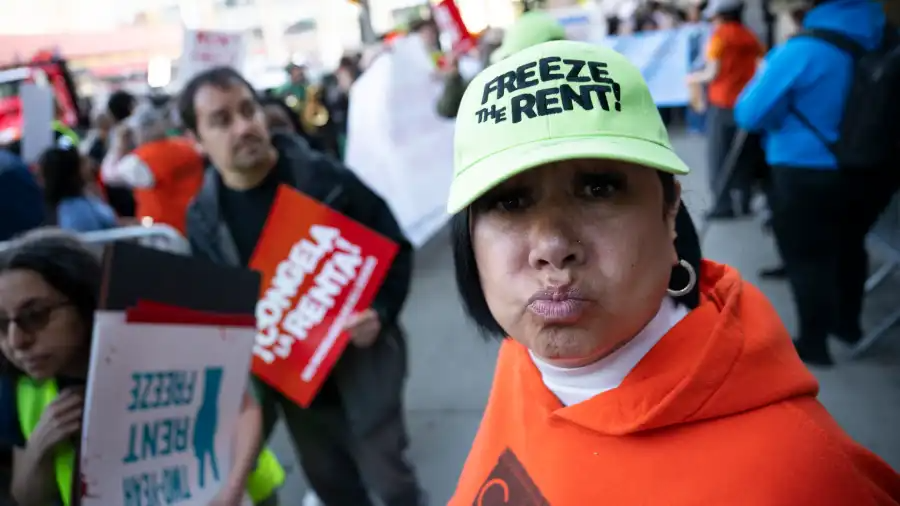
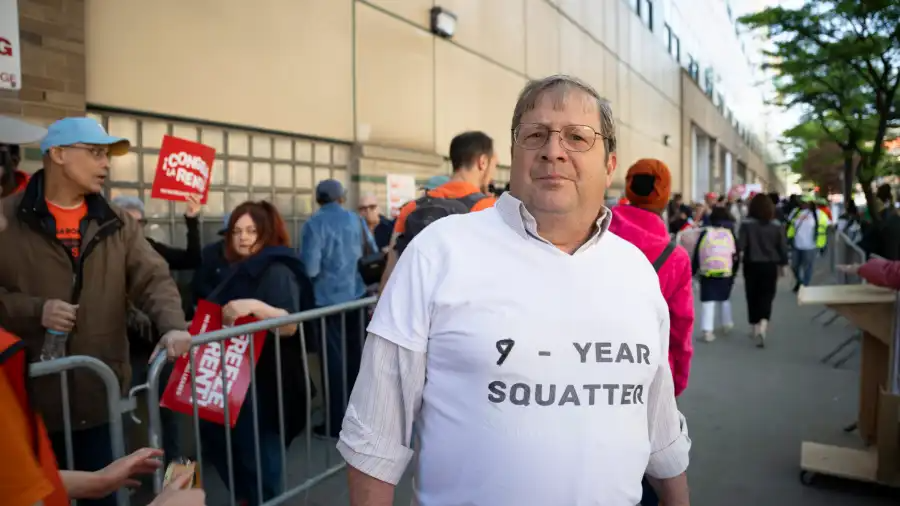
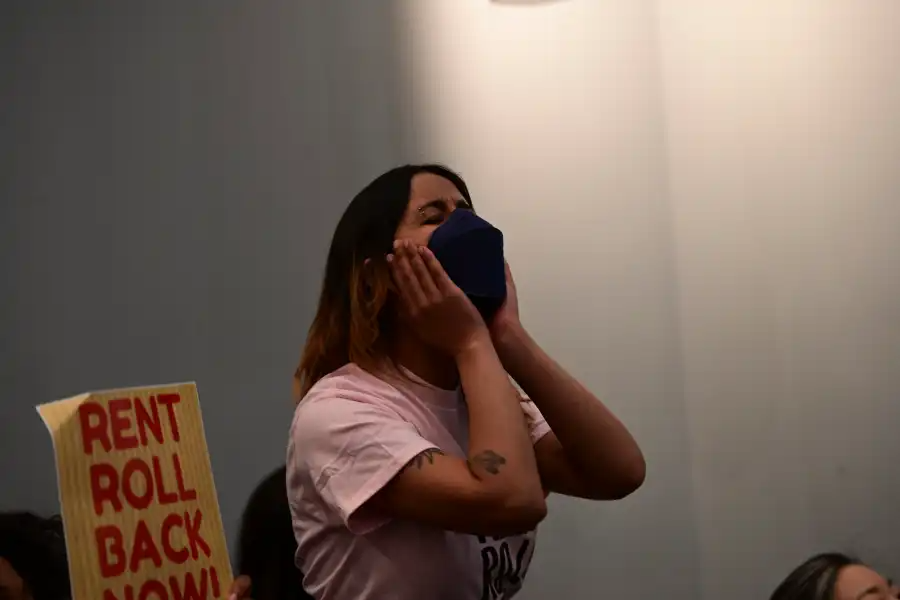
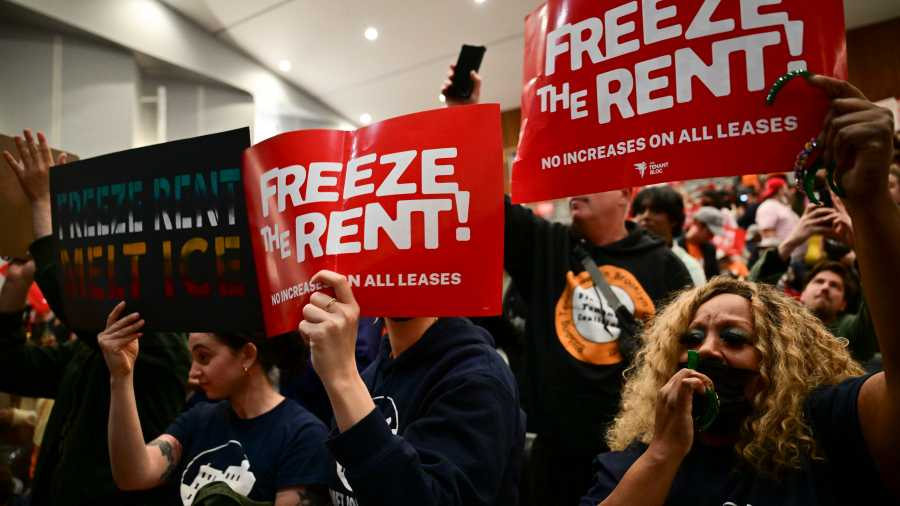
Tenant organizers and landlord representatives had gathered early ahead of the meeting, previewing the fight that will continue through public hearings. Inside the auditorium, some tenant advocates chanted for rent rollbacks and shouted over parts of the meeting, growing louder after Soltren’s rollback proposal failed.
The rollback demand was tied to anger over rent increases approved during the Adams era. Tenant members and advocates have repeatedly pointed to rent hikes totaling about 12 percent over four years.
The new preliminary range marks a sharp break from the Adams-era boards. In 2024, the Adams-appointed board advanced preliminary ranges of 2 percent to 4.5 percent for one-year leases and 4 percent to 6.5 percent for two-year leases. Last year, the board approved final increases of 3 percent for one-year leases and 4.5 percent for two-year leases.
Boards appointed under former Mayor Bill de Blasio previously froze rents three times, including during the pandemic.
Tenants see a breakthrough
Tenant groups cast Thursday’s vote as a breakthrough, while saying the board must go further. The NYS Tenant Bloc pointed to Soltren’s rollback proposal as evidence that tenant organizing had changed the terms of the debate.
“When tenants get organized, participate in the political process, and use their political power, we can win,” said Sumathy Kumar, director of the NYS Tenant Bloc.
The Legal Aid Society also praised the board for including a possible freeze in the preliminary range, but said it was disappointed that increases remained on the table.
“Amid a historic affordability crisis and growing economic uncertainty, we commend the Board for including an outright rent freeze among the proposed rent adjustment options for rent-stabilized apartments, lofts, and hotels,” the group said. “However, we are disappointed that the Board also included potential rent increases in the proposed ranges, despite the Board’s own data strongly supporting the need for a rent freeze.”
Legal Aid pointed to board reports showing continued landlord profits and a 20.4 percent increase in the market value of buildings made up entirely of rent-stabilized units, after adjusting for inflation. The group said any increase would hurt working-class and low-income tenants who have already endured four consecutive years of hikes.
Tenant organizers said they plan to keep pressing the board before the final vote. In an interview after the meeting, Matt, a member of Full Time Tenant Union, told amNewYork rent-stabilized tenants need relief after years of increases amid growing financial pressure.
“Rent stabilized tenants need relief, not another increase,” he said, adding that he and other advocates would continue pushing for a rollback. He said a freeze would be the minimum acceptable outcome for many tenants, but argued that even that would not fully address the burden renters face.
Landlords say board ignored reality
Landlord groups sharply criticized the preliminary vote, saying the board was ignoring its own data on operating costs and the financial condition of older rent-stabilized buildings.
Basha Gerhards, executive vice president of public policy at the Real Estate Board of New York, said the board’s preliminary ranges “ignore the clear financial distress shown in the data.”
“With operating costs rising and conditions worsening across older, majority rent-stabilized buildings, a freeze or near freeze is unjustifiable,” Gerhards said. “The Board has a statutory obligation to consider the financial viability of these buildings.”

Small Property Owners of New York also condemned the vote. Ann Korchak, the group’s board president, called it “reckless and irresponsible,” saying the board was violating its mandate to objectively analyze data and preserve rent-stabilized housing.
“This vote instead continues a decade-long pattern of defunding privately owned rent-stabilized housing stock and clearly surrenders to City Hall’s political pressure,” Korchak said.
Korchak said the board’s data is distorted because it combines older, financially distressed, majority-stabilized buildings with newer or more profitable buildings that have few stabilized units. She called on the board to provide separate rent orders for buildings constructed before 1973.
The New York Apartment Association also blasted the vote. The group pointed to the RGB’s 2026 Price Index of Operating Costs report, which included an illustrative formula yielding increases of 4.5 percent on one-year leases and 8.5 percent on two-year leases under a CPI-adjusted net operating income method. The report cautioned that those formulas are illustrative and “do not constitute staff or Board recommendations.”
“This range is an example of politics over people,” said Kenny Burgos, the group’s CEO. “The final vote impacts hundreds of thousands of tenants and owners. Politics has pitted the two groups against each other as if they’re not all New Yorkers who are investing in their communities and seeking the same thing: the means to live.”
Burgos said rent is needed to maintain buildings, not simply to generate owner income.
“An owner’s ability to pay for operating costs should matter to every tenant,” he said. “Rent isn’t going into the pockets of rent-stabilized owners, it’s going into keeping the buildings standing.”
Board’s own data shows the pains of rising costs
The competing reactions reflect the split in the board’s own data.
The RGB’s 2026 Price Index of Operating Costs found that owner costs for buildings with rent-stabilized apartments rose 5.3 percent, including an 11 percent increase in fuel costs and a 10.5 percent rise in insurance costs. The same report said the index is designed to measure costs paid by owners to operate and maintain buildings with rent-stabilized units, and does not quantify costs paid by tenants.
Other RGB data presented this spring gave tenant advocates their own figures to cite. The board’s mortgage survey found that the average price per unit sold rose 10.5 percent citywide in buildings with stabilized units, and that prices for buildings made up entirely of stabilized units rose 20.4 percent.
The board’s 2026 Income and Expense Study also found that net operating income rose 6.2 percent from 2023 to 2024 for buildings with at least one stabilized unit, while collected rent rose 4.8 percent, total income rose 4.9 percent and operating costs rose 4.2 percent. But the same report showed weaker net operating income growth in buildings with larger shares of rent-stabilized units, including 2.4 percent growth in fully stabilized buildings and 1.4 percent growth in fully stabilized pre-1974 buildings.
The debate has also drawn scrutiny because of Mamdani’s push to increase public participation in the RGB process.
Mamdani made a rent freeze a centerpiece of his campaign, but has since stressed that the RGB is an independent body. Last month, Mamdani launched Organize NYC, an initiative through the city’s Office of Mass Engagement aimed at getting more tenants and owners to testify before the board.
The mayor has said the effort is not intended to tell people what to say. At the April 29 launch, he said canvassers would ask residents if they know whether their apartments are rent stabilized and if they would testify. He also said the effort would include outreach to landlords.
“This is not about telling New Yorkers what they should say,” Mamdani said at the launch. “This is about ensuring that everyday New Yorkers are as involved in the processes as the impact that these processes will have on their day-to-day lives.”
Landlord groups have questioned whether City Hall’s organizing effort amounts to political pressure on a board that is supposed to operate independently. Mamdani has said he values the board’s independence and that canvassers will not encourage any specific testimony.
The landlord criticism also comes less than a month after Mamdani’s administration unveiled a city-backed insurance program for affordable and rent-stabilized housing, acknowledging that insurance costs for that stock had more than tripled since 2017.
City Hall said the program could reduce costs for 20,000 homes by 2027 and 100,000 homes by 2030, but some small-owner groups questioned whether relief would arrive quickly enough or reach the private owners most under strain.
The board will hold four public hearings before the final vote: June 4 at the Jamaica Performing Arts Center in Queens, June 8 at Hostos Community College in the Bronx, June 11 at City Tech in Brooklyn, and June 16 at Symphony Space in Manhattan. Written, audio, and video comments, meanwhile, will be accepted from May 14 through June 16.
The final RGB decision comes on June 25.
Editor’s note: A version of this story originally ran in amNY. Click here to see the original story.
Related Stories
- Rent Guidelines Board Hikes Rents for Stabilized Tenants
- Rent Guidelines Board Trims Possible Rent Hike in Vote Redo
- Sunset Park Tenants, Pols Rally for Rent Freeze After Price Hikes
Email tips@brownstoner.com with further comments, questions or tips. Follow Brownstoner on X and Instagram, and like us on Facebook.


What's Your Take? Leave a Comment