
Crown Heights Tenants Sue Landlord, Alleging Illegal Destabilization of Units
Some tenants believe the landlord falsely told the state they had made major improvements to their units to raise rents above deregulation thresholds.

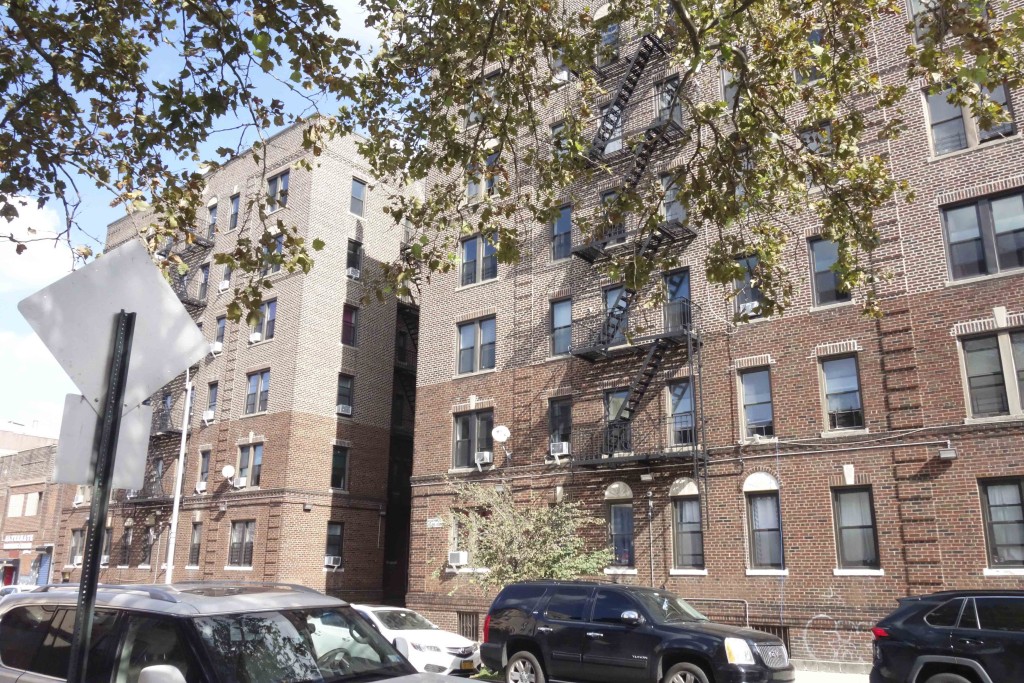
The building at 283-295 Albany Avenue in 2021. Photo by Nicholas Strini for PropertyShark
by Kirstyn Brendlen, Brooklyn Paper
A group of Crown Heights tenants are taking their landlord to court for allegedly illegally destabilizing their apartments and hiking the rent.
In 2010, 52 of the 53 units at 283-295 Albany Avenue were rent-stabilized, tax records show. As of early 2025, the building, which was constructed in 1941, had just 20 rent-stabilized apartments left.
Some tenants believe the landlord falsely told the state they had made major improvements to their units in order to raise rents above deregulation thresholds. In a class action lawsuit filed on Thursday, 13 residents demand that their landlord, 283 Albany Equities LLC, restore the legal rents and refund them significant rent overcharges.
Rent stabilization in New York
In New York City, most apartment buildings constructed before 1974 with six or more units are subject to rent stabilization. In those buildings, landlords can only increase the rent by a certain percentage — which is determined by the city’s Rent Guidelines Board – each year.
Landlords are allowed to increase rents if they perform certain improvement projects on the building — Individual Apartment Increases or Major Capital Improvements. Until 2019, if rent in a stabilized unit rose above $2,700, the apartment could legally be removed from stabilization.
“The biggest type of rent increase is what’s known as an Individual Apartment Increase. IAIs, we call them” said Roger A. Sachar, one of the lawyers representing the 283 Albany Avenue tenants.
Improvements like new appliances and flooring or upgrades to bathrooms and kitchens usually qualify as IAIs, painting or refinishing floors or painting the wall usually don’t. Under current state law, different IAIs allow for different rent increases.
Alleged IAI fraud at 283 Albany Avenue
In the lawsuit filed Thursday, tenants allege that 283 Albany Equities LLC claimed to have completed expensive IAIs in order to raise rents above the threshold and remove their units from stabilization.
In reality, they claim, those improvements were never made.
Tax documents show that 283-295 Albany Avenue had 52 stabilized units until the middle of 2018, when the number of stabilized units fell to 27. 283 Albany Equities LLC — a subsidiary of Shamco Management Corp. — purchased the building in March 2018 for $20 million, property records show.
Shamco and its owner, Alan Shamah — who is listed as the building’s head officer — did not immediately return request for comment.
“If you know what you’re doing,” Sachar said, you can figure out how much money a landlord would have had to have spend on IAIs to justify the subsequent rental increase. That’s what he and watchdog group Housing Rights Initiative did at 283-295 Albany Avenue.
In 2018, the legal regulated rent for apartment 6E jumped 186 percent, the suit claimed. To justify such an increase, the landlord would have had to make improvements worth more than $83,000.
Another unit was temporarily occupied by a nonprofit that provides transitional housing at scatter sites across Brooklyn, and should have been temporarily exempt from stabilization, the suit claims. When it was re-registered as stabilized in 2018, the rent rose to $3,079.96, the suit claims, which would have required nearly $93,000 in IAIs.
“This is a huge amount of IAIs,” Sachar said. “You look … they’re spending $90,000 in a unit. It is unlikely, looking at the units and the neighborhood they’re in, that anyone spent $90,000 on multiple units. It just doesn’t make sense.”
According to city records, 283 Albany Avenue has 27 open violations with the Department of Housing Preservation and Development. HPD has ordered the company to replace defective outlets, install working carbon monoxide and smoke detectors, fix broken windows, repaint certain units, and fix water leaks in multiple apartments.
In March, the building was cited for violating a new law requiring landlords to post flyers in any building that contains one or more rent-stabilized units and informing tenants how they can find out if their unit is subject to stabilization.
The suit also accuses the landlord of simply failing to register at least one unit as stabilized in 2019 without explanation. Since then, the unit has been treated as exempt from stabilization.
From October 2025 to April 2026, units at 283 Albany Avenue have been rented out for between $3,100 and $3,750, according to past StreetEasy listings.
“Our investigation uncovered what appears to be a systematic and pervasive scheme to illegally overcharge tenants in rent,” said Aaron Carr, founder and executive director of the housing watchdog group, Housing Rights Initiative. “When a landlord overcharges a tenant, they’re not just stealing their money, they’re undermining their ability to afford food, healthcare, and a decent quality of life.”
Sachar and the tenants are hoping that the judge will re-regulate the units in question and provide new rent stabilized leases with accurately calculated rents. In addition, they’re seeking a refund of the rent overcharges they’ve allegedly paid.
In 2024, residents of a rent-stabilized building in Queens were paid more than $100,000 each by building owner Blackstone after filing a similar lawsuit. The case was also initially investigated by Housing Rights Initiative, with tenants represented by Newman Ferrara LLP, the firm where Sachar works.
Tenants at 283-295 Albany Avenue received an immediate boost of support by their Council Member, Crystal Hudson.
“Our state’s rent regulation laws are one of the few remaining protections against skyrocketing rents in an increasingly unaffordable city. Our city’s rent stabilized tenants — more than half of whom are rent burdened — are also some of our most vulnerable. Any landlord who tries to prey on low-income Black and brown tenants must be held accountable to the fullest extent possible,” Hudson said. “I’m proud to stand alongside the tenants of 283-285 Albany Avenue in their fight to recover thousands of dollars in illegal rent increases from nonexistent or underperformed apartment upgrades and restore their rents to their correct levels.”
Editor’s note: A version of this story originally ran in Brooklyn Paper. Click here to see the original story.
Related Stories
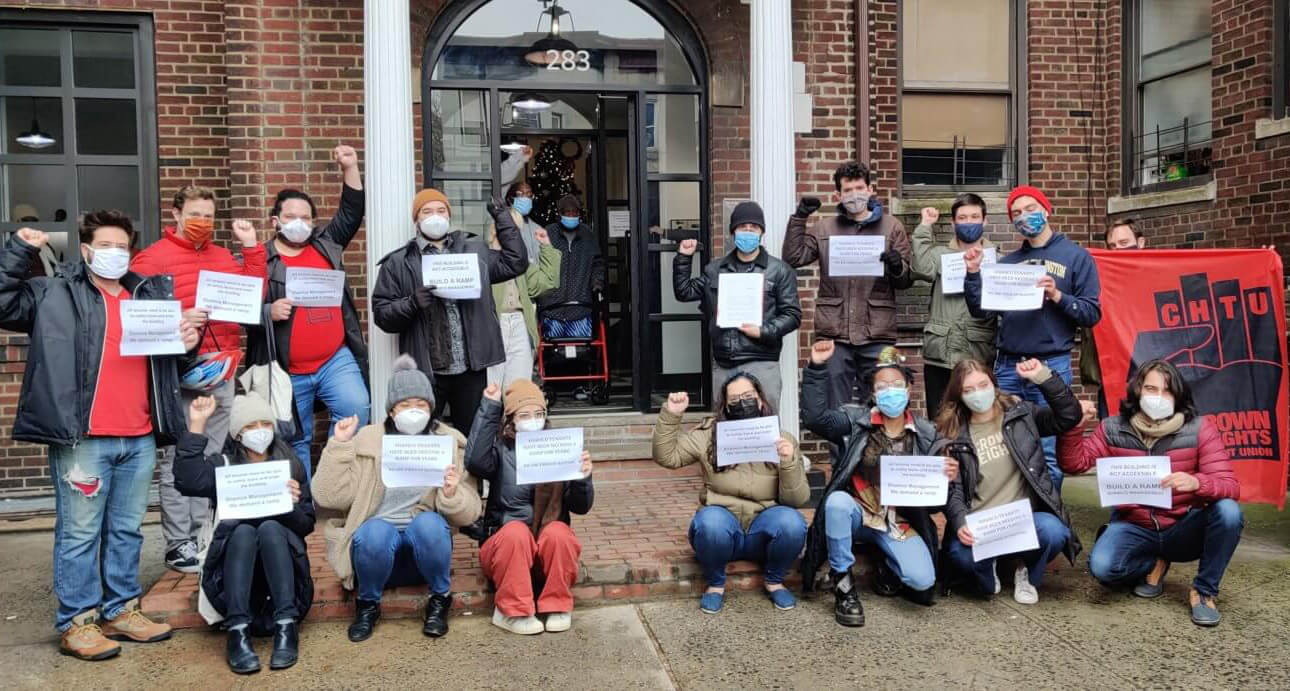
- Tenants Protest Lack of Accessibility at Crown Heights Building
- First Vote on Stabilized Rent Leaves Room for Freeze or Hike
- Program to Take Property From Negligent Landlords Gets Second Try in Council
Email tips@brownstoner.com with further comments, questions or tips. Follow Brownstoner on X and Instagram, and like us on Facebook.
What's Your Take? Leave a Comment