
Co-op of the Day: 149 Willow Street, #2D
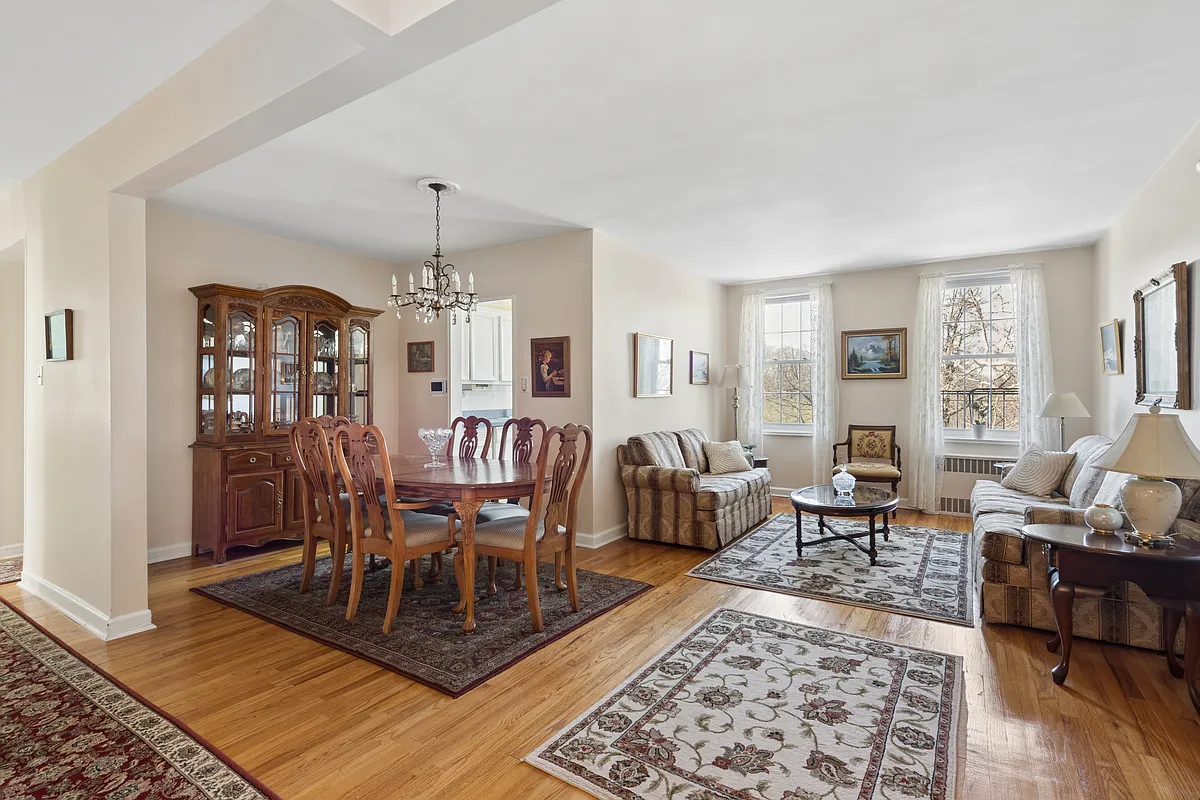
This handsome listing at 149 Willow Street in Brooklyn Heights just hit the market with a price tag of $1,250,000. We’re digging the prewar details and the abundance of windows in the two-bedroom, two-bathroom pad; we also like the unusual design of the prewar exterior. Our back-of-the-envelope square footage calculation comes out to around 1,200,…


This handsome listing at 149 Willow Street in Brooklyn Heights just hit the market with a price tag of $1,250,000. We’re digging the prewar details and the abundance of windows in the two-bedroom, two-bathroom pad; we also like the unusual design of the prewar exterior. Our back-of-the-envelope square footage calculation comes out to around 1,200, which makes the monthly maintenance of $1,584 tolerable given that it’s an elevator building. What do you make of it?
149 Willow Street [Brown Harris Stevens] GMAP P*Shark

11217, I love EVERYTHING about that President Street apartment. Totally. Only problem for me is, if it is a walk-up, and it appears to be, CDog can’t do it, and I won’t do it without CDog. 🙁
CGAR,
If you don’t care about services, why would you want to pay $19,008 a year on things you don’t necessarily care about?
I bet you could pay Rob less than 19K a year to pick up your laundry and packages! 😉
Minard, actually I don’t care at all about the services. I had a Brownstone for 10 years and didn’t mind doing all those things for myself. I like having someone to get packages and dry cleaning, but I can live without it just as easily. Space and location are far and away the most important to me, and this has both.
The apartment is lovely and the building looks well-run. For a person of steady means, this is an ideal home.
this looks to be the entire back of the building – so no windows face the street. Which on noisey street would be a bigger plus. Since some carriage house is set far back on 1 side of property….the side windows probably have pretty good light also.
Looks really nice inside.
Another point on maintenance, I would assume that most people who are willing to spend a million or more for a coop apartment would prefer to pay an additional three to four thousand a year for basic services such as sweeping and cleaning, garbage toting to sidewalk, shoveling, live-in super, etc etc. Sometimes, especially in tiny co-ops, the established shreholders who bought for next to nothing are parsimonious and do not want to spend an extra dime on the building, that puts them in conflict with a new buyer who will plunk down 1.3 million for a unit and does not want to live in dirty, dark or untended building. There is a lot to consider when buying into a coop.
You really want to carefully examine buildings with maintenances that seem too high OR too low.
What I don’t understand is that during such a time of uncertainty economically that people are willing to purchase these apartments with sky high maintenance fees knowing that they are only going up (and drastically in some cases).
To me finding an apartment with a low maintenance was almost more important than the purchase price itself.
I guess if you can afford a million dollar apartment you don’t care that when you retire on a fixed income your housing expenses are still going to increase through these maintenance fees??
Ringo, for many years, co-ops were the habitation of choice for the rich in NYC. Regular folks who owned property owned houses, which used to be priced quite modestly throughout the Boros (folks who owned townhouses in the Upper East Side paid pretty high taxes). Politicians can count votes and knew to play to the many rather than the few. Low taxes on middle-class homes became a political entitlement that was, and is, untouchable.
Now that coops have proliferated and it is no longer just the fancy-pants who live in co-ops, things are starting to change. It’s all about voter numbers. For the past seven or so years those of us in co-ops have received tax abatements that have leveled the playing field somewhat although not entirely. The maintenance charges we see listed on B’stoner do not take into account the abatements.
Nice apartment, maintenance is in line with the neighborhood.
Ringo brings up a good point… the tax situation for co-op’s is unfair.
I live on Willow St. and pay 24K a year in co-op maintenance. It makes no sense that a 2-3M brownstone pay taxes of 5K per year. At least have a more equitable tax rate. A simple 1 per cent of assessed value would help out NYC greatly.