
City Real Estate Market Rebounds Sharply in January
The lower prices and negative psychology that dominated the New York City real estate market last year went “poof!” last month as the bonus-rich and others showed a renewed appetite for residential properties of all shapes and asking prices. Overall, both prices and the number of signed contracts rose more than 10% year-over-year in January….


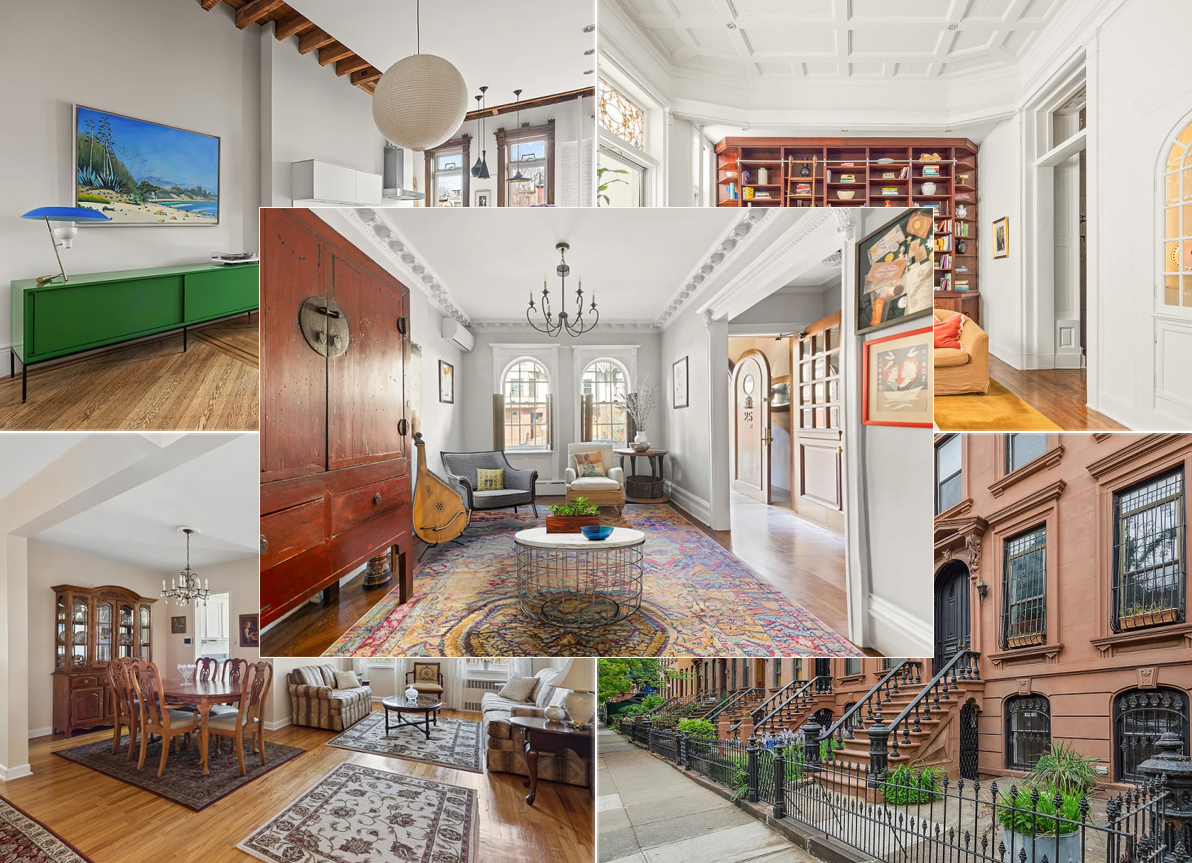
The lower prices and negative psychology that dominated the New York City real estate market last year went “poof!” last month as the bonus-rich and others showed a renewed appetite for residential properties of all shapes and asking prices. Overall, both prices and the number of signed contracts rose more than 10% year-over-year in January. [Buyers’] psychology has changed, said Frederick W. Peters, the president of the Warburg Realty Partnership. For almost two years, they’ve been scared that the market would plummet and they’d end up like fools who paid too much. Steven L. James, director of Manhattan sales for Prudential Douglas Elliman, calls it a “cautious exuberance.” One example: A park slope brownstone asking $2,475,000 that sold in a day. And in a further sign of strength, there is lots of demand for apartments and houses at all points in the price spectrum, not just the high end, according to Jonathan Miller of Miller Samuel.
Housing Market Heats Up Again in New York City [NY Times]
Photo by John Marshall Mantel for The New York Times
Re: is the NYC real estate market different from every other market in the entire United States —
1. The college student and empty nester argument — Is NYC gaining population at a significantly greater rate than any other urban area?
2. The jobs argument — Is NYC gaining high income jobs at a higher rate than any other urban area?
3. The international wealth argument — what is the percentage of residential real estate that is sold to foreign investors?
I mean all these questions seriously — and I wish articles in the NYTimes, like the one at the top of the thread, would address them, rather than filling column inches with the blather of real estate agents.
4. Jack Slade — I didn’t say anything about the prices of townhouses versus apartments, but you seem to have a weird idea of how people buy homes. Do you actually believe that people looking for a home don’t contemplate whether it’s a better value to buy an apartment vs. buy a house? And are YOU seriously saying that because “god isn’t making any more real estate”, that real estate prices will always rise?
As for those of us who bought before the boom wanting prices to stay up — for most of us existing owners, the only way that rising prices benefit us is if we want to sell out in NYC and move to a very different market. Otherwise, in terms of trading up, while rising prices will mean we get more when we sell, it also means we pay more when we buy. For me, the fact that my apartment is worth 10 times what I paid for it only makes me rich on paper.
This debate is a bit tired. Everyone who bought before the boom seems to want prices to stay up. Everyone who didn’t seems to be waiting for the market to bust.
re: SPer – would refer you to the arguments of Ed Glaeser of Harvard who expounds prolifically on the points you bring up. NY is indeed a different beast – a global luxury good more in competition with London than with Boston. NY has adapted in ways that Phila, Boston, LA and Chicago have not – reinventing itself numerous times to (nearly – see 1970’s-thru-mid-80’s) continuosly position itself as the nexus of the global economy and a magnet for talent and ambition. There are only so many slivers of the rock. Buy and Hold.
Sper- you’re saying home prices will go down because thousands of new apts are going up?
Interesting point of view…..
I would think that fact alone would drive the prices of these townhouses upwards. People are a lot smarter and people want ownership and you can’t really add a backyard to an apt on the 15th floor.
Are you seriously comparing the gold market to land?
12:01 coming back at ya:
Look back to the 70s. If we have a democratic mayor with a democratic council, major unions (police, fire, teachers, garbage, transit) get monster wage increases (outpacing inflation.
Result is either
a) taxes go up
b) services go down
This slows growth in the city, which slows real-estate appreciation.
1) the college students don’t buy in (park slope) townhouses
2) the influence of publishing is actually waning, everything except high end fashion/textile is going to asia
3) empty nesters probably don’t buy townhouses in park slope, more one or two bedrooms in manhattan
4) so far I haven’t seen the extremely wealthy buying a brooklyn place as 2nd or 3rd home….
I fully agree though that the townhouse marked in park slope is highly depending on wall st.
SPer:
The NYC market is very different than the rest of the US, and it’s well documented. Here are a few of the key reasons:
(1) Thousands of college graduates move to NYC every year to try life in the Big Apple.
(2) NYC is the center of numerous businesses including publishing, advertising, fashion not to mention finance. This creates jobs.
(3) Empty-nesters from the surrounding suburbs, sell their homes and want to be closer to the cultural mecca that is NYC.
(4) When the US economy is weak, and the dollar weakens, the slack is taken up by foreign investors. (In fact, this happens even when the dollar is not weak). This is because NYC in the only global city in the US. Extremely wealthy (and just very wealthy) people like to have second homes here. Also, compared to market like London, $1000/ft is actually considered a bargain.
I could continue…..
Well stated Secular Progressive. Common sense like that deserves to be on the CW side.
Move on speculators…
I was fascinated by this article. What happens to prices is basically immaterial to me, since I already own and have no intention to sell for many years. But I’m still waiting for someone to explain to me why the New York City real estate market should be entirely different from markets anywhere else in the entire United States, including other major urban areas.
Jack Slade — yes, god isn’t making any more real estate, but that doesn’t mean it will always rise in value does it? God isn’t making any more gold either, and I haven’t noticed that that’s followed an ever upward rise in price. And, in fact, thousands of new apartment buildings are going up as we tap away here on our keyboards. I can’t imagine why that won’t affect prices, but that just leads me back to my original question above.