
City Real Estate Market Rebounds Sharply in January
The lower prices and negative psychology that dominated the New York City real estate market last year went “poof!” last month as the bonus-rich and others showed a renewed appetite for residential properties of all shapes and asking prices. Overall, both prices and the number of signed contracts rose more than 10% year-over-year in January….


The lower prices and negative psychology that dominated the New York City real estate market last year went “poof!” last month as the bonus-rich and others showed a renewed appetite for residential properties of all shapes and asking prices. Overall, both prices and the number of signed contracts rose more than 10% year-over-year in January. [Buyers’] psychology has changed, said Frederick W. Peters, the president of the Warburg Realty Partnership. For almost two years, they’ve been scared that the market would plummet and they’d end up like fools who paid too much. Steven L. James, director of Manhattan sales for Prudential Douglas Elliman, calls it a “cautious exuberance.” One example: A park slope brownstone asking $2,475,000 that sold in a day. And in a further sign of strength, there is lots of demand for apartments and houses at all points in the price spectrum, not just the high end, according to Jonathan Miller of Miller Samuel.
Housing Market Heats Up Again in New York City [NY Times]
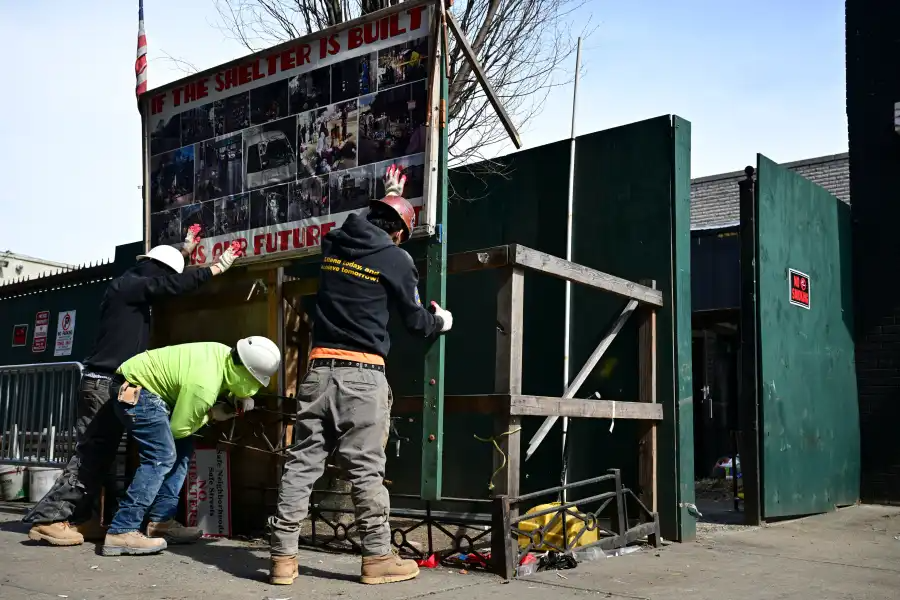
Photo by John Marshall Mantel for The New York Times


I think that when it comes to brownstones, the forces of supply and demand prevail. There are only so many brownstones in Brooklyn, and the demand keeps rising, particularly in the more desirable areas. The upshot of this is that it pushes people to consider looking in fringe neighborhoods. If there is any risk, it’s for those persons pushing the boundaries and venturing into new areas with the hope that the upswing will continue.
The total fundamental value of real estate in the city is rougly the present value of 30-40% of the income of the city’s population plus or minus.
Increased tax rates will lower this number.
Basically, the problem is that NYC is increasingly a company town. Only 260k people work in financial services (and another 20-30k in high-end law), and by and large, they dictate the tone of the market. If wall st has a downturn (this year isn’t looking so hot) the real estate market will follow.
Likewise, if, when bloomberg retires, the unions take an increasing share of taxes, it will kill the high end real estate market.
its still gonna go down at some point.
irrat exub redux: I agree with you for the most part. Crappy construction in marginal neighborhoods will continue to suffer. I don’t think the highrises will plummet, though…although they may take a while to be absorbed…worst case is that they will go rental. And high prices do not necessarily indicate a bubble.
so what
cj: true. but it’s also true that value of real estate is perceived and not inherent. Perceived value has to do with what else? supply and demand. So people who want a steal on a gorgeous brownstone won’t get it regardless of the mkt unless they buy in Bed-Stuy where the housing stock is nice but overall demand low. Inherent value of brownstones is high. Other neighborhoods, forget it — that moment has passed. Cheesy construction, on the other hand, will plummet in value.
The Starrett City bid, in my opinion, is a sign of continued bubble– groups of investors bidding on what is of considerably less value due to housing stock and location. By the same measure, all these highrises flying up all over the place will plummet
the cat leaped out the body bag.
irrat exub redux: Yes, I remember the NASDAQ crash. Yes, it it was a particular event that ushered it in (an earnings release from iVillage, if I remember correctly). But as has been pointed out numerouse times, a lot of those stocks had no underlying value – unlike real estate which provides a needed benefit: shelter. And you are also correct that eventually something will happen – the market is cyclical. But I think that ‘crash’ that you are prediciting has been avoided – at least here in NYC. And that all the people who have been praying for that crash, have lost out, again.
Look, the market will crash people — just not when we think it will, or on our sched. Remember the late 90s when the NASDAQ kept going up up up and people marvelled and kept predicting the crash that never came? Well, it came, just a lot later than people predicted. The same thing will happen here: it’s common sense. Probably some huge scandal or collapse will usher it in. My prediction? Post-Bloomberg, the sh– will hit the fan.