
Brownstoner Garden: Monday's Progress
The layout of the bluestone was finalized, the retaining wall construction began and some sod was laid yesterday. Previously: Trellis Time [Brownstoner]


The layout of the bluestone was finalized, the retaining wall construction began and some sod was laid yesterday.
Previously: Trellis Time [Brownstoner]
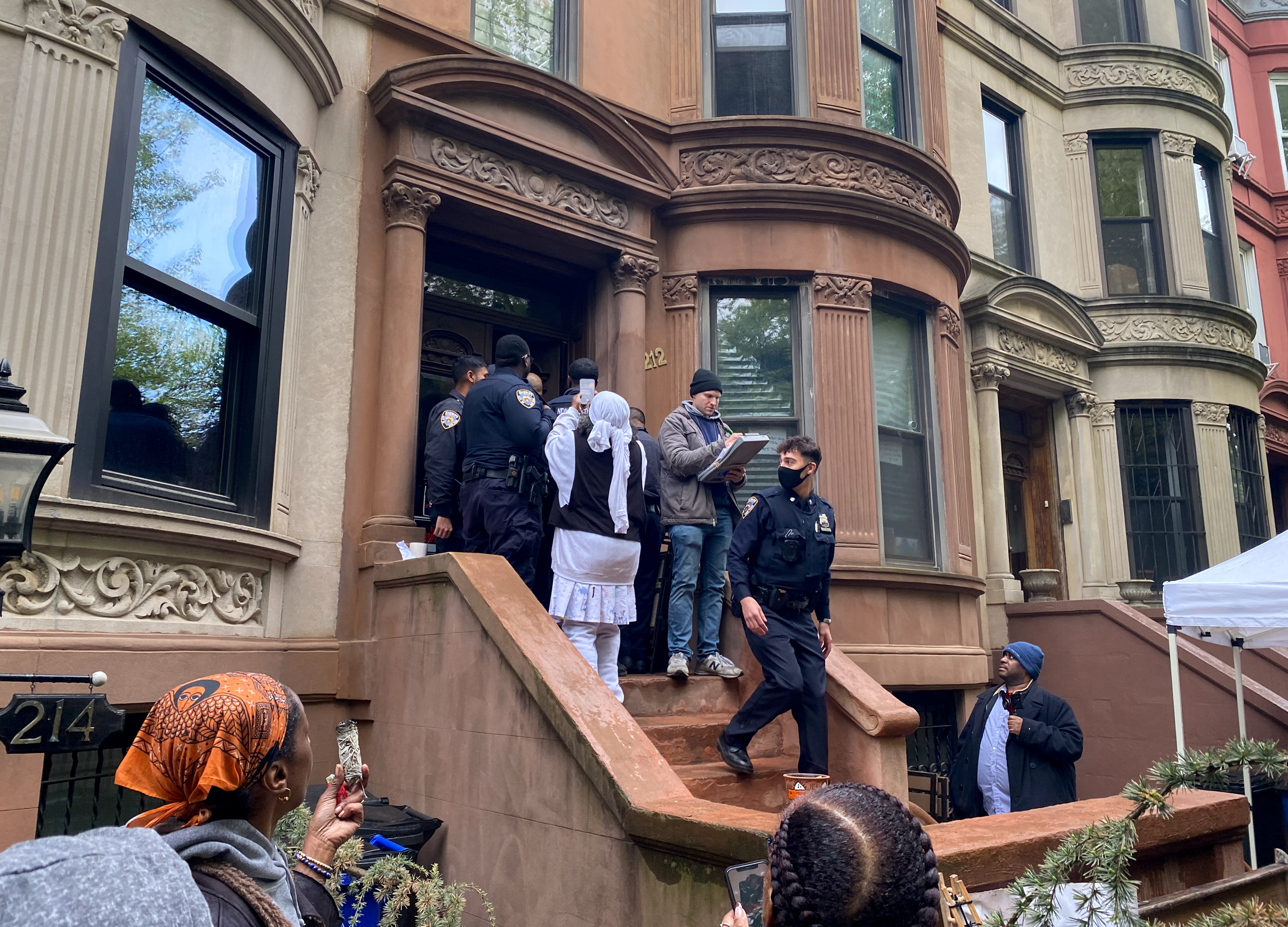
Nice group salvage effort!
Thanks a million ameraleed for the bluestone tip! This evening we were on our way to Home Depot and swung by to see if any of it was left and lo and behold! The assorted pieces we dug out of the dumpster are perfect…and free! There are still some larger/thicker hunks left. We could only take what would fit in our Honda hatchback without it totally scraping bottom.
Thanks for the bluestone info.
And by the way – I’m being quite sincere when I ask you not to interpret what I say as angry rants – I’m just being provocative, colorful, expressive and having fun, all served up with a dose of truth. Perhaps humor doesn’t always translate, so maybe I’ll start my entries with a disclaimer.
Geology geek details, following up on 5:24:
Bluestone is a sedimentary rock (a sandstone), just like brownstone or Ohio stone. It tends to be much harder than brownstone, hence its use in sidewalks, vs. brownstone, which is easily carved.
Slate is a metamorphic rock – a sandstone that has been set down in layers and put under great pressure. Hence the fine layers that make up the stone.
Flagstone is a generic term, referring to any large, flat paving stone (such as bluestone).
Slate is more appropriate for a garden walk. High-traffic areas, such as sidewalks, were historically paved in bluestone or granite.
Within a landmark district, LPC usually requires replacing bluestone or granite in kind. Concrete sidewalks can be replaced in kind, but LPC typically wants the concrete tinted to match the predominant paving material of the district (cheap and simple).
meant to say “fine” not “file” layers…
Not sure if it has changed, but it is extremely expensive to replace. I’ve seen concrete dyed a similar color used on some landmarked blocks.
Ed, your angry rantings aside (deep breaths 😉 – bluestone is different from slate in that it does not have the file layers that flake off, more of a solid piece of stone. the enormouse blocks used in front of rowhouses and on the sidewalks are very expensive to replace, and are hard to find in the 4 or five inch thick dimensions that was used in the 19th century. In lots of neighborhoods that fell on hard economic times, such as FG and Clinton Hill, people sometimes poured concrete over the bluestone for repair or personal taste reasons. Such a shame really when you see that or dig up your cracked concrete patio to find damaged or destroyed bluestone directly underneath it.
I had been told that in historic districts they had to replace slate and bluestone with the same materials. I know they did in the heights. DId this change?
Oops – I should have never used bad language! I meant to delete that.
Of course, if you did decide to read it, I meant it, with respect to cowardly bloggers…
I wasn’t joking – I guess I never heard it called bluestone. I’ve heard of slate and flagstone.
What is bluestone exactly?