
$25 MacArthur Grant for Affordable Housing Research
During the past decade, the booming real estate market and waning federal subsidies resulted in the loss of over two million units of affordable housing, according to the John D. and Catherine T. MacArthur Foundation which announced on Tuesday that it was committing $25 million to the study of housing policy in the United States….


During the past decade, the booming real estate market and waning federal subsidies resulted in the loss of over two million units of affordable housing, according to the John D. and Catherine T. MacArthur Foundation which announced on Tuesday that it was committing $25 million to the study of housing policy in the United States. “A greater national commitment to affordable housing requires a greater understanding of the impact of housing on the well-being of children, families, and communities,” MacArthur President Jonathan Fanton, speaking at New York University’s Furman Center for Real Estate and Urban Policy, said today. “This new research will produce a deep, empirical evidence base to show how housing affects children’s cognitive, emotional, and behavioral development and how housing choices shape the economic, emotional, and physical well-being of adults.” According to a reader who attended the event, panel member and HPD Commish Shaun Donovan disclosed that a big focus of HPD over the next year or two is going to be addressing the need for “permanently affordable” housing that doesn’t trap families (by disincentivizing them to move) or disappear when initial owners turn around and sell.
Maybe MacArthur wants to devote a few bucks to an idea we’ve had lately: What if the government created a comprehensive housing voucher program that made subsidies linked to people and not properties? This would remove the incredible inefficiencies and disincentives of the current system, while providing a much more liquid subsidy program to the people who need it. Crazy?
MacArthur to Invest $25 Million in Housing Research [Newswire]
Affordable Housing [Macfound.org]
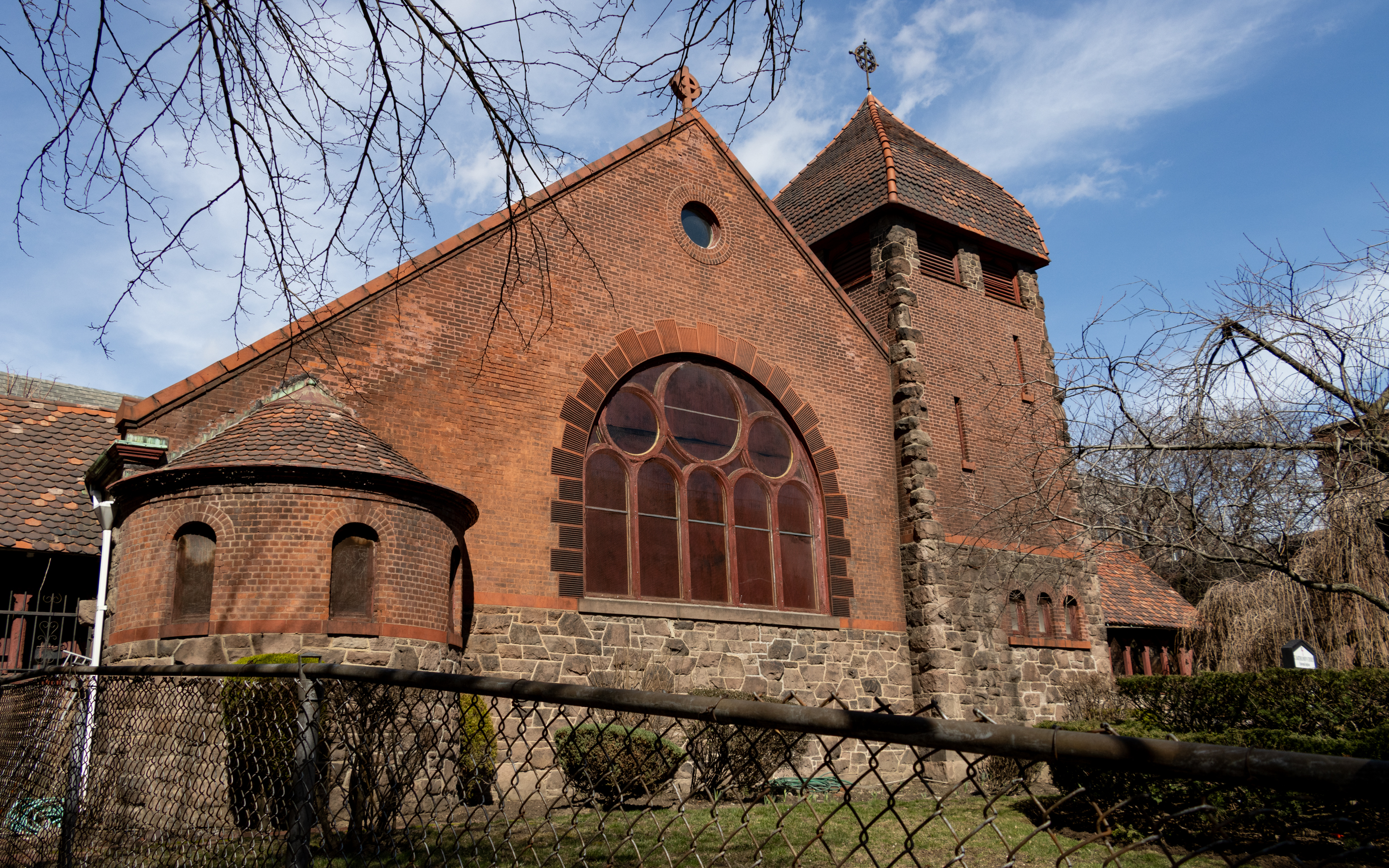
Photo of Boulevard Homes in East New York by gkjarvis



Josh,
Are you saying that other cities don’t have affordability problems? I find that hard to believe, actually (unless you’re talking about depopulated cities like Detroit that have a large, if deteriorating, housing stock). And in NYC, you certainly can live somewhere for $300 per month — doubled up or more in a room, or even sleeping in shifts (yes, people do that).
Of course there needs to be more housing created. That isn’t the question. The question is whether the housing that is created will be affordable to people below median income.
Are you really proposing eliminating zoning? It’s hard for me to imagine you would like the results. In any event, Brooklyn has long been zoned for much denser development than it has gotten. But higher density development has only gotten underway as part of LUXURY development, not affordable/low income development. Developers want to build densely when they stand to reap enormous returns — ie, by putting high rise condos in desirable nabes like Fort Green, Park Slope, etc. Most of the affordable housing created in the past couple of decades has been very low density — viz, Nehemiah Housing in East New York.
Personally, I’m against rent control/rent stabilization, because these programs easily end up benefiting the wrong people, and do discourage construction (ie, a reluctance to invest in residential development because of concerns about limits on return). Boosting low income people’s ability to enter the market through vouchers will further stimulate development. I don’t see why one needs to assume a FIXED stock of housing, as you do, in the context of significant expansion of the Section 8 program.
Again, I think the housing crunch for low income people is directly related to extreme income inequality. I believe that wherever you have extreme inequality, you will have ample housing options for the wealthy and zip for the rest.
SPer,
There’s a great paper done a while back, I think the last name was “Glazer” , maybe “Glaser”. He did work analyzing how zoning and use limits affect cost and it was a very strong link. I think the results are pretty compelling.
There is a lot of building here now, but for a city this size we are at the bottom end of units constructed by population. Whenever you see the price of resell being so much higher than the cost of construction you have to ask “why”?
You are right in that there will always be some people who are so poor that they cannot afford anything or very much. But when you have a tightly fixed supply like this you create many more disenfranchised people as housing gets bid up. Especially when we have so many high earners here. If you have three apartments and four people…
And when you look at other cities, you can rent something for $300 a month and make $15k/ year. Yes, that’s poor, and that’s a shitty life, but those options don’t exist here as restrictive supply has forced them out.
And, if you’re not convinced yet. Just try to play through what would happen if every poor person in the city just got a $2k/mo rent voucher. We still have the same fixed stock of housing. You would need to create more housing for it to make any difference.
Exactly right, SPer.
Section 8, as a program, was set up to eliminate the abuses easily found on both the landlord’s and tenant’s side of low income housing. Landlords have to meet inspection standards that are pretty high, and sometimes even pettily exacting. Tenants are screened, so that only the most “deserving” are in the program. Provisions are set up so that both landlords and tenants who do not abide by the rules are kicked out of the program. I know several people who have section 8 tenants, and find them to be better tenants than some of their market rate tenants.
Of course, there are occasionally horror stories on both sides, but there are certainly plenty of tenants and landlords from hell in the free market as well. Section 8, like the words “the projects” and “welfare” always seems to bring to mind, and to any discussion by people who have never known them, or anyone on them, the image of the worst offenders of all of those programs. There are many, many people who have been helped by these programs, and lead productive, quiet lives. Let’s not throw out the baby with the bathwater. Unlike the vast majority of Brownstoner readers, not everyone can afford market rate housing, and there just isn’t enough to go around. As a supposedly enlightened society, we should be prepared to help anyone to get a decent roof over their head. I hope the McArthur money produces real and tangible solutions and ideas that can be implemented asap.
I’d like to see the government extend those 2/5 subway lines extended out to flatlands/mill basin…there is a lot of under developed geography out there…let the market supply some more housing accessable to good jobs in Manhattan and Downtown Brooklyn.
now you’re mixing different topics Brownstoner.
Low-income people can’t even afford rs/rc apts.
And freemarket has never been able to build housing for low-income and never will — the believers in free-market don’t even claim that – they just think enough high-earners will vacate dated/obsolete housing in favor of new units that low income can take over old.
But Josh, right now we have upzoning in the absence of any requirement to provide low income housing — none of the new towers in Brooklyn going up right now (everything in Dumbo, everything on 4th Ave) have apartments for low income folks.
You can upzone all you want, but if developers primarily build only for people making over the median income, you will always have 50% of the population who cannot afford these apartments. Apparently there’s not as much money to be made in low income housing. Therefore, none gets created without government incentives.
As for inflationary pressures, aren’t those coming just as much from those who are being extremely well compensated for their labor in the current economy? What’s making housing unaffordable in Prospect Hgts, Gowanus, the South Slope — all areas where low income people used to be able to find a place to live? Isn’t the inflationary pressure coming from top earners? And you’re worried about inflation coming from low income people with vouchers?
Part of the housing crunch is due to the fact that the lowest earners in our society don’t earn enough to afford decent housing. That’s been a problem for many decades — that’s why we have public housing projects. I’m not saying that public housing or rent control are the right ways to intervene in the market, but the fact is that the housing market does not provide for low income people. We have to have government intervention.
Definitely a better idea than what we have now with RC/RS/Mitchel Lama/etc etc.
But, throwing more money at existing housing stock in high density area will only raise prices. It would just be inflationary.
I think efforts need to be made to increase supply of housing. That would mean stopping downzoning and opening up more areas to development. If we want more affordability, we should have an “upzoning” movement.
That’s the problem: lots of landlords don’t take Sec. 8. They don’t want the scrutiny from HUD inspectors or the other bureaucratic hassles. For vouchers to really work in NYC landlords would have to be required to take them (and to renew leases).
Fair enough. We’re talking about vouchers completely replacing rent control and rent stabilization.