
PACC Spins Out Another Affordable Housing Project
[nggallery id=”24677″ template=galleryview] The Pratt Area Community Council has launched the website for its latest affordable housing venture called The Gates Cooperative. Located at 566 Gates Avenue between Tompkins and Throop in Bed Stuy, the five-story brick building will have 34 units, mostly 2 bedrooms. Construction is not complete yet (four months to go apparently)….

[nggallery id=”24677″ template=galleryview]
The Pratt Area Community Council has launched the website for its latest affordable housing venture called The Gates Cooperative. Located at 566 Gates Avenue between Tompkins and Throop in Bed Stuy, the five-story brick building will have 34 units, mostly 2 bedrooms. Construction is not complete yet (four months to go apparently). Here’s how the 34 units break down: 11 two-bedrooms at $87,000; 10 one-bedrooms at $150 000, and 13 two-bedrooms at $157 000. There is no difference at all in the 2-bedrooms, only who qualifies income-wise. The prices were determined by Area Median Income (some at 80% of AMI, some of 110%). Other restrictions: Half the units are reserved for Community Board 3 residents, and there’ll be two information sessions, one on September 29th, one on October 23rd, both at the Restoration Corporation on Fulton Street. As usual, he units will go through a lottery. — Rachel Chang
186 Washington Avenue [Corcoran] GMAP


Yeah… ya see, I’m not excited about supporting a “brief mandatory residency period complete with tax abatements” if that just means the housing prices quadruple (or more) when the homeowner leaves the neighborhood with a windfall.
Help lower income folks buy in their neighborhood… for a little while. And then get priced out.
If something is gonna be market-rate in a very short period of time (and that’s less than 15 years or so in my head)… then what’s the point? Make it market-rate from the beginning… let the market decide where to build… and actually collect taxes.
What Chaka describes is almost sinister.
The rules vary by development
In some, the buyer shares resale profits on a declining scale. For example. A buyer reselling within three years of buying would pay 100% of profit back to the developer. For resales occurring during between the 4th and 15th years, 50% of profit goes back to developer. Years 15-25, 25% of profit, etc. The resale price is whatever the market will bear.
In some developements the only restriction is income related, you have to sell to someone who qualifies under the same guidelines you qualified under. If you had to fall withing 195% of Area median income, so would any prospective buyer. This type of restricion also has a time frame, often expiring after 15-20 years. Again, resale price is limited only by what market will bear.
In cases where the owners are paying very low purchase prices to get in, it’s often b/c the building is meant to remain affordable so on resale the sales price would be restricted. These have least potential for profit taking but have the lowest barrier to entry too.
Often the restrictions on these types of buildings are tied directly to their financing. If a building is partly financed with a 25 year interest free loan from the state, for example, the restrictions are tied into that time period in order to prevent public money from becoming a quick flip windfall to the individual buyer.
ty: I don’t believe you can sell one of these places on the open market. You have to sell back to the sponsor. The sponsor resells under the guidelines. That doesn’t mean the rules can’t change in the future.
Getting one of these apartments is like winning Lotto. After a brief mandatory residency period complete with tax abatements, the owners are free to sell at market rate.
Yeah… I know, life isn’t fair. I was just pointing out my situation as a prefacing remark — i.e., I wasn’t looking to find out what the salary scales are.
I want to know what the rule are for resale.
I want to know if this is a waste of my tax dollars because the community isn’t actually being served — and this is just a gov’t subsidized vehicle for displacing lower income people.
I want to know if I should be writing letters to my city and state officials asking for accountability. Or are there rules that would allay my fears.
Life isn’t fair, tybur6, especially for the guys in the middle. Same deal when it comes to school scholarships.
sorry…wrong thread
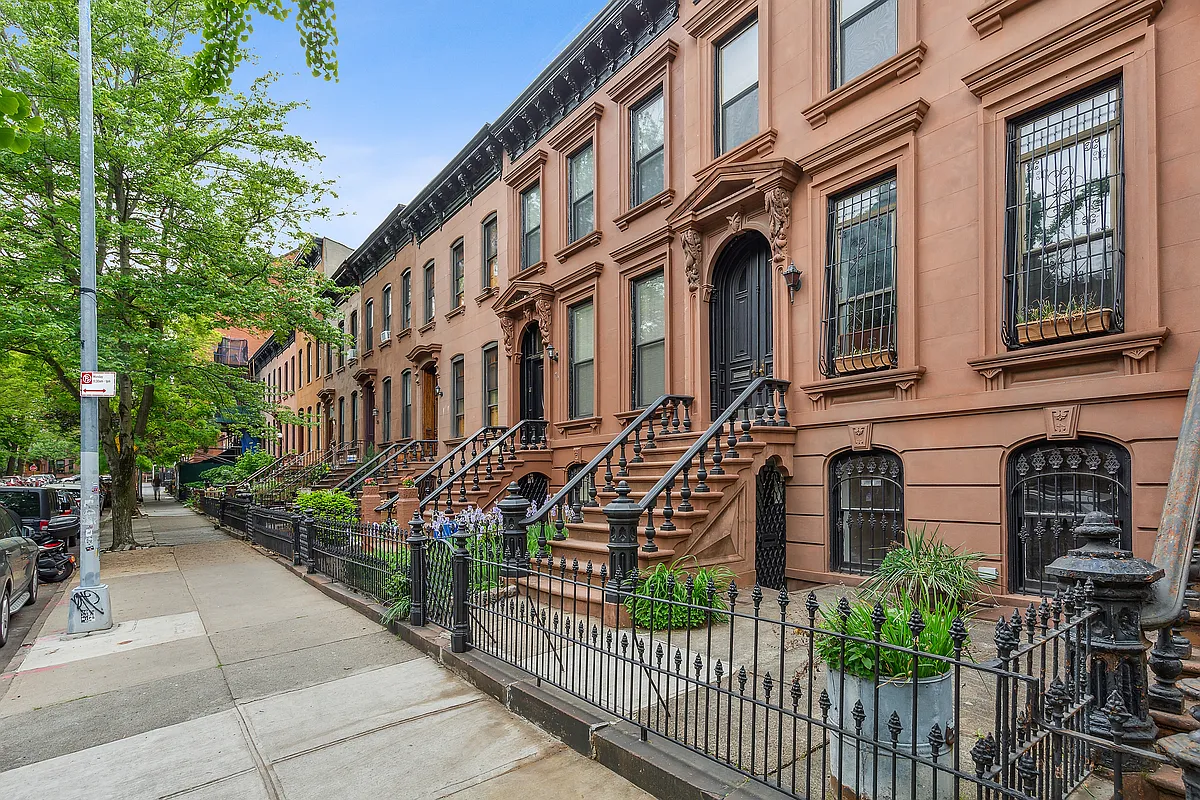
That’s a lot of house there in Ditmas Park!!! The street looks great except for that one white monstrosity with the room thing growing out of the second floor!!!!!
I’ve never gotten a clear idea about the RE-sale restrictions… if someone buys a place, are they similarly restricted on who they can sell to? What price they can ask for? Number of years to wait? and so on….
I’m in the magic donut-hole (not “poor” enough to get something like this and not “rich” enough to actually afford anything market-rate)
BUT – I am a voter and a tax-payer… I’m wondering about what my government is doing. Should I be supporting this sort of stuff?? Are these affordable home actually providing housing to people with lower incomes or are they simply for show? (i.e., Looks good on paper, but after 5 years no one with lower incomes lives in these places.)
I’m not attacking or judging here… I seriously just want to know what my tax dollars are doing. It’s not that crazy to be a little paranoid about the state of gov’t regulation (and lack of oversight) these days.