
Foreclosure of the Week: 14A Monroe Street
How’s this for fishy? The house at 14A Monroe Street in Bed Stuy sells for $325,000 in July 2003 and the buyer takes out a $570,000 mortgage at the same time. Two years later, he sells it for $950,000 to a guy who finances $855,000 of the purchase. Now it’s in foreclosure and the bank…


How’s this for fishy? The house at 14A Monroe Street in Bed Stuy sells for $325,000 in July 2003 and the buyer takes out a $570,000 mortgage at the same time. Two years later, he sells it for $950,000 to a guy who finances $855,000 of the purchase. Now it’s in foreclosure and the bank is left holding the bag. That’s what we’d call a cash machine.
14A Monroe Street [PropertyShark] GMAP
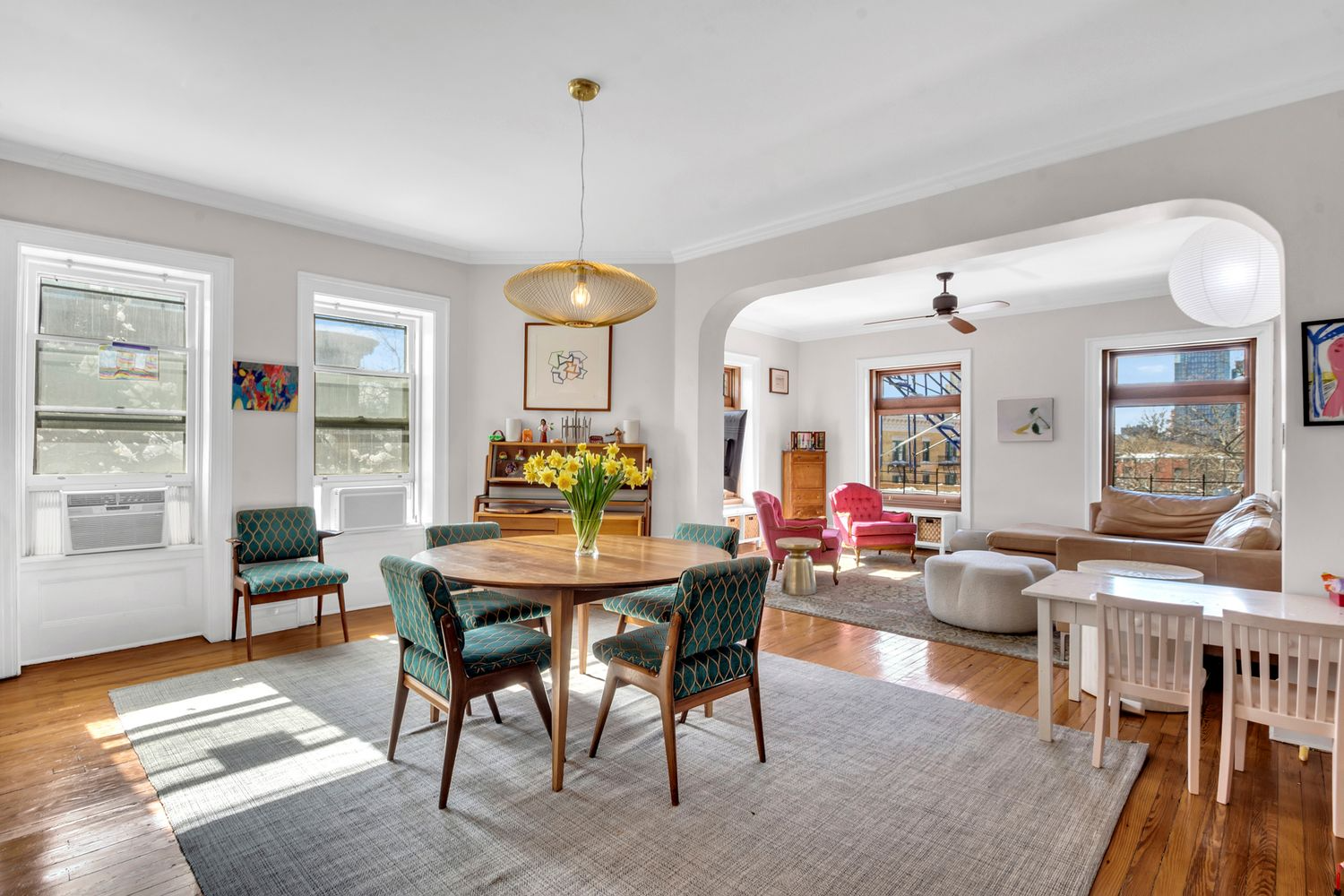



This house seems more in Clinton Hill than Bedford Stuyvesant.. Monroe St. and Classion St… I think Bedford Stuyvesant starts somewhere between Franklin and Bedford…
Its true I only live a mile and a half away from Ft Greene but I am in Stuyvesant Heights… Ft Greene were a house sold last year for 3 million+ are part of my comps. That 3 million dollar house is just a bit smaller than mine.
Its true I only live a mile and a half away from Ft Greene but I am in Stuyvesant Heights… Ft Greene were a house sold last year for 3 million+ are part of my comps. That 3 million dollar house is just a bit smaller than mine.
12:42, the bank appraisers are not blind. And they don’t even take bribes. But they know that their mortgage clients will cut them off in five seconds if they don’t bring the appraisal in at the “sale price.”
The difference between The Bronx and Brooklyn is that with the exception of Riverdale and a couple of other small areas, market values are pretty uniform in The Bronx, so fraud on this scale is rare. In Bed-Stuy, you can appraise a house on a crappy rundown block, and use comps one-half mile away on the best block, where market values could be twice as high (or more). Unless the person reviewing the appraisal is very familiar with the area, it could appear to be a reasonable report.
How can a buyer dissappear….don’t you need social security numbers, addresses, etc.
Maybe I’m naive, or just honest, but I don’t understand how people think they can get away with this.
12.42 and 12.45 here:
They bought houses with 100% mortgages at ‘market price’. They waited a bit then arranged a phony sale to a phony buyer at a massively inflated price again primarily financed. The group included appraisers and they managed to create all the documents needed to convince lazy lenders that the deals, and the buyers, were actually legitimate.
The Sellers and Buyers then split the mortgages proceeds and stop paying. The Lenders look to foreclose only to discover the property isn’t worth what they thought it was and the Buyer/Borrower has dissappeared.
Can some one explain that article about mortgage fraud in plain english.
I don’t understand how it was done.
This house would be great for a middle class family that makes under 100K year but now it has a million dollar price tag the bank will have to wait 10 years to get there money…
Not sure the link worked:
Twenty Three Indicted in New York Straw Buyer Scheme
Twenty-three individuals were indicted in the Southern District of New York on allegations that they participated in an illegal scheme to defraud various banks and financial institutions by submitting fraudulent applications and supporting documentation for mortgages and home equity loans. As
a result, the lenders were induced to make loans to persons and at terms that the lenders otherwise would not have funded. The defendants include brokers and processors who worked at the mortgage brokerages AGA Capital NY, Inc. (’AGA Capital‘) and Northside Capital NY, Inc. (’Northside Capital‘), in Brooklyn, New York, real estate appraisers and loan account executives.
As alleged in the Indictment unsealed in Manhattan federal court:
From 2004 through December 2006, Northside Capital, AGA Capital, and its successor, Lending Universe Corporation, brokered over one thousand home mortgages and home equity loans, with a total face value of at least $200 million dollars, with various banks and lending institutions. Northside Capital, AGA Capital, and Lending Universe, earned a total of at least $4 million in commissions and fees on these loans. The lenders that issued the mortgages and loans brokered by Northside Capital, AGA Capital, and Lending Universe have suffered actual losses of at least $3.5 million as a result of the defendants’ fraud scheme.
The eight-count Indictment charges the following defendants with conspiracy to commit bank and wire fraud, and several of the defendants with bank and wire fraud in connection with the procurement of seven specific mortgage and home equity loans:
…
David Neustein, appraiser;
…
As part of the fraud scheme, the defendants identified properties for sale in multiple locations including all five boroughs of New York City, New Jersey and Sullivan County, New York. The defendants typically purchased the target properties with one or more mortgages and/or home equity loans amounting to 100 percent of the purchase price of the property, thus ensuring that the defendants did not have any money at risk in the fraudulent transactions.
The fraud also involved paying individuals who fit a certain financial profile to act as phony purchasers, or ‘straw buyers’ of the target properties. The defendants then prepared and submitted false and misleading information concerning the straw buyer’s current residence, employment, income, assets, and existing debt. In support of these false and misleading representations, the defendants also created false documentation, such as bank statements and proof of income, on which the lenders relied to verify the statements in the loan applications.
In addition, the defendants sought mortgages and home equity loans for the target properties at values that were in excess of the properties’ actual sale prices and, thus, the properties’ true market values. To support applications for loans in excess of the properties’ market values, the defendants procured artificially inflated appraisals of the market value of the target properties. Using these false appraisals, the defendants received mortgages and other loans in excess of the actual sale price of the properties securing the loans. The difference between the appraised value of the property and the property’s actual sale price represented, in part, the defendants’ profits from the scheme.
The defendants distributed the profit from each fraudulently obtained mortgage loan amongst themselves for their personal gain. The defendants also earned commissions of at least 2 percent and as much as 4 percent on the fraudulently inflated loan values, in addition to fees and other monies distributed upon the closing of each property.
If convicted, each defendant faces a maximum sentence on each count of the Indictment in which he or she is charged of thirty years in jail and a fine of the greater of $250,000 or twice the gross gain or loss resulting from the crime.