
The Insider: Reimagined Interiors Modernize, Brighten PLG Limestone
A lighter palette, abundant storage, and new mechanicals including central air and solar panels were among the updates.

Photo by Erik Petschek
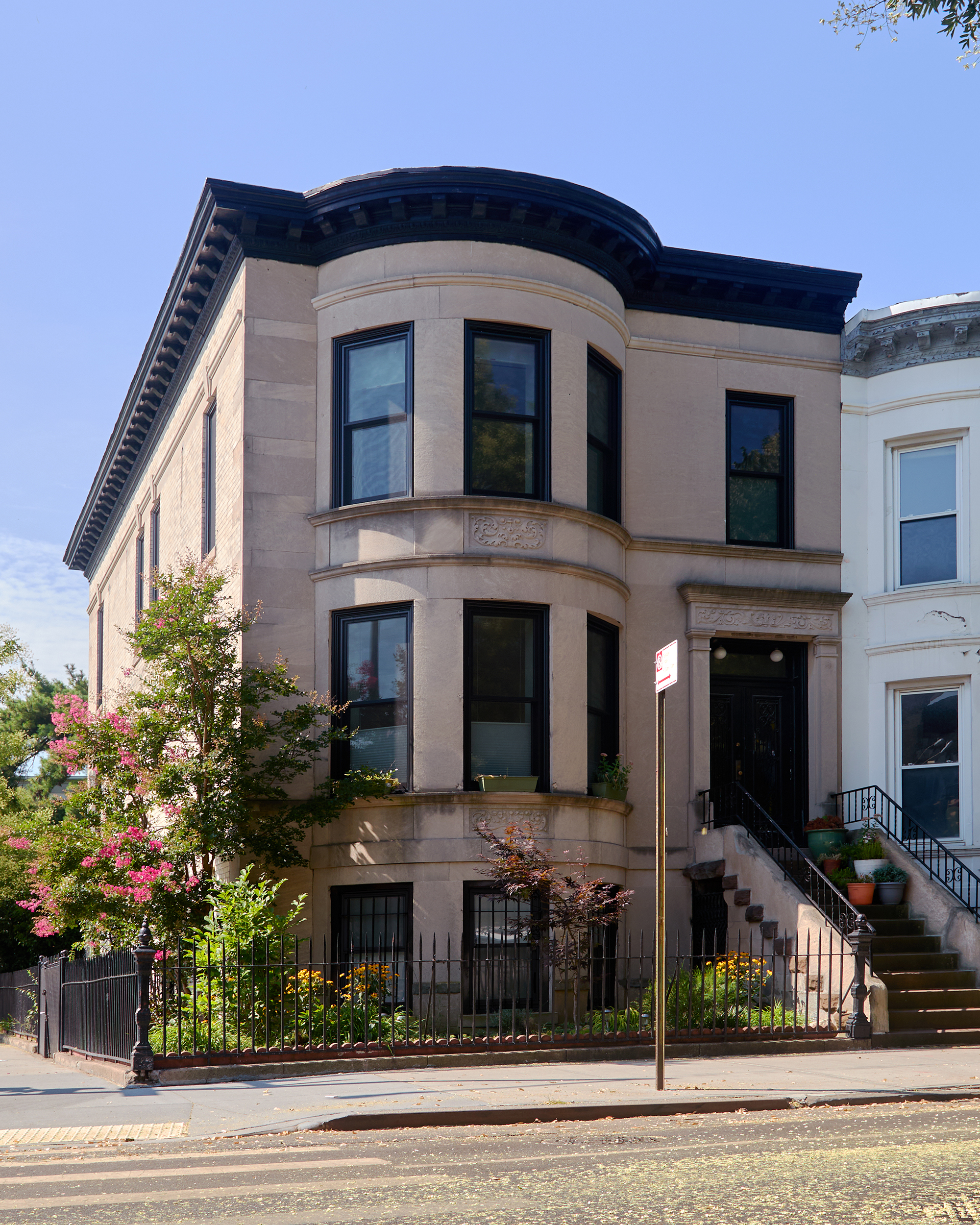
The inside of a landmarked corner house in Lefferts Manor, an enclave of stately late 19th and early 20th century row houses near Prospect Park, was wholly reinvented when new owners with a penchant for Japanese design came along. Wanting updated mechanicals, light-filled rooms, and good storage, they approached Abruzzo Bodziak Architects (ABA), to orchestrate a brighter, more functional, kid-friendly home.
“We looked at houses in the same row, trying to understand the original intent,” said architect Emily Abruzzo, partners with Gerald Bodziak in the Brooklyn- and Connecticut-based firm they founded in 2009. “Most of them had been renovated over time. Our clients’ house had some original details and some things that had been changed.”
Among the original features, they discovered, was a shallow curved cove at the ceiling, along with high wainscoting and heavy woodwork. “It was dark, and didn’t feel right for them,” Abruzzo said. They ended up keeping a few original elements, including flooring, stair rails, and a fireplace surround. “The stuff we invented or translated, as in the case of the cove, we tried to keep in the spirit of the original, but lightened and modernized. We see it as a modern, minimal interpretation of what was there.”
The new design language includes more generously proportioned curved ceiling profiles, fabricated of GRFG (glass fiber reinforced gypsum) and finished with on-site plaster craft. New wainscoting, referencing the taller original, is light oak rather than dark lacquered wood.
Thanks to layout changes that created a bigger kitchen, along with a consistent materials palette of white oak, white-painted woodwork, terrazzo, and cast plaster, the overall feeling of the house is light, serene, and informal.
Totally new mechanicals include conversion from gas to all-electric, a ducted heat pump system with hidden diffusers for heating and cooling, and solar panels on the roof. Old windows were replaced throughout with energy-efficient ones.
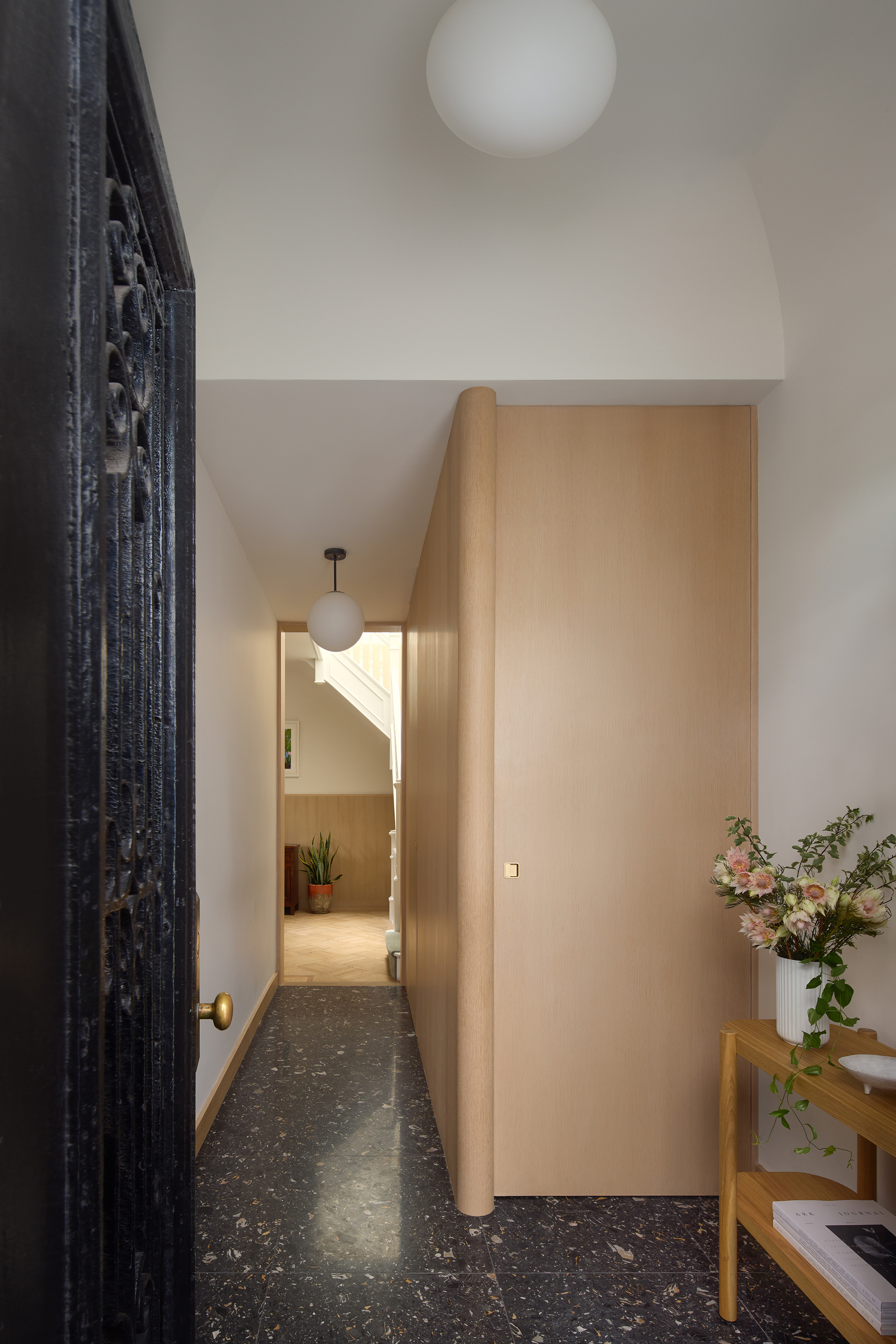
At the entry, a tight vestibule with shallow closets was replaced with a long white oak volume for coats and a tucked-away powder room, a brand new insertion. In traditional townhouses, there would be a door to the left into the front parlor. The front parlor is there, with the entrance to it at center of the house, where the staircase is.
The architects chose sturdy terrazzo floors for high traffic areas throughout the house.
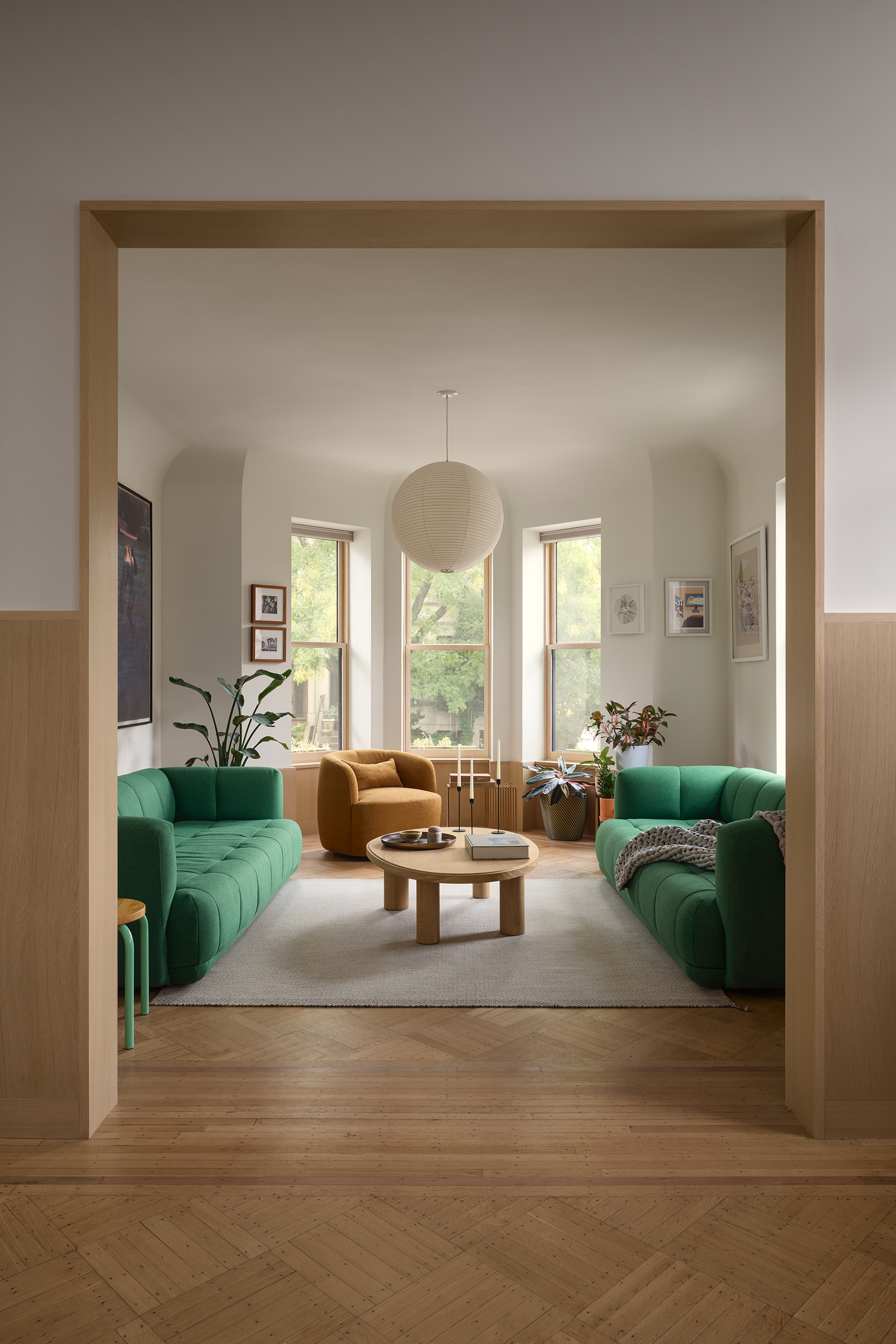
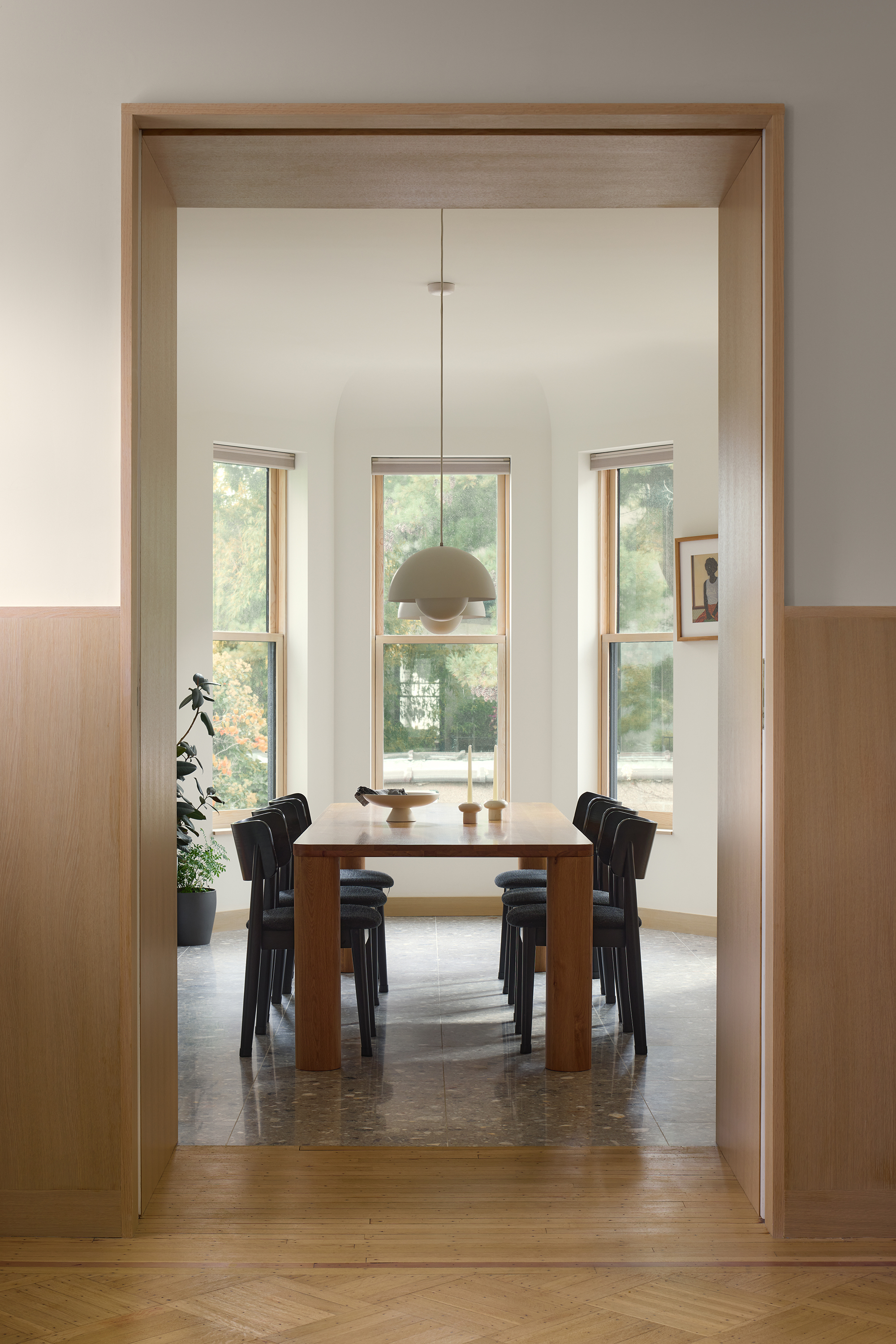
The parlor level rooms are a sequence of spaces framed by wood-trimmed cased openings, some (but not all) close to their original size and placement.
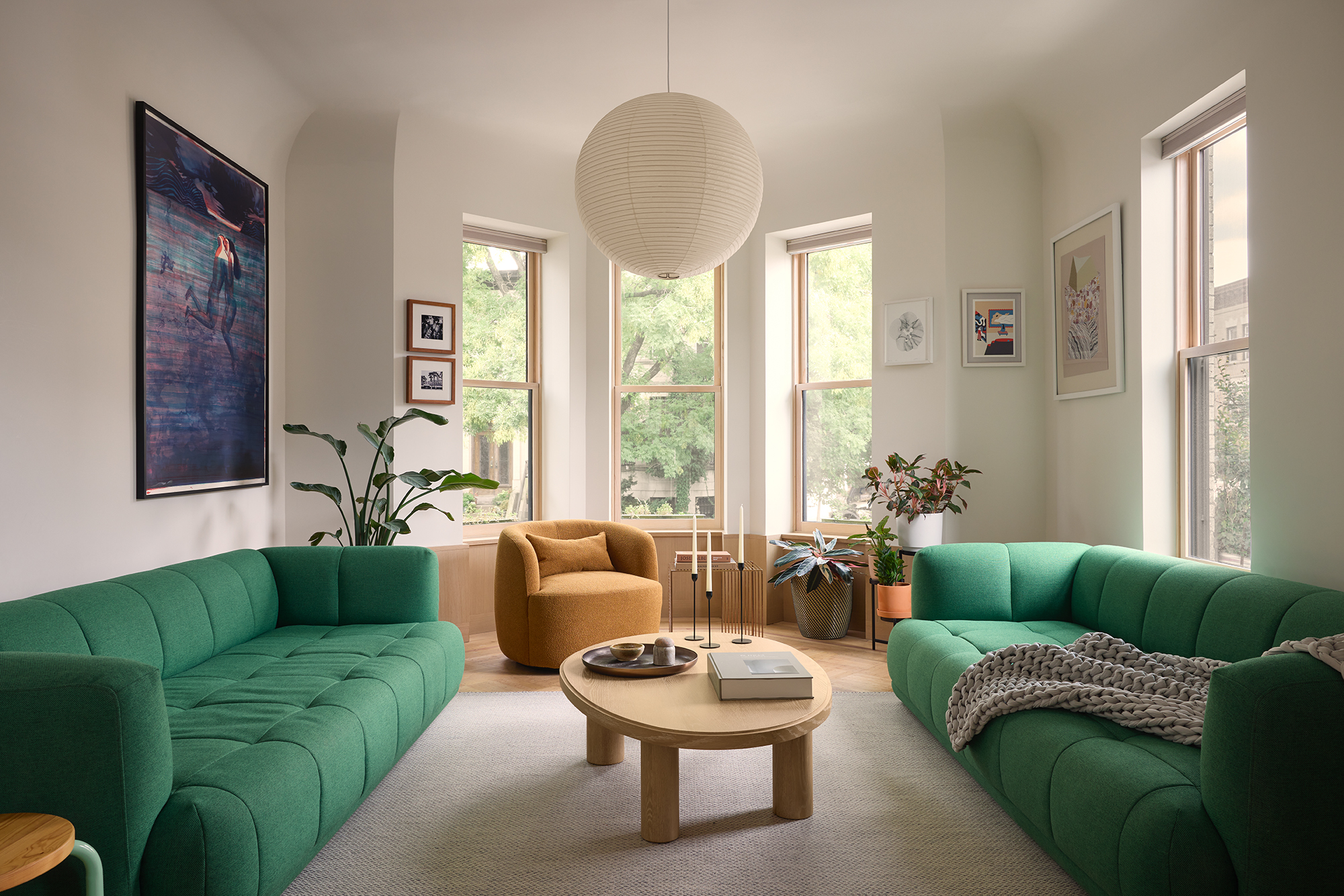
The homeowners, who work in design-adjacent fields, selected the furnishings — among them, the front room’s bold green sofas from HAY’s Quilton system.
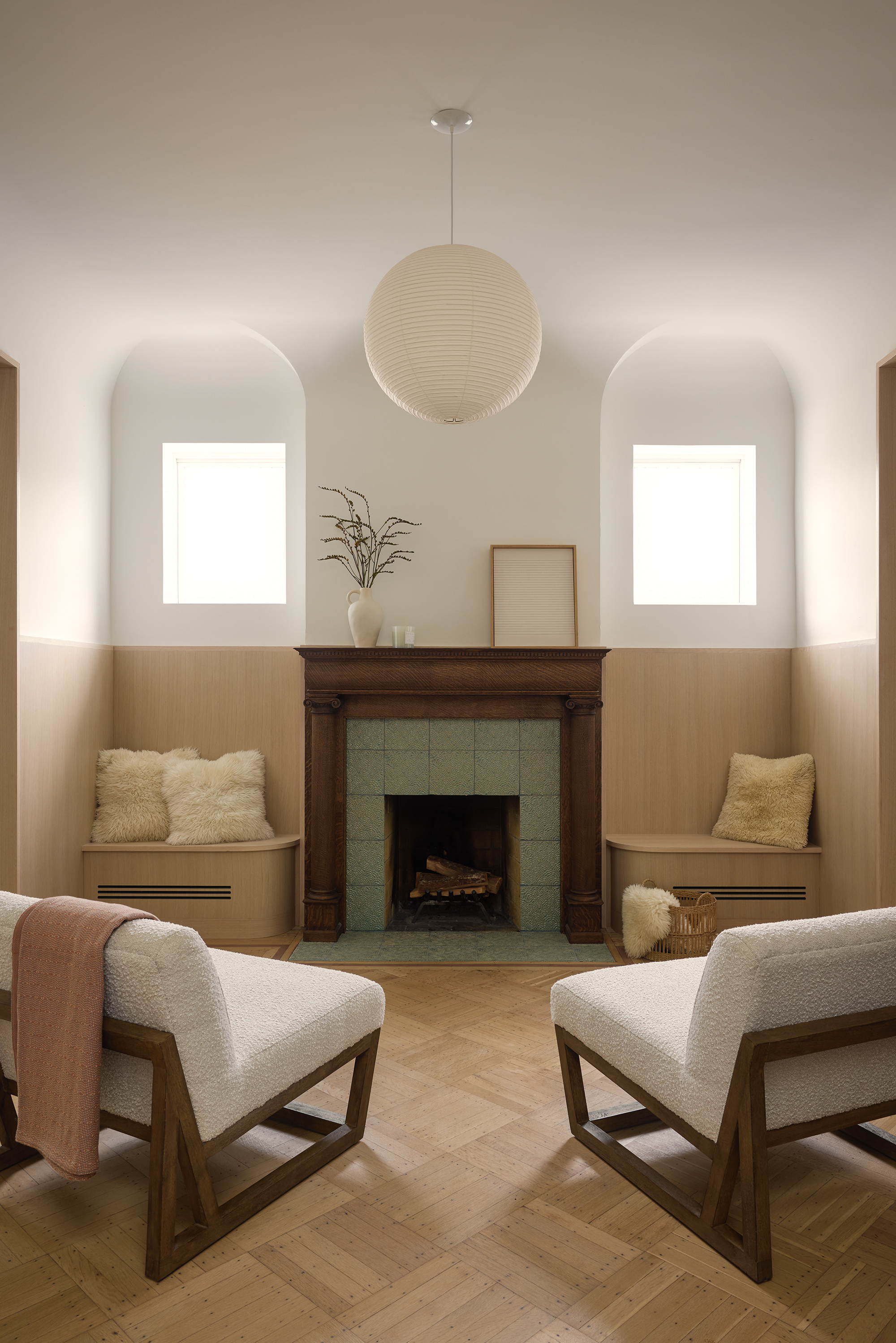
What is essentially a pass-through between the front parlor on the left and kitchen on the right became one of the most pleasing spaces in the house. ABA removed bookshelves on either side of the fireplace, which was spiffed up with handmade tile from Anne Sacks, and replaced them with small benches for extra seating that also serve to conceal HVAC equipment.
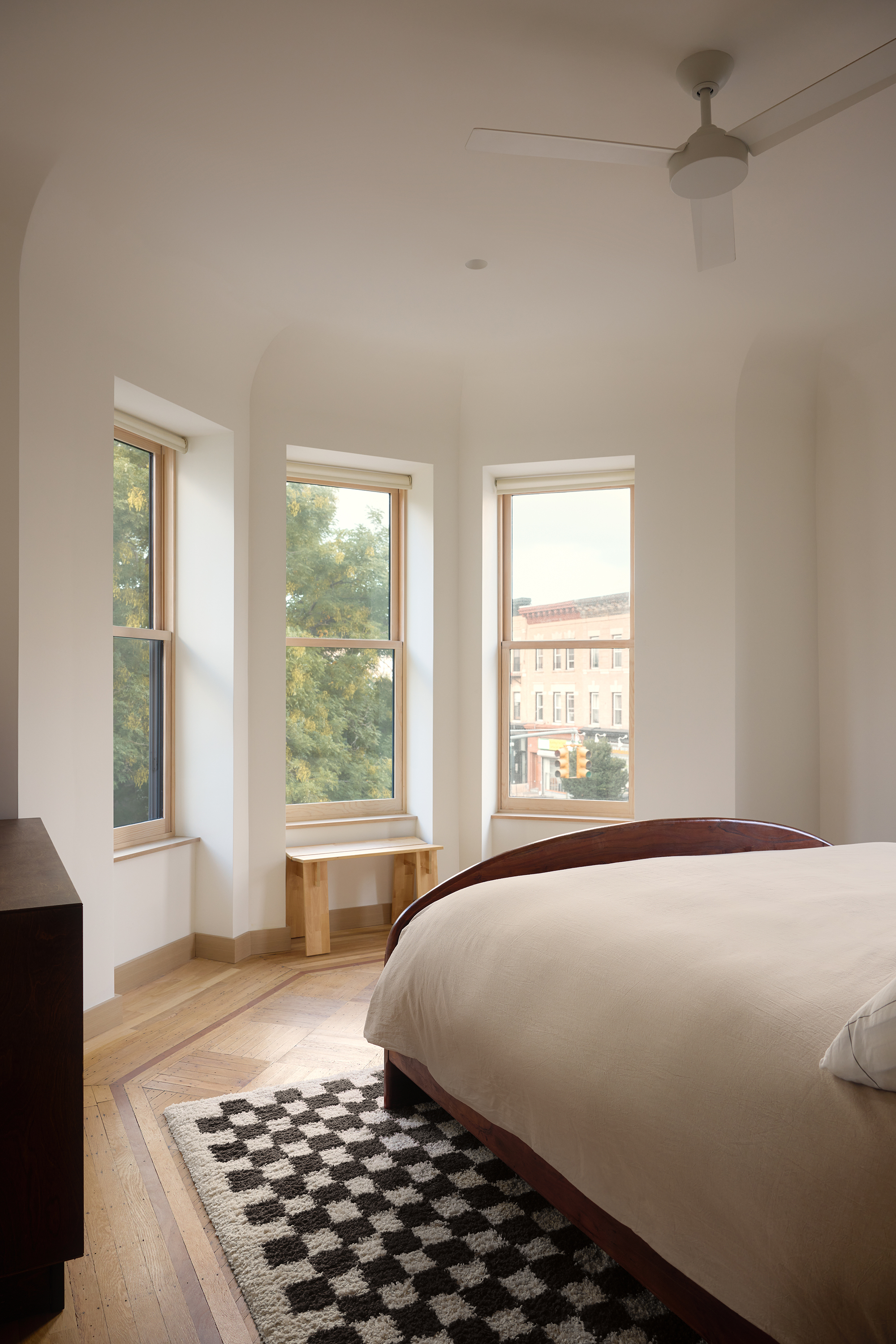
The original window openings remain, now crowned with arches that are the harmonious result of the 16-inch ceiling curve.
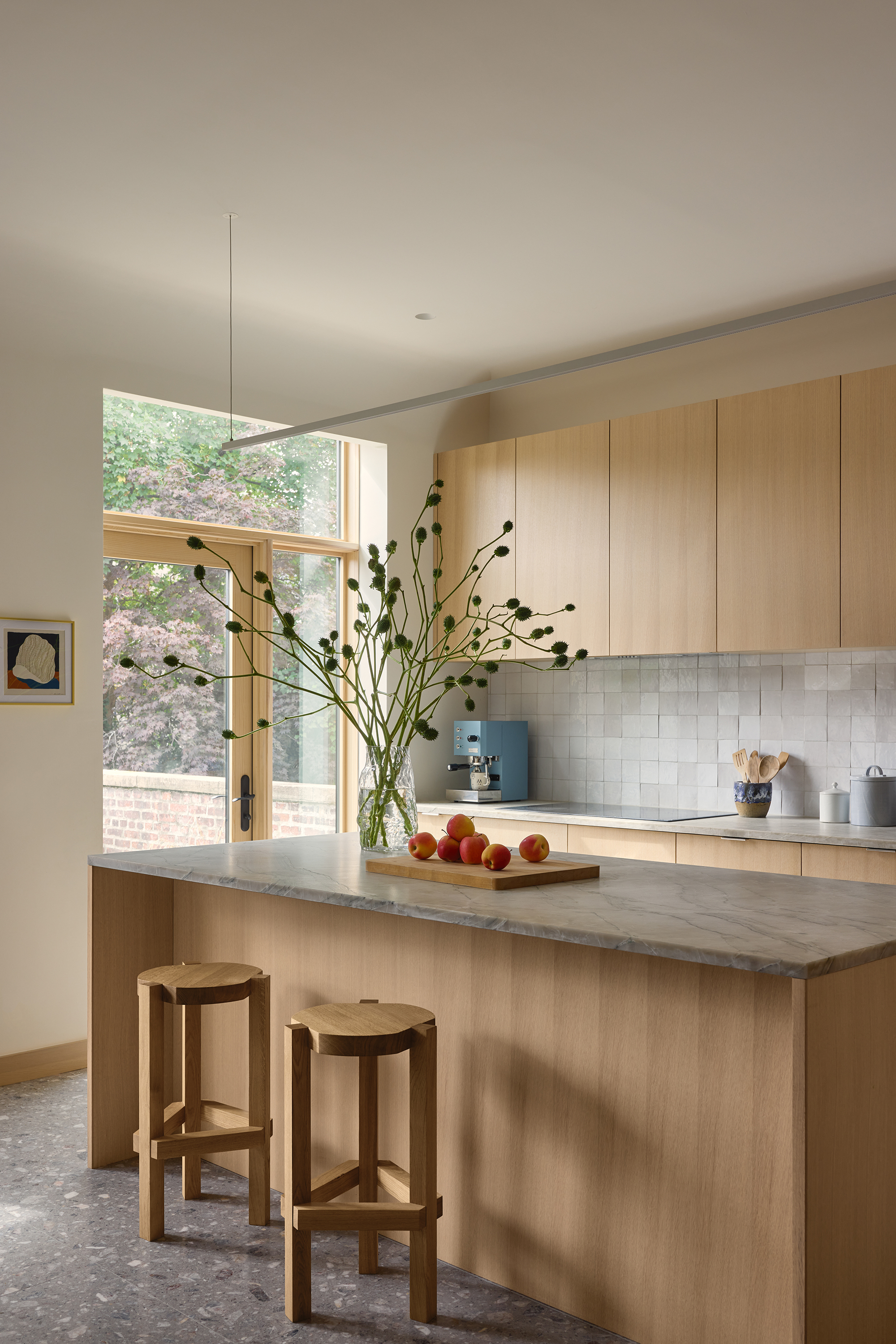
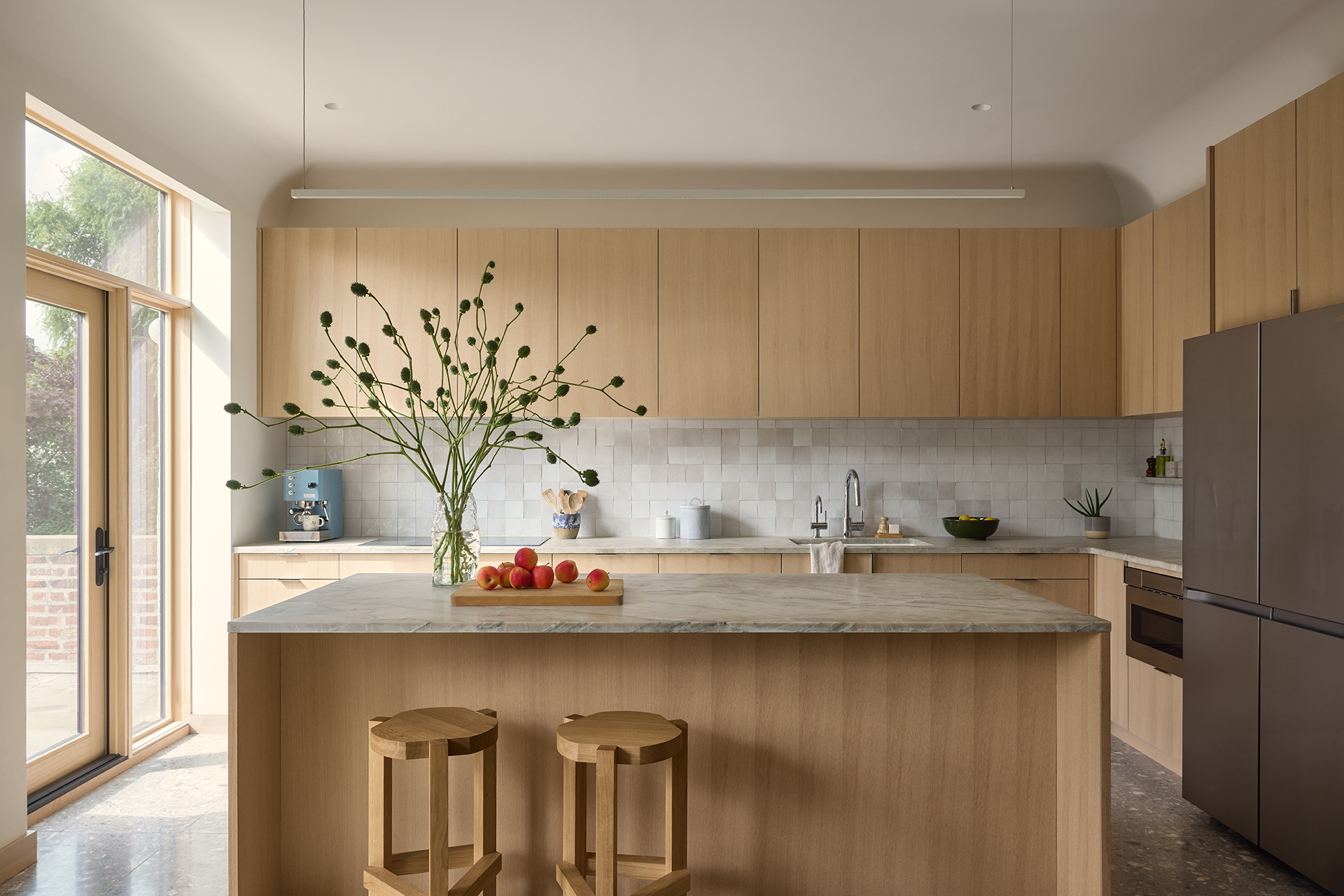
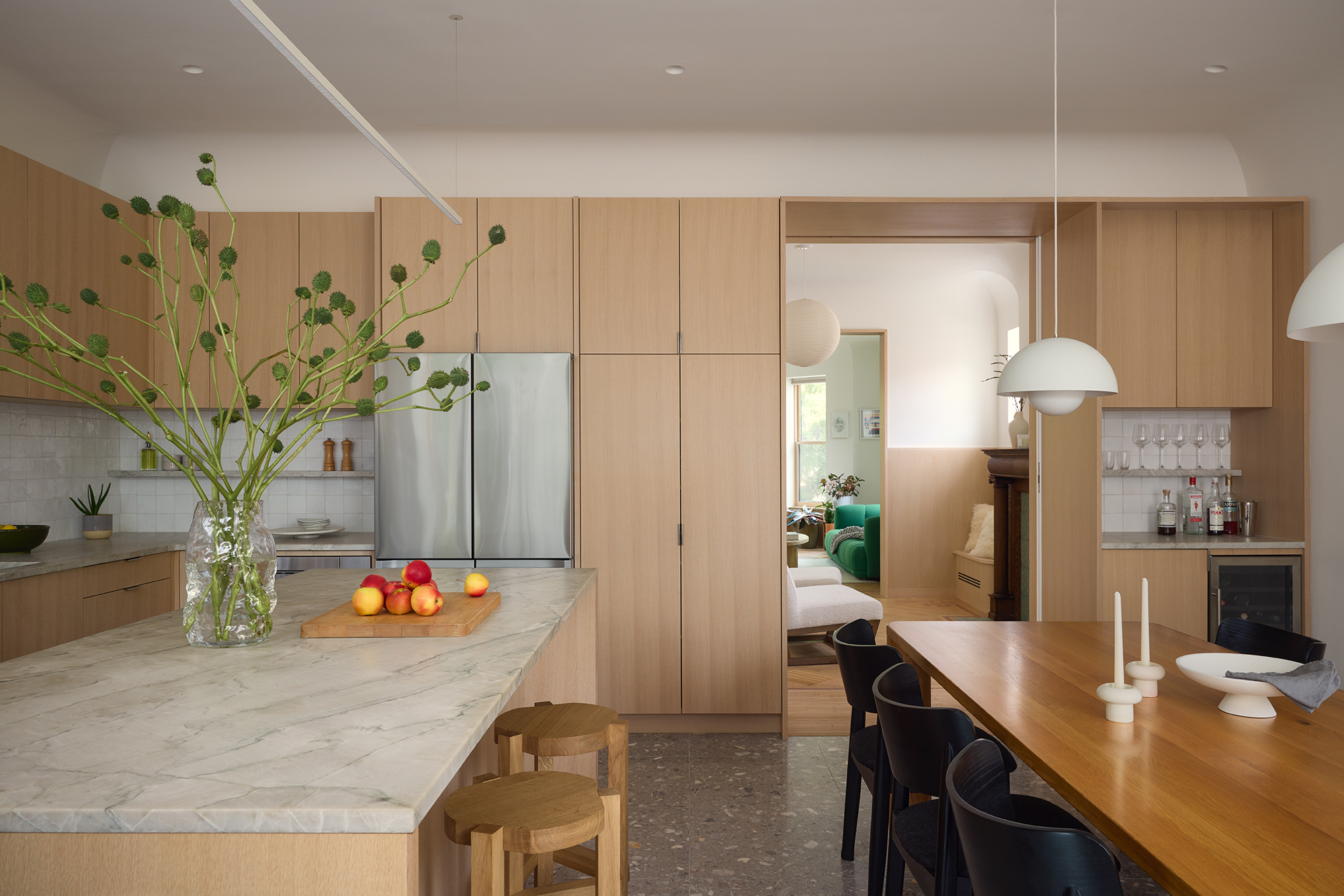
Tiny galley kitchens were the order of the day when these houses were built. “There was a trace of it, with a big soffit that had only been partially removed,” recalled Abruzzo. “We opened the whole room to the full width of the house.”
Wall to wall white oak cabinetry contains a wealth of storage. Veined quartzite countertops, a handmade tile backsplash, and terrazzo flooring from Naturali Stone bring in pattern and texture.
The window bay in the back wall frames the dining area.
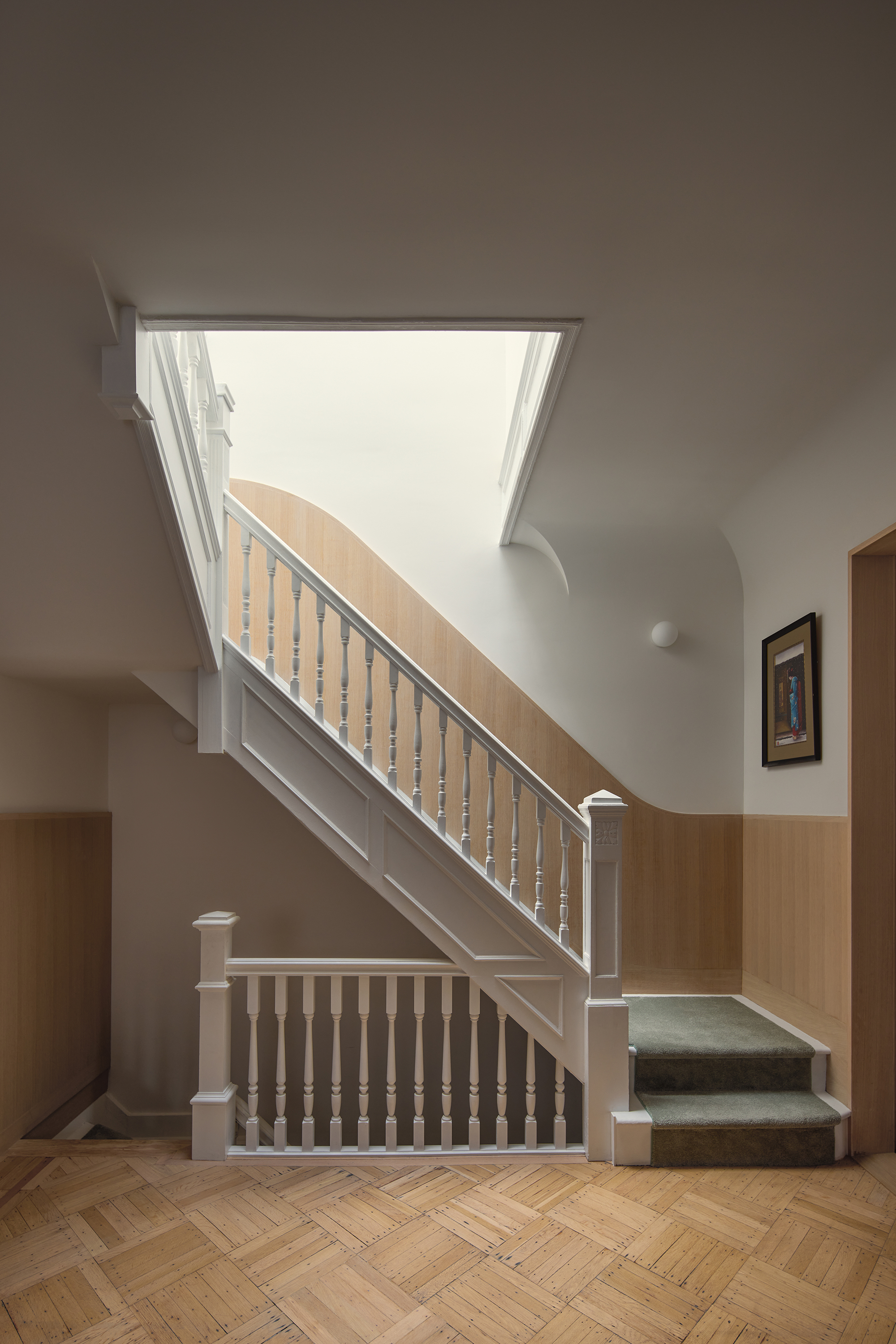
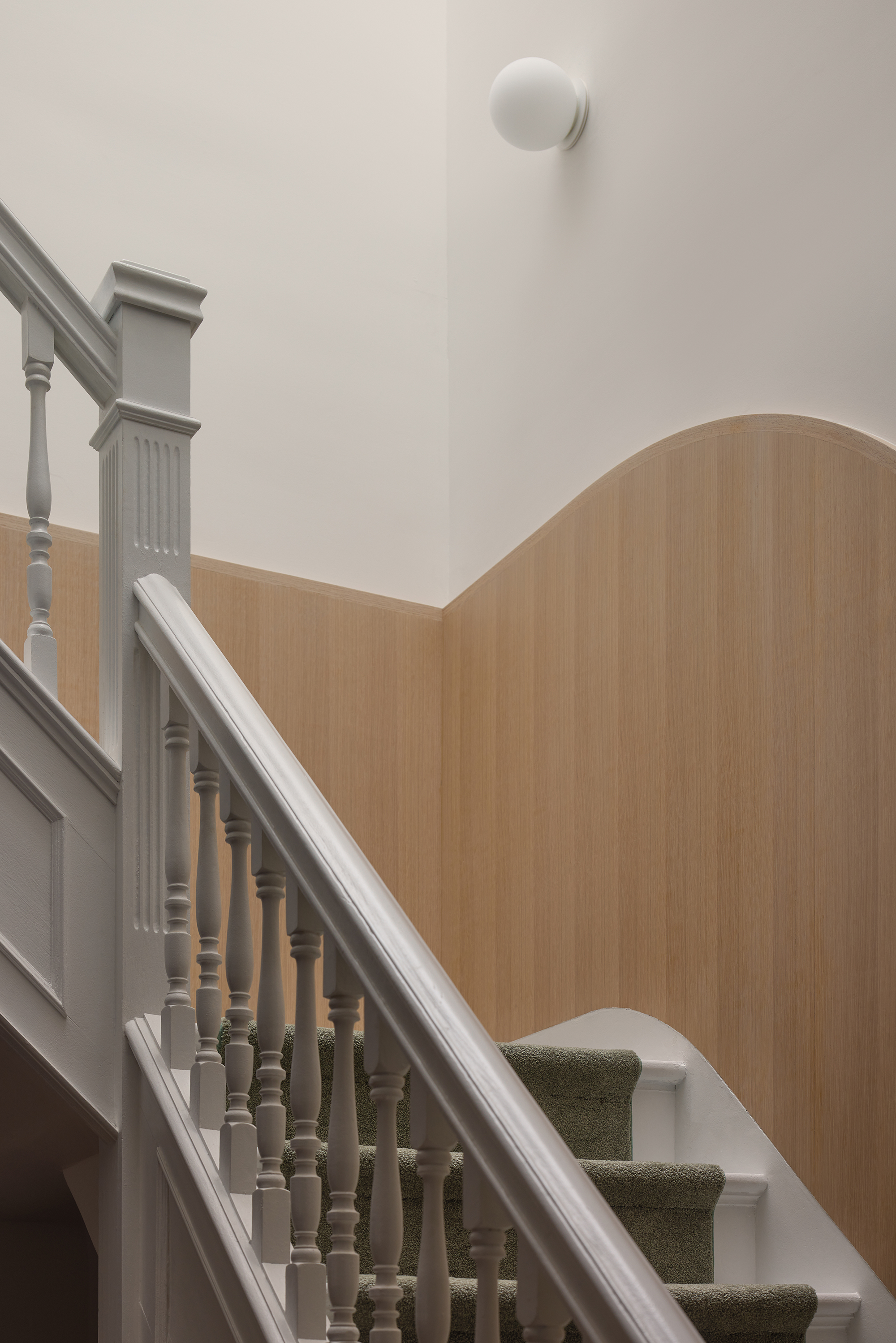
The central staircase was in sound structural shape. Wainscoting of white oak veneer plywood follows the stairs in playful curves to the top of the house. The railing is new, replicated to the match the original.
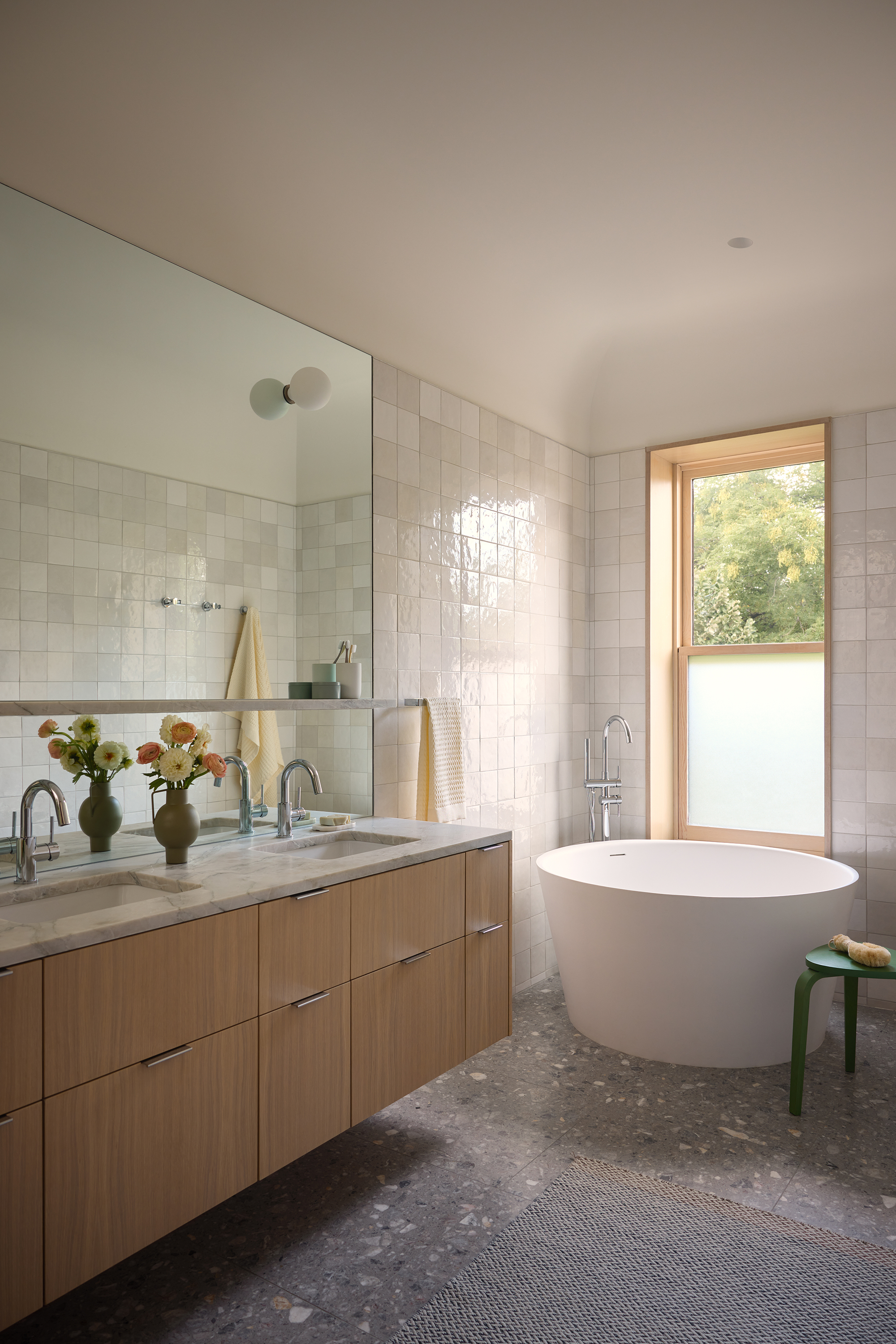
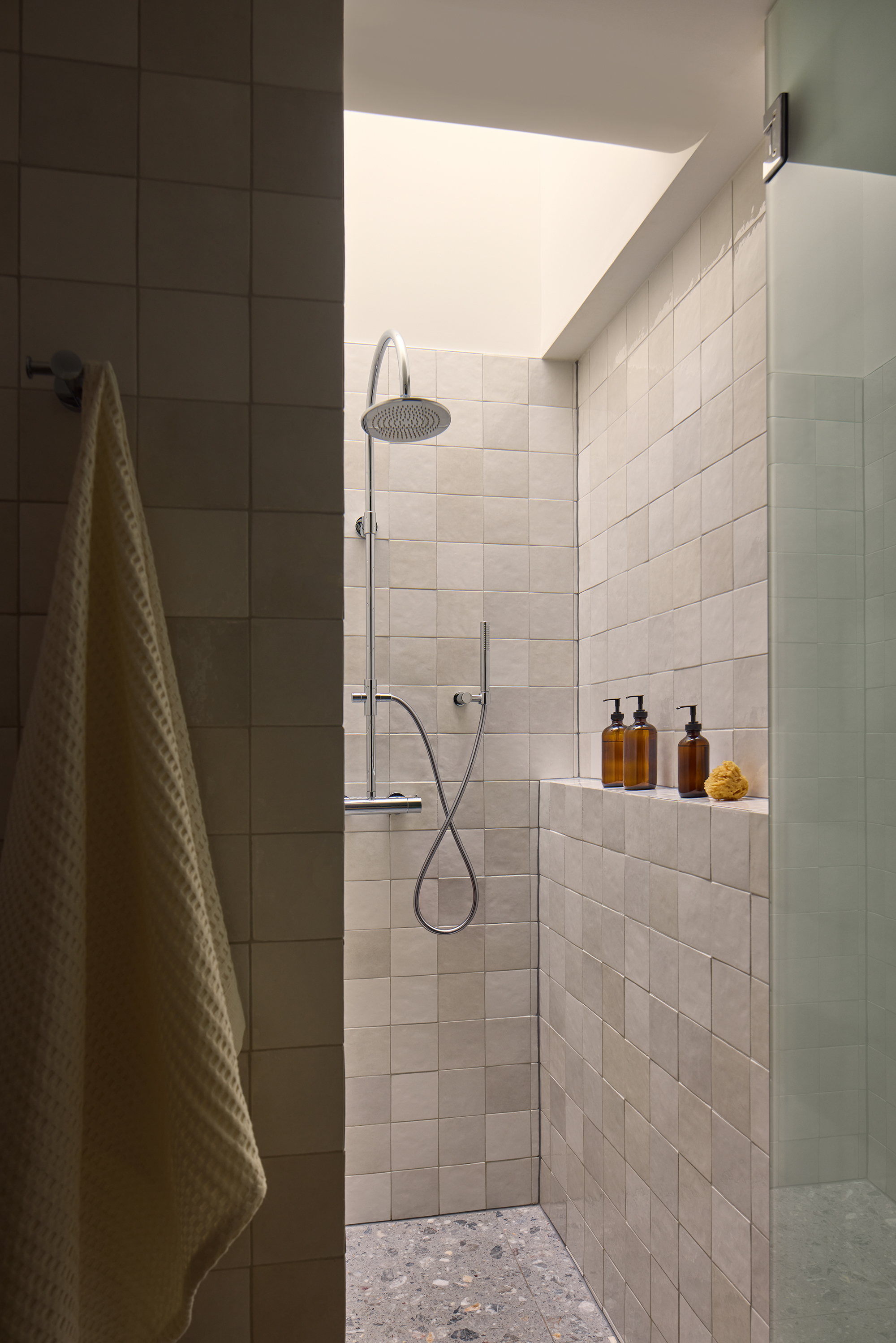
The kitchen’s materials palette extends to the primary bath: white oak and quartzite for the vanity, handmade wall tile, and terrazzo flooring. The soaking tub is Japanese style.
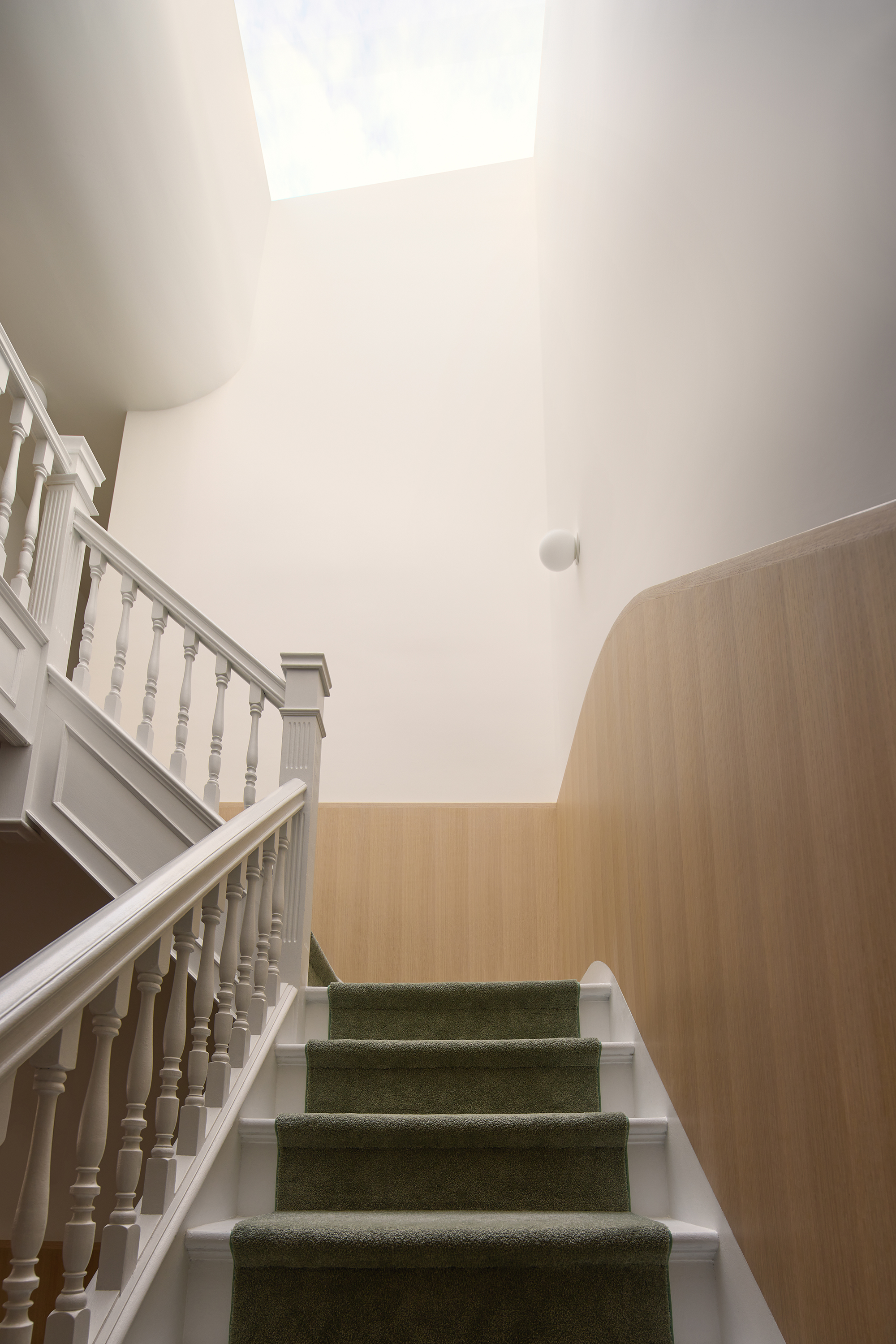
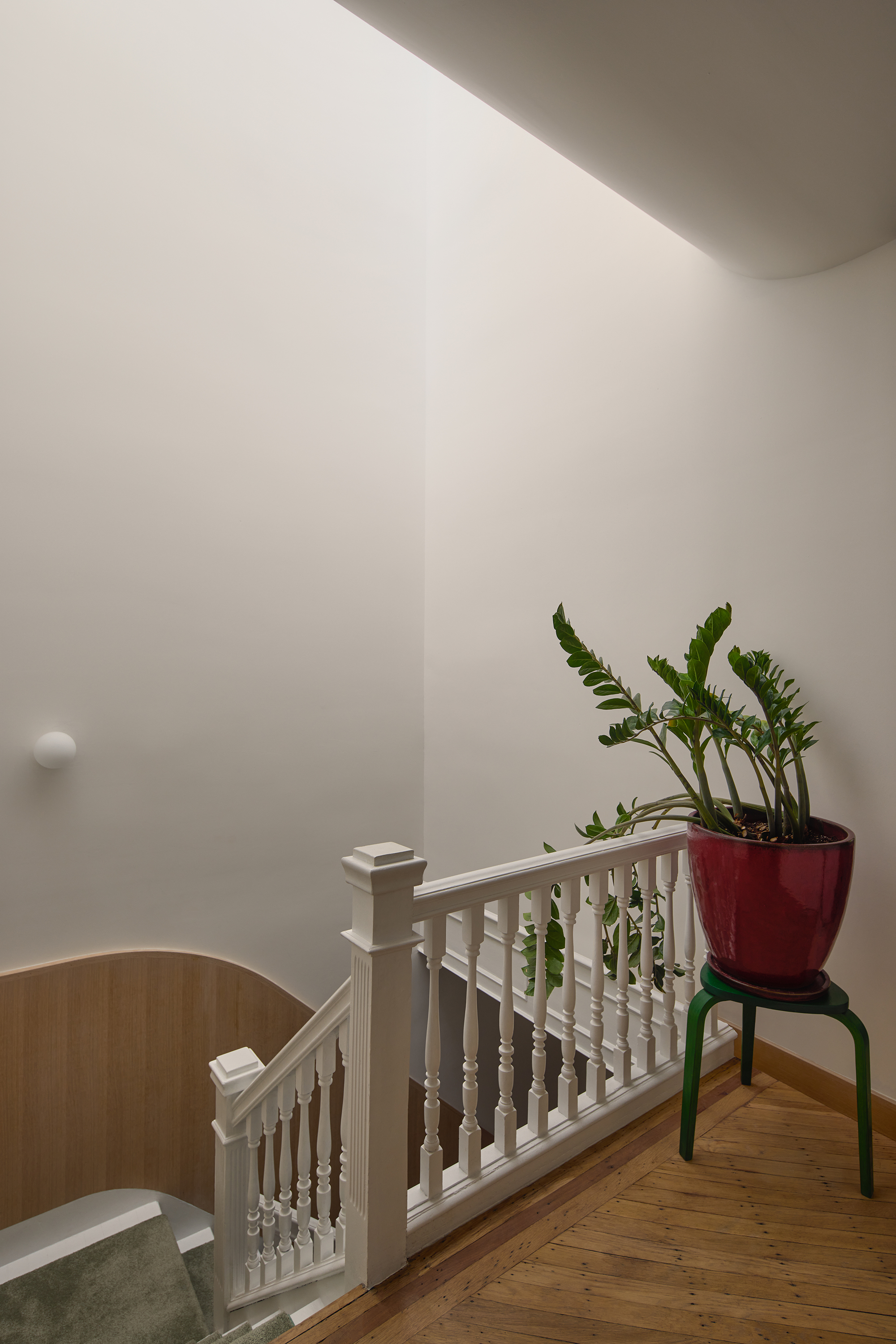
“We took out the ceiling in the stair hall and made the whole ceiling a skylight with a glass skylight system,” Abruzzo said. “It brings in so much light. It changed the house dramatically at relatively low cost.”
[Photos by Eric Petschek | Styling by Krystin Petschek]
Got a project to propose for The Insider? Contact Cara at caramia447 [at] gmail [dot] com
The Insider is Brownstoner’s weekly in-depth look at a notable interior design/renovation project, by design journalist Cara Greenberg. Find it here every Thursday morning.
Related Stories
- The Insider: Greenpoint Reno Yields Unique Aesthetic, Flood Protection
- The Insider: Colorful Paint and Tile Lead PLG Row House Reno
- Brownstoner’s Top 10 Insiders of 2025
Email tips@brownstoner.com with further comments, questions or tips. Follow Brownstoner on X and Instagram, and like us on Facebook.

What's Your Take? Leave a Comment