
The Insider: Dated Park Slope Prewar Becomes Stylish Live-Work Space for Two
The new owners of this two-bedroom apartment were determined to preserve and enhance the Art Deco details.

Photo by Hanna Grankvist
The Art Deco-era details were subtle — a curved wall in the kitchen, arched openings between rooms, a fluted glass panel — but the new owners of this prewar apartment with an integrated professional office were determined to preserve and enhance them. The vintage touches provided a taking-off point for the redesign of the dated ground floor space, with the aim of creating an airy, comfortable, and functional apartment for two.
The clients, an artist and a museum curator, “have a lot of visual expertise and wanted to keep the feel of the space,” said Sarah Jacoby, a Long Island City-based architect known for her use of color and sensitivity to original detail. “They really appreciated the arched openings throughout, the old doors and moldings, and the narrow wood strip floors.”
Jacoby thoroughly updated the two-bedroom, two-bath apartment, which also has a separate dining room as well as a one-time therapist’s office, now an art studio. She enlarged and reoriented the kitchen to better connect with the rest of the apartment, completely overhauled two tiny existing baths, and rejiggered the layout. “There was a warren of closets and smaller rooms, very inefficient. We simplified the sequence of openings and shifted them around based on the new circulation.”
Jacoby’s team emphasized the arched openings throughout, changing the proportions of some as needed and adding a new one to open the living room to more light.
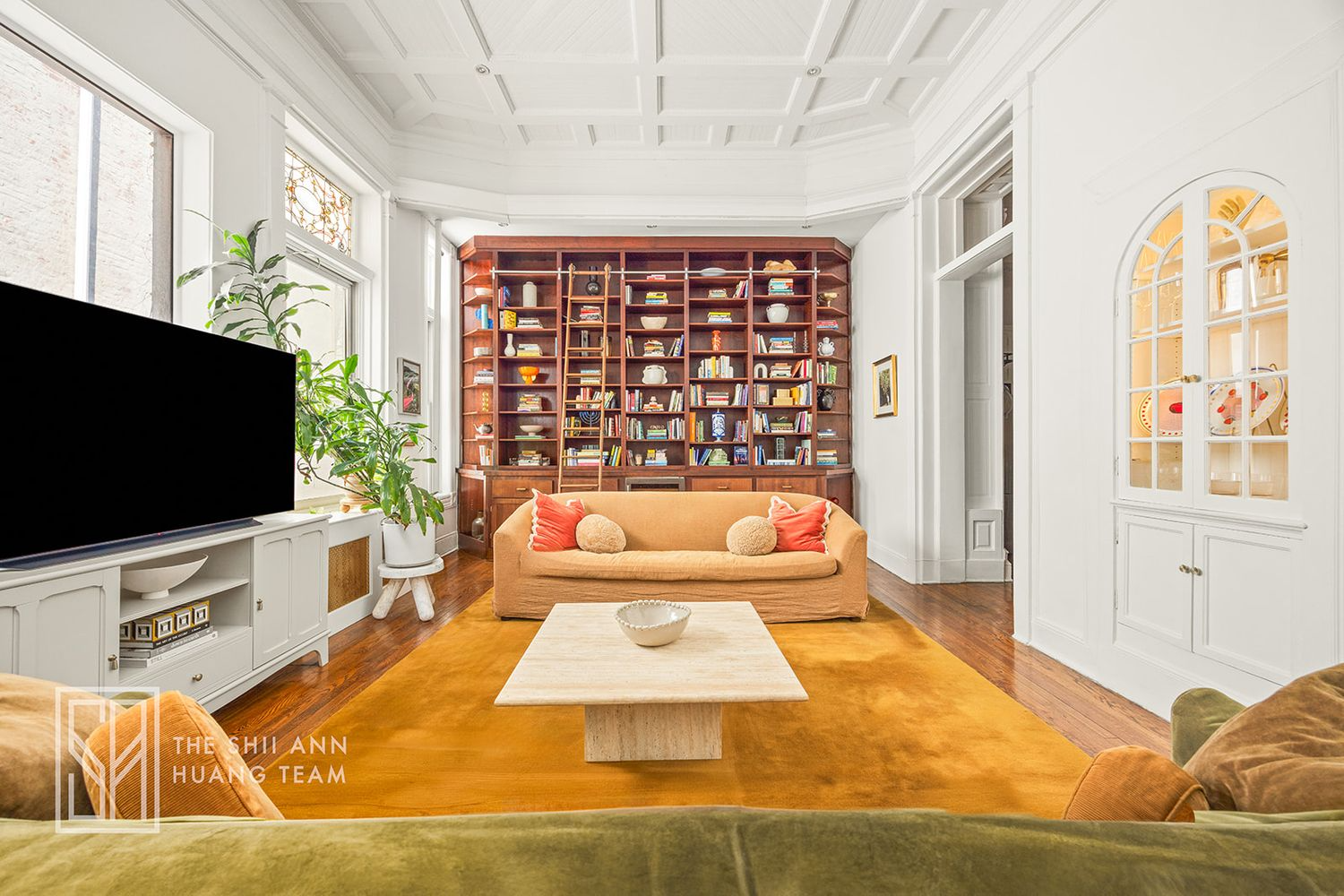
The main living spaces are painted Mayonnaise by Benjamin Moore. “Things are kind of creamy rather than stark white,” the architect said.
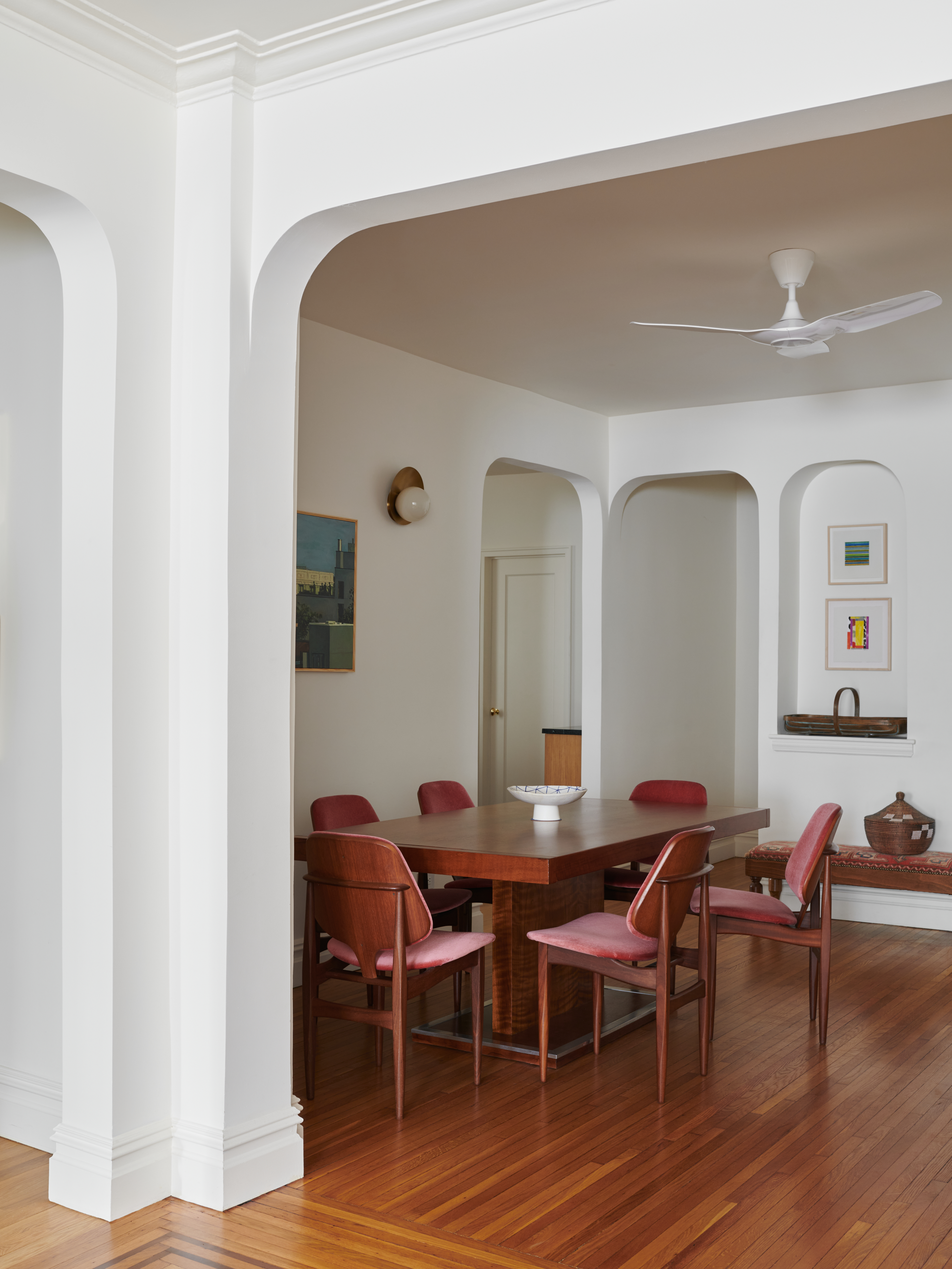
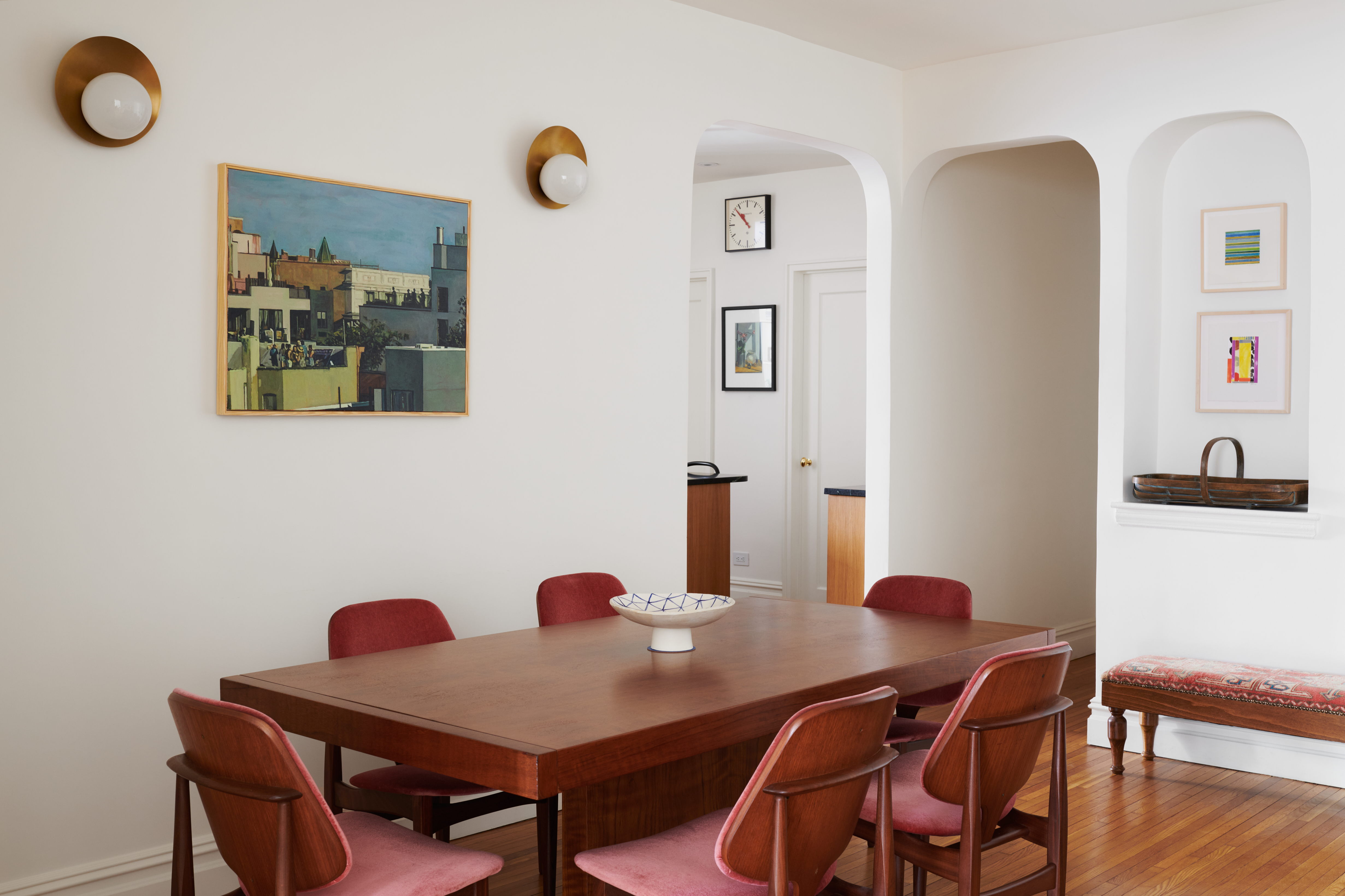
The apartment’s main entry door opens into the dining room, which retains an original wall niche.
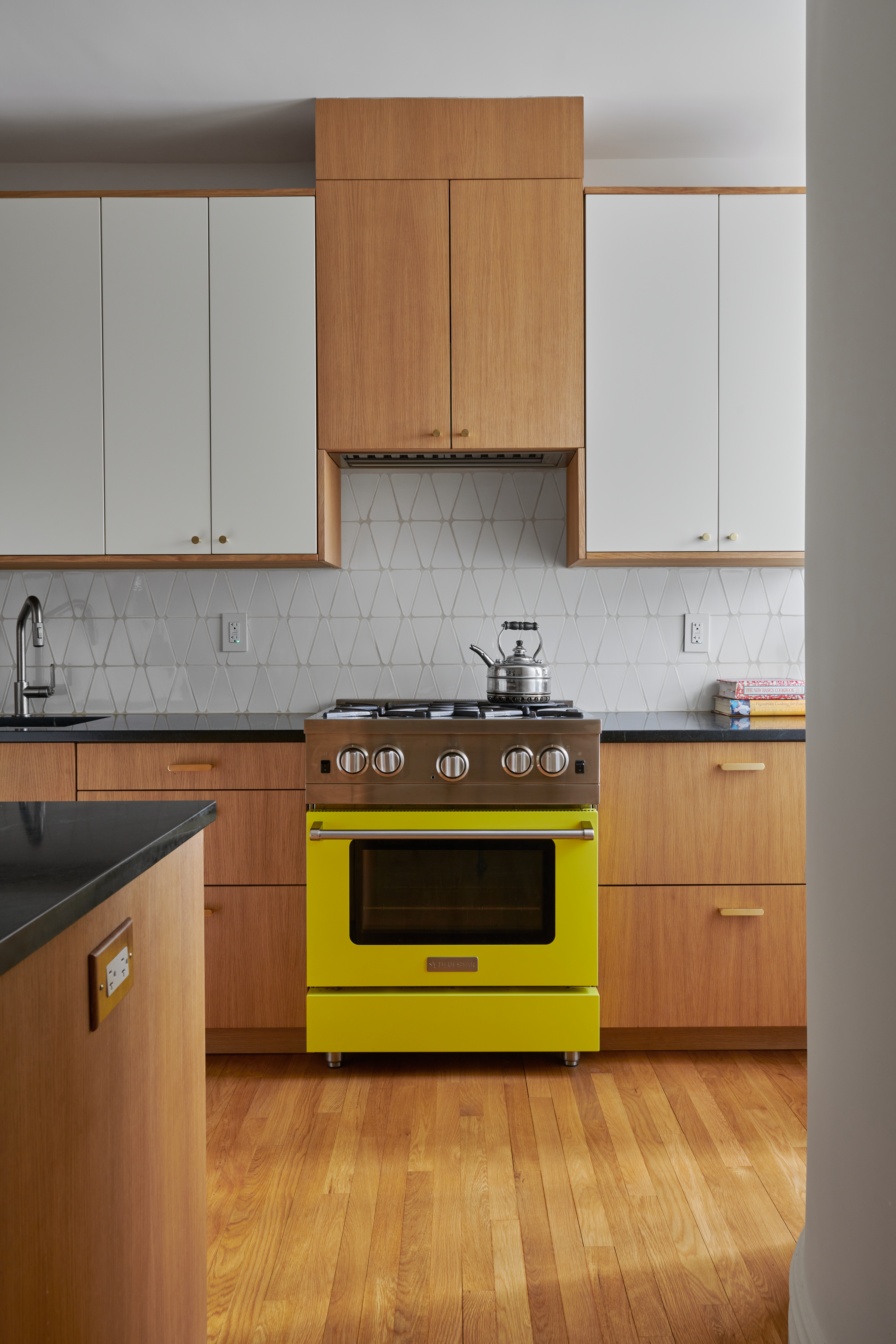
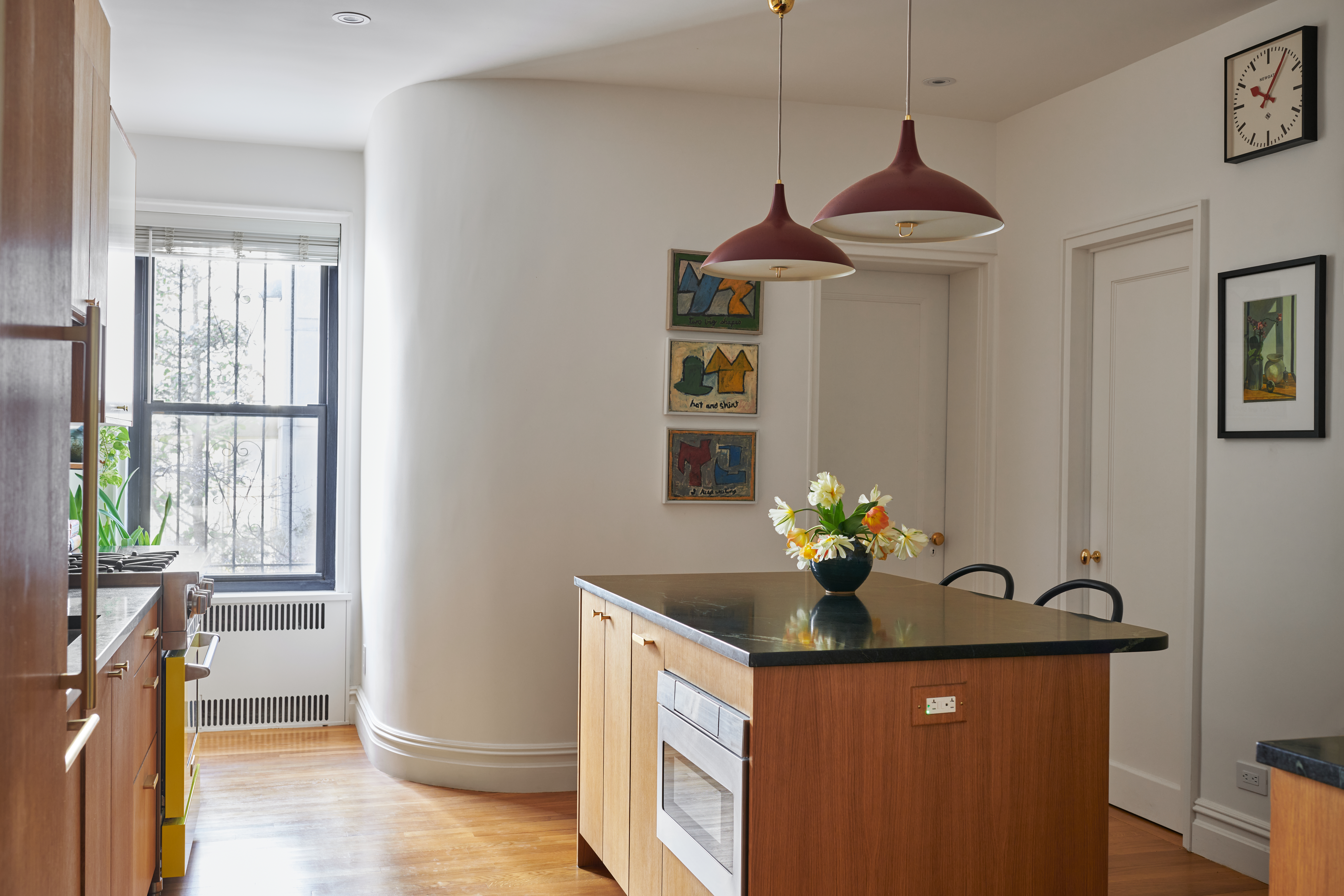
Jacoby eliminated an unnecessary hallway to enlarge the kitchen. The yellow stove was chosen early on in the process. “The stove is the focus,” she said. “It was nice to have as an anchor for decision making.”
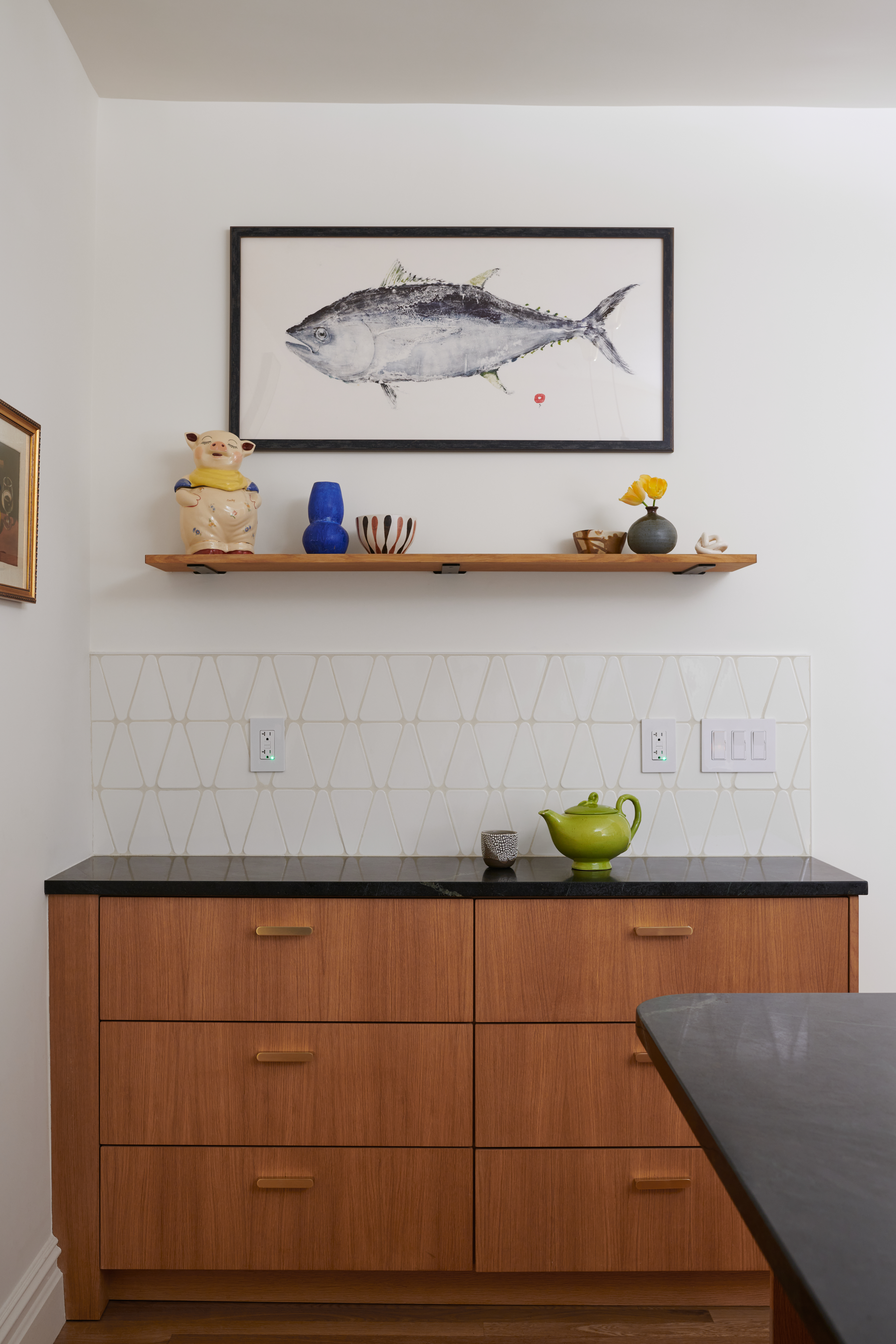
Warm wood cabinetry from Reform was customized with trim. White oak cabinets below, with some painted uppers, along with black soapstone countertops, handmade wedge-shaped backsplash tiles from Modwalls with midcentury character, and red pendant lights, create a playful dynamism. An additional console was inserted into a corner for extra counter space.
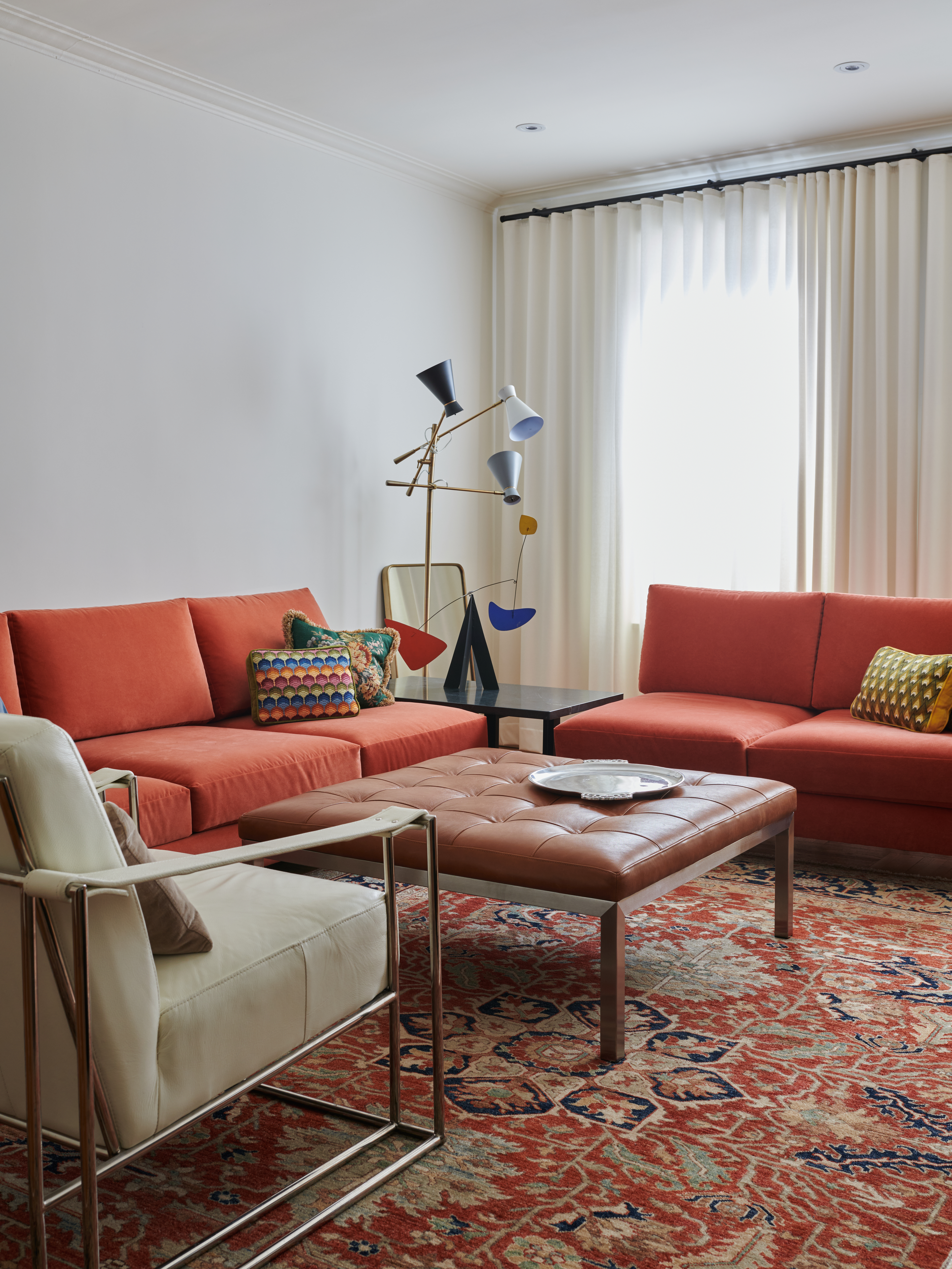
The homeowners chose the furnishings, mostly with a mid-20th century bent. “They sourced stuff that felt like it was from the era,” Jacoby said.
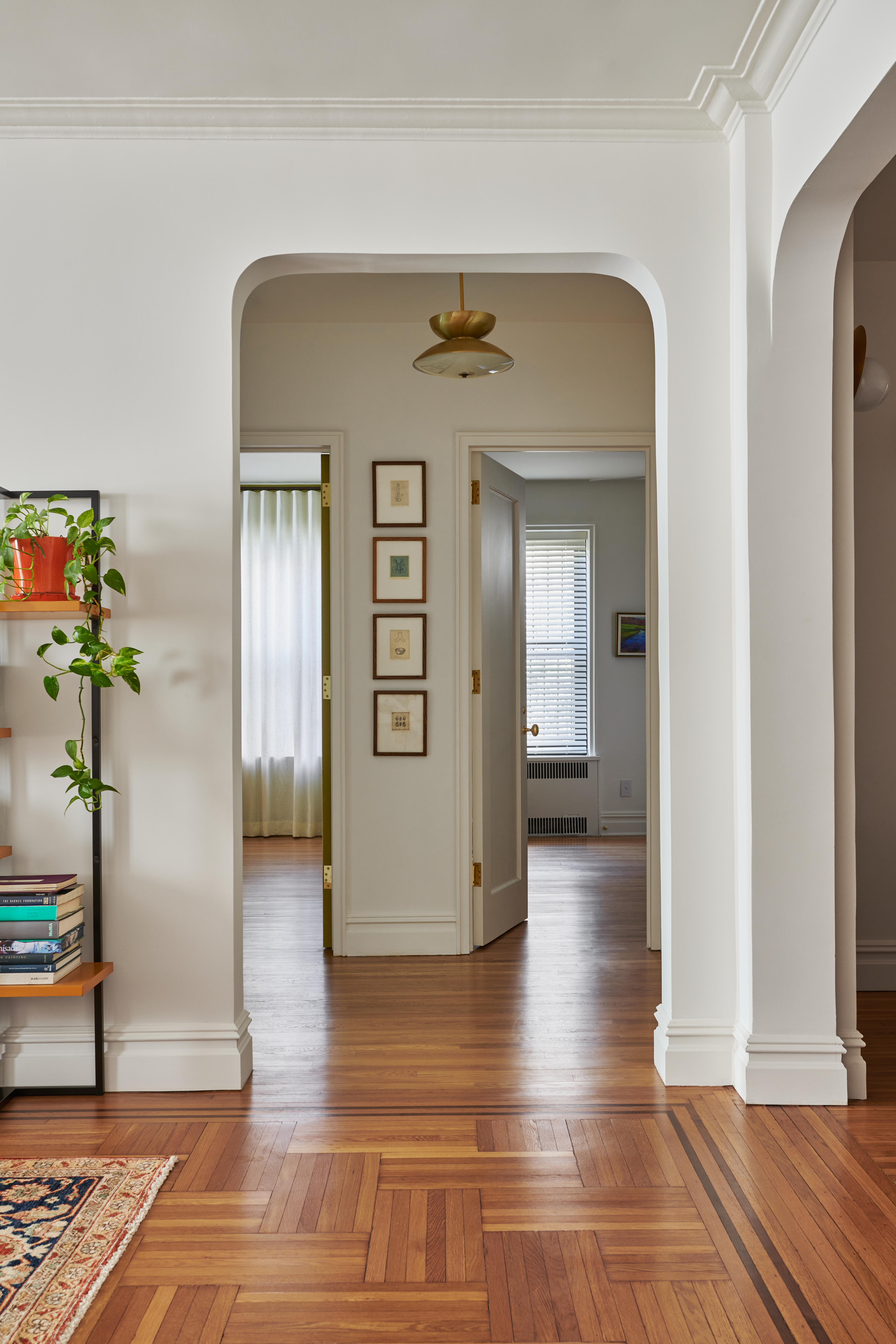
Jacoby added a wide arched opening in a solid wall to admit light into the living room from the rooms opposite — a bedroom on the left and the office-turned-studio on the right.
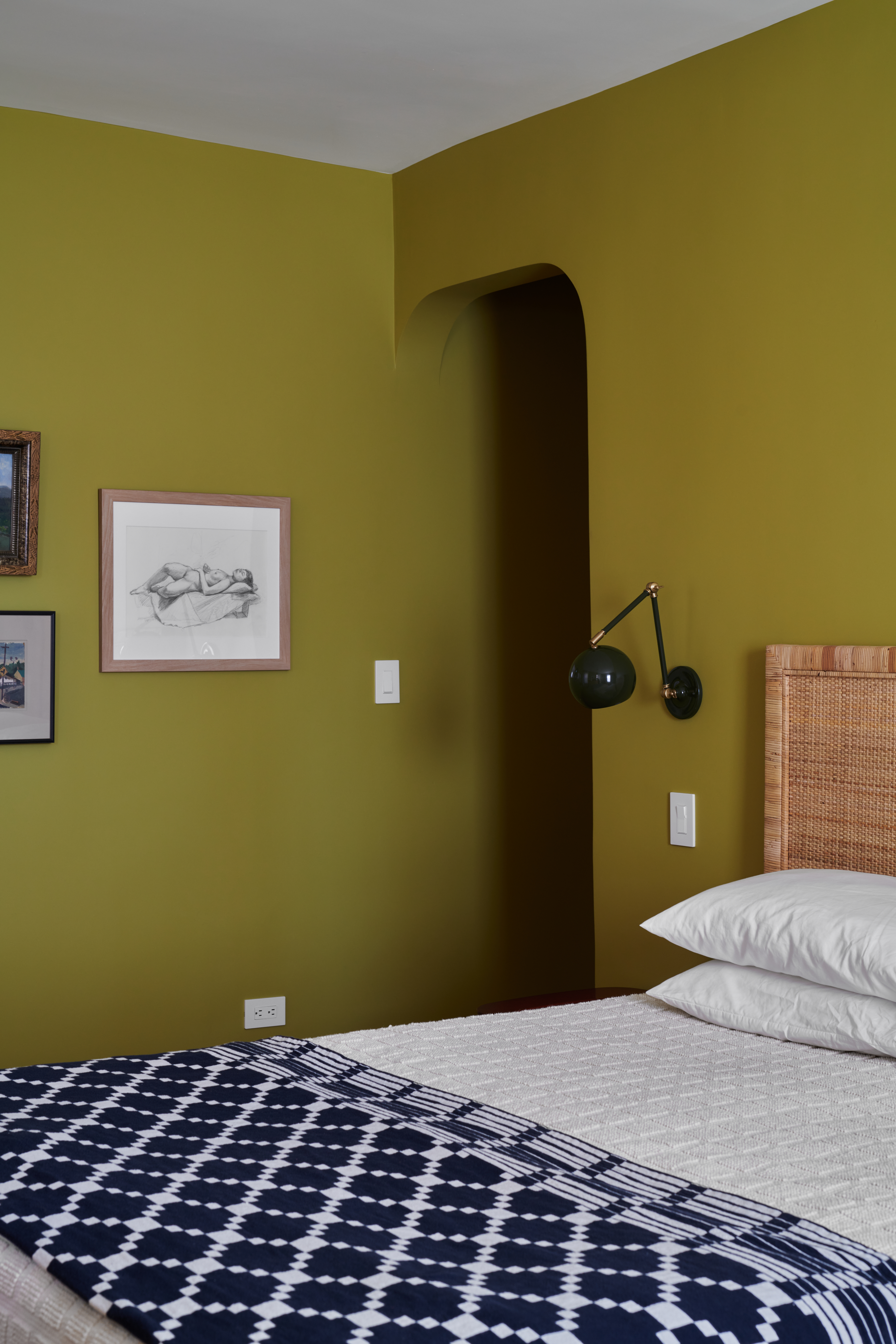
Wasabi paint by Benjamin Moore, a rich green, distinguishes the primary bedroom.
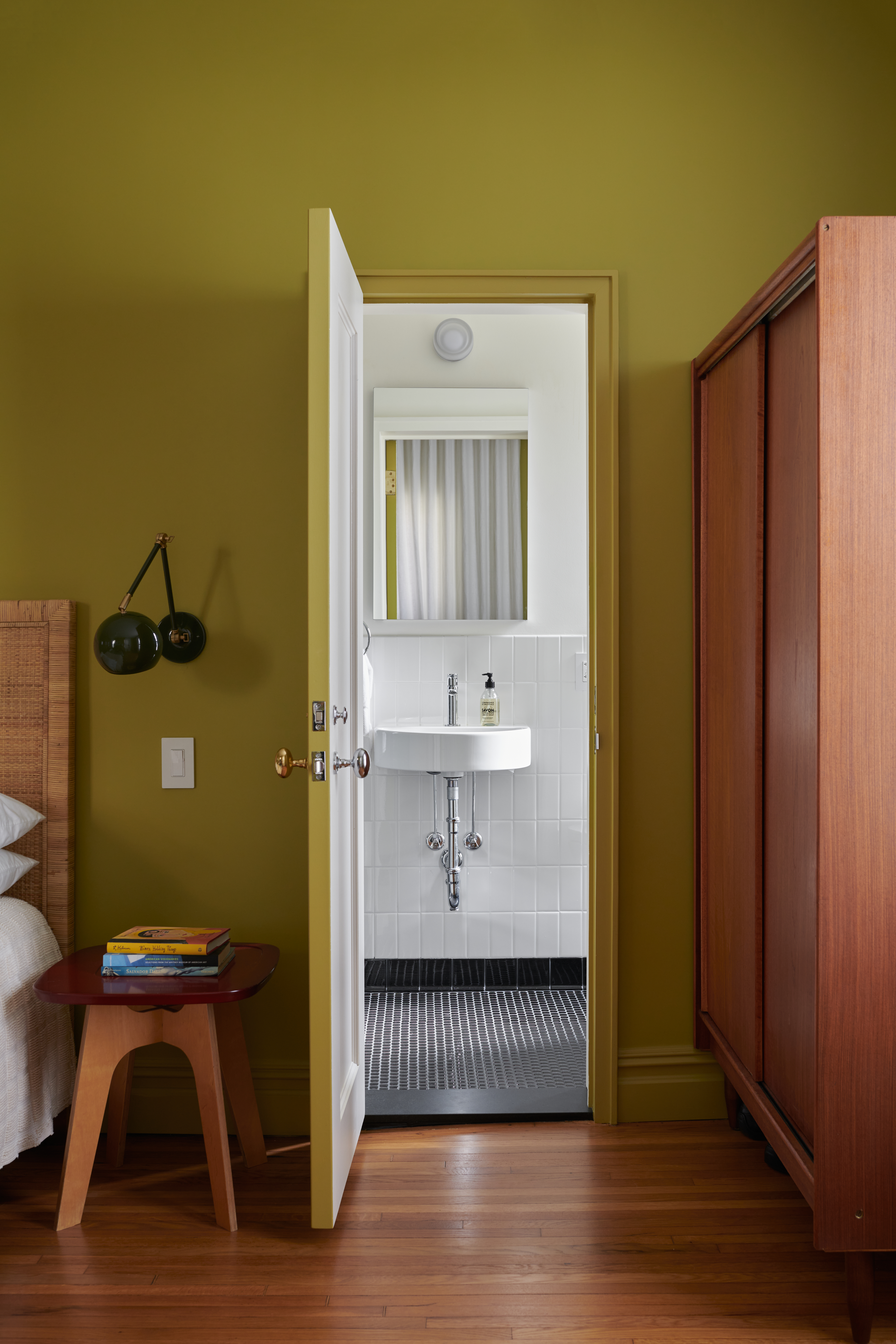
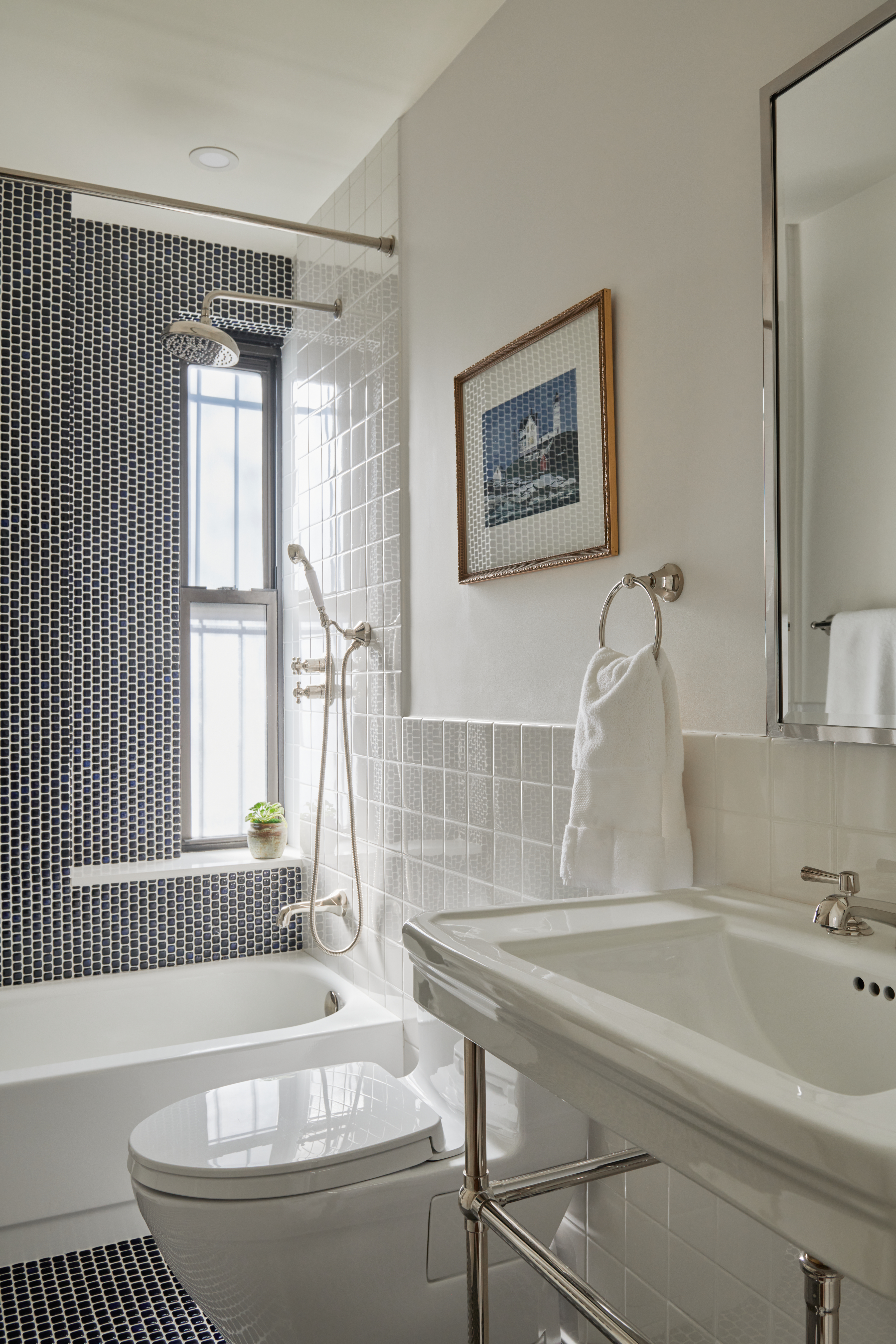
The ensuite bath is back-to-back with the apartment’s secondary bathroom, splitting a window. “We tried to come up with a palette that felt refreshed without spending a fortune,” Jacoby said. “We went very simple on the tiles, but had them be cousins of each other.” A sink on chrome legs in one of the bathrooms clearly recalls the 1930s.
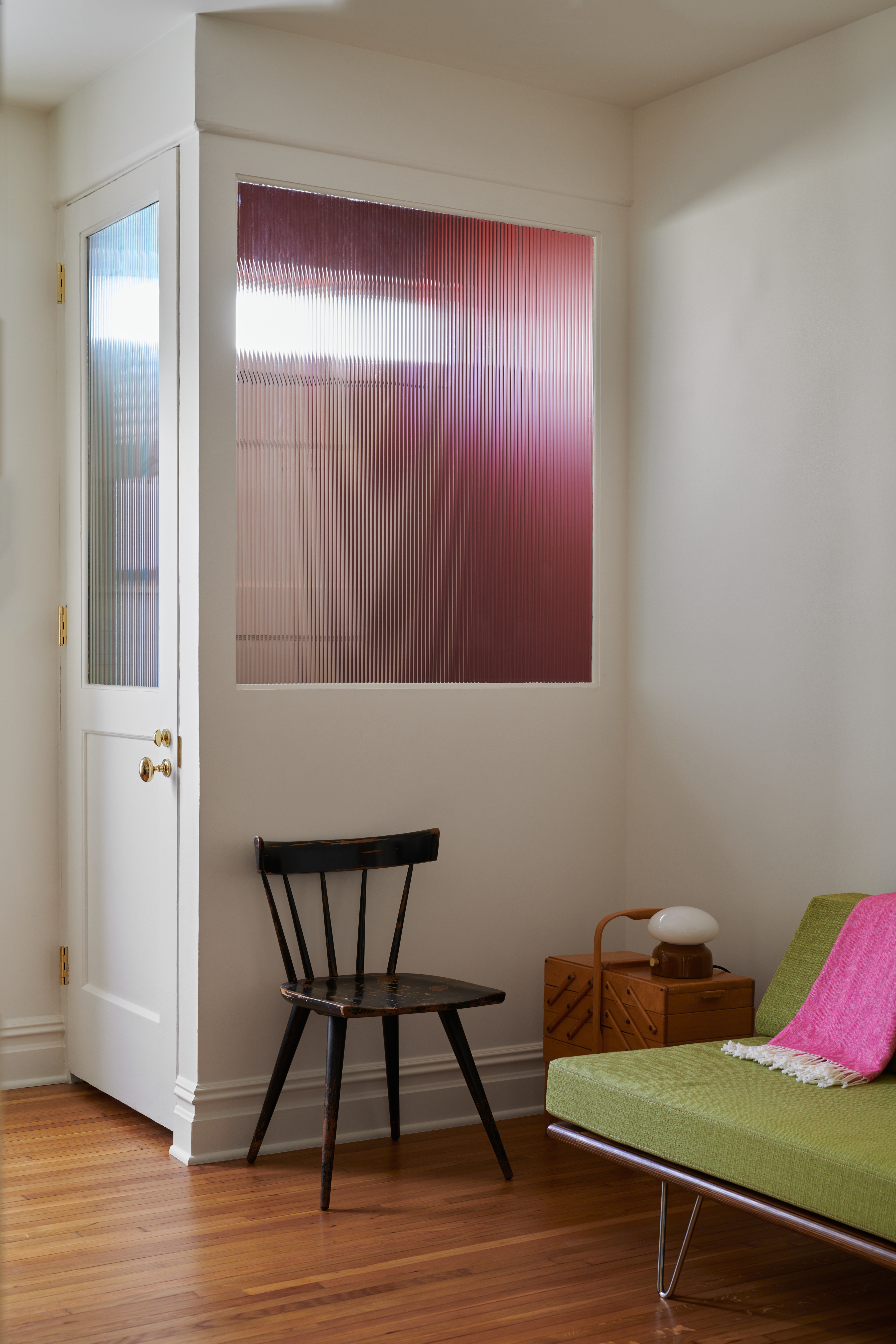
A tiny existing vestibule into the office — a second entry into the apartment from the street — helps keep out cold air. It was salvaged and painted Pomegranate by Benjamin Moore, which makes its clear fluted glass panel appear pink.
[Photos by Hanna Grankvist]
Got a project to propose for The Insider? Contact Cara at caramia447 [at] gmail [dot] com
The Insider is Brownstoner’s weekly in-depth look at a notable interior design/renovation project, by design journalist Cara Greenberg. Find it here every Thursday morning.
Related Stories
- The Insider: Vivid Color, Restored Staircase Revitalize Park Slope Limestone
- The Insider: Considered Color Palette Makes Renovated Bed Stuy Townhouse Shine
- The Insider: Pops of Stained-Glass Colors Brighten Park Slope Limestone
Email tips@brownstoner.com with further comments, questions or tips. Follow Brownstoner on X and Instagram, and like us on Facebook.


What's Your Take? Leave a Comment