
The Insider: Greenpoint Townhouse Flexes to Evolve With Growing Family
Bold pops of color, a Murphy bed for guests, and spaces that can be reconfigured to meet future needs distinguish this wood-frame house.

Photo by Eva Zar
The design ethos of this recently renovated three-story townhouse — minimalist but warm, with a whisper of the future — sprang from more than one source. Architect Fabian Lorenz, trained in Europe and a former senior architect at Bjarke Ingels Group, a Danish firm, gravitates toward what he called “a minimalistic Scandinavian palette.”
One of the homeowners, a filmmaker with an affinity for Korean and Japanese design, was after “nice, clean, resolved, sophisticated details,” Lorenz said. As a point of reference, she cited sci-fi movies like “After Yang” and “Her.” “They’re both set in a utopian future, but it’s not a display of technology. They’re human centered,” said Lorenz, who established his Brooklyn-based firm, Studio Fabian Lorenz, in 2021. “We were interested in a homey feeling, with a calm, natural palette of wood, but there are subtle cinematographic hints of this futuristic layer in the design.”
Hence the special attention to reflective surfaces, lighting effects, and use of color. Such elements as a kitchen backsplash of dichroic glass that breaks light up into different colors depending on the viewing angle, moody nighttime illumination, and unexpected jolts of color throughout “transport you,” as Lorenz put it, “from the neutral atmosphere.”
The gut renovation transformed the stoop-less and circa mid-19th century wood frame house from a down-at-the-heels multi-family to a two-family. There’s an owner duplex on the two lower floors and a separate apartment on top, in keeping with the homeowners’ vision for a long-term residence that would adapt to different stages in the life of their family. It was an “A to Z” job, Lorenz recalled. “We took out a bearing wall and remediated the structure heavily with steel. There was a time you could look from cellar to roof.”
Wood prevails in the reconstructed interior. “We wanted something that feels warm, so pale or washed-out woods were dismissed,” the architect said. “We found this beautiful cherry for the floor that exudes a warmth you don’t get with oak. It really carries a lot of the project.” Cabinetry veneers are cherry as well, though lighter in tone.
The ground floor’s open design is conceived around a multifunctional millwork wall that stretches the length of the building, incorporating a Murphy bed in front, a dining alcove in the middle, a kitchen at the rear, and a load of storage. New sliding glass doors open to the garden. The second floor contains three bedrooms: the primary bedroom; a guest room that doubles as a home office; and one large bedroom for the homeowners’ two children, to be divided into separate spaces in years to come.
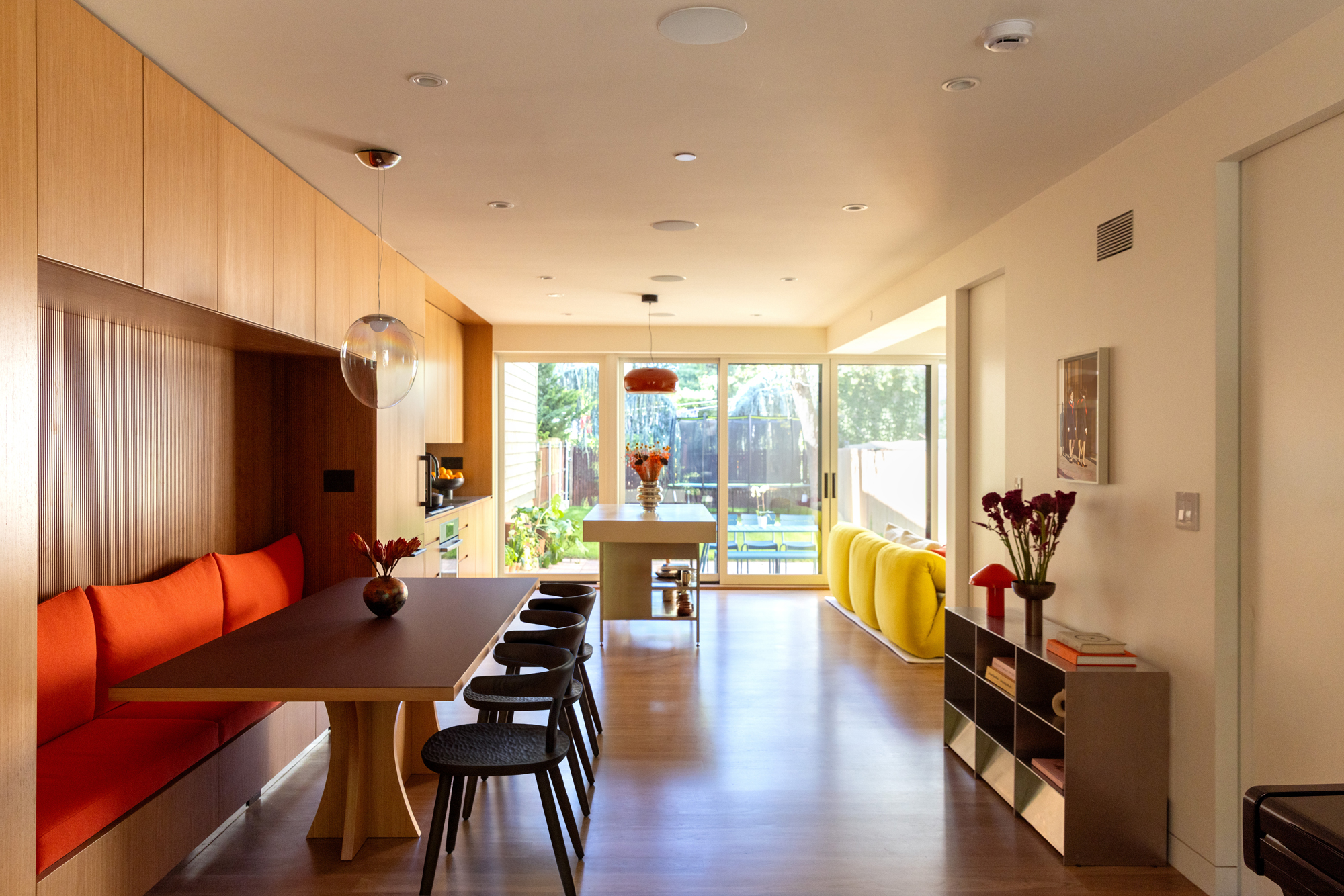
The ground floor’s public space was organized around a long custom millwork wall. “The wall is like a Swiss army knife,” Lorenz said. “It has all these functions in different sections that activate different uses,” while preserving a maximum of open floor area.
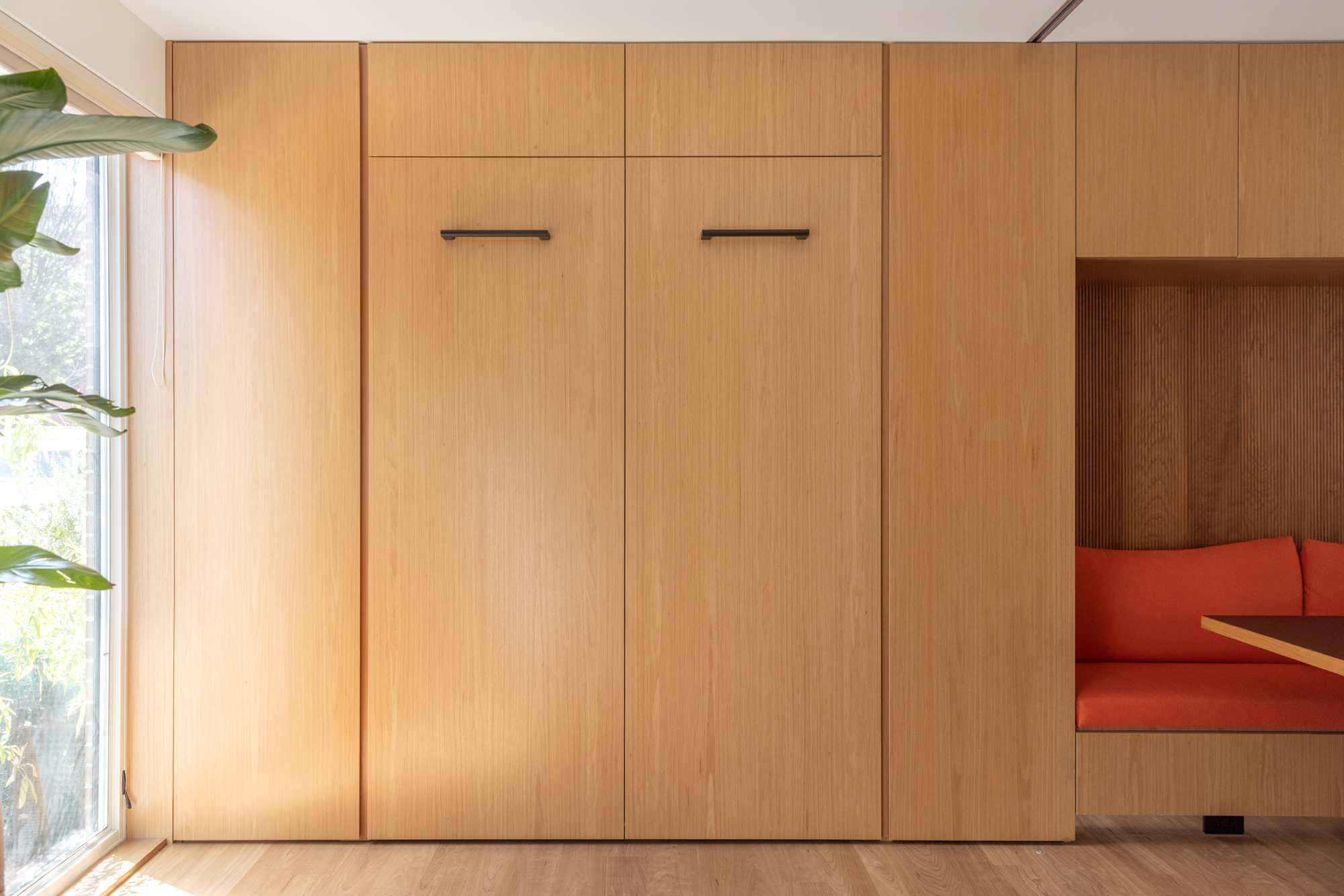
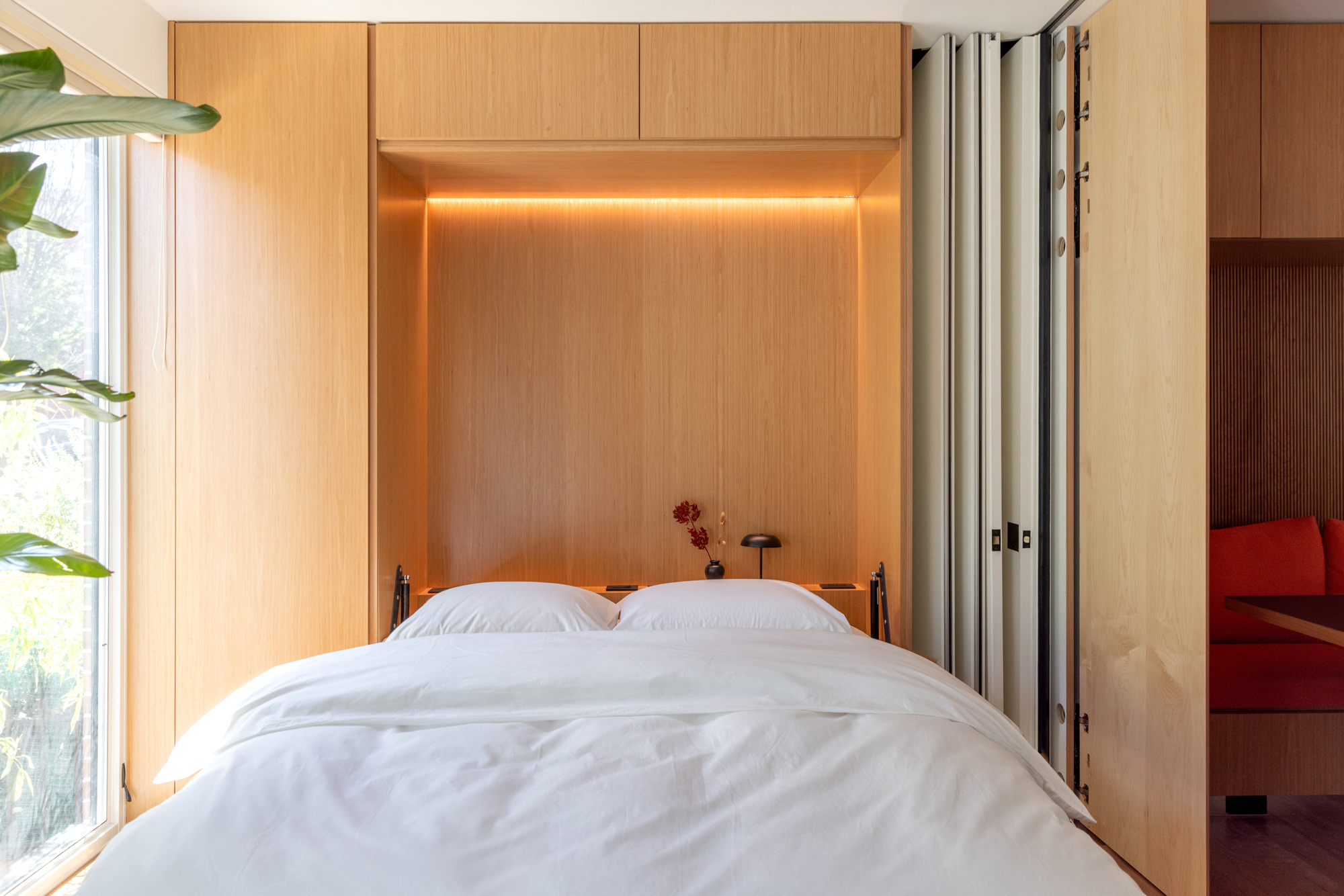
Accordion panels tucked into the wall slide out to convert the front portion of the large open space into private guest quarters. Integrated lighting around the Murphy bed supplies atmospheric illumination.
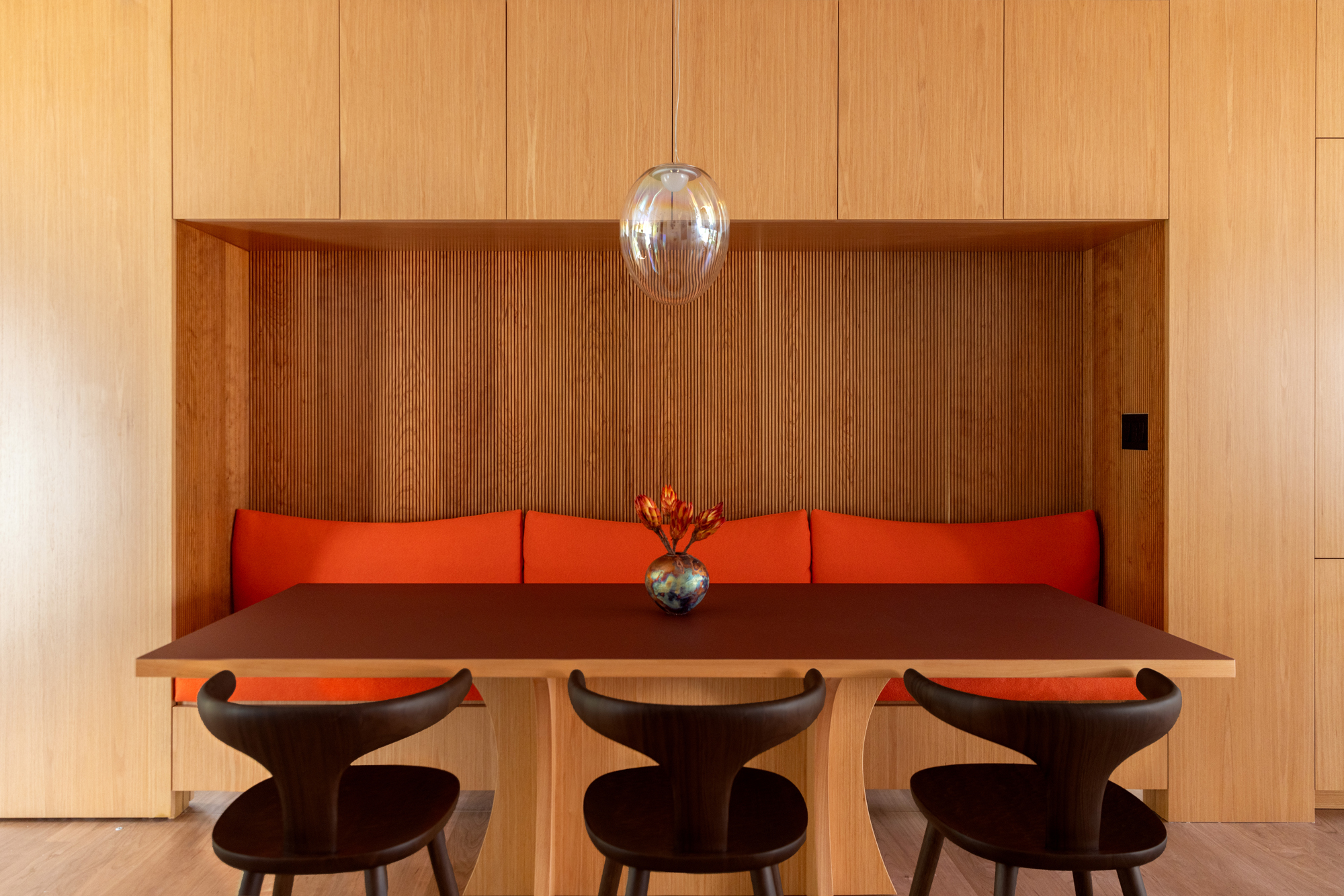
The custom dining table, designed by Fabian Lorenz Studio, seats 10 comfortably. Its cantilevered shape allows people to slide easily into the built-in banquette, which is upholstered in orange-red Knoll fabric.
The dining light is a futuristic Nebula pendant from Artemide; the handcrafted Bunna chairs were sourced from Serbian maker Zanat.
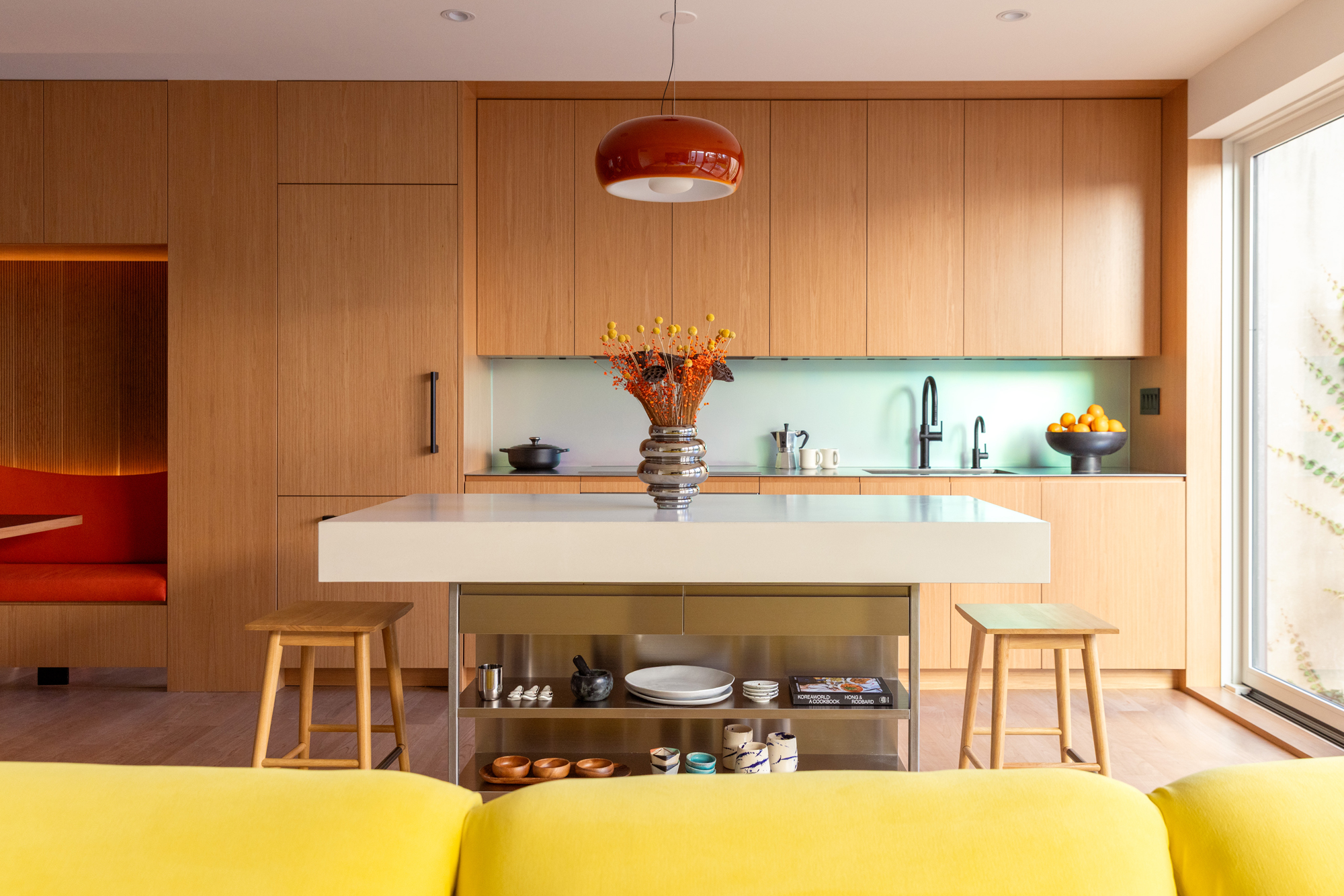
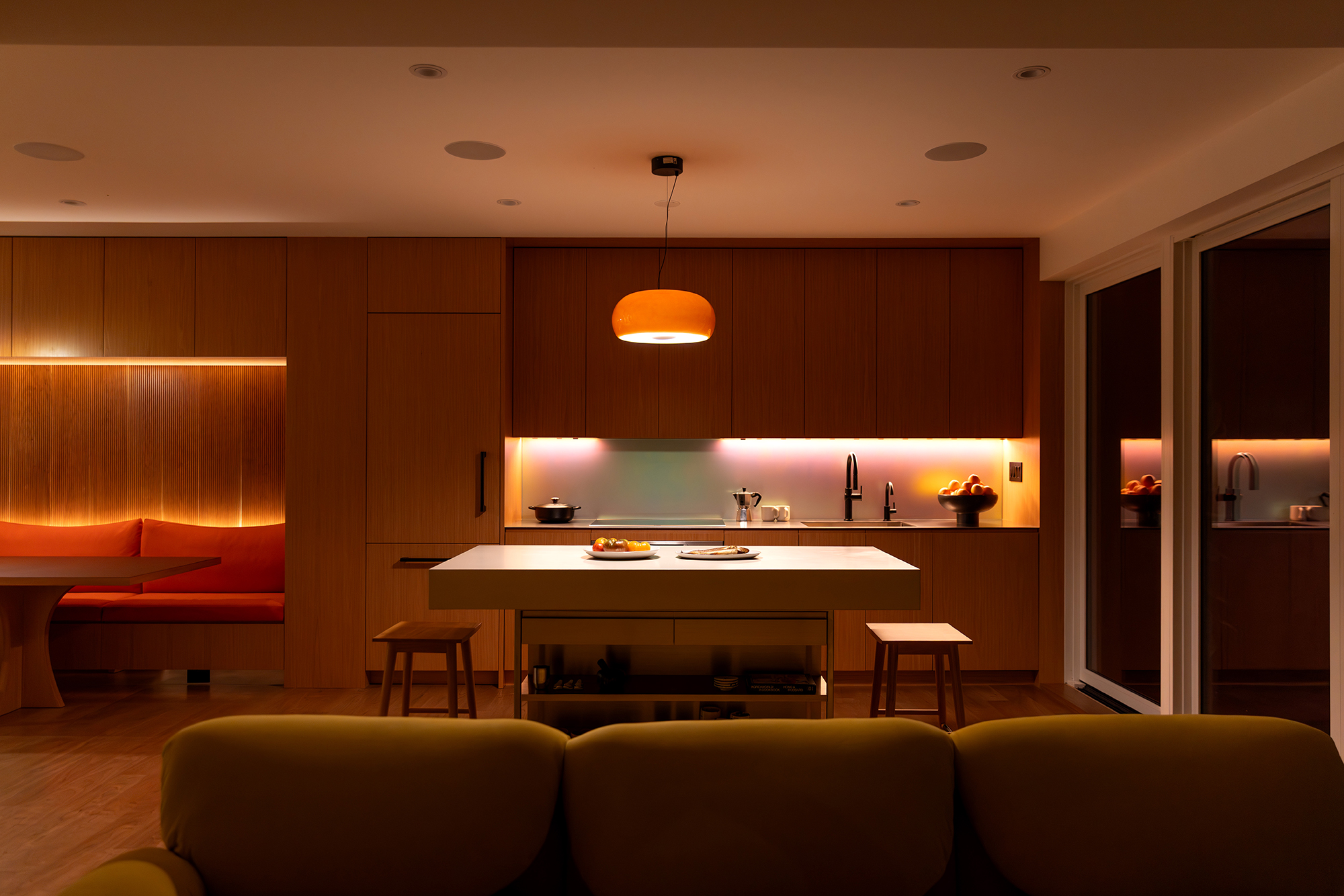
The construction of the all-custom kitchen, which includes a stainless steel island with a 6-inch-thick top of fiberglass-reinforced concrete, involved several different trades.
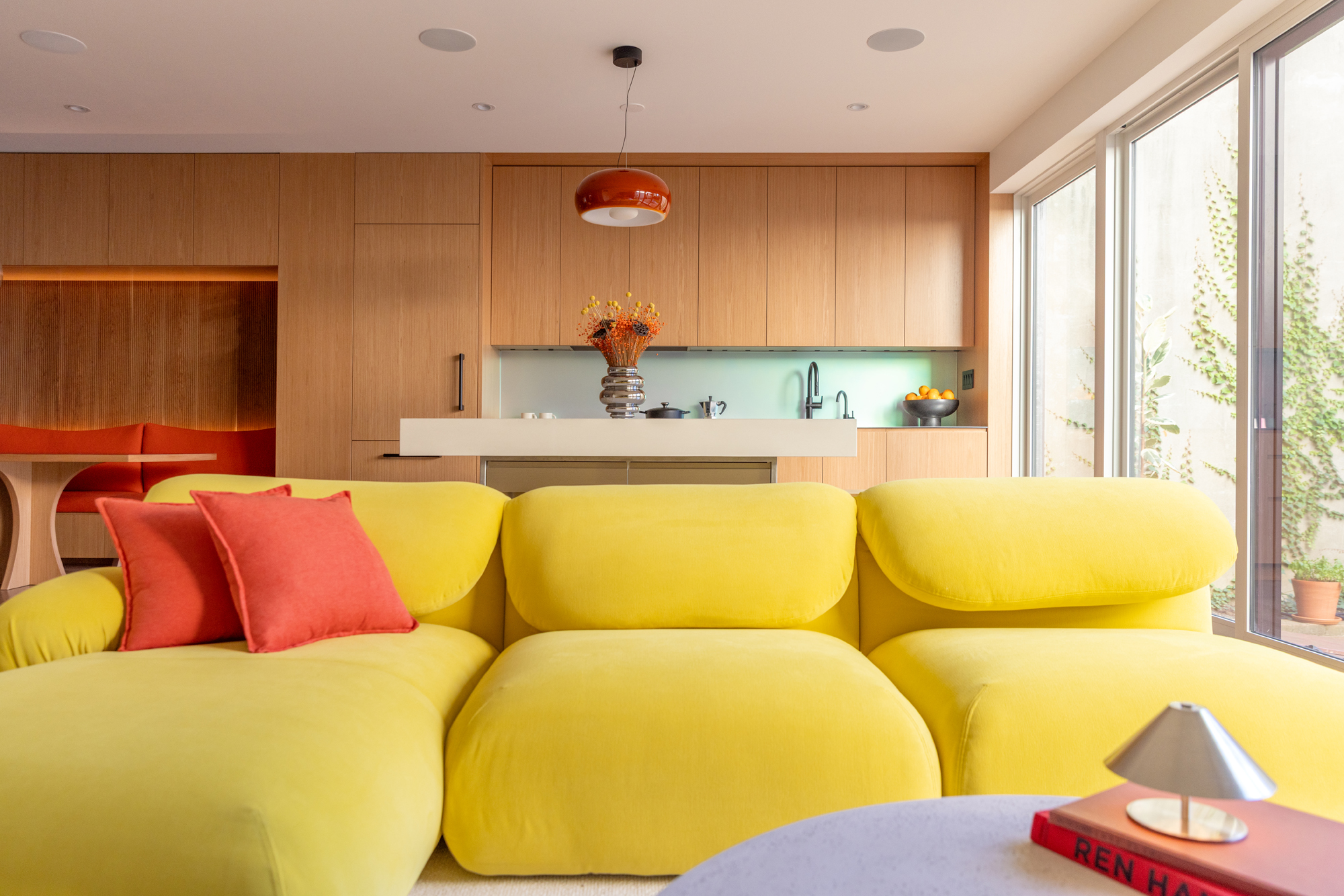
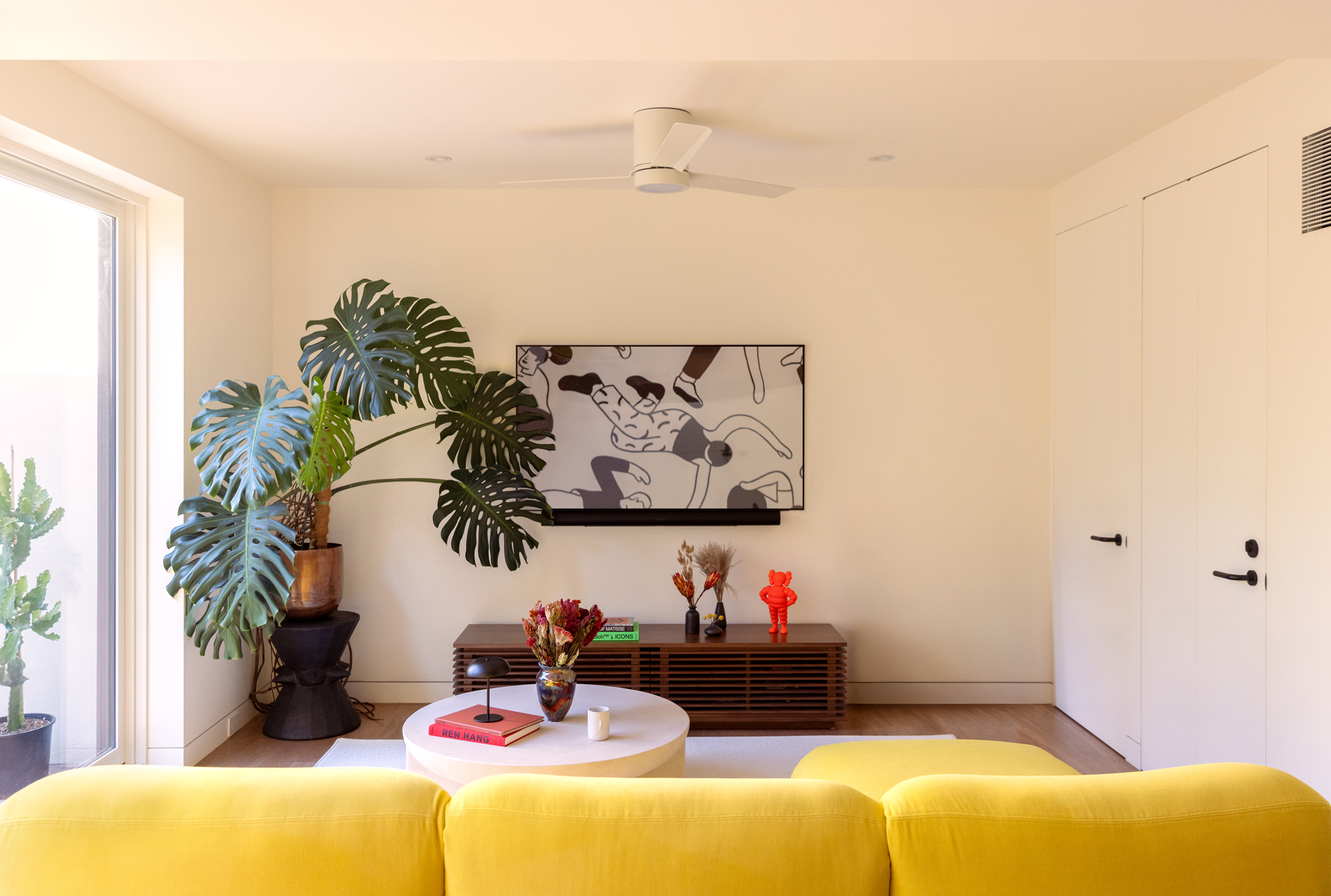
Herman Miller’s Luva sofa in sunshiny yellow harks boldly back to 1970s Italian design.
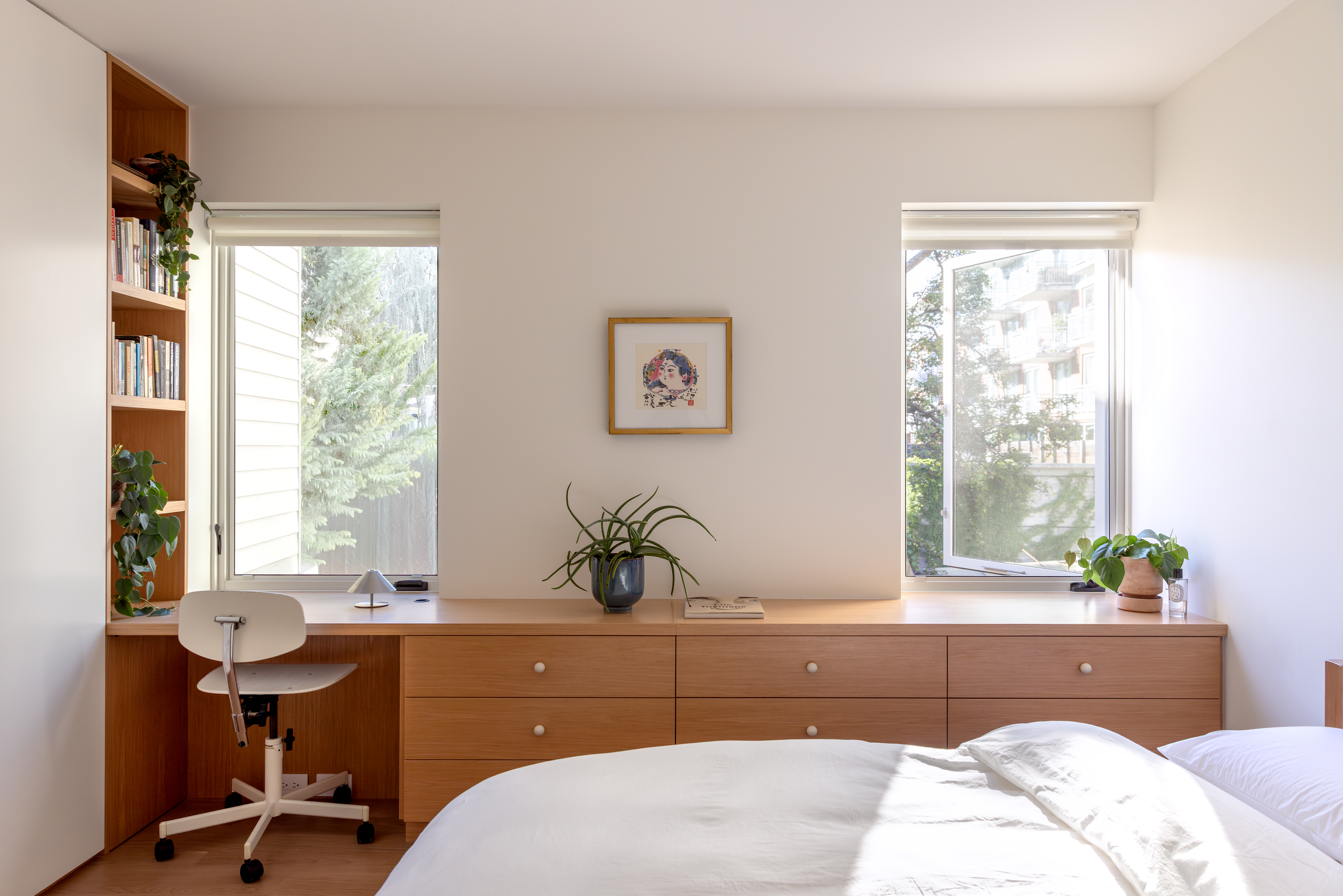
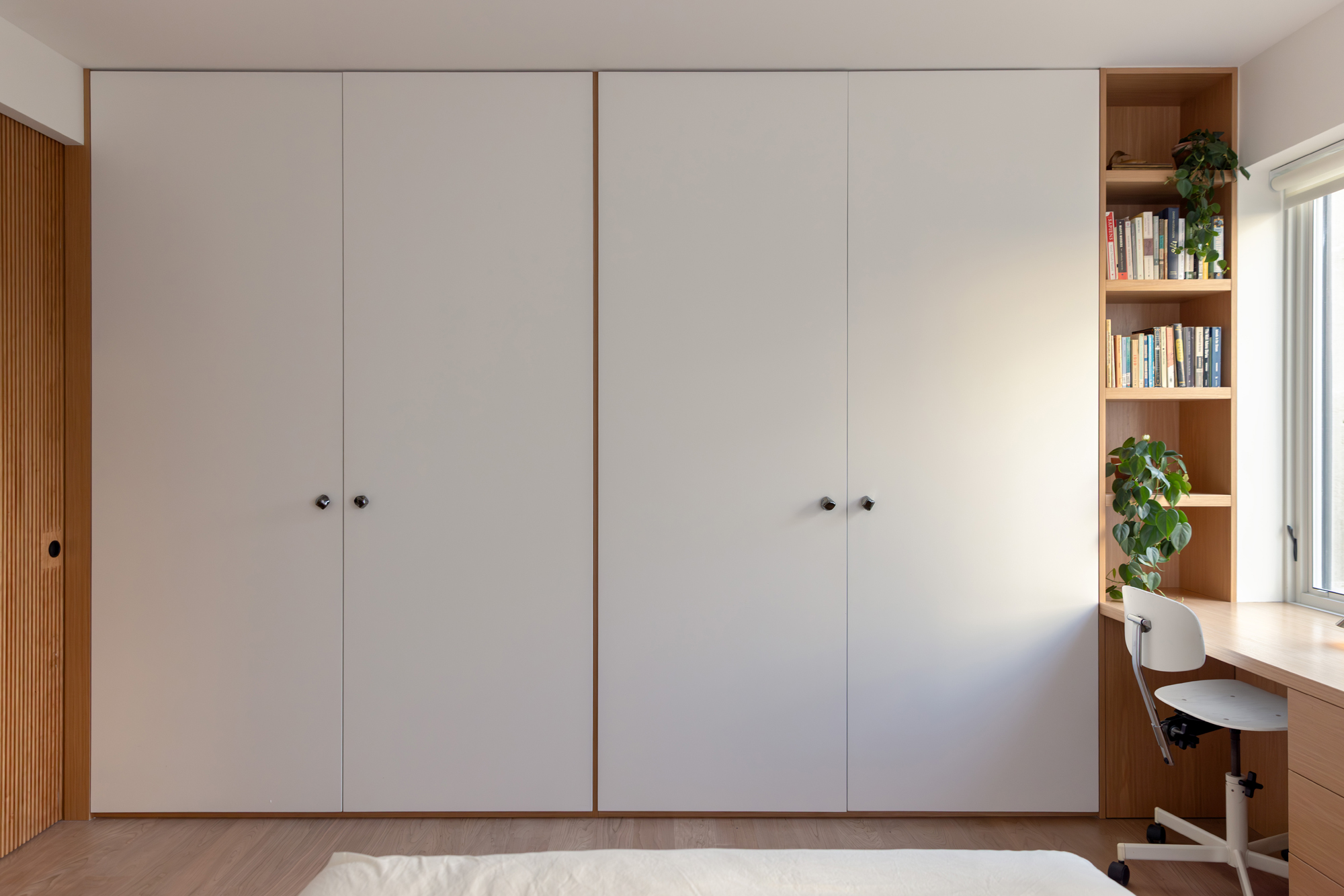
Cherry millwork in the primary bedroom is leavened by closet doors painted warm white. The custom desk is made of ash.
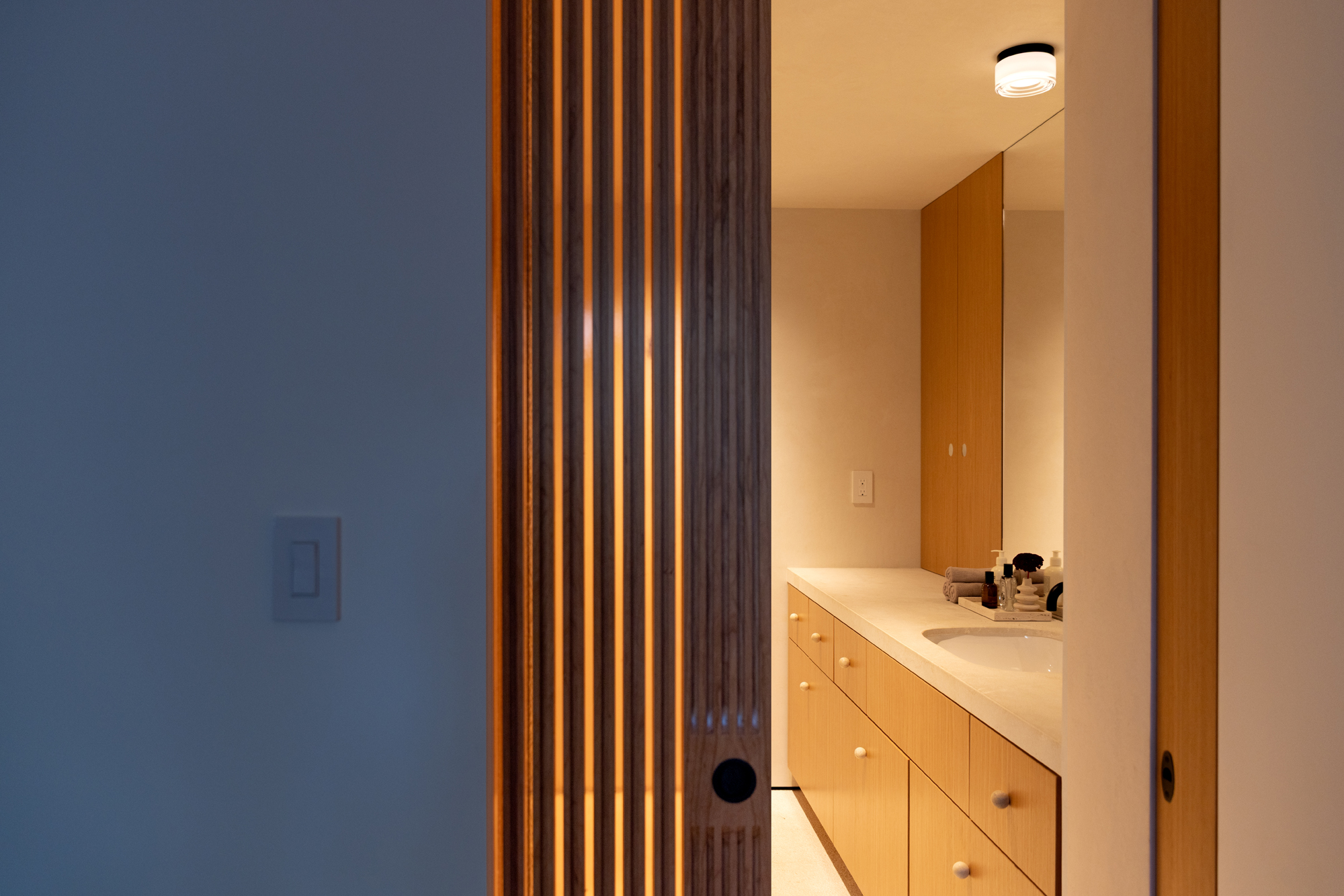
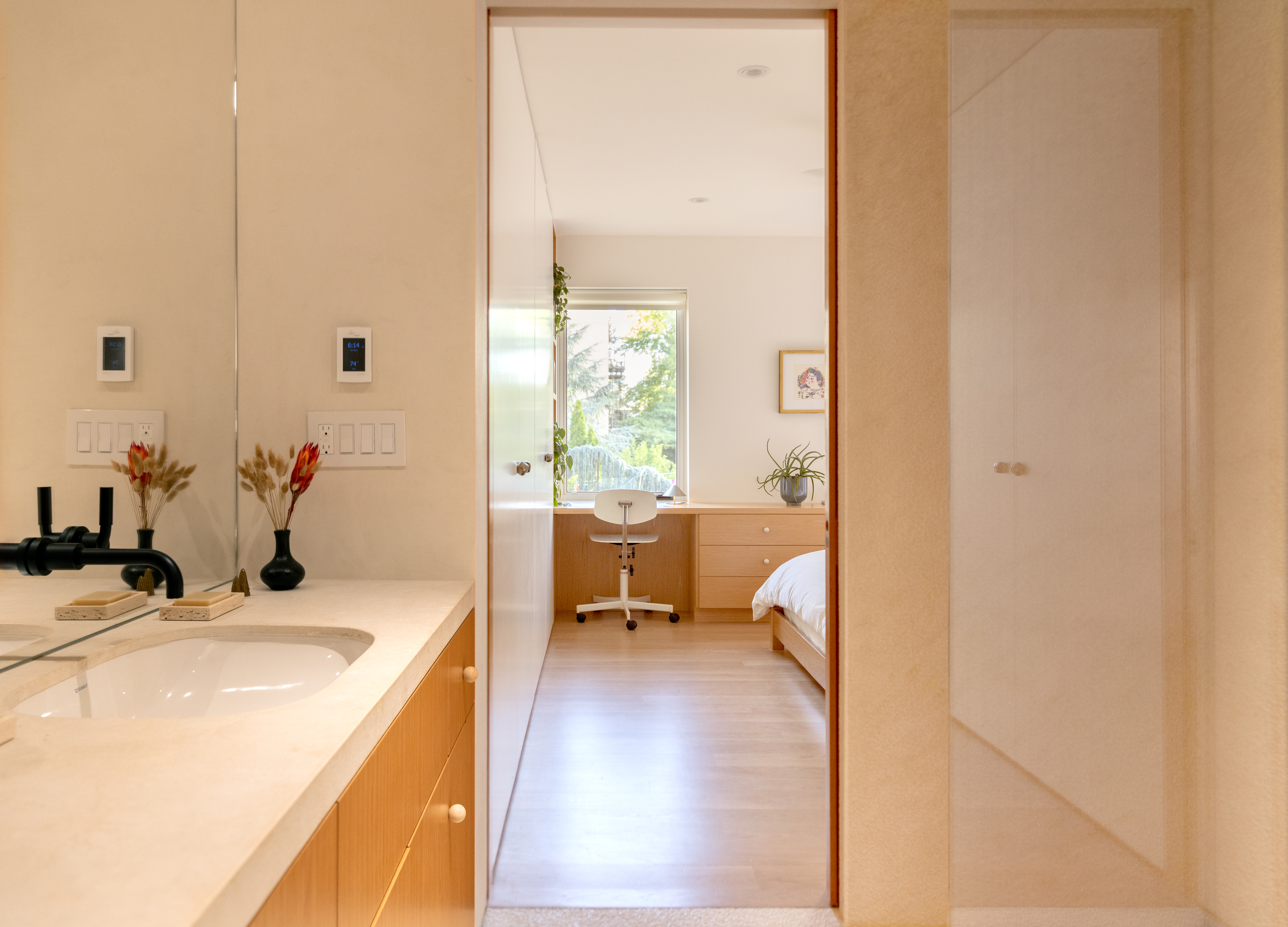
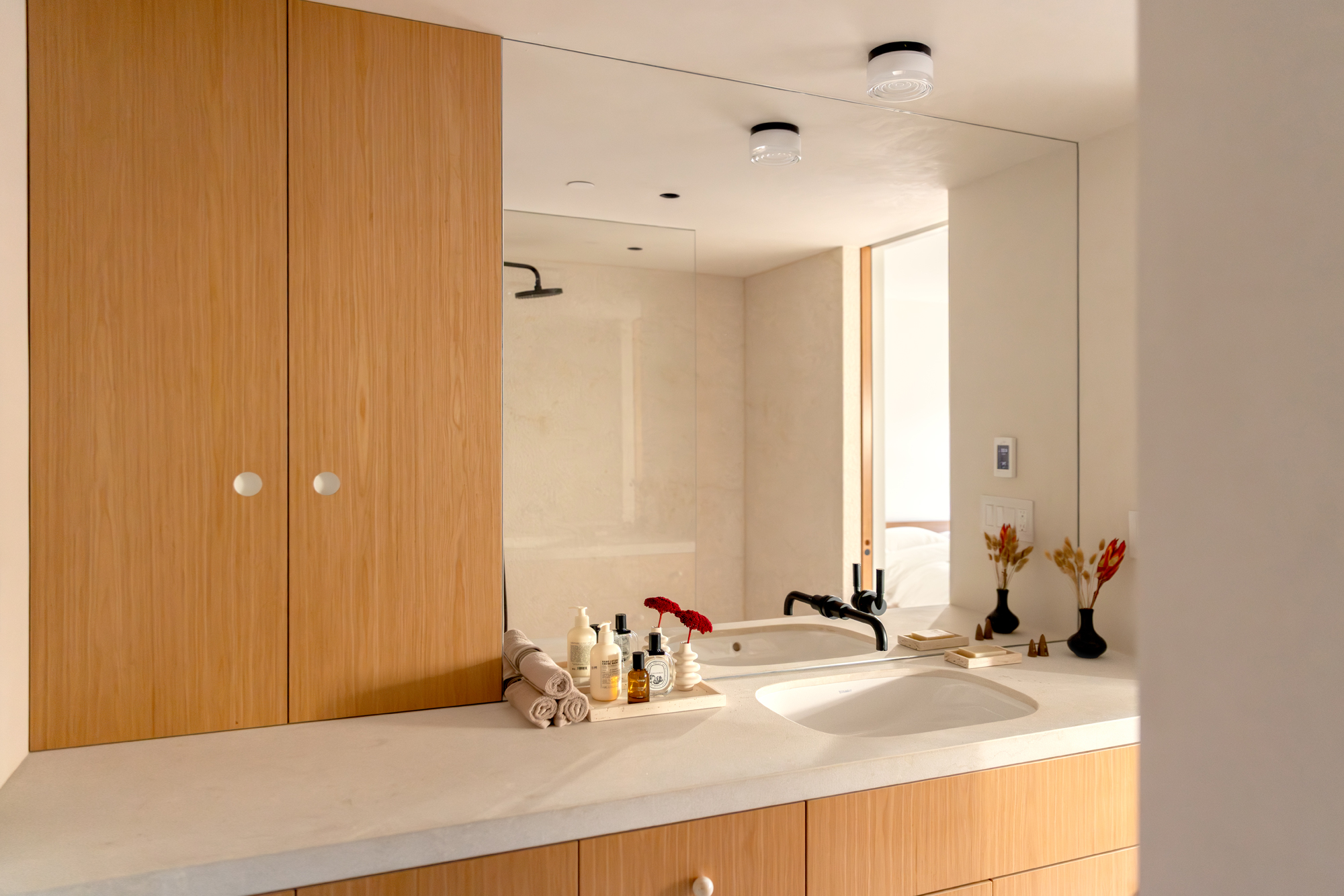
A slatted wood pocket door filters light into the windowless primary bath. The architects took the opportunity to introduce color with an accent wall of deep blue and insets of transparent salmon-colored material layered between the door slats.
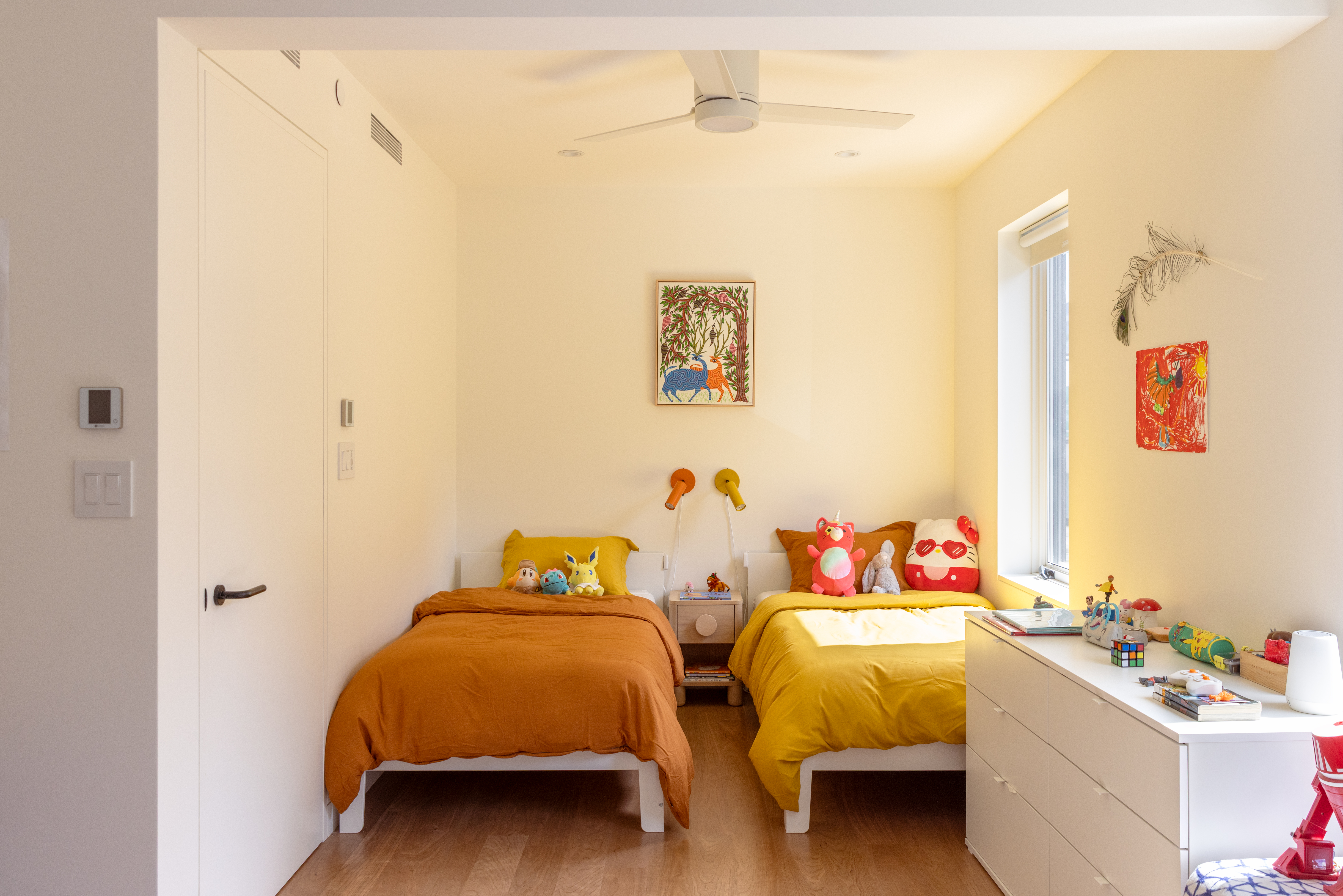
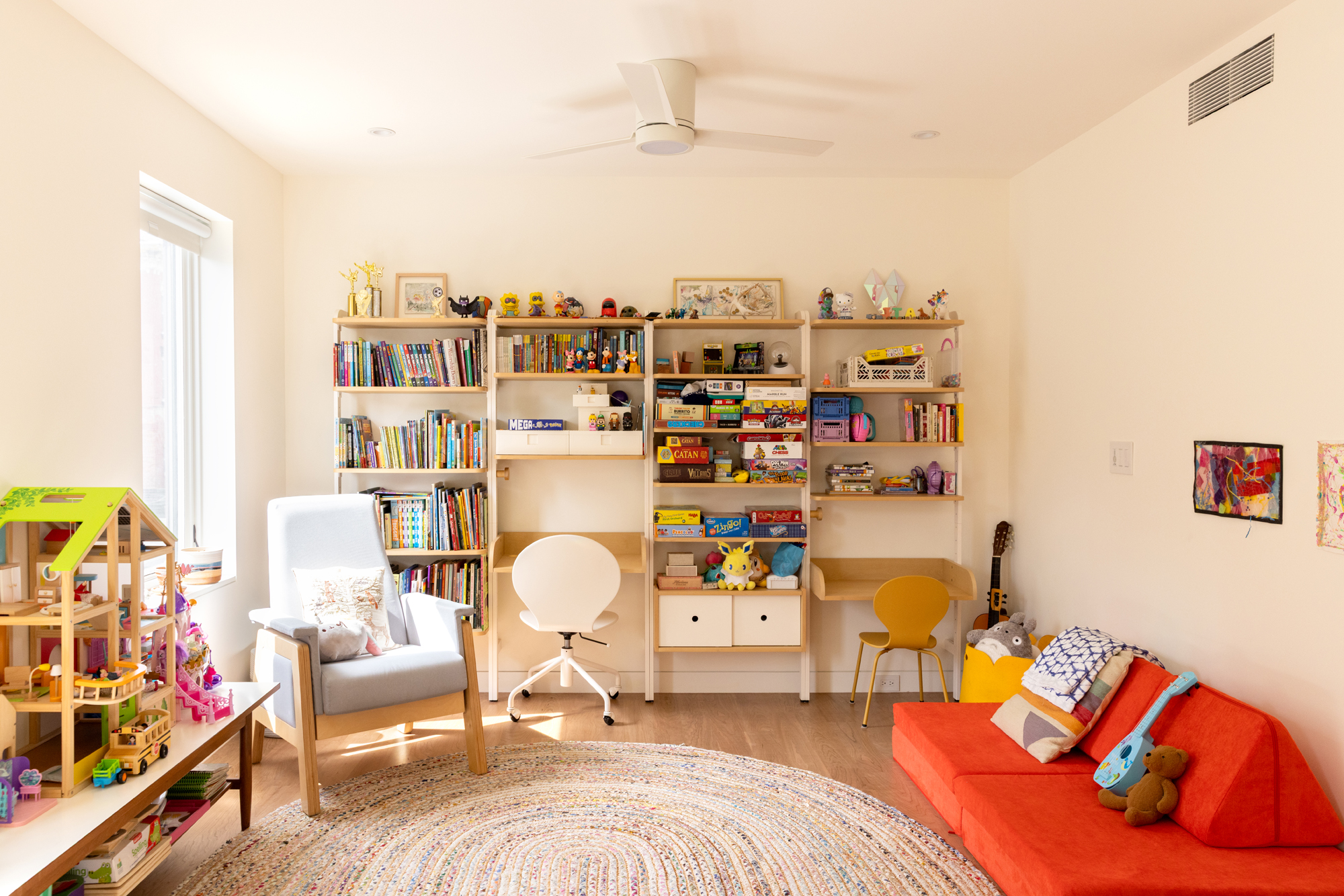
Today a single space with two twin beds and a large play area, the children’s room was designed to anticipate family life in years to come. “The space is laid out in a way that with the insertion of one simple wall and door you can create two equally sized rooms,” Lorenz said. “We even left cables and stuff in the floor so they can easily connect.”
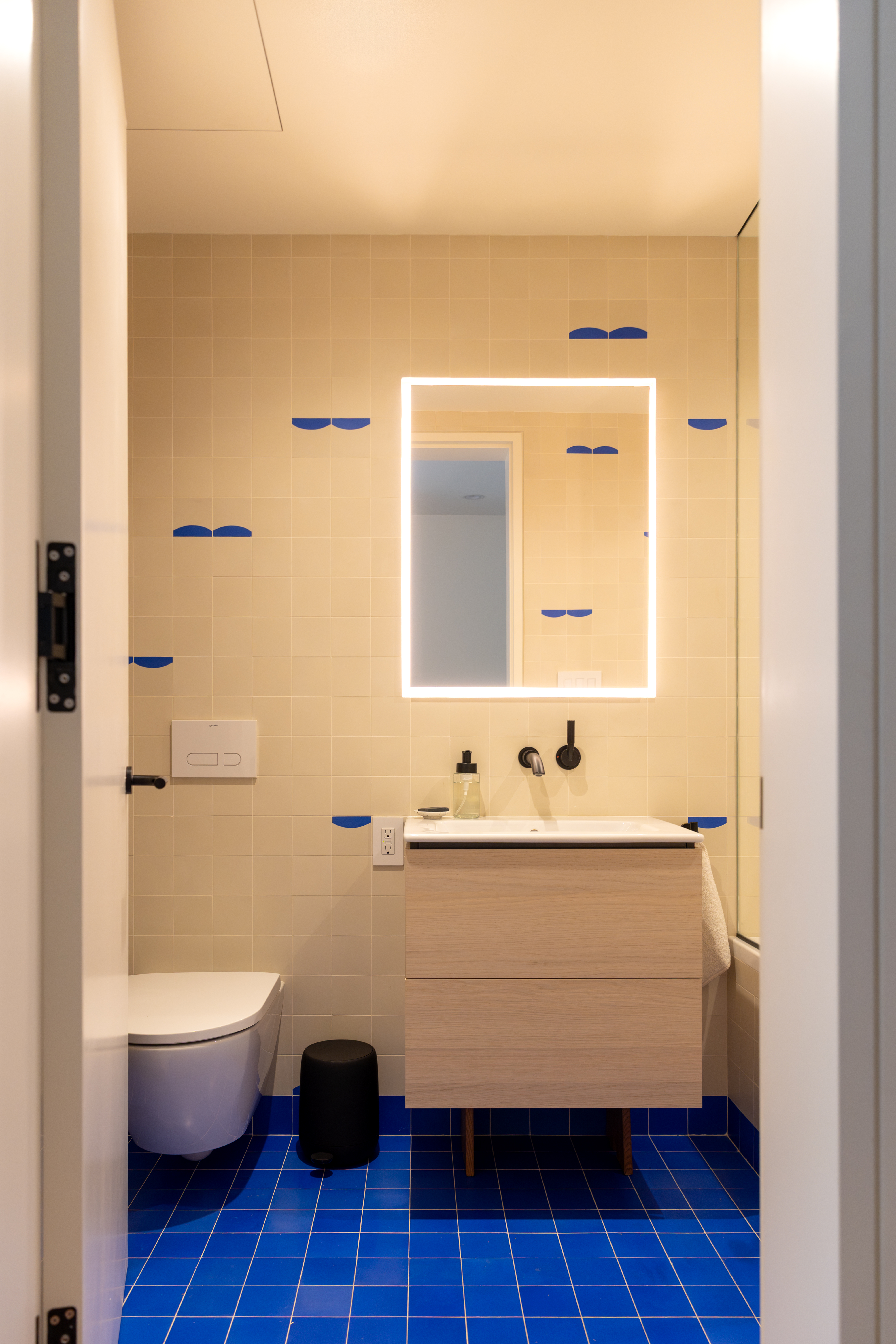
A regular medicine cabinet in the children’s bath was modified with a custom light cove.
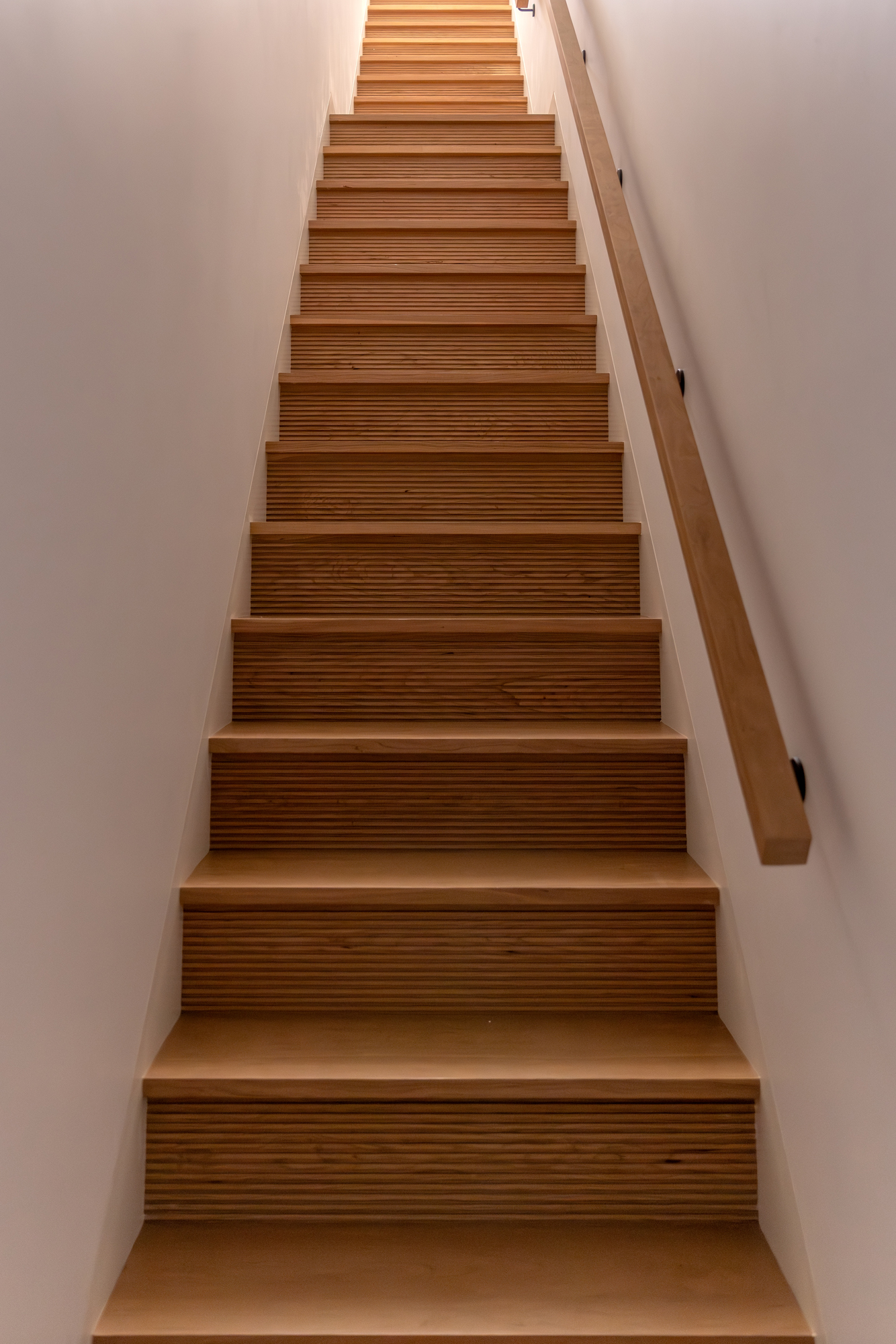
A newly inserted straight-run stair starts in a small shared vestibule into which the house’s one entry door opens, and runs along a party wall to the top floor unit.
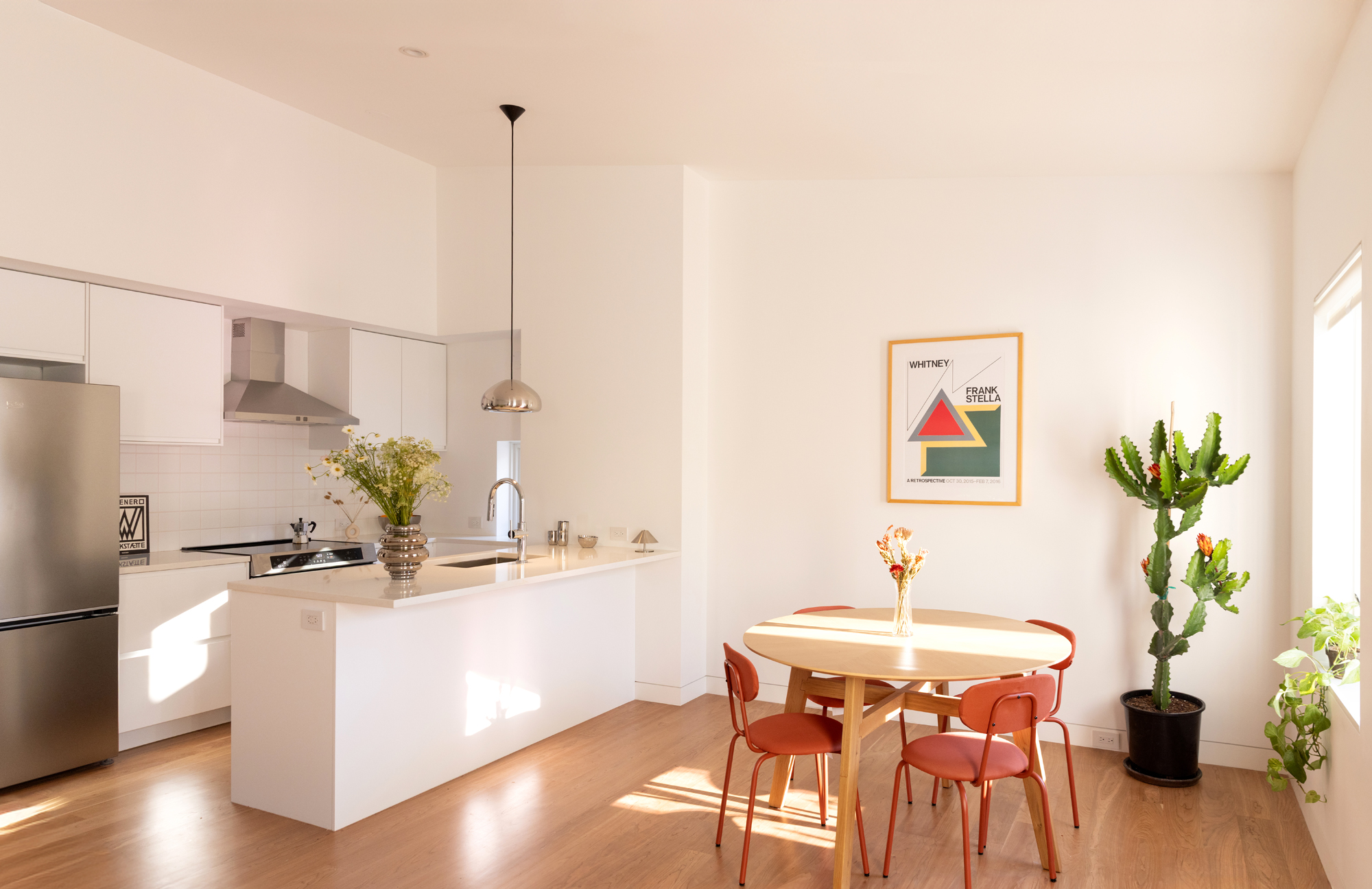
The skylit top floor apartment, used now for guests and anticipated as an eventual home for grandparents, was designed to be melded into the duplex at a future date.
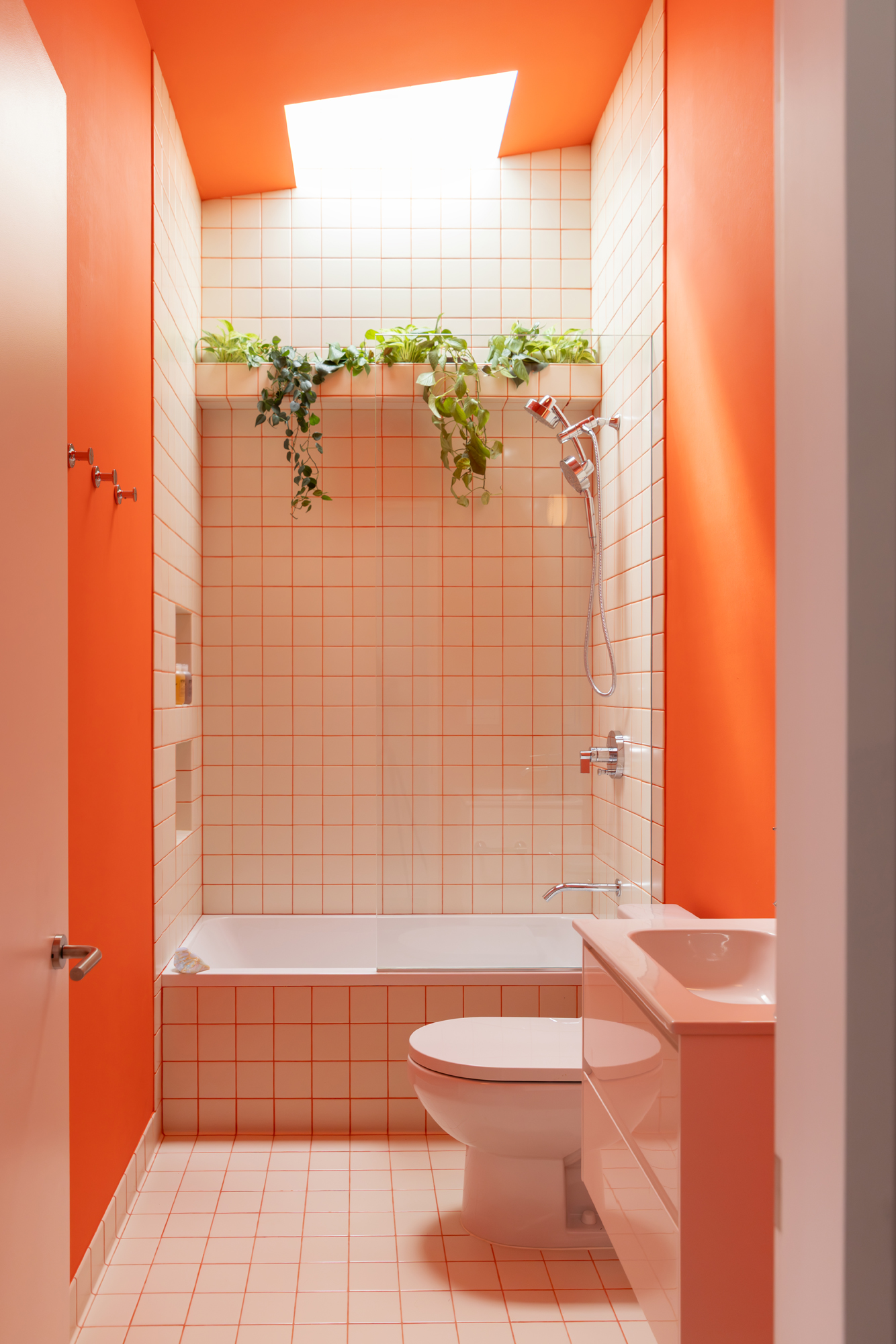
A bold orange bathroom is an energetic pop of color at the top of the house.
[Photos by Eva Zar]
Got a project to propose for The Insider? Contact Cara at caramia447 [at] gmail [dot] com
The Insider is Brownstoner’s weekly in-depth look at a notable interior design/renovation project, by design journalist Cara Greenberg. Find it here every Thursday morning.
Related Stories
- The Insider: Stylish ‘Upside Down’ Owner Duplex Crowns Greenpoint Townhouse Renovation
- The Insider: Central Light Well Organizes Space in Greenpoint Row House Gut
- The Insider: Penthouse Addition With Views, Plantings Tops Greenpoint Factory Building
Email tips@brownstoner.com with further comments, questions or tips. Follow Brownstoner on X and Instagram, and like us on Facebook.
Lovely home. I am curious about people’s thinking when the designate a third floor apartment as a future space for grandparents. Wouldn’t it be better to put that use on a ground floor?
Yep I was thinking the same thing. If the future space is for the grandparents then ideally grandpa and grandma need the lower unit so yeah this looks like a functional mistake. You won’t want them dealing with all those stairs ( the knees and hips get arthritic :).
Great modern house all the same and congrats to the owners
I think the notion that you have to live on a single floor as you age is a peculiarly American one. Think of those elderly folks you see trudging up impossibly steep steps in European hill towns, a plastic shopping bag in each hand. Maybe that’s why many of them live so long! In all seriousness, that’s the family’s intention. If it doesn’t work out as planned, they’ll adapt.
Aha longevity stairs ! Ok maybe thats what the owners where going for and of course on can install those bulky escallator stair climber thingys as needed. However I am with Putnam though, aging-friendly housing isn’t only an American concept and is in fact now code in new construction through out European cities.
Oh well great stuff still Cara and thanks for the goodies over the years ( yep I remember Casacara 🙂
Is universally accessible and aging-friendly housing an American concept? If so, it is a good one. Some older folks (and younger folks) can easily scamper up and down multiple flights, others not so much. In many European countries they allow smaller and cheaper elevators so you see them in lower rise buildings, while US standards demanding that they big enough for an EMS gurney means fewer new apartments are accessible to people with mobility issues, heavy bags and strollers. In my own house I plan to renovate the ground floor tenant’s apartment bathroom (hopefully before it falls into the cellar) with an eye for the possibility I may need to move down there at some point. And perhaps the owners of the house in question plan one of those stairway seat lifts if need be.