
After Years of Delays, Work at Gowanus Green Might Move Forward
The project has been on ice since 2024, when a disagreement between National Grid and the Department of Environmental Conservation stalled remediation.

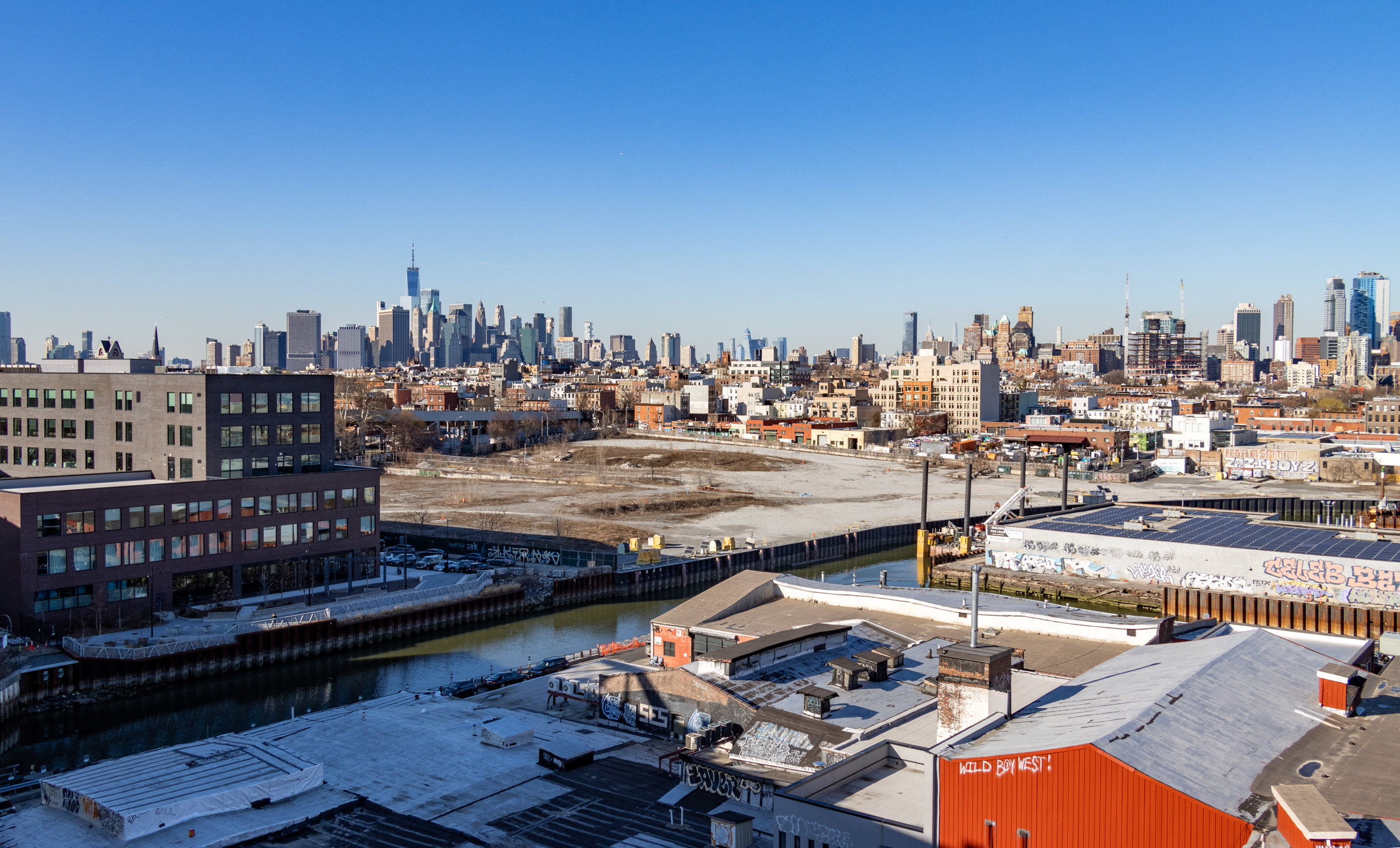
After years of delays, development of the all-affordable Gowanus Green appears to be moving forward. Photo by Susan De Vries
by Kirstyn Brendlen, Brooklyn Paper
After two years of delays and disputes, the developers of the Gowanus Green — the massive affordable housing development set to be built atop one of the most toxic sites in Gowanus — appear to see a light at the end of a long, sludgy tunnel.
The project has been on ice since 2024, when a disagreement between National Grid and the Department of Environmental Conservation stalled remediation of Public Place, a city-owned former manufactured gas plant and future home of Gowanus Green. Now, the agencies seem close to settling their differences.
But some locals worry the cleanup won’t be enough to protect future residents and the environment, especially after developers proposed dividing the undeveloped land into two separate parcels.
Officials hash out the details of remediation at Public Place
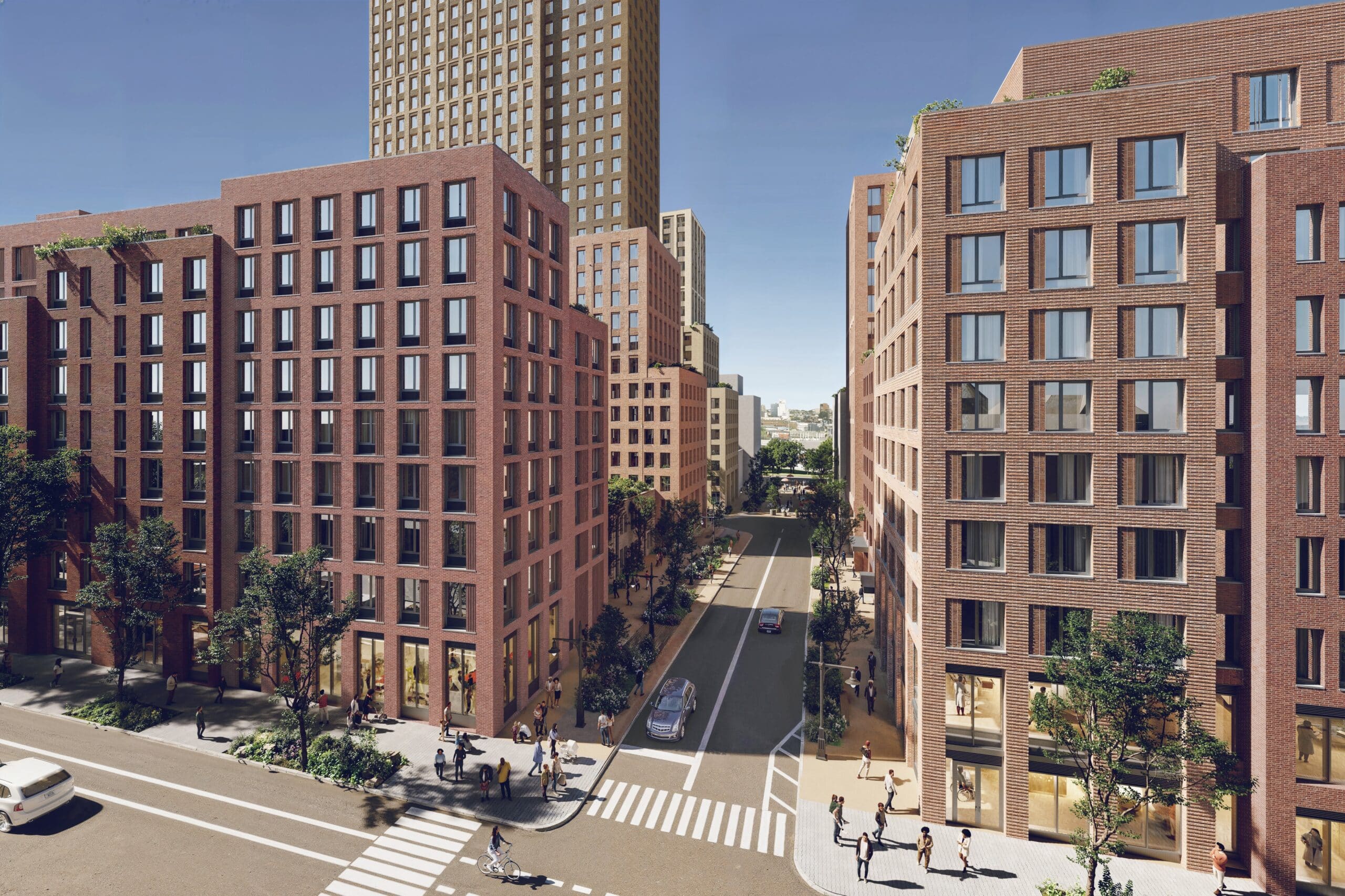
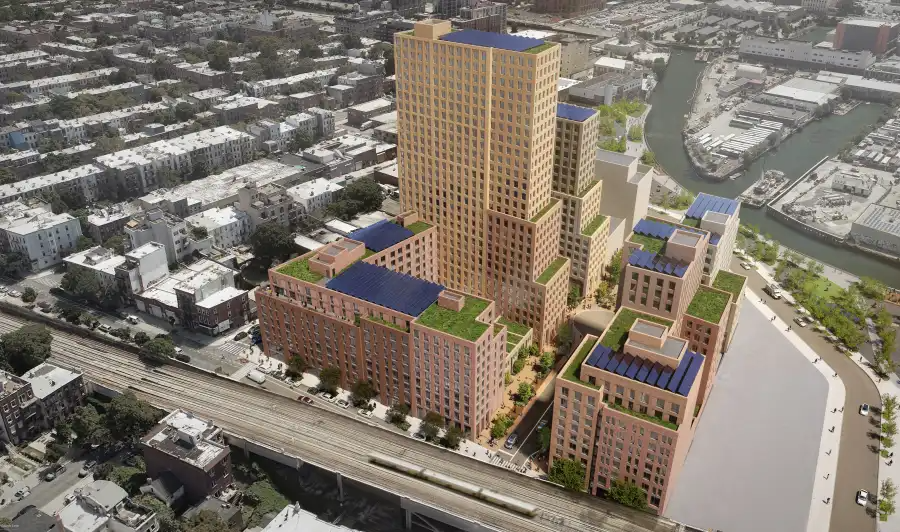
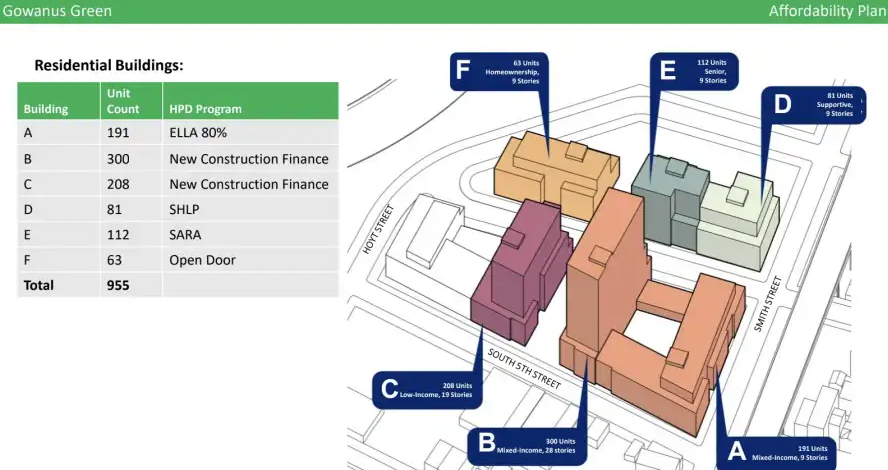
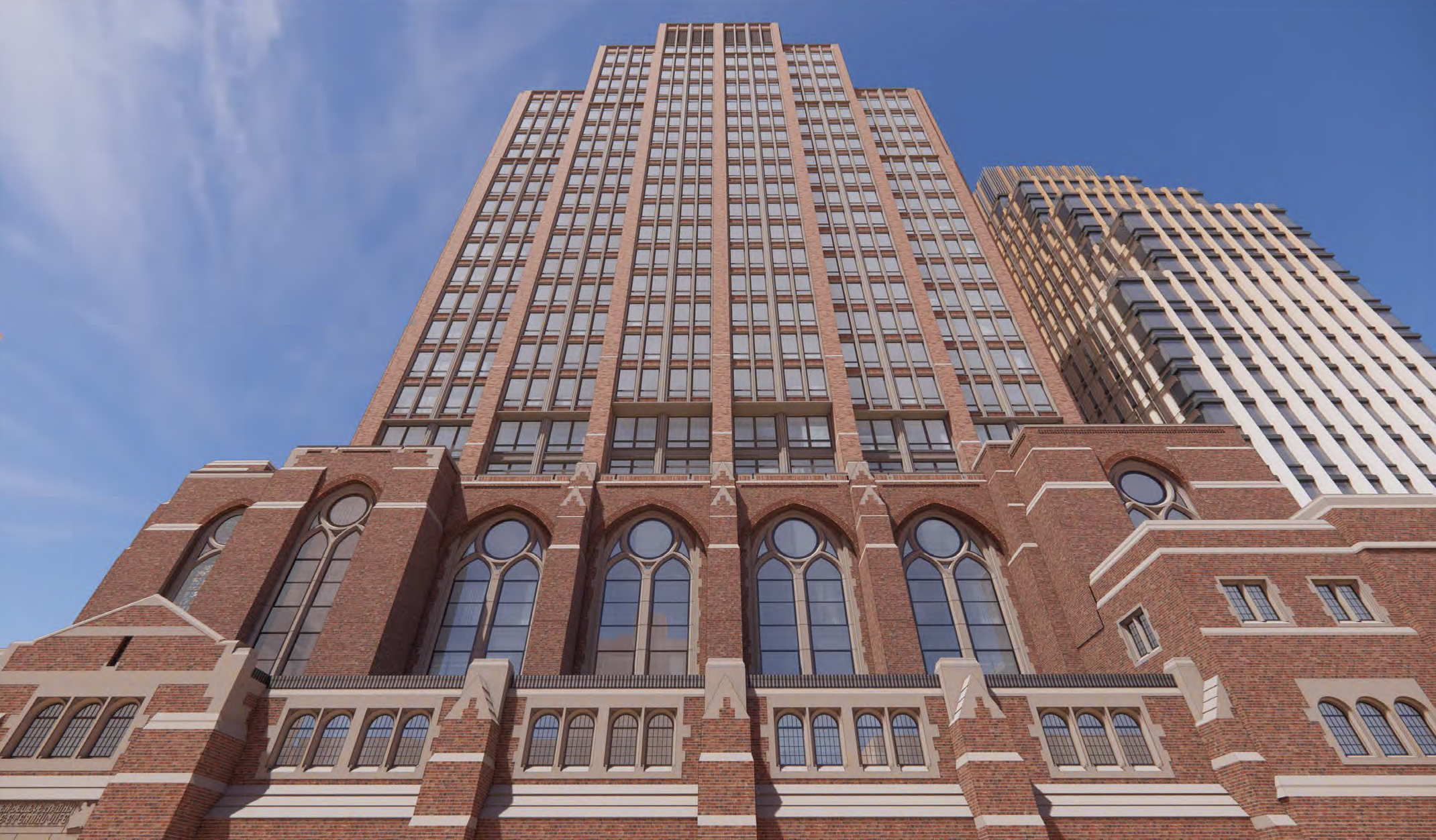
New York City promised to build the mixed-use development with 950 all-affordable apartments, a new public school, and a new park, as part of the 2021 Gowanus rezoning. Construction would begin after the Brownfield remediation of Public Place was finished.
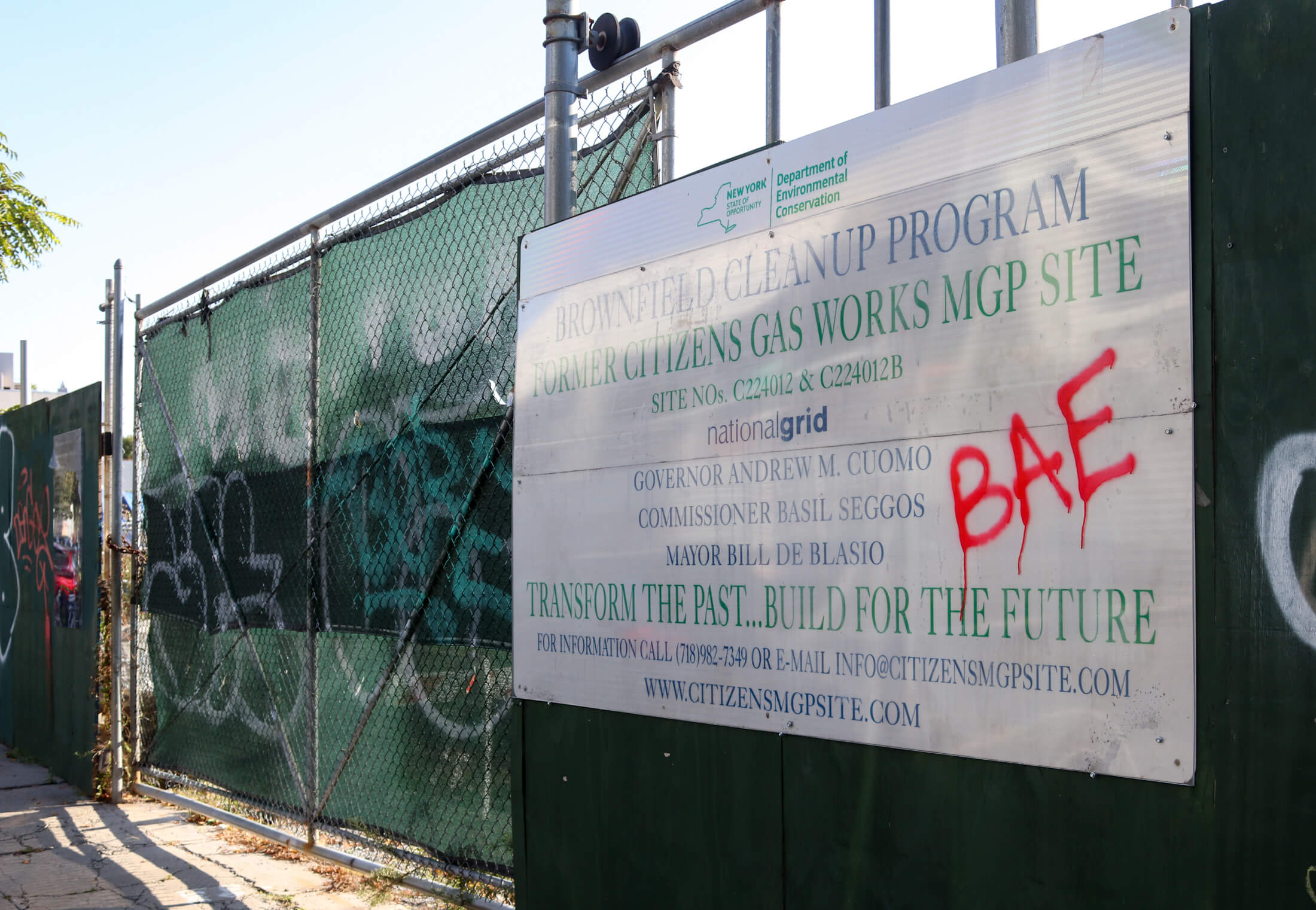
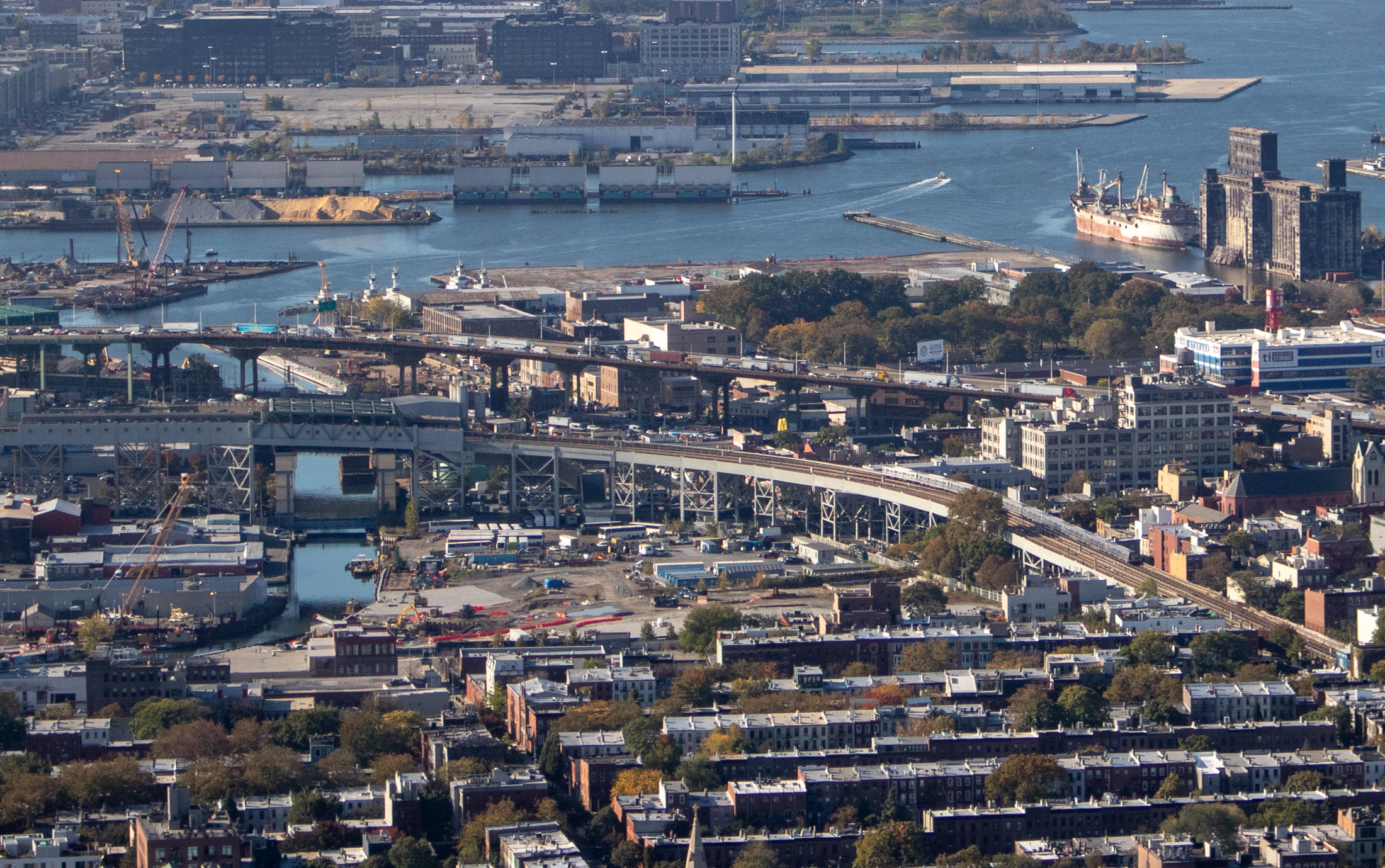
In 2023, after the initial clean-up at Public Place was largely completed, the federal Environmental Protection Agency handed down new rules related to contaminated groundwater. The site, which was the home of the Citizens Manufactured Gas Plant for more than 100 years, is heavily contaminated with carcinogenic coal tar and other hazardous chemicals. Without proper containment, groundwater — carrying coal tar and other gunk — can travel into adjacent lots and right back into the Gowanus Canal, putting health, safety, and years of remediation at risk.
The agencies could not reach an agreement on an amended remediation plan — National Grid felt its plan was sufficient to address EPA’s concerns, while EPA and DEC disagreed — and National Grid initiated a dispute resolution process, suspending all clean-up.
At the time, officials said they hoped the disagreement would be resolved as quickly as possible, and that it would certainly impact the development of Gowanus Green. Two years passed with few updates.
At a March 12 meeting of the Gowanus Oversight Task Force, Andrew Gugliemli, director of DEC’s Division of Environmental Remediation, shed more light on the disagreement.
To prevent contaminated groundwater from seeping back into the canal or onto adjacent lots, DEC wanted National Grid to use a technique called in-situ solidification — essentially injecting concrete into the soil — to “stabilize” contaminated areas, ensuring coal tar and other toxins can’t move.
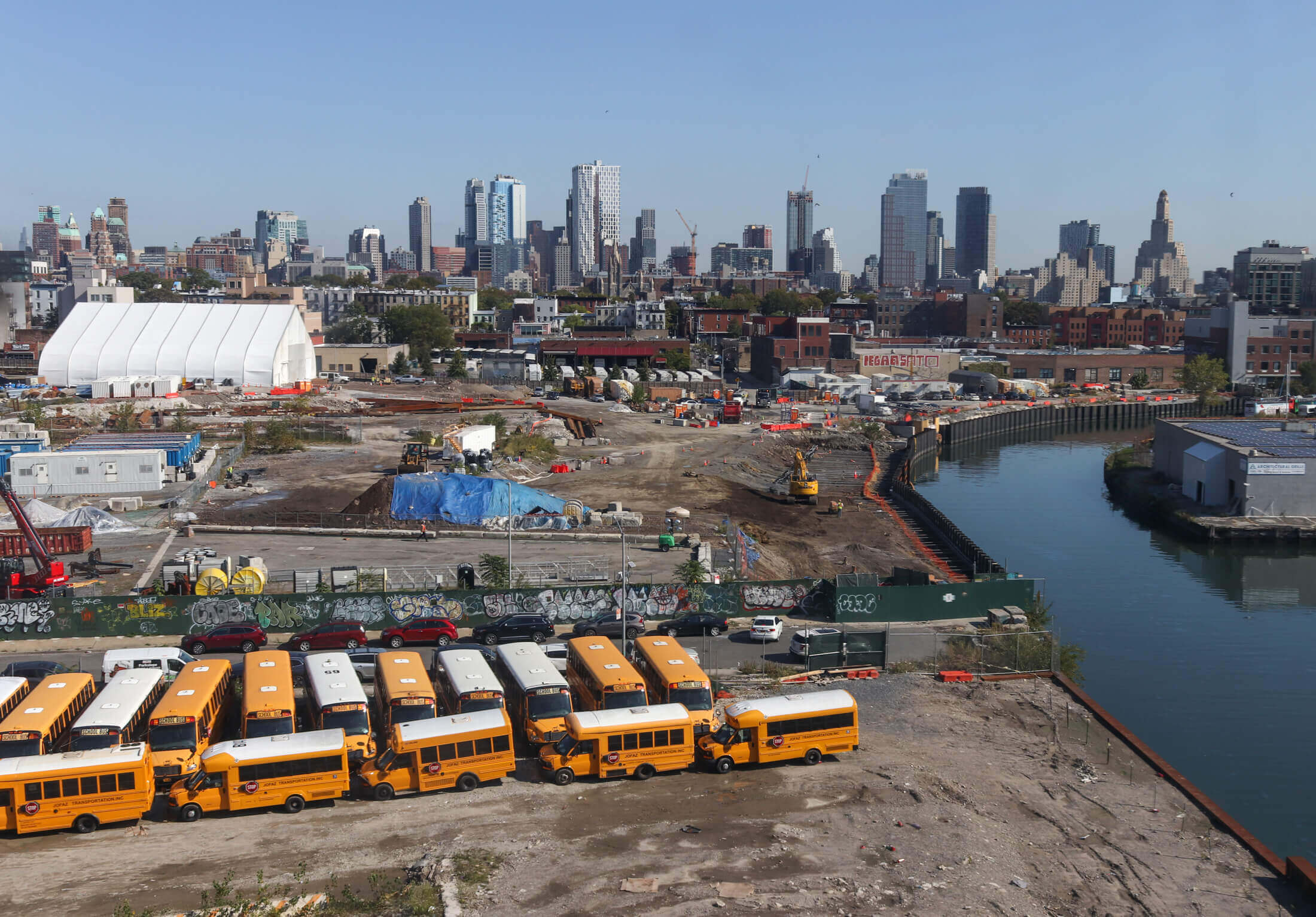
Public Place is studded with the remains of old infrastructure, Gugliemli said, including building piles.
“National Grid has said, ‘There’s obstructions, we can’t do that solidification in every part of the site,’” he said. “We said, ‘Well, prove it. You can say that you can’t do it, but we want you to go out there and prove that you can’t do it.’”
In the next few weeks, National Grid will search the ground to determine whether the obstructions are there, and if they will really make the work impossible. If the utility is right, the parties will explore alternatives — like “encapsulating” the contaminants, rather than solidifying them.
Gugliemli didn’t have an exact timeline for when National Grid’s investigation would be finished, or when a decision would be finalized.
But when the development team — composed of Fifth Avenue Committee, the Bluestone Organization, and Jonathan Rose Companies — presented an update at the same March 12 meeting, they seemed to feel a solution was imminent. That’s in part because of a change they hope to make to the Brownfield site itself.
Developers pitch a change to the site
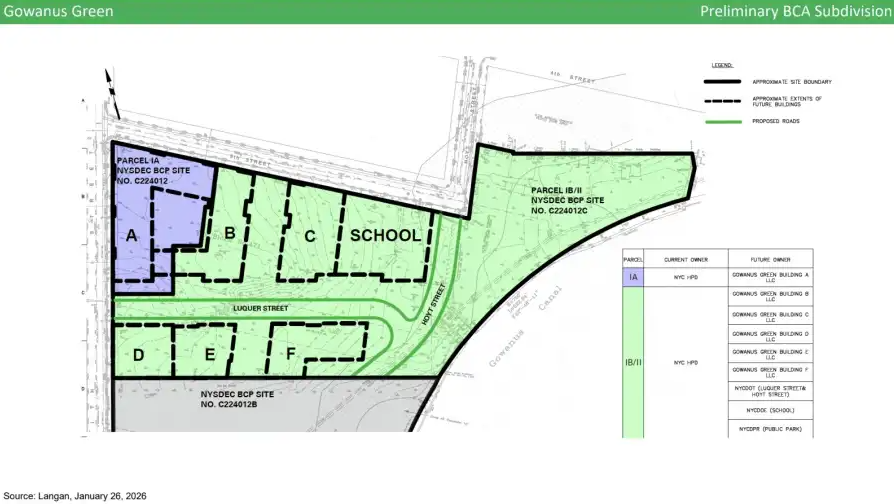
In late 2025, the development team, National Grid and the city’s Department of Housing Preservation and Development filed an application with DEC to split Public Place and turn the .754-acre future home of Building A into its own separate Brownfield site, “Parcel A.”
The application said the split would “facilitate-post remedial development” and simplify the implementation of long-term environmental controls. If approved, the split would require two separate remediation plans, one for each site.
The proposal drew immediate concern from locals. Jack Riccobono, a member of local advocacy group Voice of Gowanus, was worried that dividing the site would make it more difficult for DEC to enforce remediation standards.
“We were concerned, but it certainly felt like part of this pattern of sort of catering to the polluter and to the consortium of developers to continually break apart what should really be one universal cleanup of this massive site,” he said.
Public Place has already been divided once, when the former “Parcel III” was made into its own Brownfield site, 459 Smith Street. That site is privately-owned, and has its own remediation plan, unrelated to the one at Public Place.
Another part of Public Place, Parcel IV, sits north of the Gowanus Green site, across 5th Street. Parcel IV is part of the state Superfund program, and is also privately owned. DEC and National Grid have struggled to access Parcel IV, as its owners have been uncooperative.
In February, the Gowanus Canal Community Advisory Group sent a letter to DEC urging it to deny the division. The long-term success of the clean-up relies on environmental monitoring and control systems that must be maintained for decades to come, they said.
“These controls will sit beneath multiple buildings, including low income housing, a school, and public spaces, and responsibility will eventually be distributed among multiple owners and operators,” the letter reads. “This creates long-term legal and practical challenges for ensuring that monitoring continues, systems are maintained, corrective action occurs when needed, and accountability does not weaken as properties change hands.”
Local politicians, including Assembly Member Jo Anne Simon and U.S. Representative Dan Goldman, have also voiced their opposition to the split.
In comments submitted to DEC, Simon said she was “appalled by the twists, turns and lengthy delays to cleaning up this site, as well as the rationales asserted for the proposed carve outs.”
She — along with Voice of Gowanus and the CAG — want Public Place to be transferred into the state Superfund program, which they say would give DEC more control while preventing National Grid from collecting the cost of the cleanup from ratepayers.
DEC has maintained that the remediation would be the same even if Public Place were part of the state Superfund program, and that the costs would then be passed on to residents through taxes rather than National Grid bills.
“I am offended by the apparent acquiescence of the agency to National Grid’s clearly documented plans to spread out the payment of its remedial liabilities — which it knew full well when it purchased Keyspan — over a period of 47 years so as to secure the NYS Public Service Commission’s approval to pass along the costs of this clean up to the ratepayers over the next two generations of New Yorkers — including those who are already bearing the brunt of the environmental exposure and their progeny,” Simon continued. “It fairly boggles the mind.”
The development team, though say, the dividing the site would speed up construction of much-needed affordable housing without jeopardizing remediation. Gowanus Green represents roughly one-third of the affordable housing promised in the 2021 rezoning, and the need for those units is only rising.
Michelle de la Uz, executive director of Fifth Avenue Committee, said the split would allow Building A to secure funding so construction can begin when remediation wraps on the smaller site – even if cleanup is ongoing on other parts of Public Place.
“In order to get a certificate of occupancy for the building, you need to have a certificate of completion on the remediation,” she told Brooklyn Paper. “You won’t get a lender that’s going to lend construction financing on a site if it can’t get a certificate of occupancy, and you can’t get a certificate of occupancy without a sign off on the cleanup, and you can’t get a sign off on the cleanup unless you divide the site.”
Building A has already received a $5 million construction grant from the state. In 2024, after remediation stopped, a city representative said the grant “does tie us to a certain timeline to start construction,” but did not elaborate on the timeline.
Dana Ferine, an assistant public information officer with the DEC, said the split would “[allow] for earlier remedial action in areas that would otherwise be co-dependent on a unified development schedule.”
Though the sites would have separate remediation plans, Ferine said the Brownfield program “ensures consistency of intended uses across property lines,” and that both parcels would be held to the same standards.
“I know the main concern people have is, OK, you do [Parcel A], and then the rest of it’s never going to happen,” de la Uz said. “That is absolutely not the plan here. The entire site needs to be cleaned up in order for Gowanus Green in its full vision to be delivered.”
DEC has not yet issued a decision on the application. Despite that, earlier this month, the development team submitted a proposed supplemental cleanup plan for the smaller Parcel A site.
“We’re still thinking about it,” Gugliemli said. “In the meantime, we wanted the public to look at what the proposed work plan would be if we were to approve that amendment and create that site.”
The 10,000-page document outlines what’s already been done at the site and what would be done if the split were approved. A public meeting on the proposal will be held on March 25 at 7 p.m.
With much uncertain, Gowanus Green inches forward
With both the split and the cleanup proposal still in flux, developers are confident that Building A will be moving forward soon. De La Uz said they hope to close on funding by June 2026.
At the March 12 meeting, she put forward a timeline for construction and remediation. If the split and new clean-up plan are approved, supplemental remediation at Parcel A would begin later this year. Additional clean up for Parcel B — the larger plot, which will house buildings B-F, the school and the park — would start at the same time.
Some construction work for Building A would run concurrently with remediation, de la Uz explained. The building’s foundation will include a sub-slab depressurization system to prevent any remaining hazardous gases from leaching into the building itself, and installation of the system will overlap with clean-up.
Remediation for Parcel A would wrap up in 2027, and construction of Building A would start in 2028. The building would be ready to welcome residents in early 2029.
Remediation at Parcel B would also wrap up in 2027, but construction timelines for the remaining buildings vary.
“The goal here is to have construction of the six buildings from 2026-2031,” de la Uz said. “That’s going to be dependent, of course, on the availability of subsidy and financing from the City of New York.”
Editor’s note: A version of this story originally ran in Brooklyn Paper. Click here to see the original story.
Related Stories
- Renderings of Affordable Gowanus Green Complex Show Elegant, Traditional Design
- Extensive Construction in Gowanus Forecasts a Very Different Neighborhood Ahead
- EPA Letter Warns State Cleanup of Gowanus Green May Leave Contamination Behind
Email tips@brownstoner.com with further comments, questions or tips. Follow Brownstoner on X and Instagram, and like us on Facebook.
What's Your Take? Leave a Comment