
Proposed IBX Will Dramatically Reduce Emissions, MTA Says
The agency will gather public feedback on the Interborough Express light rail plans at a series of meetings starting Tuesday.

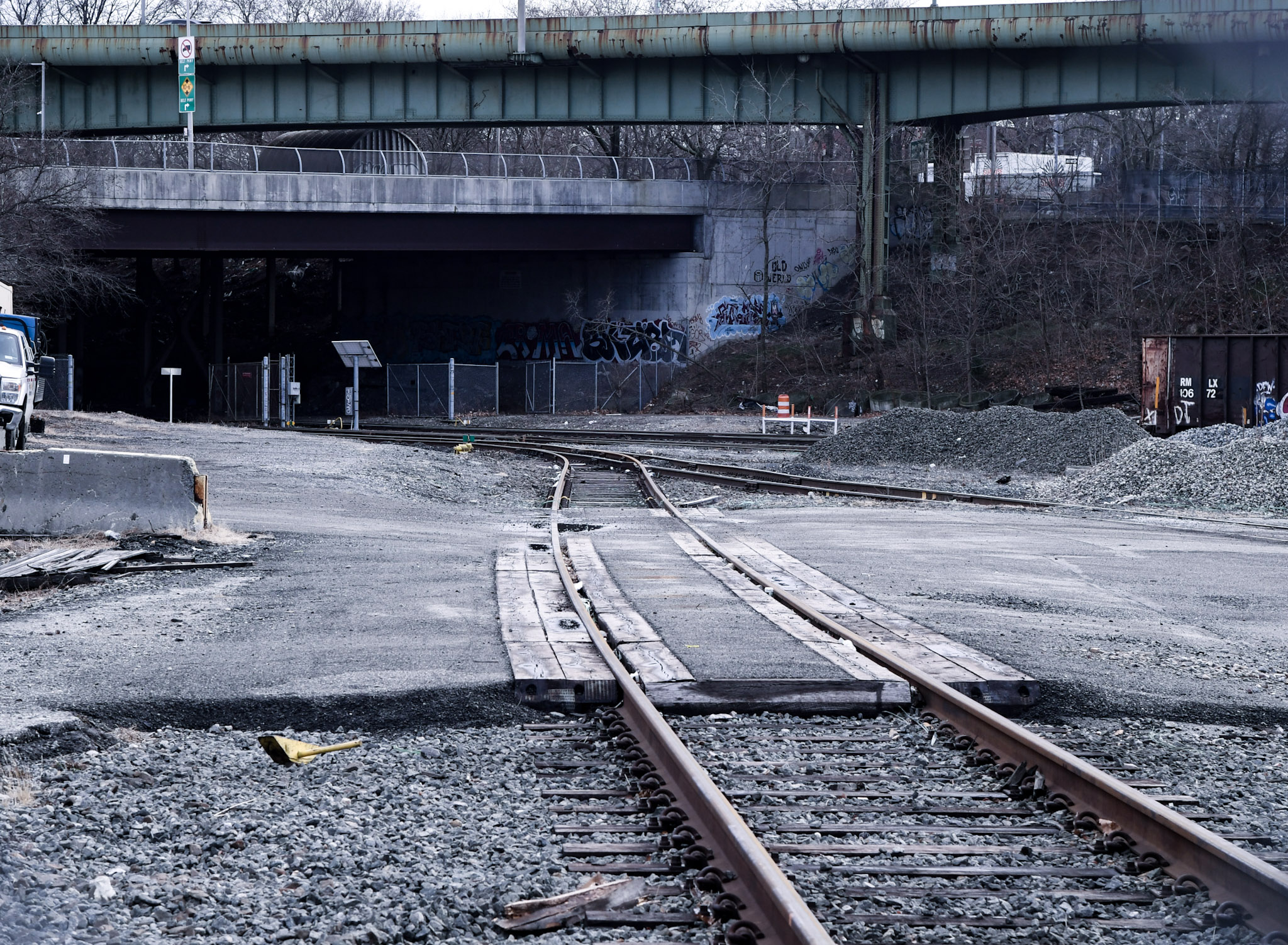
View of the Bay Ridge branch next to the 8th Avenue station in 2022, which would be incorporated in the proposed Interborough Express. Photo by Marc A. Hermann / MTA
by Barbara Russo-Lennon, amNY
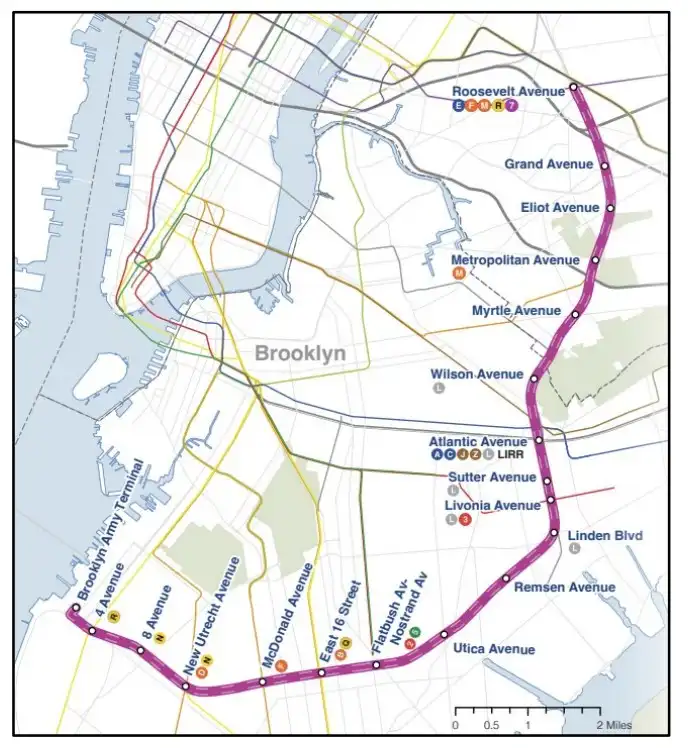
The MTA announced the next phase of public engagement for the IBX light rail planned for Brooklyn and Queens—the largest transit expansion project undertaken by the state-run agency in over 50 years.
The meetings will take place throughout the two boroughs, starting on Tuesday, April 28, at P.S. 7 in Queens. A total of six public meetings, where residents can share thoughts and ideas, are planned through May.
The IBX, formally called the Interborough Express, is poised to transform travel between the two outer boroughs, connecting nearly a million residents along the route. Since many of the IBX’s potential riders currently rely on private vehicles for local travel, the MTA said, the planned light rail will translate to roughly 21.8 million fewer vehicle miles traveled in passenger cars each year.
The result? A reduction in greenhouse gas emissions each year, according to the MTA.
“Nearly one million New Yorkers live along the proposed IBX route, many of whom feel they need a private car for interborough travel,” MTA Chair and CEO Janno Lieber said on April 22. “On this Earth Day, we want to make sure these folks know that soon there will be a better, faster, and more climate friendly way to travel between Brooklyn and Queens.”
According to the U.S. Environmental Protection Agency, transportation is the largest source of emissions in the country, accounting for 28 percdent of all national greenhouse gas emissions in 2022. Primarily, greenhouse gas emissions from transportation come from burning fossil fuels for cars, trains, ships, planes, and trucks.
MTA reps said over half of the transportation sector’s emissions come from passenger cars and trucks.
The public meetings aim to raise awareness about the environmental benefits while giving New Yorkers a chance to share their thoughts about the project.
“The upcoming public workshops are an important step in reaching them as we continue to advance the IBX,” Lieber said.
Meanwhile, residents of Brooklyn and Queens have expressed both support and concern about the IBX, including its environmental impacts on communities.
“IBX would destroy thousands of trees along and near the freight line,” Liisa Lunden of Elmhurst said. “A single tree in New York City can support hundreds to thousands of species, including birds, mammals, insects, etc., and trees play a crucial role in supporting this biodiversity. What happens to all of this wildlife?”
Will, a Queens resident, told amNewYork that he likes the idea of the IBX but is concerned about any trees that might be lost during construction of the train line.
Christina Wilkinson, secretary of the Juniper Park Civic Association in Queens, expressed similar sentiments about the importance of trees.
“The trees currently serve as a buffer between the polluting freight trains and the community,” she said. “People waiting down on the platforms will be subjected to freight trains belching black smoke and trash odor from waste trains. What will MTA do to protect riders from these conditions?”
Other residents living close to the planned route expressed concerns about noise pollution and the many cat colonies near the existing freight line that the IBX would use.
Barbara O’Donnell, a homeowner in Middle Village, said at an MTA public meeting in November that her neighborhood would be “highly impacted” by the IBX’s proposed Eliot Avenue stop.
“The avenue is a two-way street. It does not support a gigantic subway station,” she said.
Still, officials said the IBX will significantly reduce travel times between Brooklyn and Queens by bypassing Manhattan along its route, which will connect to 17 subway lines, 51 bus lines and the Long Island Rail Road. Currently, the G train is the only New York City train that does not stop in Manhattan.
“The Interborough Express will be life changing for residents in the two largest and fastest-growing boroughs in New York City,” Jamie Torres-Springer, construction and development president at the MTA, said.
Schedule of IBX public meetings
Public workshops about the IBX are scheduled for:
Queens: 80-55 Cornish Avenue, Elmhurst
Queens: 68-02 Metropolitan Avenue, Middle Village
Brooklyn: 5811 Ditmas Avenue, East Flatbush
Brooklyn: 4802 10th Avenue, Borough Park
Queens: 60-85 Catalpa Avenue, Ridgewood
Brooklyn: 800 Van Siclen Avenue, East New York
More information about the IBX is at mta.info.
Editor’s note: A version of this story originally ran in amNY. Click here to see the original story.
Related Stories
- Could the IBX Be Fully Automated?
- Interborough Express Reaches New Milestone in Road to Reality
- State Takes $166 Million Step Toward Making Interborough Express a Reality
Email tips@brownstoner.com with further comments, questions or tips. Follow Brownstoner on X and Instagram, and like us on Facebook.

What's Your Take? Leave a Comment