
Restored to Opulent Splendor, a Delaware County Mansion Asks $2.995 Million
Constructed as a summer home for the McLean family in 1912 and now known as Belle Terre, the mansion was restored by artist Hunt Slonem.

Photo via Annabel Taylor of Four Seasons Sotheby’s International Realty
Resplendent with over-the-top ornament, this Delaware County mansion has been restored with an artist’s eye for color and pattern and a respect for the grandly scaled original details. Constructed as the summer retreat for a wealthy industrialist and family in the early 20th century, it has a baronial presence meant to impress and is still situated on more than 38 acres of land with a vista over an ornamental lake.
The estate on the market at 10566 County Highway 18 in South Kortright and now known as Belle Terre was constructed in 1912 as the family of James and Sara McLean. He made his millions in the mining business with the Phelps-Dodge Corporation. The more recent rescue and renovation of the house back into a single-family dwelling after decades of institutional use was the vision of artist and house collector Hunt Slonem.
James McLean already had a family connection to South Kortright before building his new mansion. His family moved to the area when he was young, as early as age 12 by some accounts. His father, Edward, born in Scotland, and American-born mother, Margaret, were recorded in the 1860 census as farming in the area. Edward died in 1891 and soon after James began making changes to the property, known as Riverside. Between 1892 and 1899, local papers reported on the enlargement of his house, the creation of an ornamental lake, the construction of a coachman’s cottage, and more improvements.
The changes to the house were perhaps not grand enough as in 1912 it was reported that the existing McLean summer home in South Kortright was being demolished so a new brick house could be constructed on the spot. Local paper The Delaware Gazette reported in August of that year that the house was to have a cement foundation and “spacious parlors and sun parlors.” The landscape around the house would get a new look as well with a lawn of several acres embracing the existing lake. A large force of workers was expected to be employed on the site with a goal of completing the house by October 1913 at an estimated cost of $100,000.
A reporter bumped that number upwards and referred to it as the “new million dollar McLean mansion” in November of 1913. By that time, projects on the interior were under way, with local painter and decorator F. H. Churchill at work. The contractor for the entire project was reported to be one Mr. Weeks.
Newsy blurbs in the local papers don’t mention an architect behind the design, nor do any subsequent histories. A dig through period publications uncovered one intriguing attribution. A page dedicated to the John Swenson Granite Company in the 1914 edition of Sweet’s Catalogue of Building Construction includes a list of projects that used the company’s Concord granite, including the McLean residence in South Kortright. Architect James T. Kelley is credited with the design.
Kelley, a Boston-based architect, established his own practice in the 1880s. Known for his country and city homes as well as civic buildings primarily, but not exclusively, in Massachusetts, Kelley worked in several revival styles, including Colonial Revival. No other references to Kelley, or his sometimes collaborator Harold S. Graves, as the designer of this house or another house on the McLean property have turned up.
Work on the new McLean mansion and landscaping was completed in advance of the summer of 1915 when landscape painter Louis Aston Knight visited the estate to paint views of the new dwelling. It isn’t clear where the McLeans and the artist crossed paths. Knight was born in France to an American-born father, also a painter. While Knight worked primarily in France, he did gain some attention in New York in the early 20th century. The McLean family, which included daughters Ethel, Helen, and Alice, also traveled extensively and may have crossed paths with the artist. In 1894 they undertook a lengthy multi-city tour of Europe, and in 1913 Sara McLean and other family members spent about six months touring the continent, perhaps awaiting the completion of the new mansion.
Knight executed at least one painting of the mansion as well as a view of the Delaware River at South Kortright during his sojourn in the area. The latter was exhibited in New York in 1918. The painting of the McLean property survives in a private collection. In Knight’s romantic landscape a stone bridge crosses the bucolic lake and a reflection of the mansion shimmers in the water.
The view of the house depicted is the stately main facade, with its neoclassical full-height entry porch with columns and a pediment. Fittingly, a copper balustrade and roof crown the mansion. Early views of the property show the house originally had a sunroom and porch on one side of the main facade and a more substantial wing on the other.
While the family didn’t live full time in South Kortright, they seem to have had a tradition of philanthropy and involvement in the community. Funds were donated to the South Kortright library, local improvements underwritten, and entertainment furnished for celebrations. In the 1920s, that philanthropy extended to the use of the house; Sara McLean allowed the Episcopal Diocese of New York to use it for mission work, including as a summer home for girls.
James McClean died in 1920 and widow Sara seems to have spent more time in Manhattan until her own death in 1934. While she had her own home on Long Island, daughter Alice T. McLean apparently took over the management of the South Kortright property. She had married in 1904 at the original summer home in South Kortright. After divorcing in 1915, she reverted to the McLean name and was often referred to in the press as Mrs. Alice McLean. She was an avid horsewoman, a polo player, frequent traveler, and dog lover.
In January 1940, following the outbreak of war in Europe, Alice funneled her energy into the founding of the American Women’s Voluntary Service (AWVS), modeled on the Britain’s Women’s Voluntary Services organization. The AWVS, which welcomed all women, became the largest women’s service organization in the U.S. with more than 300,000 members supporting the war effort by organizing scrap drives, providing first aid, offering transport services, and other help. There were units across the country, including in Brooklyn.
The success of AWVS brought Alice a multi-page profile by Jannet Flanner published in the New Yorker in 1942. While it highlighted her rugged determination to make the organization succeed, it also touched on her family history and the “Palladian pillared style” mansion in South Kortright. Described as being in charge of the family farm for the last 20 years, she was said to be known locally as “as good as a man with crops and an absolute natural with horses.”
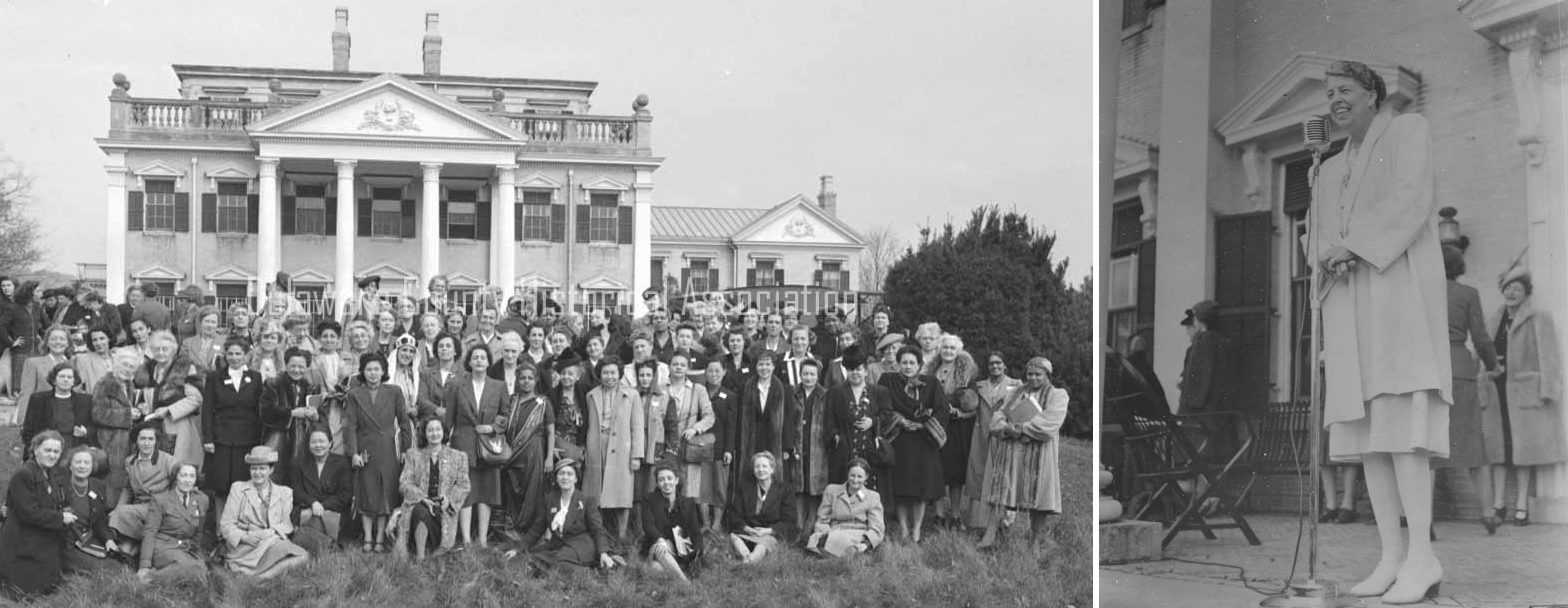
While horses still filled the stables her father established and cattle grazed the land, she also used the property to promote the work of the AWVS. In the fall of 1940, she threw open the estate to an estimated crowd of 4,000 to enjoy free food, a movie, and a dance band. In 1946 Alice hosted the International Assembly of Women at the property, with women from 53 nations participating, including Eleanor Roosevelt.
Her final plans for the property seem to have been the establishment of the International Valley Foundation, an art center to promote creativity across international boundaries. Alice ultimately sold the house to investors in 1950.
The mansion has housed a number of organizations since then, including the Christian Brothers in the 1950s, a gymnastics camp known as Belle Terre in the 1980s, and a Phoenix House drug treatment facility from the 1990s until 2015. At some point in the later 20th century, an additional wing was added to the house.
In 2017, artist Hunt Slonem purchased the house and began the process of peeling away the layers of alterations to find any surviving original details hidden underneath. Slonem already had extensive experience with house restoration, having tackled the Cordts mansion in Kingston.
In a 1953 newspaper article, the house was described as having a sprawling main level with large reception room, a library, dining room, gun room, and billiard room as well as spaces that were the servants’ domain including a kitchen, butler’s pantry, laundry room, and staff dining room. The second and third floors held 14 bedrooms for family and guests plus staff quarters. An elevator provided access from the basement, which held a wine cellar, up to the third floor. The grounds held barns, a carriage house, multiple houses for staff and tenants, and a gate house.
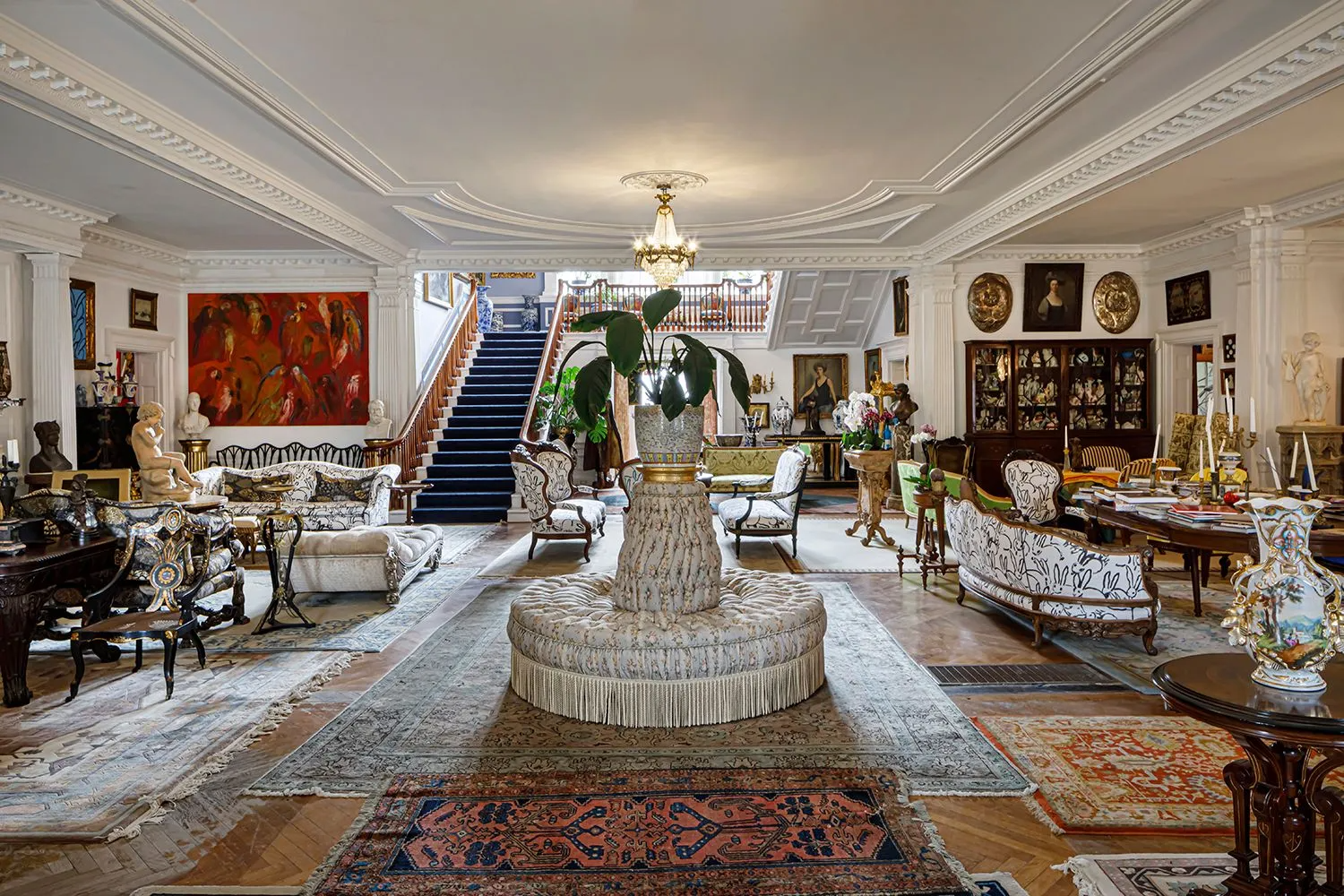
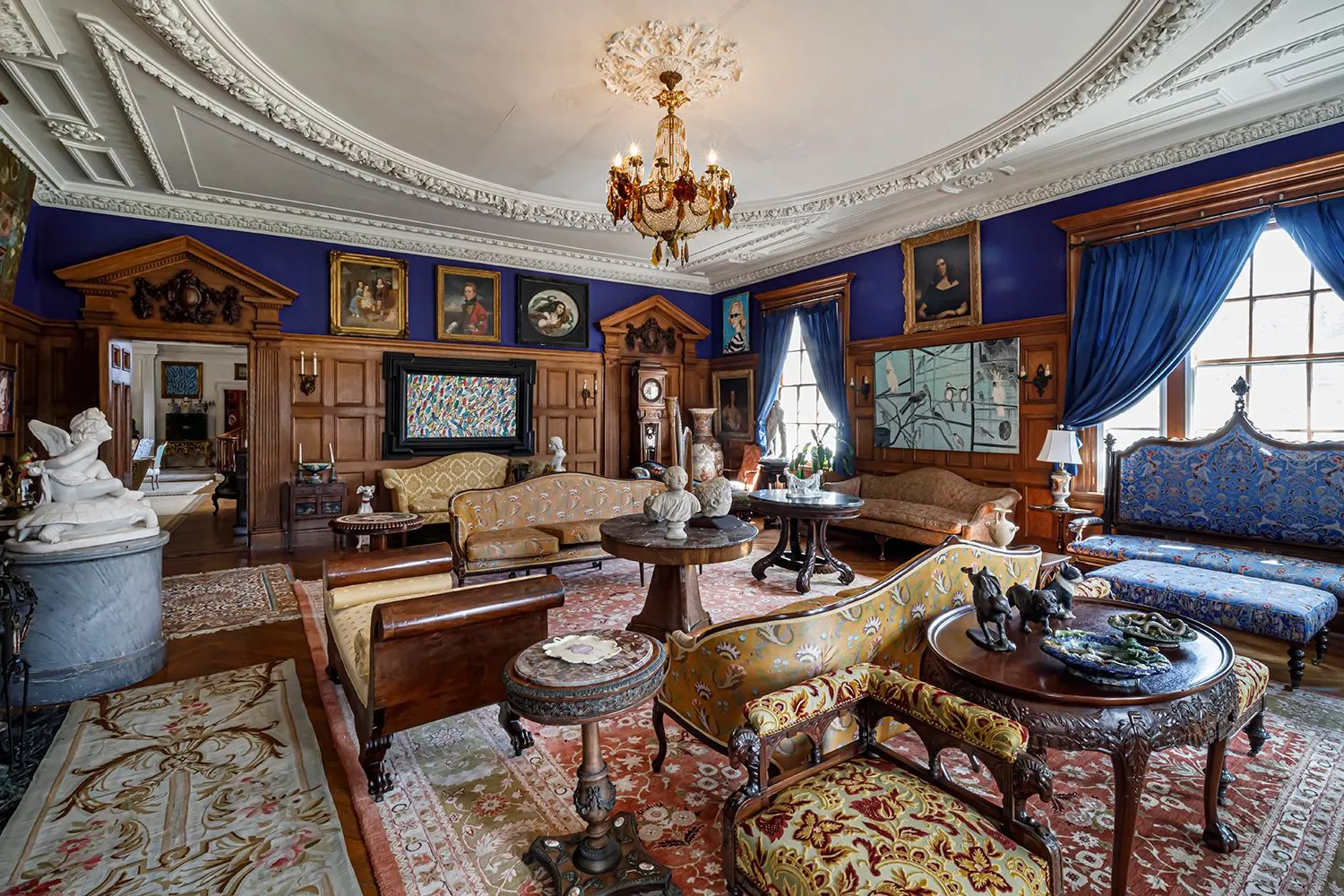
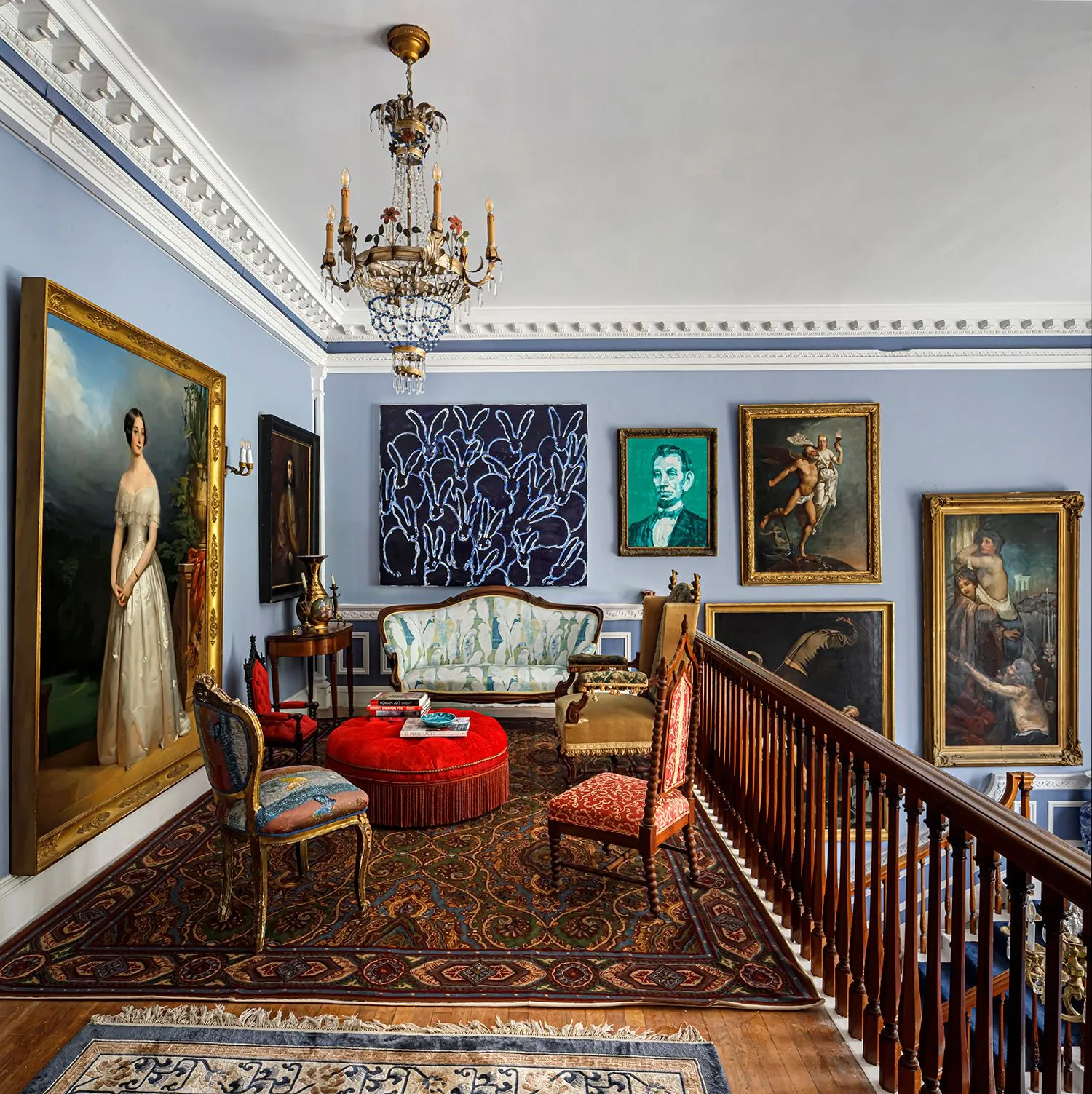
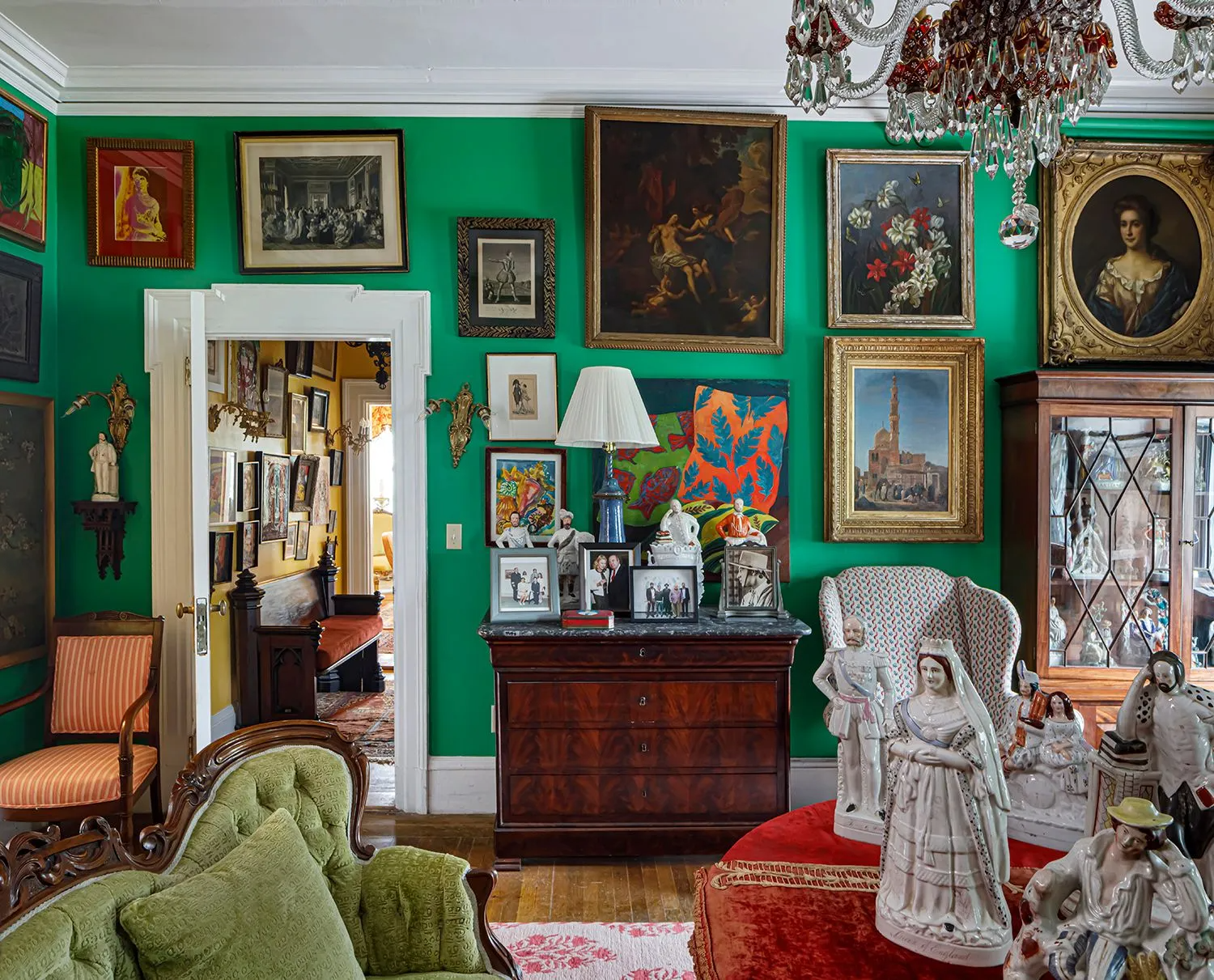
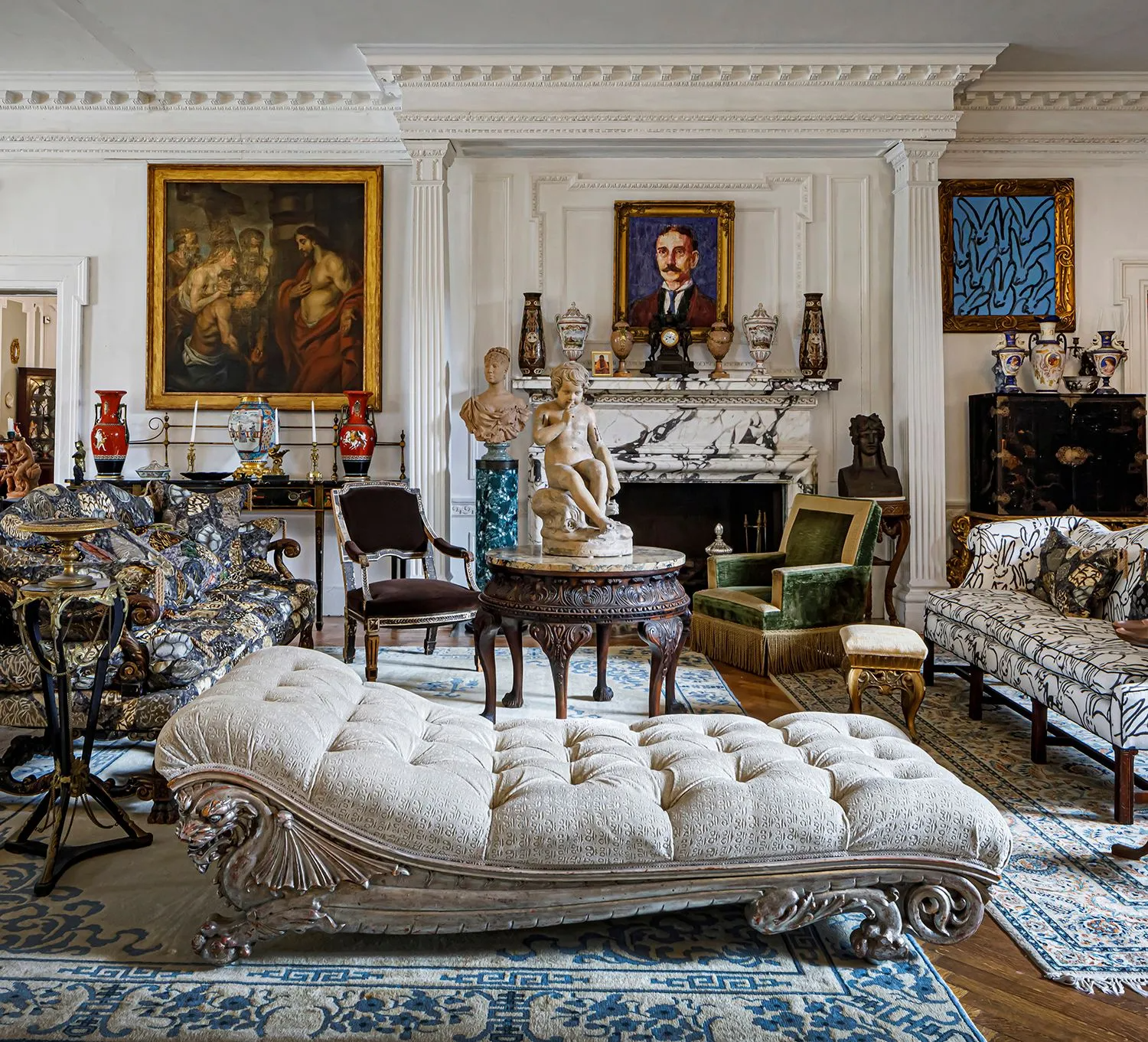
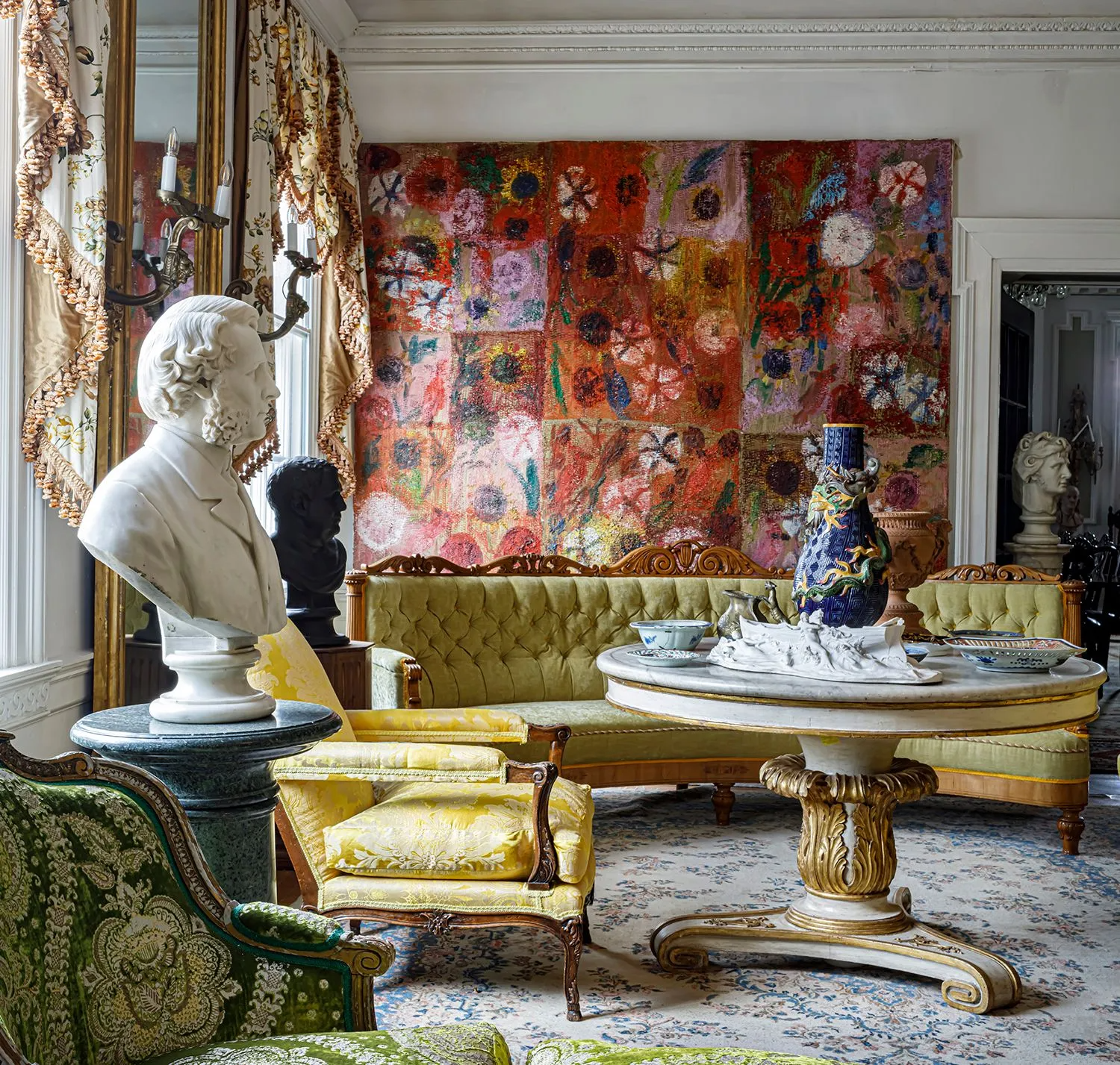
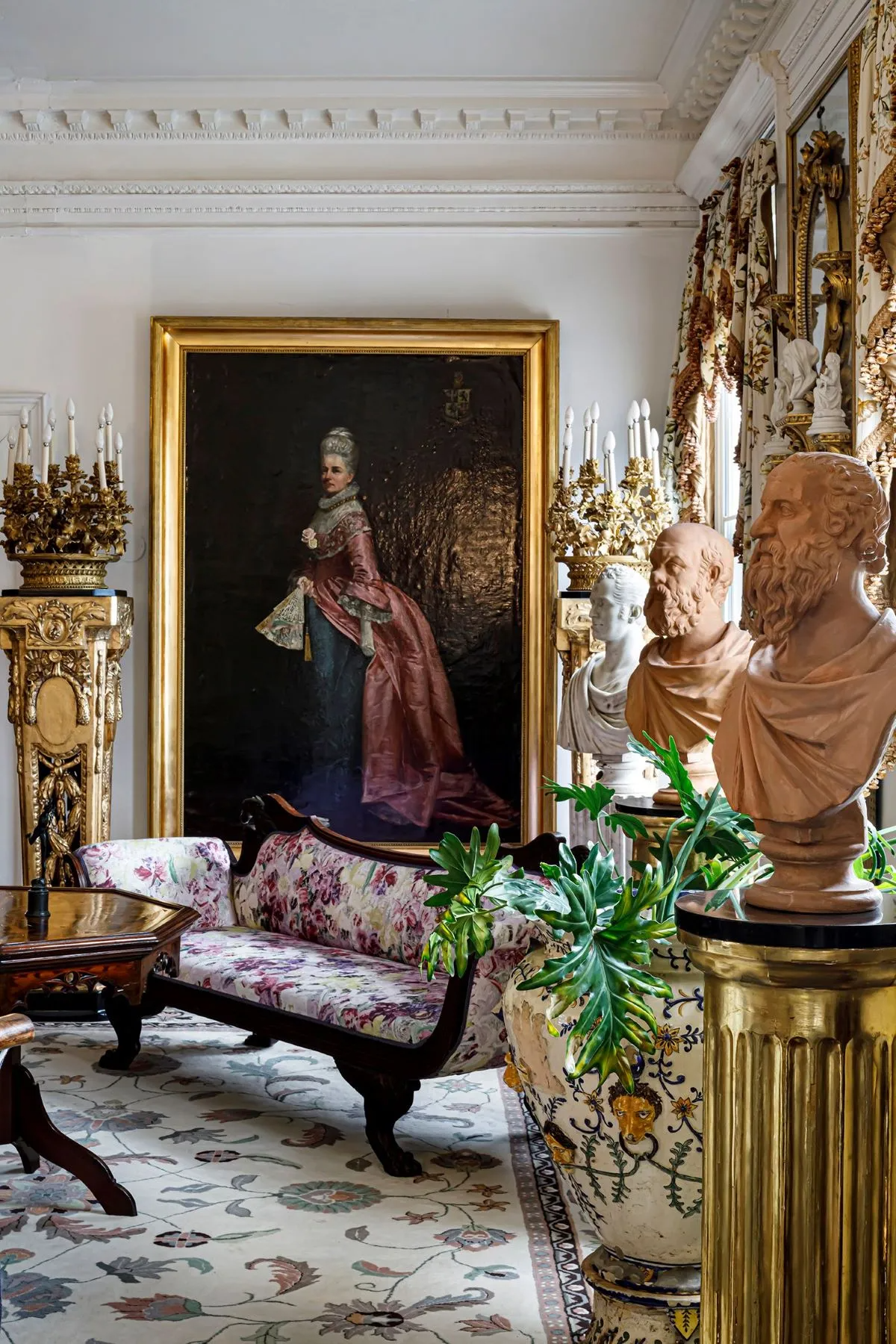
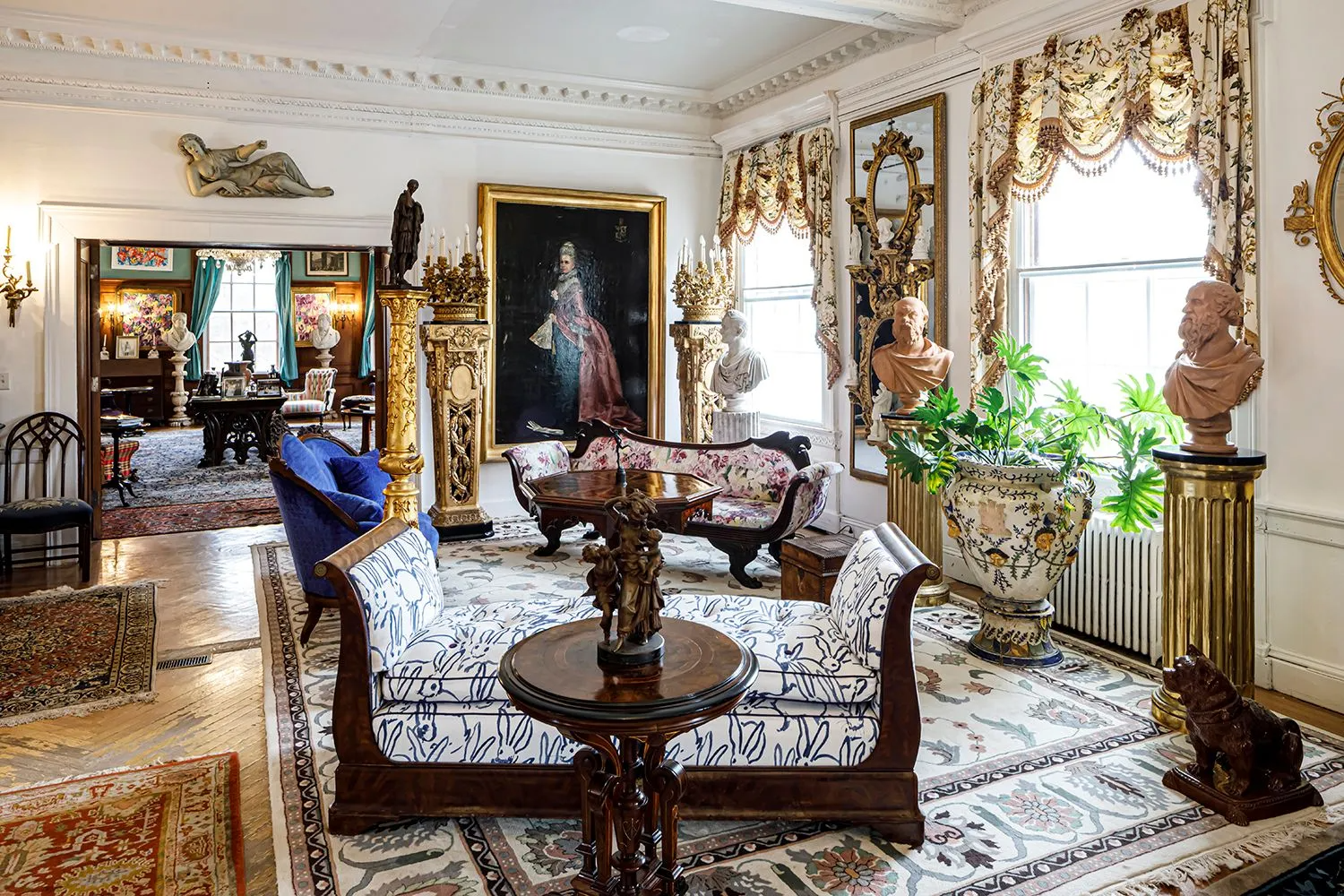
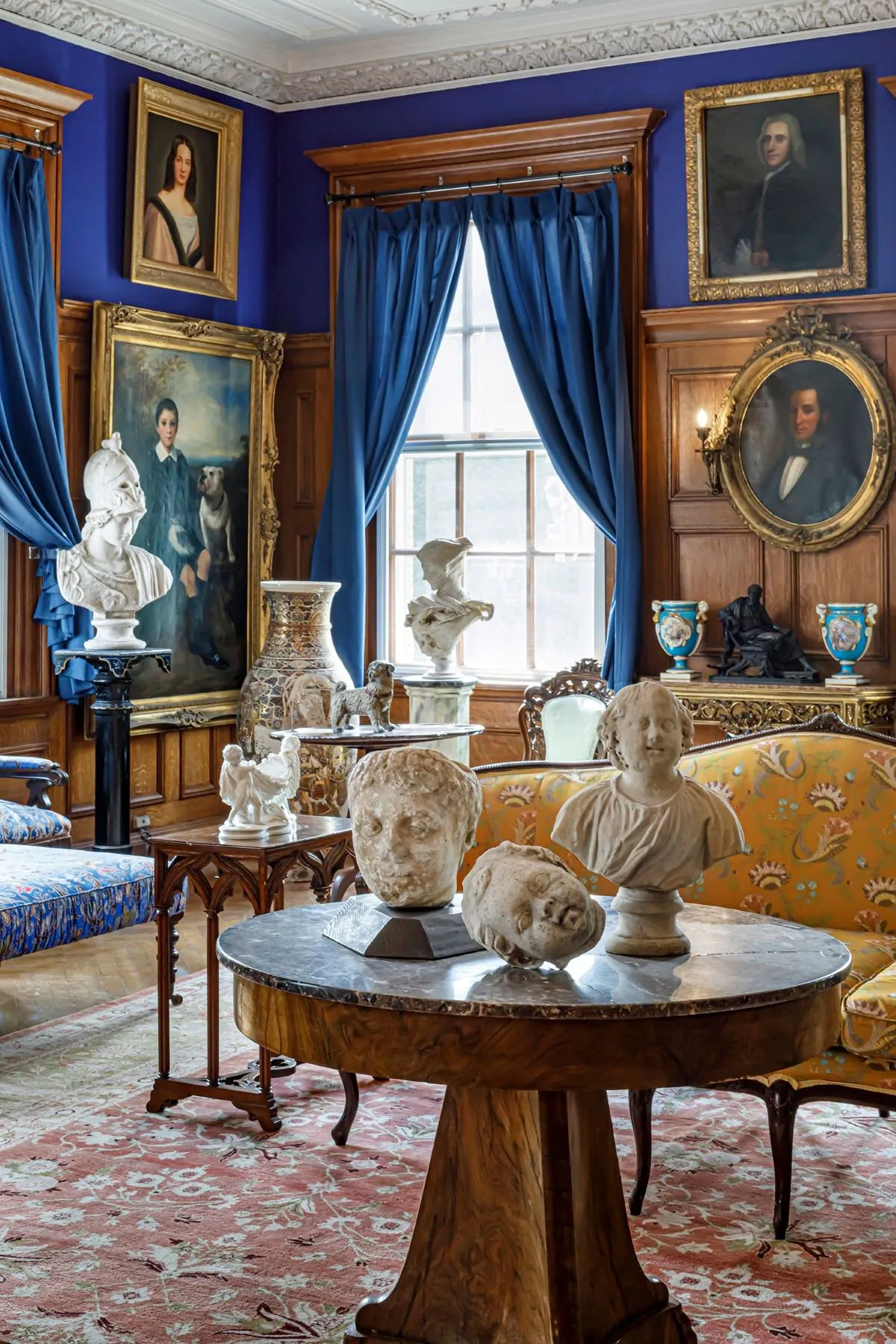
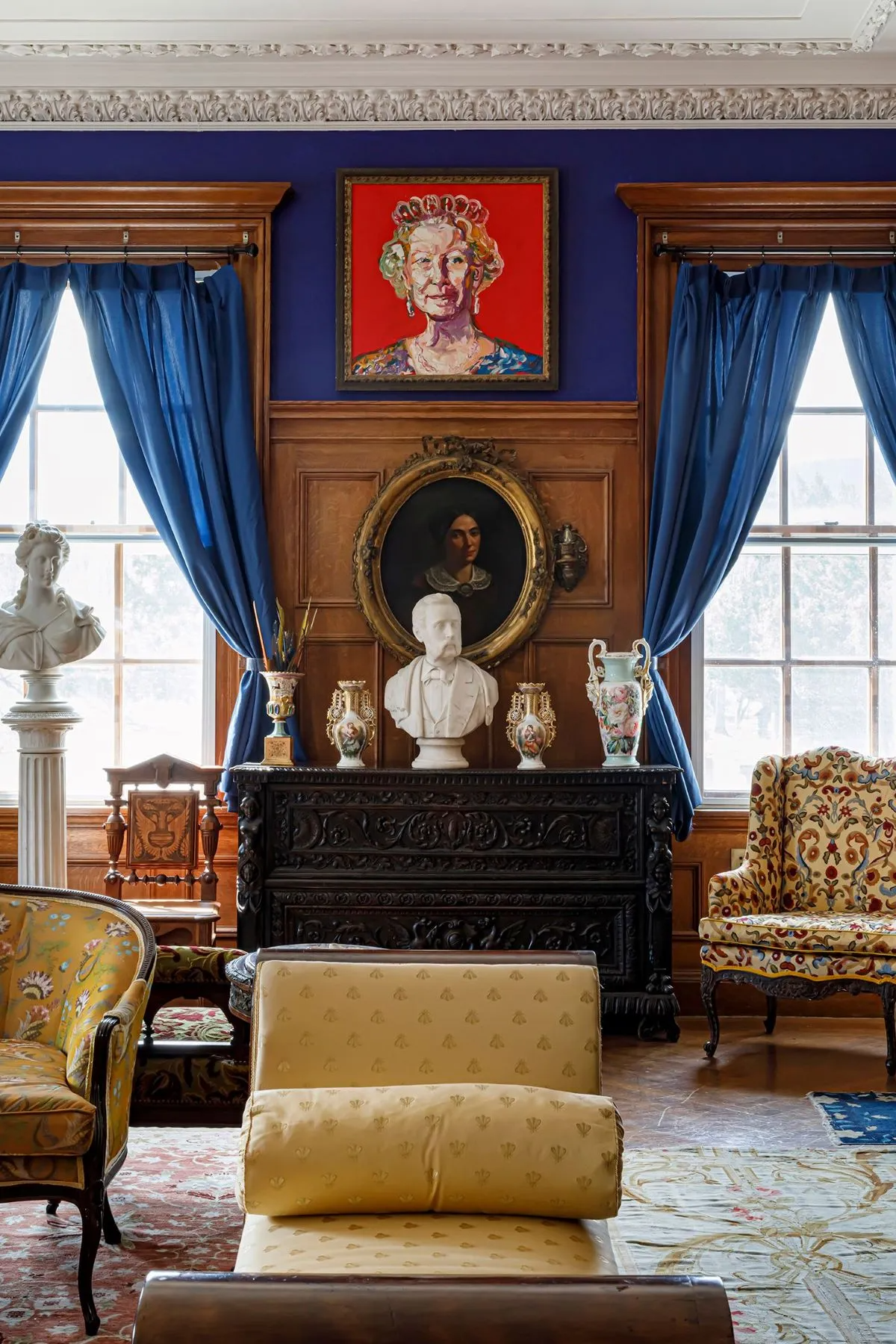
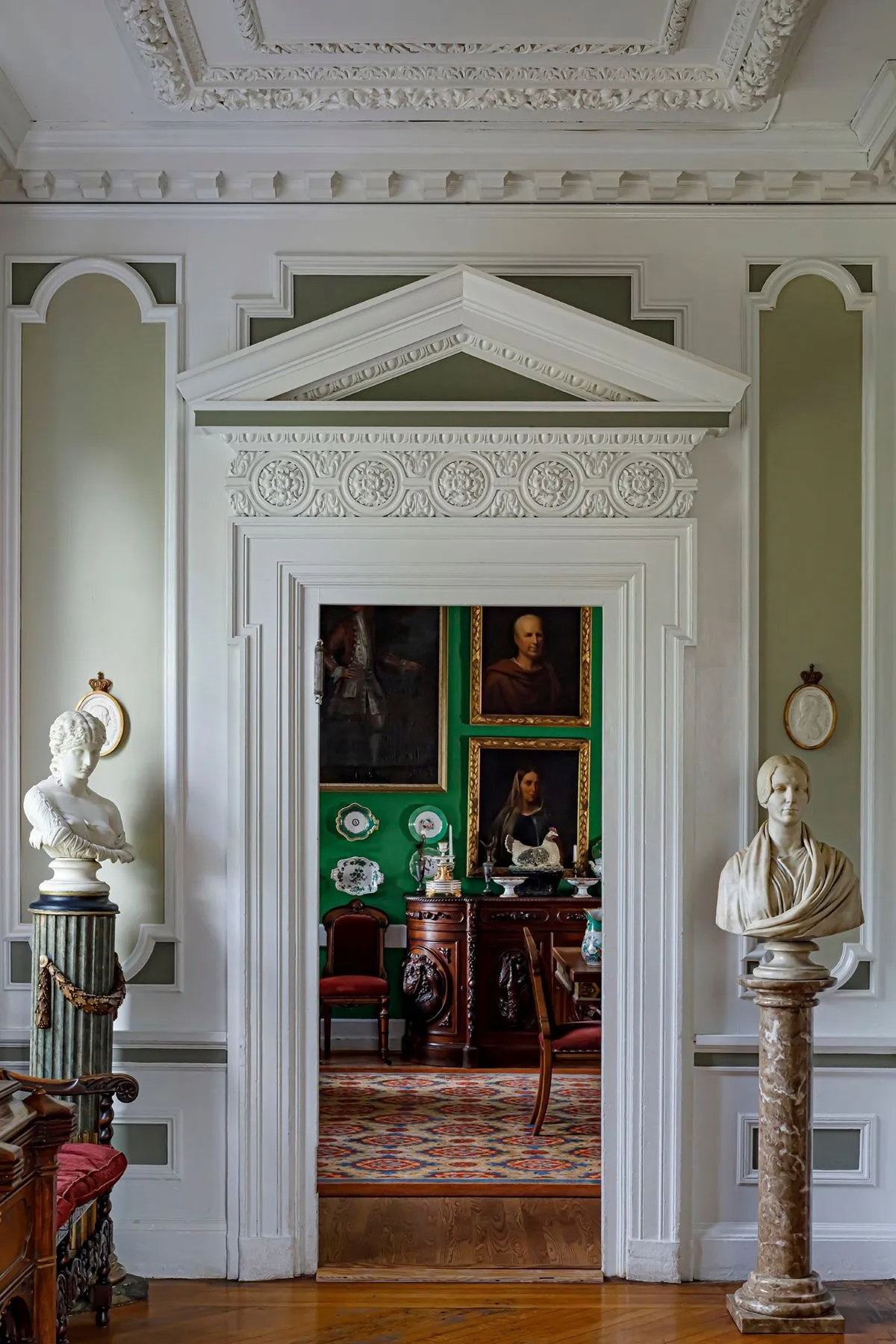
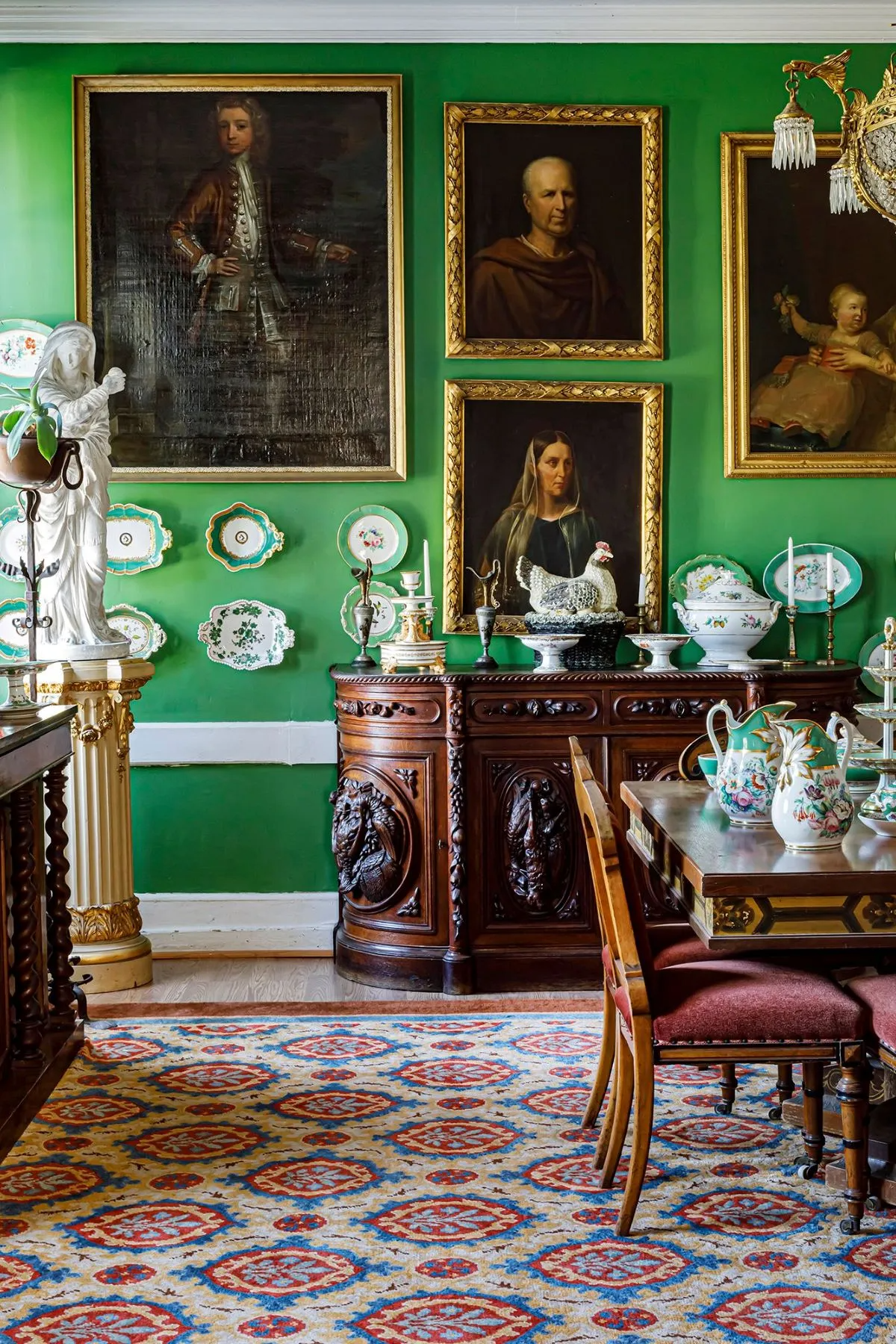
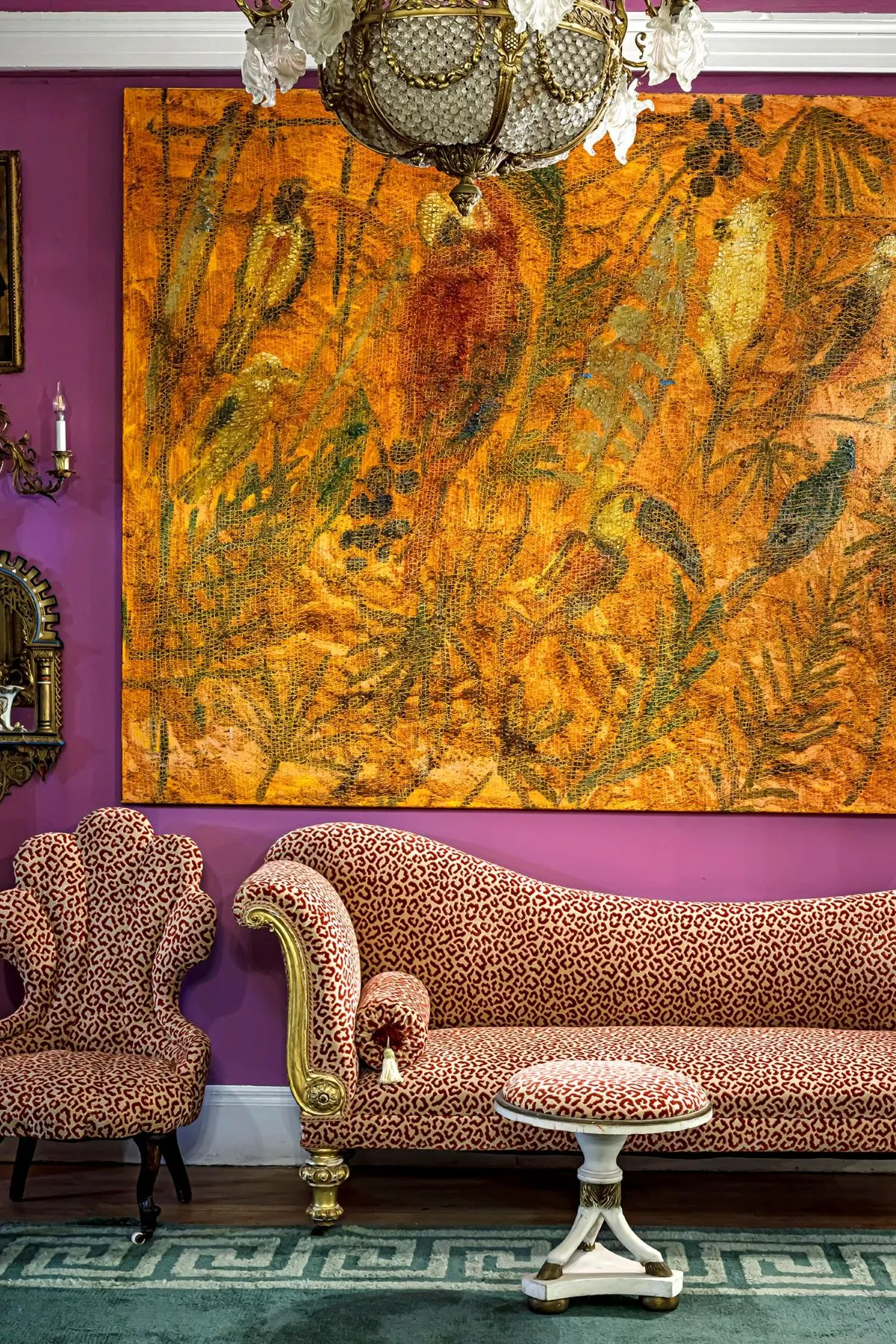
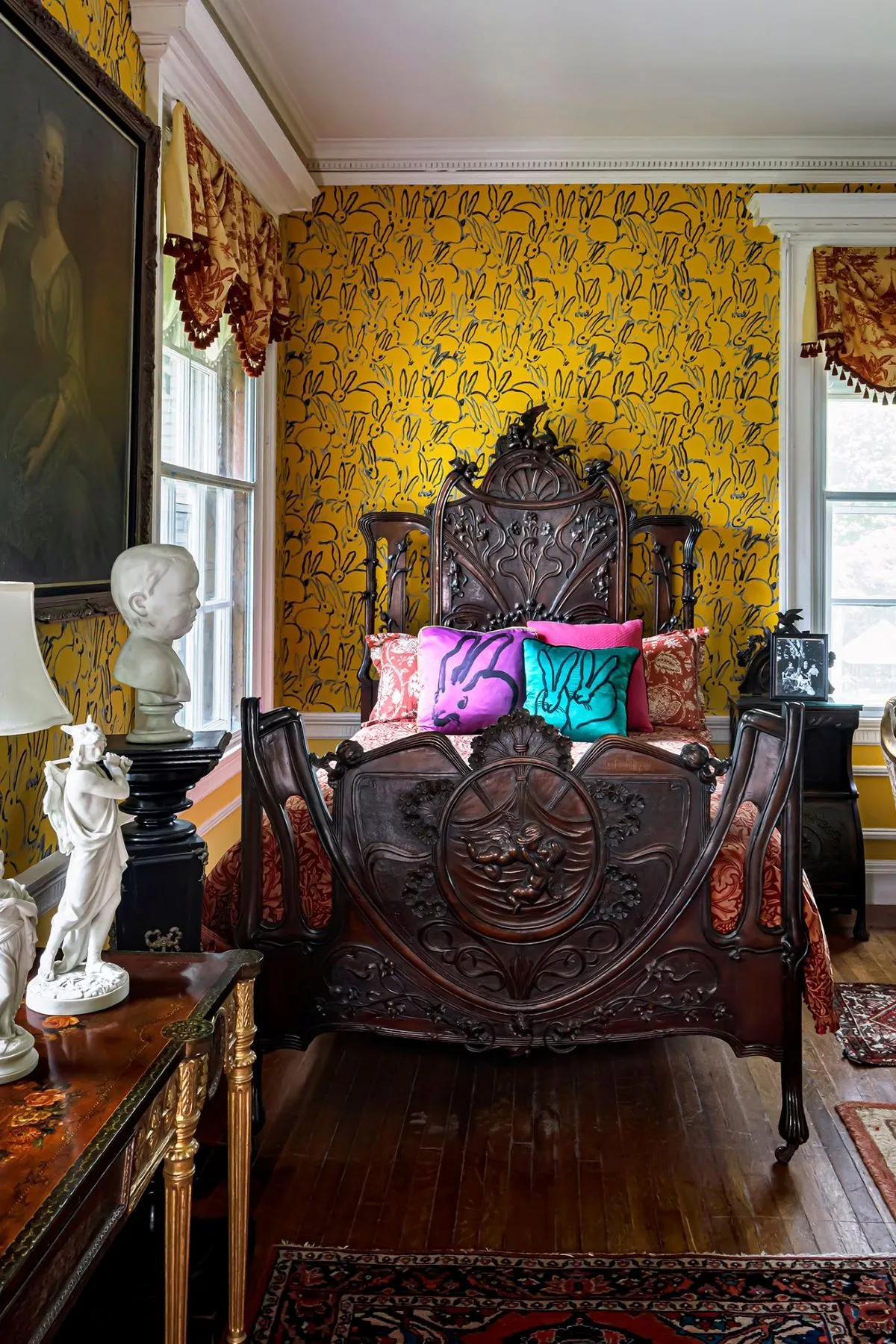
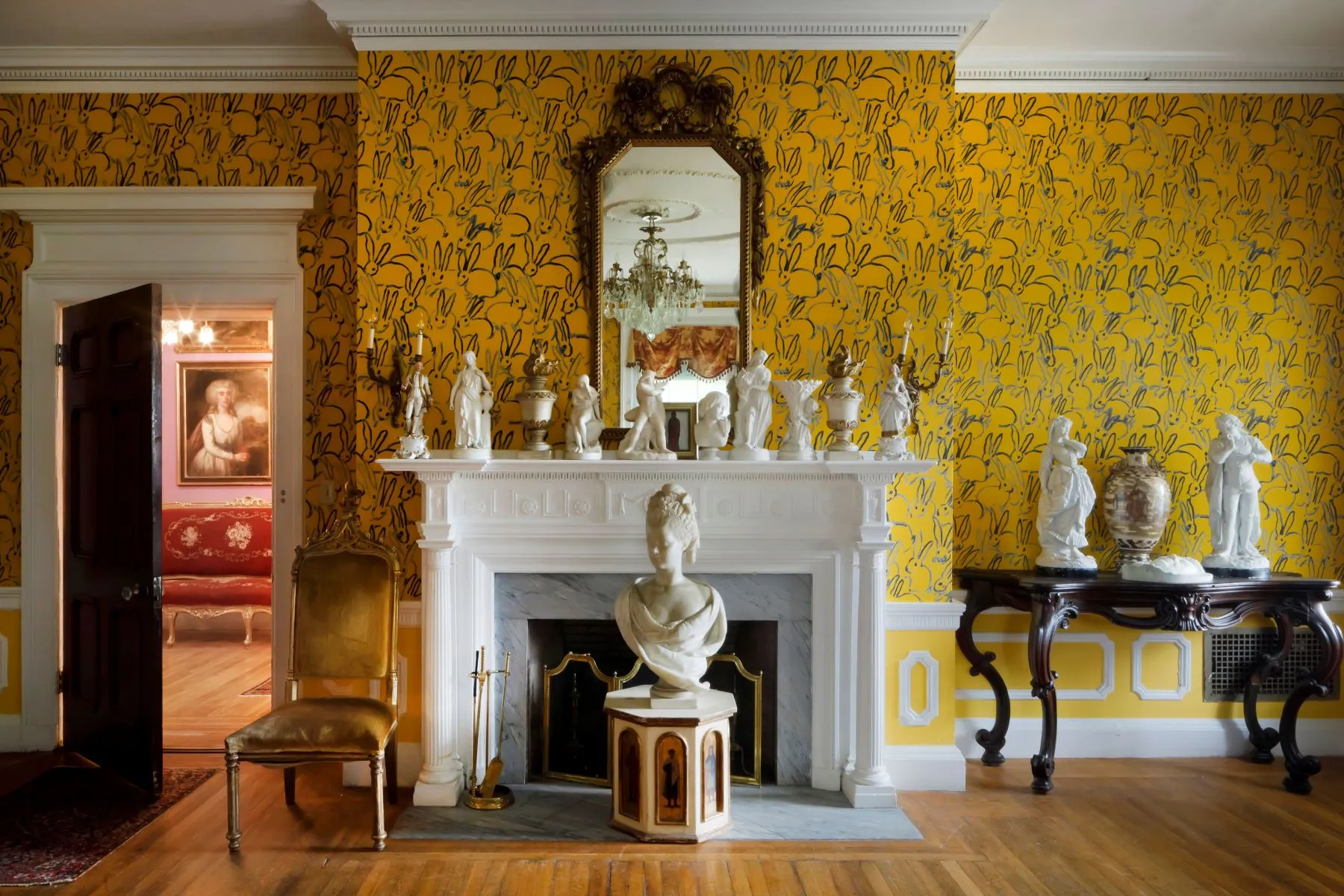
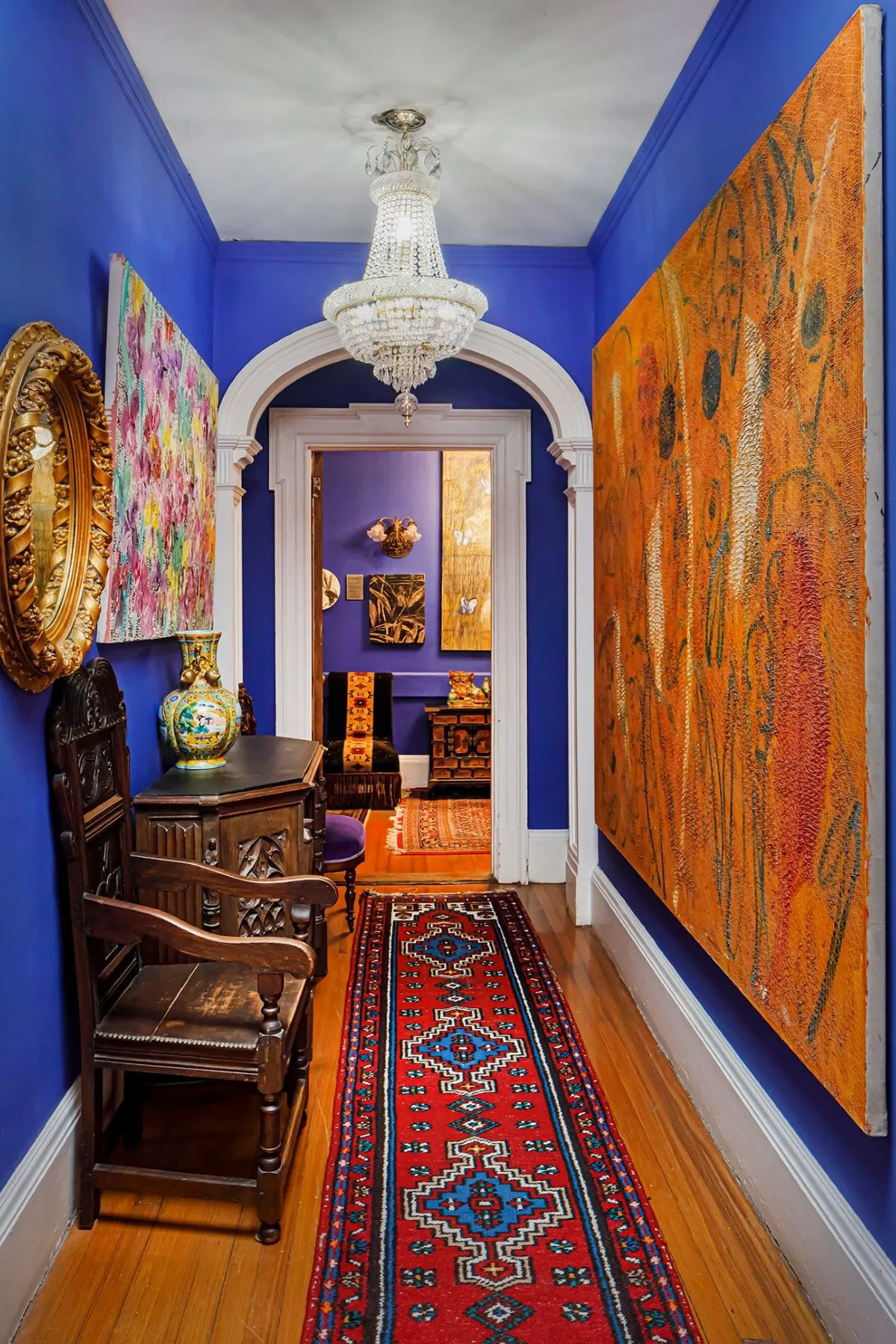
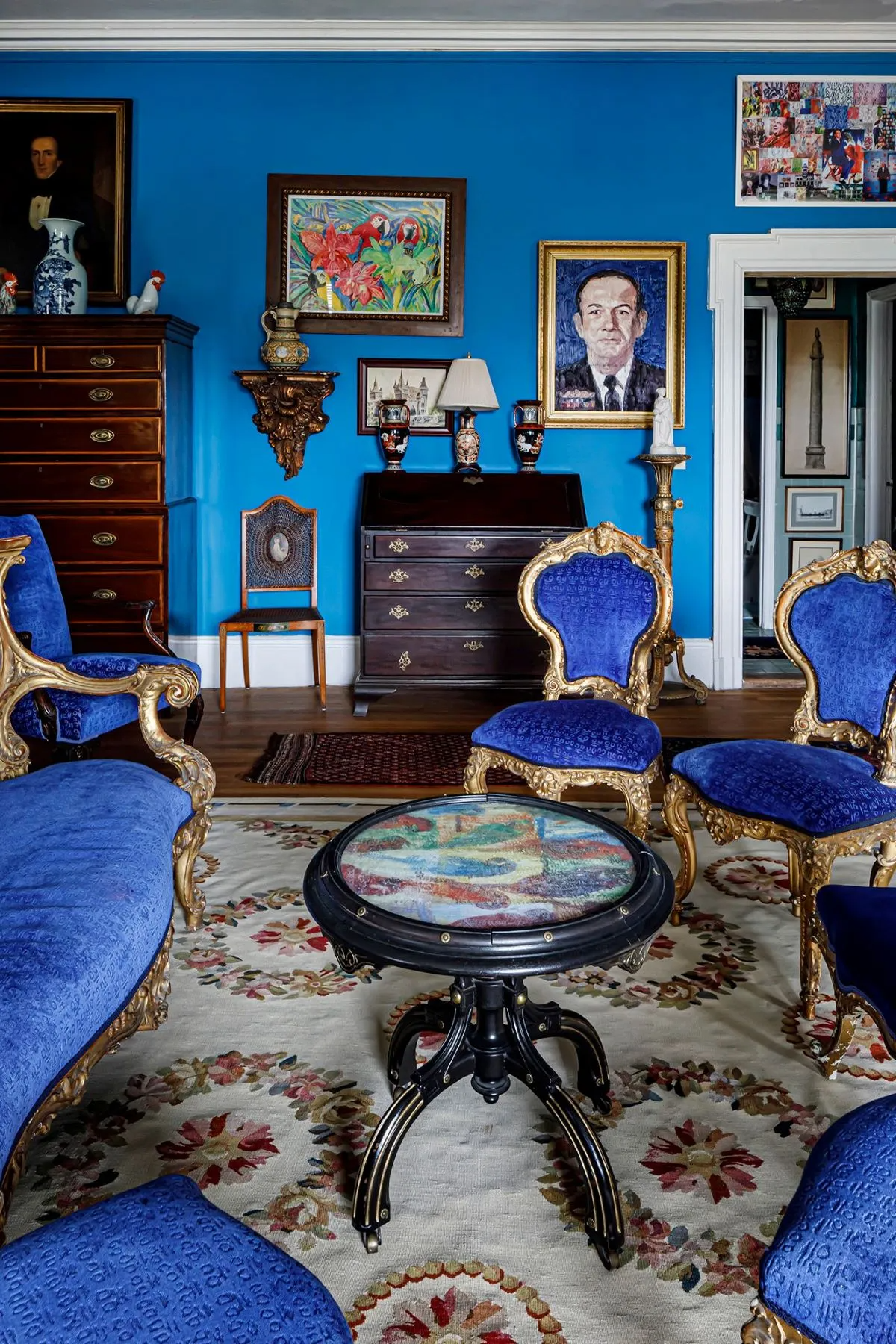
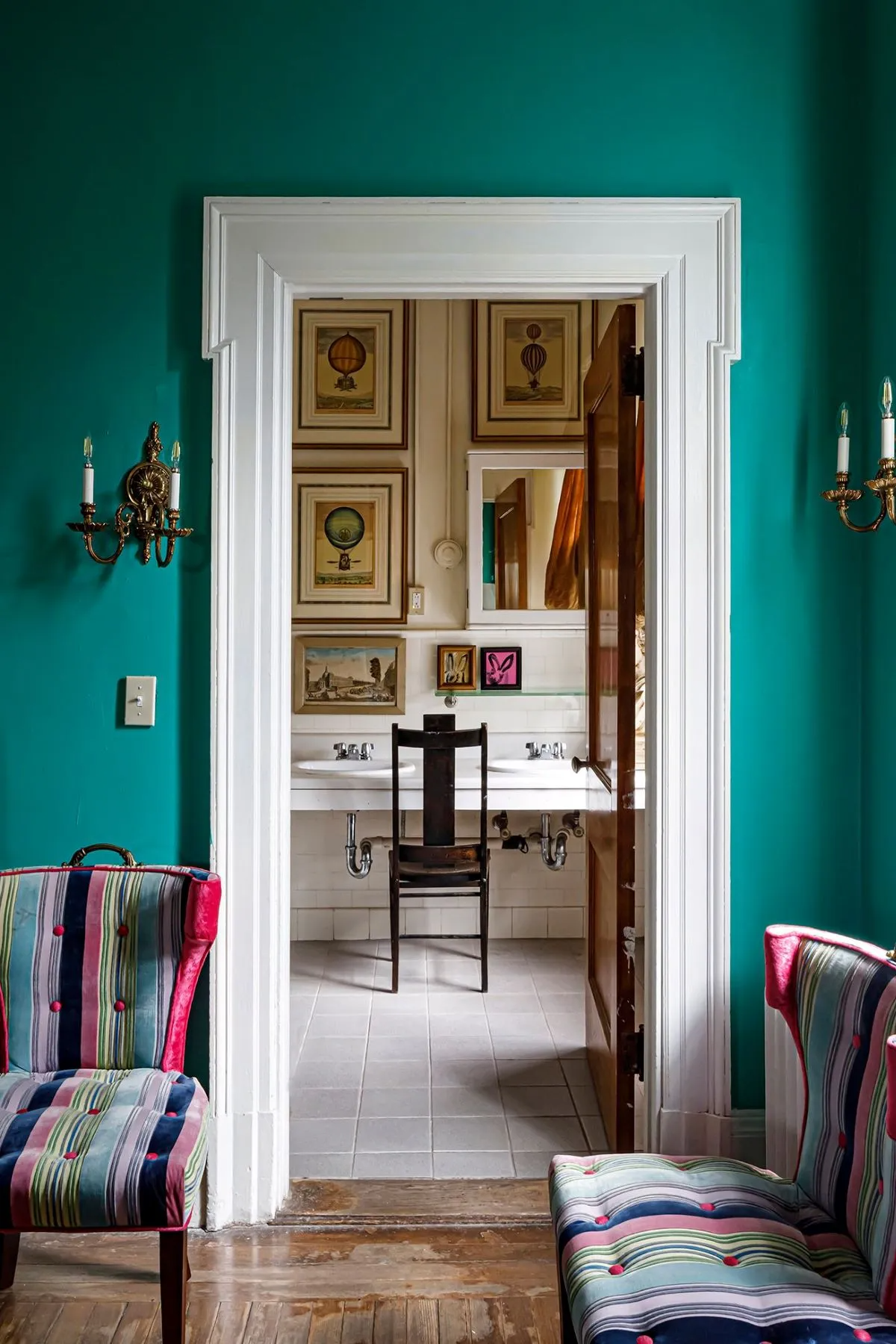
The restored house now has 16 bedrooms and 12 full baths within roughly 24,000 square feet. The interior views reflect Slonem’s exuberant style with layers of art, furniture, and color.
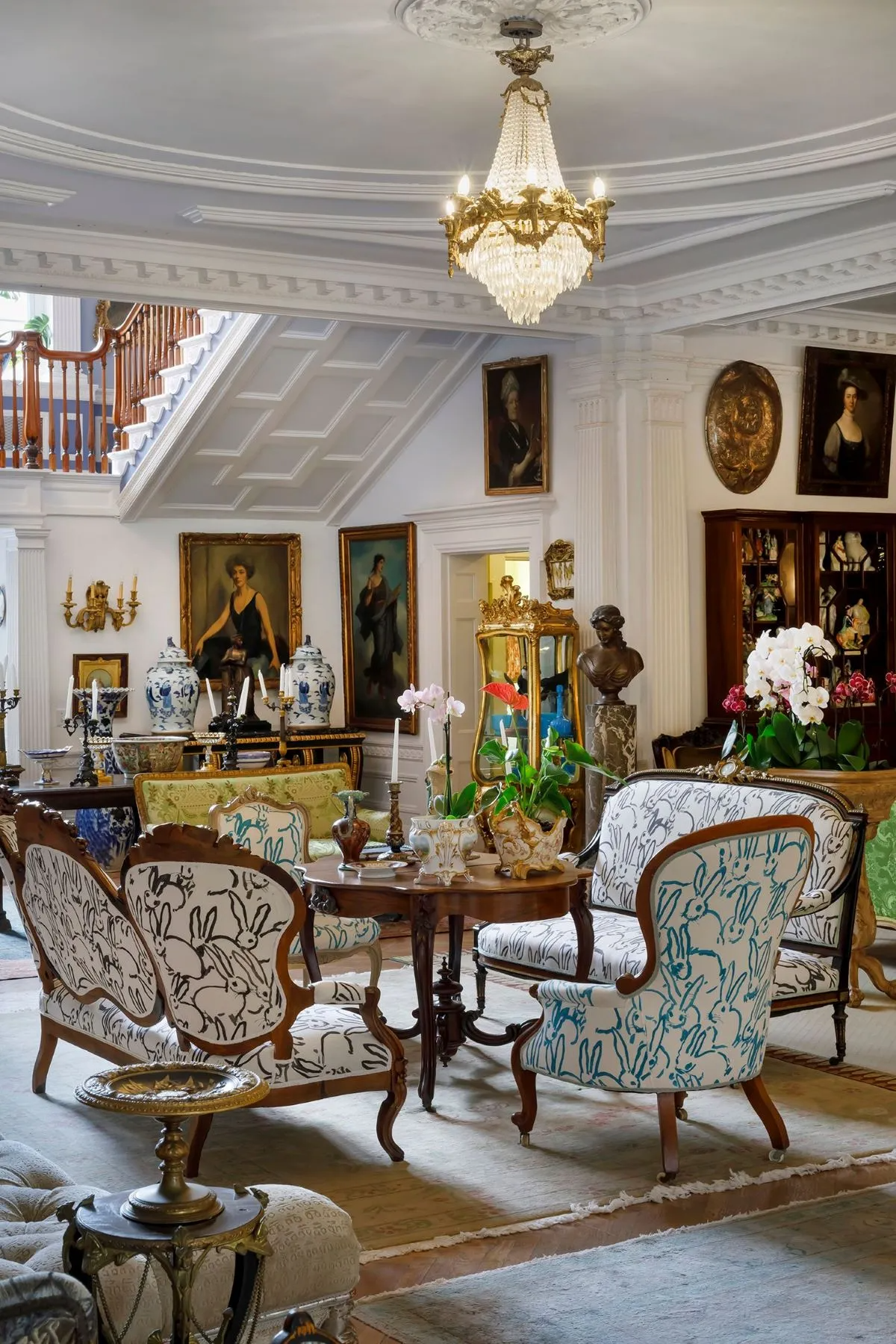
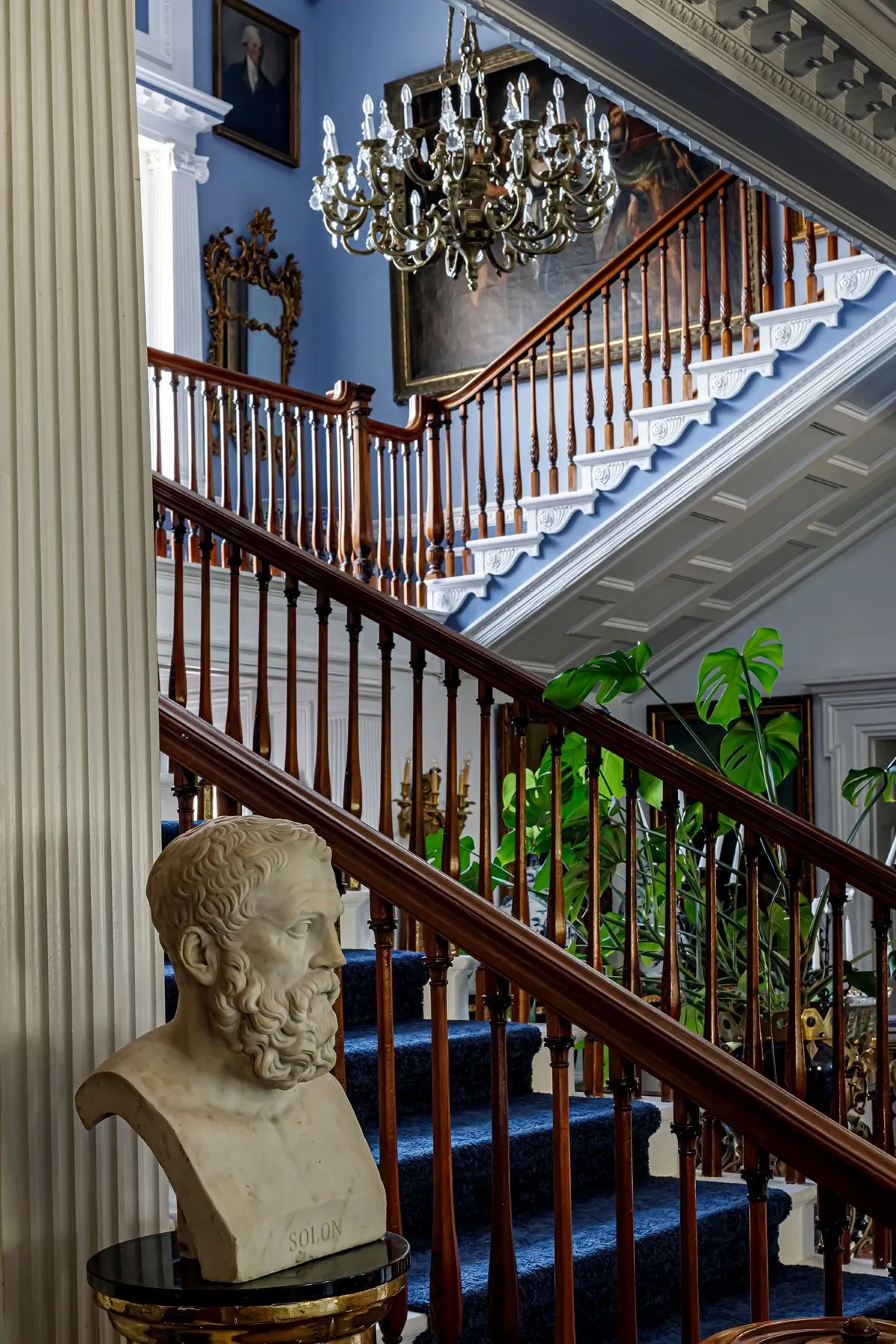
A plethora of furniture in the grand reception hall still barely seems to fill the space, whose architectural details include plasterwork, pilasters, and Greek ear moldings framing the doors. A grand staircase incorporates a substantial landing.
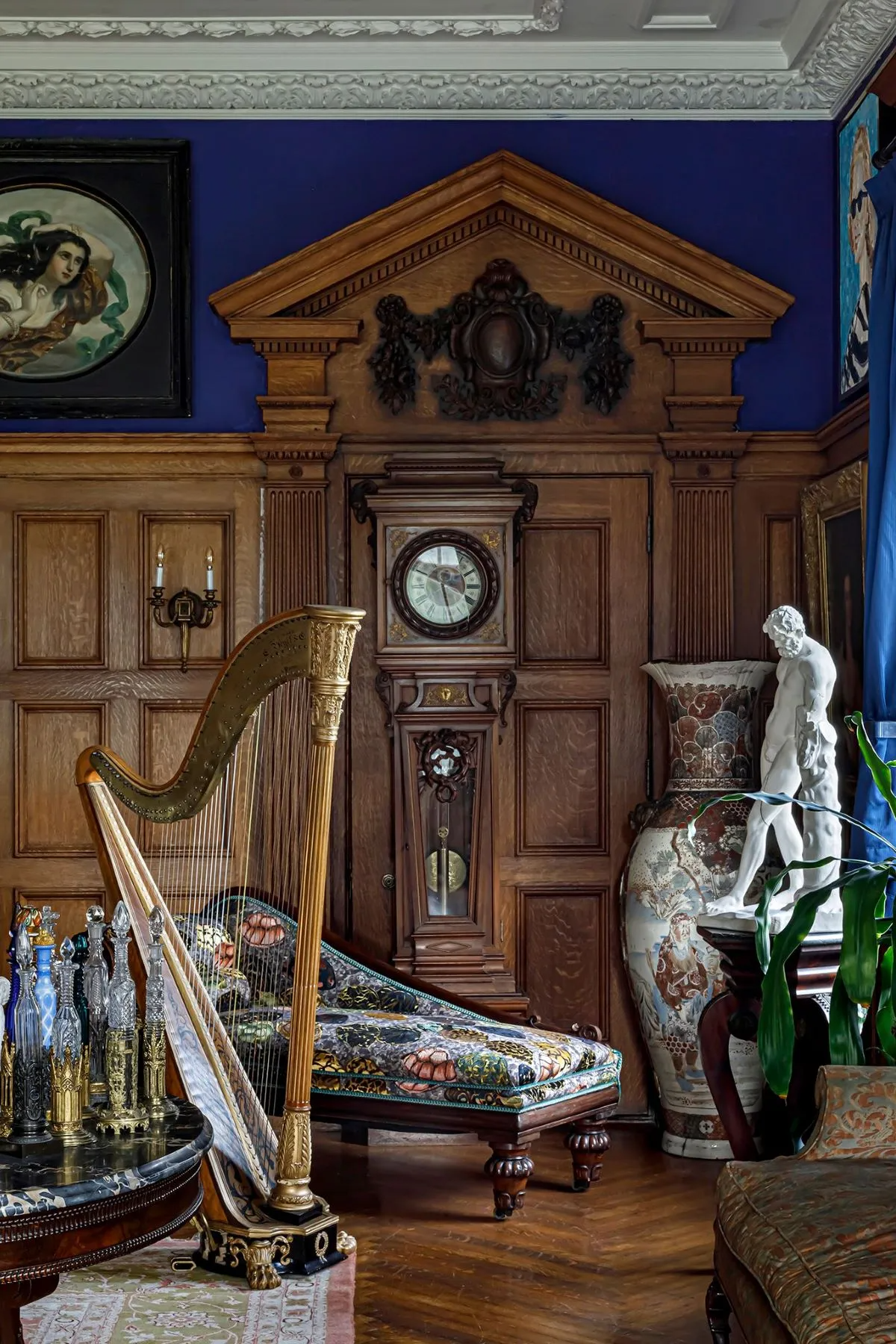
Wainscoting mentioned in the 1953 interior description can still be found in the former library. It’s paired with deep blue walls that contrast sharply with the elaborate plasterwork on the ceiling.
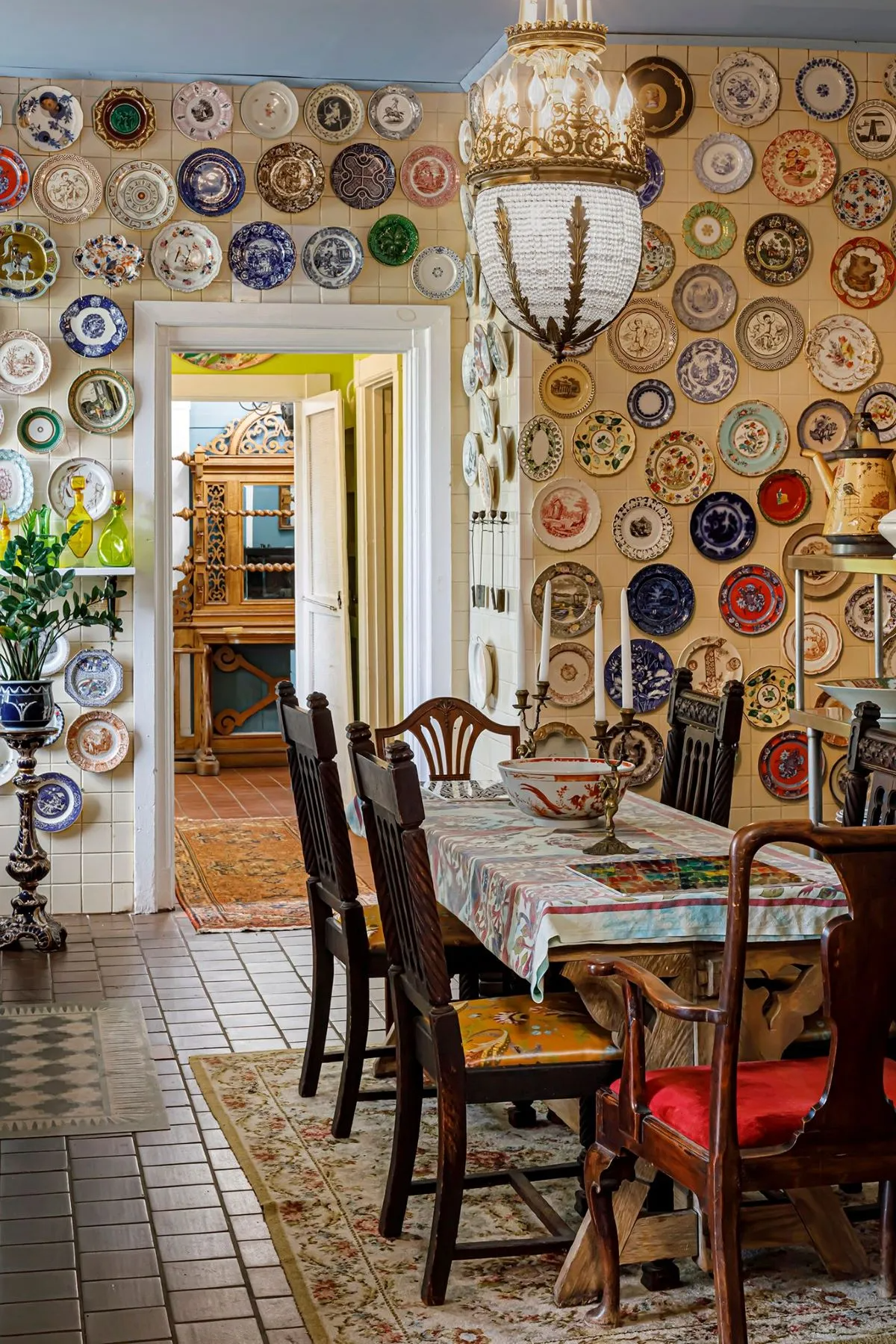
The full kitchen isn’t shown in the listing photos — just a glimpse of a room with a tile floor and wall adorned with plates. According to The Spirited Homes of Hunt Slonem, a 2023 book by Brian D. Coleman that showcases six of the properties that the artist has renovated and furnished, the kitchen was updated as part of the project.
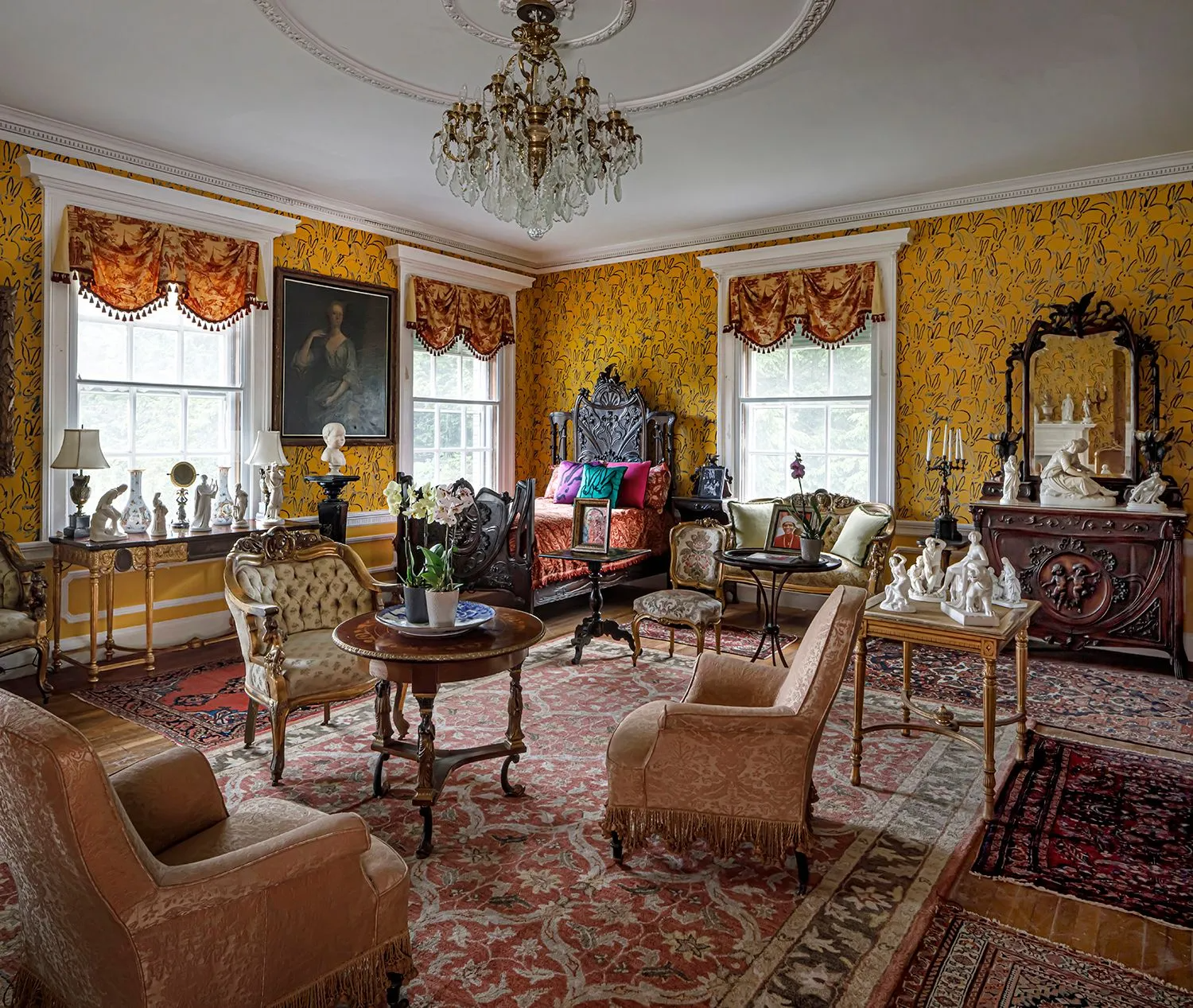
The eye-catching use of color continues upstairs. In one of the bedrooms Slonem’s signature bunnies have been translated into a golden yellow wallcovering.
The 38.23 acre property still includes the lake installed by McLean, and an aerial view shows a landscaped garden with a pond and other features. The listing doesn’t mention whether or not the property contains outbuildings.
South Kortright is a hamlet set amidst the Catskills and is roughly a three-hour drive from Downtown Brooklyn. The town of Delhi is nearby and home to the Delaware County Historical Association, the Hanford Mills Museum, shops, and restaurants.
Annabel Taylor of Four Seasons Sotheby’s has the listing for Belle Terre and the property is priced at $2.995 million.
[Photos via Annabel Taylor of Four Seasons Sotheby’s International Realty unless stated otherwise]
Related Stories
- Live Your Gilded Age Dreams in This Kingston Manse, Yours for $2.25 Million
- A Picturesque Italianate Villa With Cupola Near Newburgh, Yours for $748K
- A Shingle Style Manse in Callicoon, Yours for $579K
Email tips@brownstoner.com with further comments, questions or tips. Follow Brownstoner on X and Instagram, and like us on Facebook.

What's Your Take? Leave a Comment