
First ‘Ripoff’ Hearing Packed by Renters Eager to Connect Dots on Lousy Landlords
Officials met directly with New Yorkers to hear about chronic problems and to learn how much tenant associations really help.

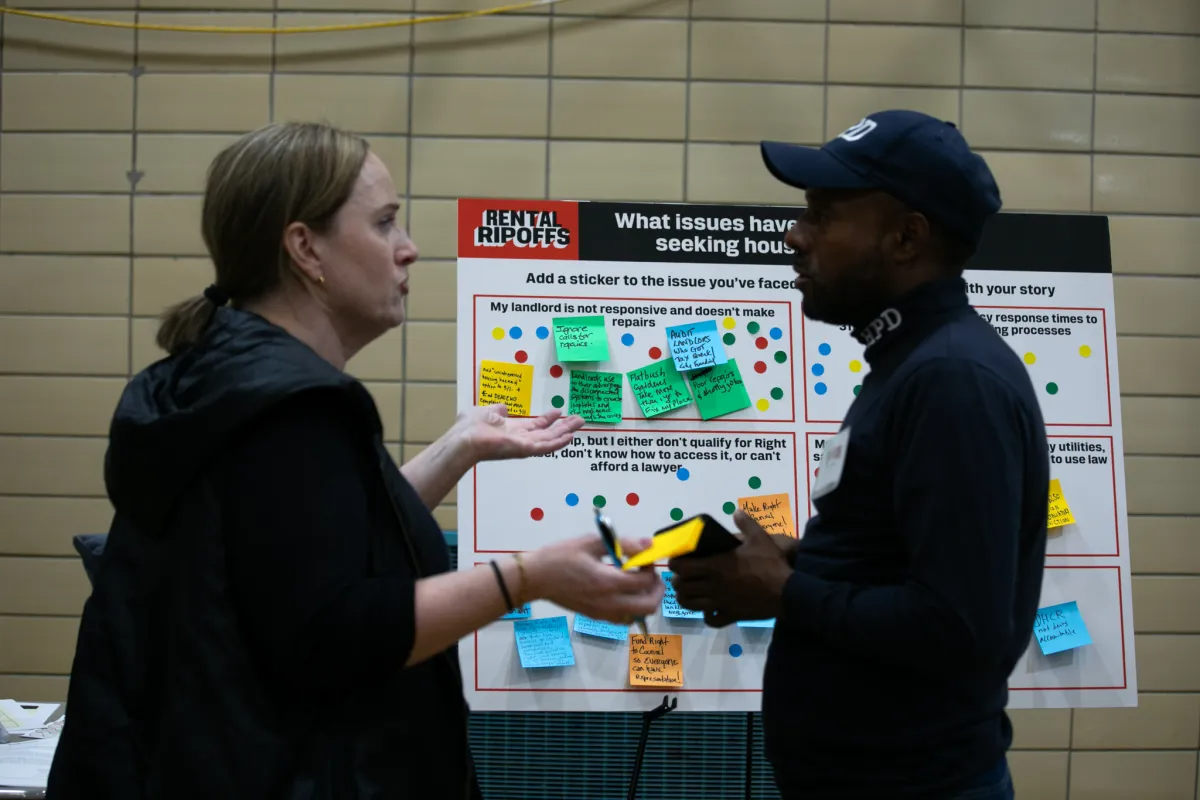
Tenants shared information about bad landlords at the first of five ‘Rental Ripoff’ hearings, February 26, 2026. Photo by Ben Fractenberg/THE CITY
by Samantha Maldonado
This article was originally published on February 26 at 9:36 p.m. EST by THE CITY
Leaky ceilings. Persistent pest infestations. Sky-high rents. Complaints to landlords and the city going nowhere.
These were just a few of the experiences from the hundreds of New York City tenants who filed into a downtown Brooklyn high school on Thursday to talk to agency officials at the first Rental Ripoff Hearing held by the Mamdani administration.
At the at-capacity event, billed as “New Yorkers vs Bad Landlords,” tenants sat down individually with officials to share their stories.
The hearing was the first of five that will take place in each borough through April. The hearings will inform a report from the Mamdani administration with recommendations on how to address the most pressing issues. Some of those will also be incorporated the city’s housing plan, a blueprint of programs and policies to address the housing crisis.
The point of the evening was to gather tenant experiences, from their attempts to secure repairs in buildings to dealing with questionable fees landlords impose.
Cea Weaver, director of the newly revived Mayor’s Office to Protect Tenants, said she was particularly interested in learning about the impact of tenants’ associations on living conditions.

“It’s pretty well documented that having a union in your workplace means that you have better working conditions, more time off, higher wages, better benefits, whatever,” Weaver said. “We actually don’t have a lot of information about the impact of tenant associations. Does an active tenant association in the building improve people’s ability to get repairs made?”
The event was active, with a diverse array of tenants visiting tables of various agencies and advocacy organizations and circulating around the school. Staff called out numbers that indicated to people it was their turn to chat with officials.
The mood was that of a boisterous science fair, with several attendees saying they felt a bit overwhelmed.
In the high school gymnasium, two dozen posters lined the room inviting tenants to share their stories on Post-it notes or mark agreement with certain statements using polka dot stickers. My landlord is not responsive and doesn’t make repairs, one statement on a poster read. Another: We established a tenants association but are unsure how to take action.
One tenant, 27-year-old Kaela Brown, said she and her three roommates in Bushwick had dealt with a “really bad landlord” who didn’t “fix any issues” for two years. They have a hole in their ceiling and her room doesn’t have heat, so she often sleeps in the living room. Roaches, flies, and mice variously took up residence.
“The mice issue was messing with my mental health,” said Brown, who works as a bartender. “I couldn’t sleep because I heard them in the walls.”
She called the city Department of Housing Preservation and Development but no one came until she said she had a mold issue — a trick she’d heard could get inspectors out — and when they arrived, they identified many other problems in the apartment and issued multiple violations. But Brown is still awaiting repairs, she said.
“I wanted to bring more attention to this specific landlord because he does it to other people and it’s not right,” Brown said.

Like Brown, several tenants at the hearing said they were there to get action on behalf of not only themselves, but their fellow tenants.
“I’m here because I’m looking to find other resources and get some visibility and support for the long-standing pattern of issues that are in my building in particular, not only for myself but for some of my neighbors who are elderly who I worry about a lot,” said Rachel, a 52-year-old music teacher who lives in a rent-stabilized apartment in Bensonhurst.
Rachel, who, like others, asked that her last name be withheld because she feared retaliation from her landlord, said she’s had a huge leak in her bathroom ceiling for three years. Her landlord refused to call a plumber, she said.
At the hearing, Rachel spoke to Ana Pluchinotta, tenant liaison at the Department of Buildings.
“What they told me was to keep in touch with them directly, send them direct records of my history since I was smart enough to stay well documented,” Rachel said. “My understanding is they’re gonna see if they can help me specifically because I think my case was clearly stated and I was able to say that I had very good documentation.”

Kelsey, a 26-year-old Crown Heights resident and social worker, said she testified about the digital intercom and rental payment systems her landlord has implemented. Paying rent online, she said, comes with a $3 fee. And she said making a request for a repair goes through a digital portal — instead of directly to the super — which responds via chatbot.
“Having so many seniors [in the building] and a smartphone-based intercom and payments — so many people have lost so much agency in how they’re able to pay their rent and call the super for repairs, big or small,” Kelsey said. “It’s really dystopian and weird. I feel fortunate that I can understand the system and I can help the best I can.”
Kelsey also said the building’s front door was unlocked for a month when the intercom broke, leaving many of her immigrant neighbors fearful given reported activity from ICE.
For another tenant, Cristal Calderon, the Rental Ripoff Hearing represented another lever she’d try to pull to change her living situation. The Greenpoint resident said she’d been overcharged for rent on her stabilized apartment for years, and she’s been dealing with intense and violent harassment — including racial and sexualized comments and threats — from her landlord as a result.
“If this is what I’m going through as an extremely privileged person,” she said, ticking off her status as a single, young, childless citizen who is fluent in English, “then what the f-ck are others going through?”
Calderon said she was disappointed Mayor Zohran Mamdani himself was not present. (The mayor was not scheduled to appear.)
Ahead of the hearings, tenant associations rallied outside to decry heating issues, hazardous conditions, and other problems that they said landlords often left unaddressed.
Groups representing landlords blasted the hearings for disparaging them and for not getting the full story, as property owners face their own rising expenses.
“No one denies that some renters are dealing with serious problems,” said New York Apartment Association CEO Kenny Burgos in a statement. “But when buildings don’t bring in enough income to cover property taxes, utilities, maintenance and basic operating costs, decline becomes inevitable, no matter who owns them.”
Multiple reports have spotlit struggles of nonprofit housing groups operating subsidized apartments. Many others have examined the thin margins that some rent-regulated landlords that do not receive government subsidies contend with.
The Real Estate Board of New York released an analysis ahead of the hearing showing about 10 percent of residential buildings account for the vast majority of evictions and severe housing code violations over the past two years.
Related Stories
- What’s to Come at ‘Rental Ripoff’ Hearings? Tenant Hotline Staff Hear It All
- Public Advocate Unveils 2025 List of Worst Landlords
- Bay Ridge Landlord Must Pay Restitution to Defrauded Residents
Email tips@brownstoner.com with further comments, questions or tips. Follow Brownstoner on X and Instagram, and like us on Facebook.
What's Your Take? Leave a Comment