
Business Week's Spoonful of Sugar
For all of you owners out there who are tiring of all the depressing news that keeps coming out on the housing market, Business Week tries to cheer you up this week by putting a more positive spin on the National Association of Realtors report of median year-over-year prices falling 1.7% in August. Their two…


For all of you owners out there who are tiring of all the depressing news that keeps coming out on the housing market, Business Week tries to cheer you up this week by putting a more positive spin on the National Association of Realtors report of median year-over-year prices falling 1.7% in August. Their two biggest rationalizations reasons for hope? First, the decline in the number of existing homes sold was less than economists expected; the drop was entirely related to condominiums and co-ops. Second, the monthly increase from July to August in the number of unsold homes was only modest 1.5%, the smallest amount so far in 2006. (Who cares if it was the highest absolute amount since April ’93.) Don’t you feel better now? That’s what we thought.
Hopeful Glimmers in the Housing Slump [Business Week]
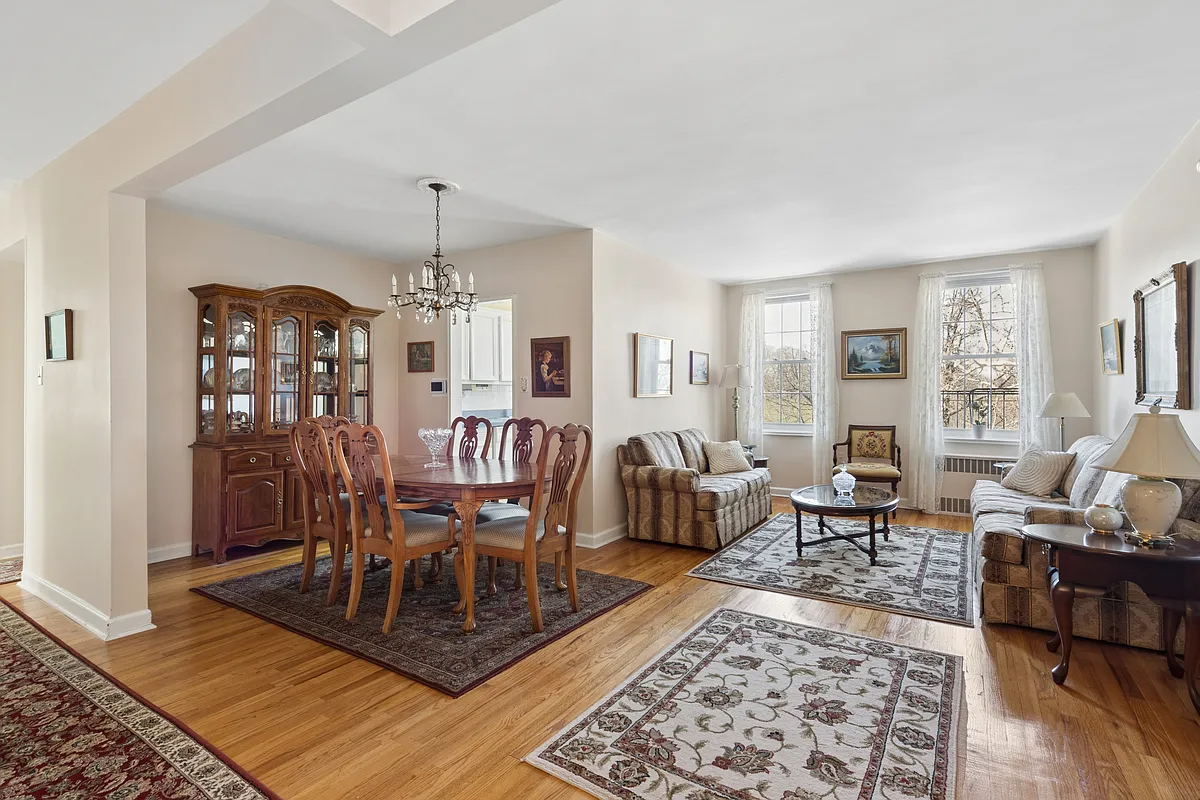
Photo by KAP Cris


A housing report from the New York Sun. “Veteran real estate broker Deanne Esses said eight people in her Upper East Side office on Madison Avenue are leaving their jobs for alternative careers. Those eight represent 20% of the office’s sales staff.â€
“That’s only the beginning. Ms. Esses said she thinks more New York City brokers will be leaving the scene. ‘Business here is just not quiet; it has dropped dead over the past few weeks,’ she said. ‘At the same time, there’s a flood of inventory on the market. We run open houses, we run advertisements, but nothing works. There are no buyers, and without buyers, there are no sales.’â€
“Ms. Esses made these noteworthy observations: Everything now is negotiated downward from the initial asking price, by a minimum of 5% to 7%. Prices are down at least 10% from a year ago on practically everything.â€
“The Upper West Side is moving very slowly. The Hamptons have turned especially soft. ‘We’re in a transition stage where sellers will have to come down in price, and right now it’s a waiting game to see what the buyer will do,’ Ms. Esses said. ‘Since there’s only one Manhattan, I don’t see a crash. But who knows?’â€
“Real estate appraiser Jonathan Miller also cites a sharply slowing trend, with actual sales activity flat. There’s a big gap between buyers and the sellers, and more realism will be required by the sellers, he said. His reasoning: swelling inventories, especially condominiums.â€
Not so fast – new home sales tend to jump in august – buty they’re still down 17 percent from last year.
http://calculatedrisk.blogspot.com
I had the same thought about the New Home sales, until I took a closer look.
The numbers jumped 4.1 percent because the numbers from the prior THREE months were sharply slashed. In other words, the news these past three months has been much worse than thought, and this is at best a very modest bump upwards.
As well, the Federal housing numbers come with the advisory that these particular numbers are notoriously inaccurate and so a four percent jump (or drop) in any given month should be treated as a flatline.
It looks like thing aren’t all doom and gloom. New home sales just jumped 4.1% in August.
http://tinyurl.com/kzp2e
converted from old factories is very small drop in the bucket compared to total housing.
Probably smaller average household size is biggest factor in less density now compared to 50 years ago.
“Brooklyn has a ways to go before it even reaches its population density of 50 years ago.
Manhattan has a lot further to go than Brooklyn to reach its peak density from over 80 years ago.”
Really so why do we need so many more buildings than 50 years ago if much has already been converted to living space from former facturies…doesn’t make sense.
Brooklyn has a ways to go before it even reaches its population density of 50 years ago.
Manhattan has a lot further to go than Brooklyn to reach its peak density from over 80 years ago.
“‘a reader’ – sounds like you want it both ways. Don’t use undeveloped land and don’t increase density.
Should all these people just disappear”
a. you can lower immigration – then we would have a stable population. Seems to me we are just passing on lower standards of living to future generations -do you care? or are you just out to make a buck?
b. you still don’t have an answer – where does it end?
‘a reader’ – sounds like you want it both ways. Don’t use undeveloped land and don’t increase density.
Should all these people just disappear.