
Affordable Housing Ballot Measures Prevail
Fought by the City Council, which would lose sway over development, the items promise to fast track projects amid an affordable housing shortage.

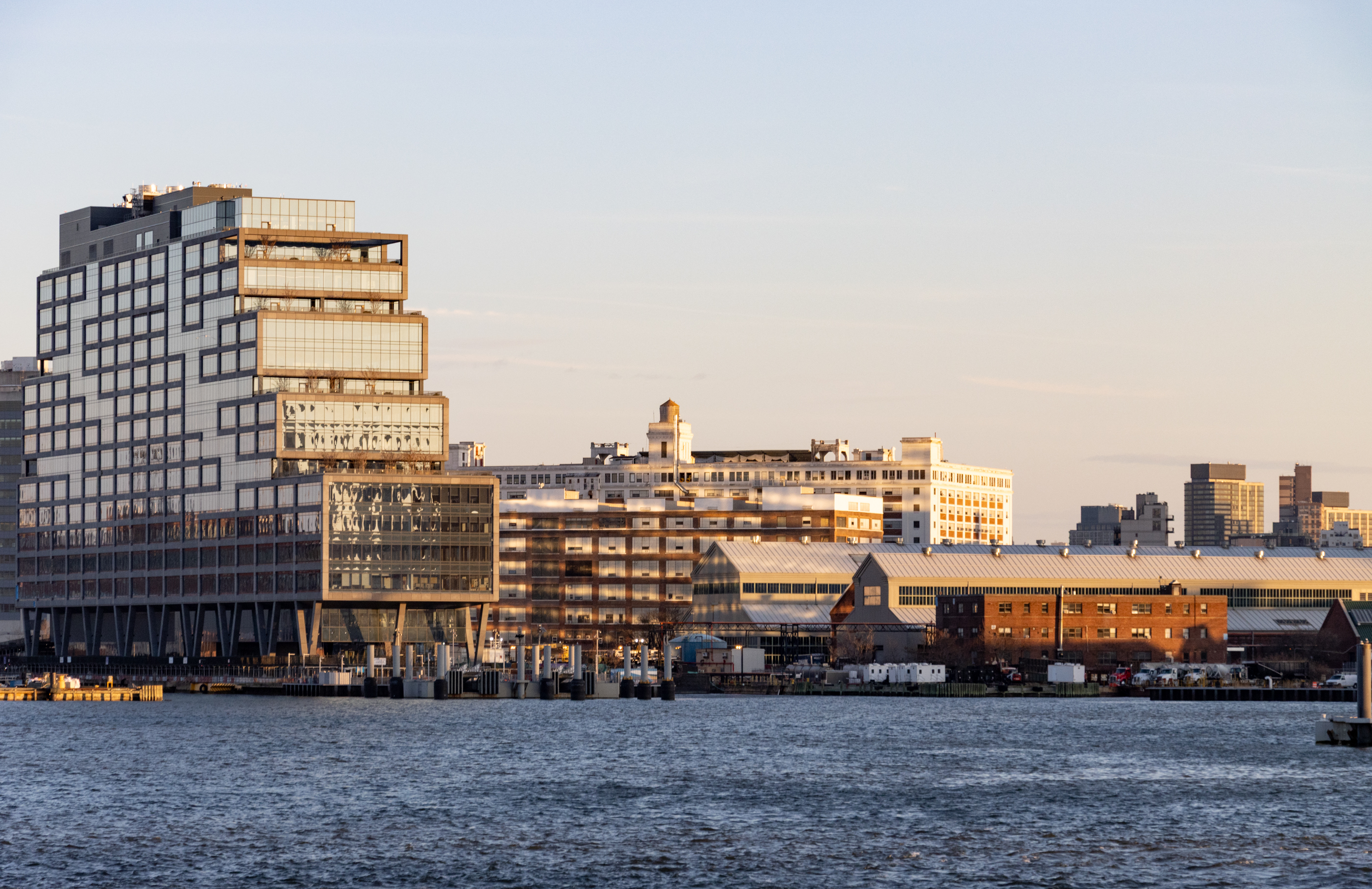
New and older Bronx buildings dotted the skyline leading toward Manhattan, November 3, 2025. Photo by Ben Fractenberg/THE CITY
by Marina Samuel
This article was originally published on November 4 at 10:52 p.m. EDT by THE CITY
New Yorkers said yes to four citywide ballot measures Tuesday night, approving a slate of proposals intended to reshape how the city approaches affordable housing development.
The sweeping changes stem from proposals 2 to 5, which aim to increase housing production by streamlining land use reviews and modernizing the city’s development process. All four proposals passed with over 56 percent of votes, according to unofficial results from the Board of Elections. The fifth proposal, which would digitize and create a unified City Map, received even stronger support.
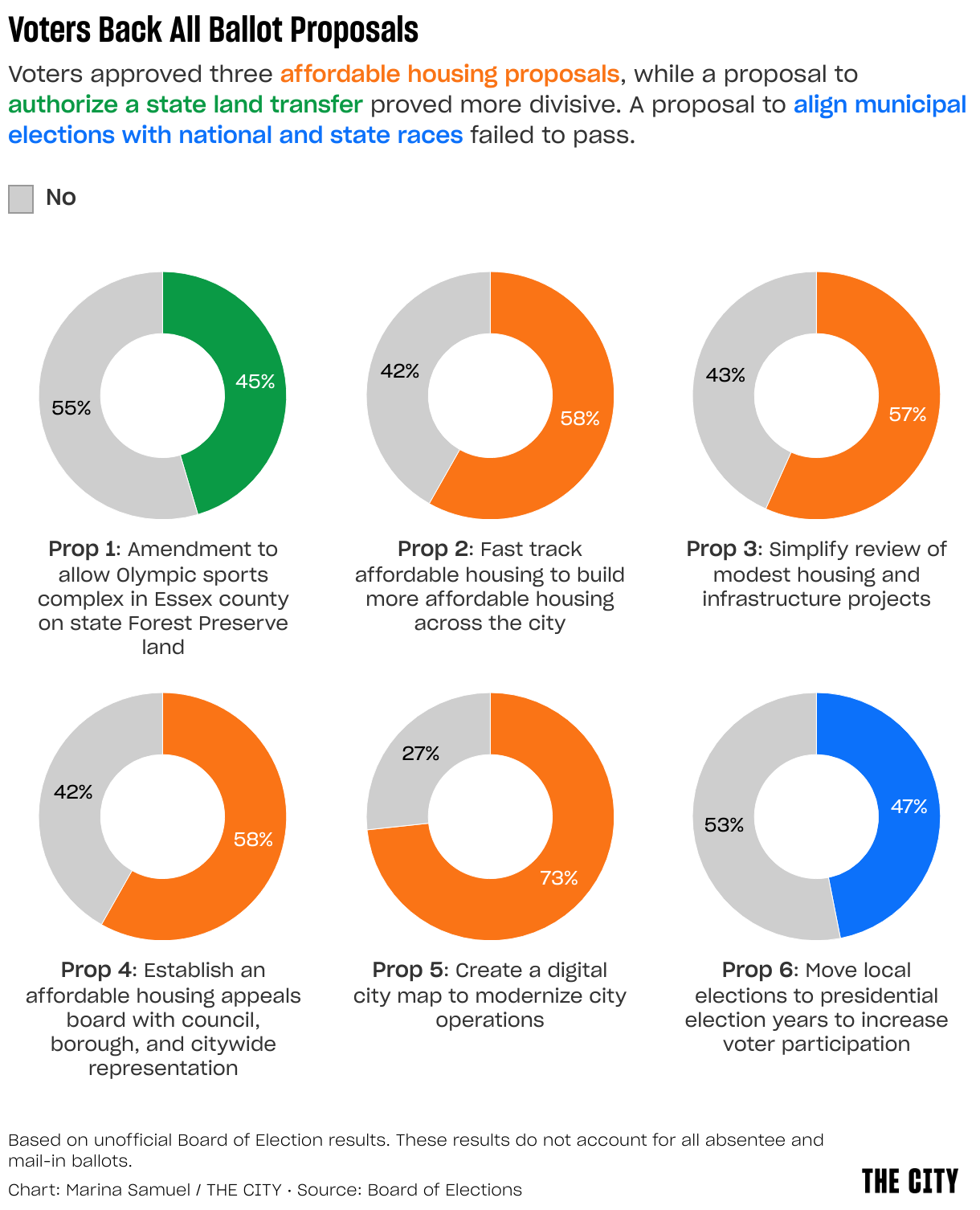
Proposals 2, 3, and 4 received major pushback from the City Council, which used public funds to pay for used mailers, digital ads, and public education campaigns to counter what Council members described as “misleading language” in the ballot questions.
The measures, put forward by a charter revision commission convened by Mayor Eric Adams, allow certain developments — notably those creating permanently affordable housing or in neighborhoods that have historically seen little new construction — to proceed without City Council approval. Council members warned that the land use review revamp could limit local oversight over local development, while supporters argued it was necessary to cut red tape and accelerate housing production.
“Tonight, New Yorkers sent a message: we must address the housing crisis, and we need new tools to do so. Today’s vote gives the City powerful new tools to build the affordable housing New Yorkers need and deserve,” said Richard Buery, chair of the Charter Revision Commission. “These proposals will make it faster and more efficient to build affordable housing in every neighborhood. I look forward to working with the Mayor-elect to ensure these tools are put to good work to deliver the affordable housing that New Yorkers so desperately need.”
A Council spokesperson, Benjamin Fang-Estrada, said in a statement: “New Yorkers desperately need more housing that is affordable to them, but the solution isn’t to take away communities’ power to secure more affordability and essential public goods from developers and the City. These misleading ballot proposals permanently change the City’s constitution to weaken democracy, lasting beyond the next mayor when we inevitably have a mayor who is bad on housing, equity, and justice for communities. This will leave our city without the checks and balances of democracy to protect New Yorkers and ensure outcomes that prioritize them, not simply profits.”
A majority of voters rejected the last question, Ballot Proposal 6, which would have moved municipal elections to align with federal and state races. Opponents warned that down-ballot races risk being overshadowed by national issues.
The lone statewide amendment, Ballot Proposal 1, would retroactively authorize the transfer of 323 acres of constitutionally protected state Forest Preserve to the Mount Van Hoevenberg Olympics Sports Complex. The state plans to purchase 2,500 acres of land to replace the transfer. A majority of New York City residents disapproved of the amendment but votes are still being tallied statewide.
Related Stories
- Mamdani Wins as Brooklynites Turn Out to Polls in Record Numbers
- Affordable Housing’s Slow-Motion Financial Collapse
- Ballot Measures on Housing Get Green Light Despite Council Pushback
Email tips@brownstoner.com with further comments, questions or tips. Follow Brownstoner on X and Instagram, and like us on Facebook.

Although I voted no on 2, 3, and 4, as did most people I know, I had mixed feelings about them. I hope this works out well and actually results in more affordable housing.