
All We Need Now Is the Butler
The old-fashioned butler’s pantry with built-ins for dishes and linens and soft metal sinks for washing delicate tableware is having a moment.

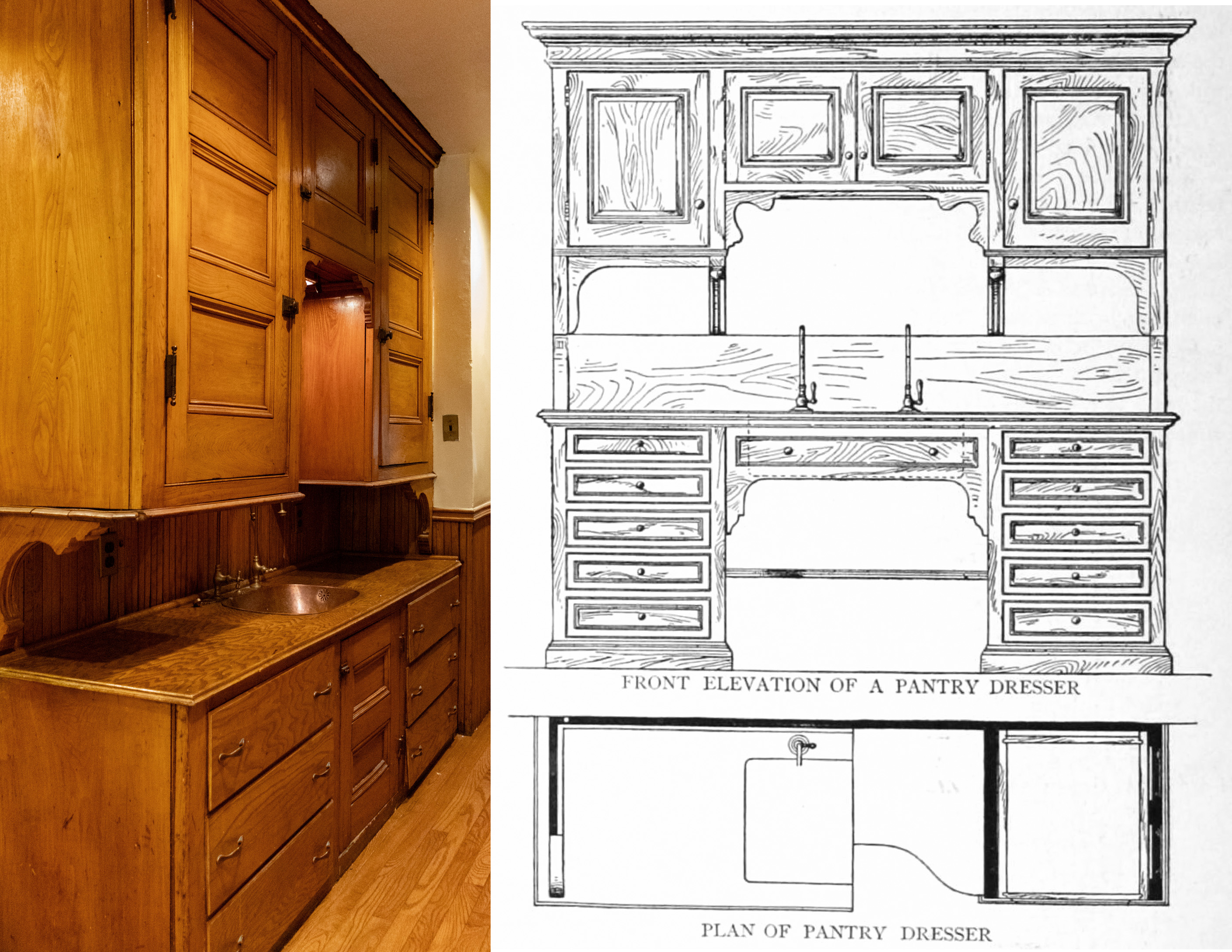
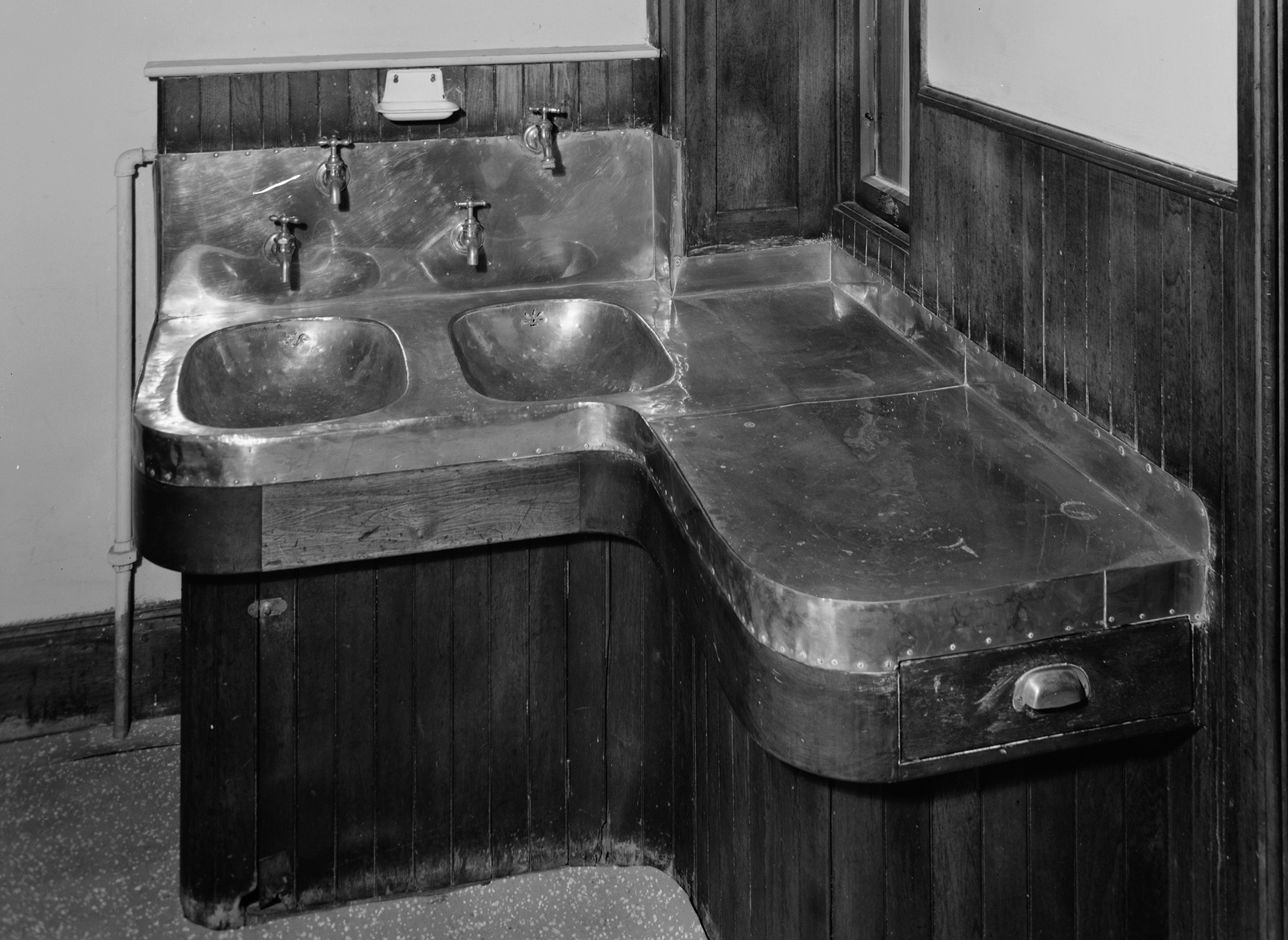
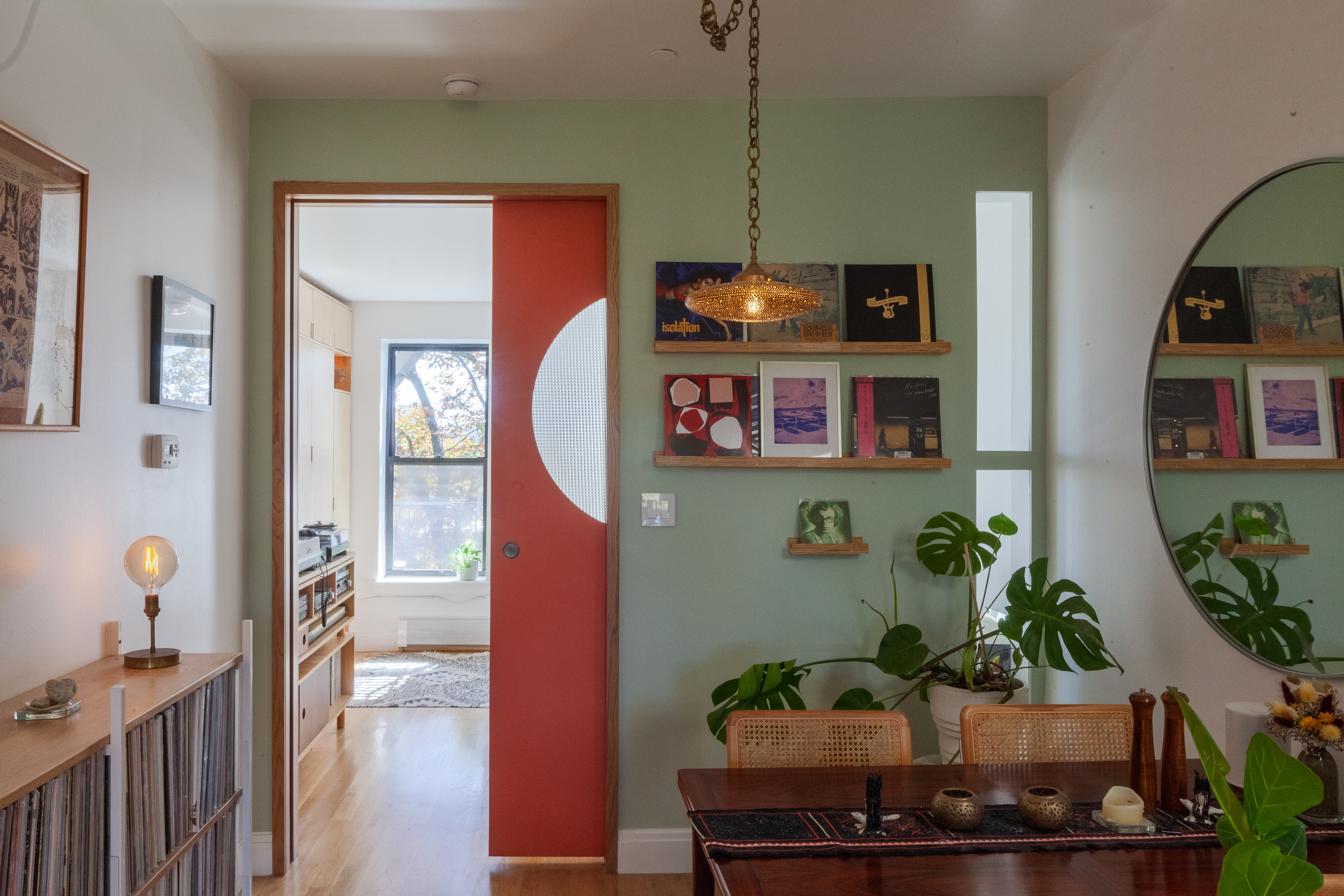
Clockwise from left: A Bed Stuy butler’s pantry. Photo by Susan De Vries. A plan for a pantry built-in. Image from Shoppell’s Modern Houses via Internet Archive. A Prospect Lefferts Gardens dining room. Photo by Susan De Vries. A butler’s pantry sink. Photo by Cervin Robinson for HABS via Library of Congress
If you are a fan of the cinematic world of wealthy Gilded Age people on both sides of the Atlantic Ocean, or if you enjoy meandering around 19th century mansion house museums, then at some point you must have seen a room off the kitchen or the dining room where servants picked up trays or put prepared food on plates to take out to the table.
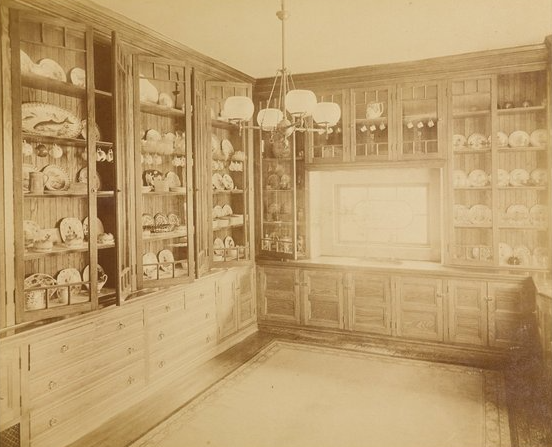
The room usually has wall-mounted sets of cabinets with glass doors, a wood or marble countertop beneath the cabinets, often with a small sink, and wide drawers and cabinets underneath. If the room is large enough, the other side of the room might be equally equipped or contain locked cabinets holding the household sterling silver, glassware, and china. That’s the makeup of a classic late 19th century butler’s pantry.
Those of us who love period details like this seek them out like the Holy Grail. Those who have them often regard them as the best feature in their homes.
The name “butler’s pantry” is often used interchangeably with the general term “pantry.” There are really two types of pantries. One is basically a closet off the kitchen with shelves and perhaps cabinets where non-perishable foodstuffs are stored. The shelves often hold small appliances, pots, bowls, and other cooking-related things one doesn’t want cluttering up the adjoining kitchen countertops or cabinets. That is your classic pantry, and most 19th century homes, including our row houses, were built with them.
True butler’s pantries were not as common. The large homes and estates in Europe and America began outfitting these pantries in the mid and late 19th century. People with the wherewithal to have a staff of servants often had a butler. He was the chief of staff of the household. His pantry was like a safe. The upkeep and protection of the fine silver, china, glassware, linens, and other precious serving materials were his responsibility. The objects were kept under lock and key, especially silver, and were meant to be taken out when required, then cleaned and polished and returned. An inventory list was checked to make sure everything was returned to its proper place. In large homes, the call bells were sometimes installed here, so the butler could attend to his employer’s needs or send another servant out.
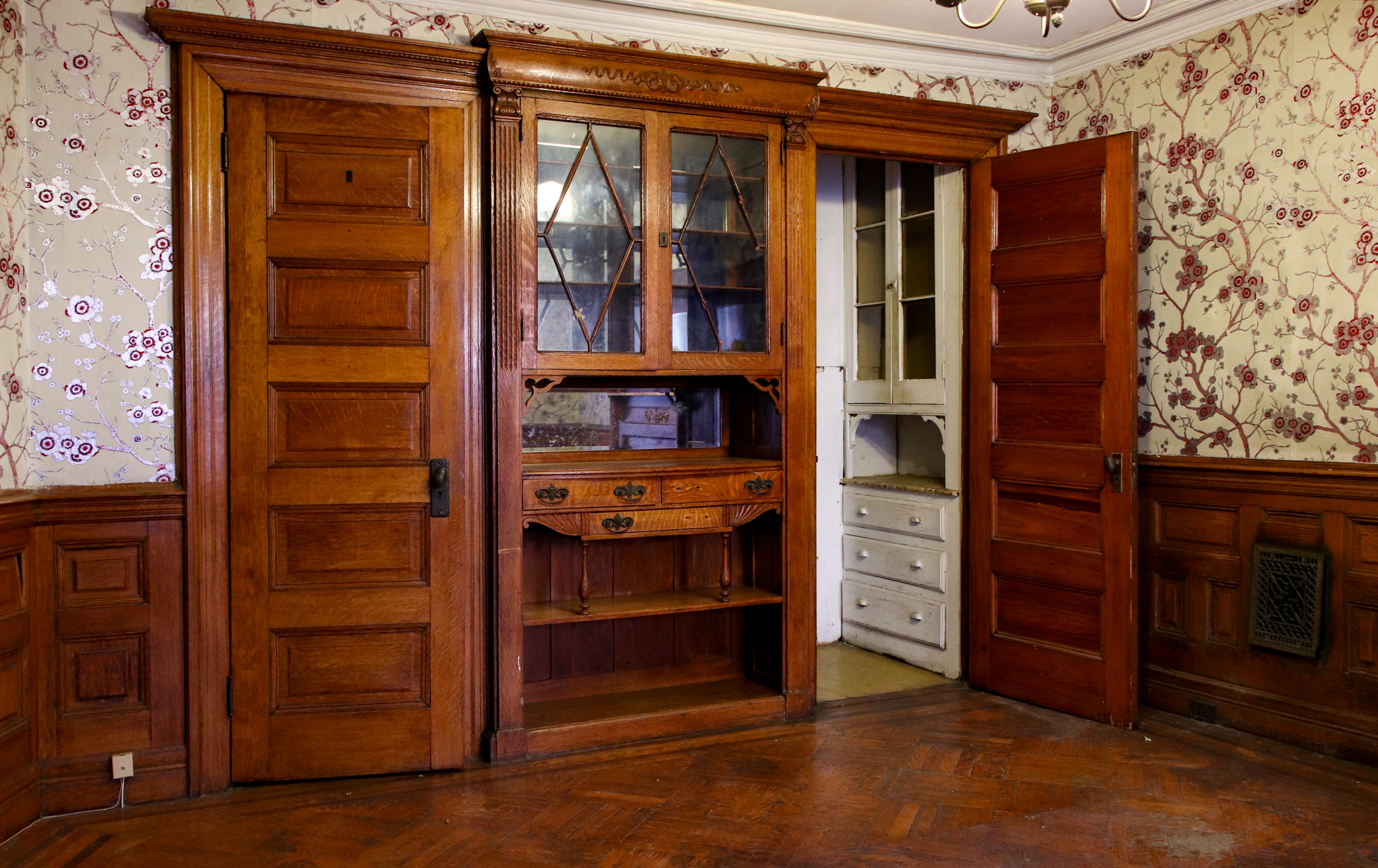
One generally finds a substantial butler’s pantry in large freestanding homes and estates. Brooklyn neighborhoods such as Prospect Park South or along the Shore Road in Bay Ridge were built for people of means with several servants and most likely had butler’s pantries in many of the homes. The large urban townhouses, such as those on Prospect Park West or mansions in Clinton Hill or St. Marks Avenue had them as well. Maybe not now, but when they were built. They were desirable interior features although the original owners of the home rarely went downstairs and saw them.
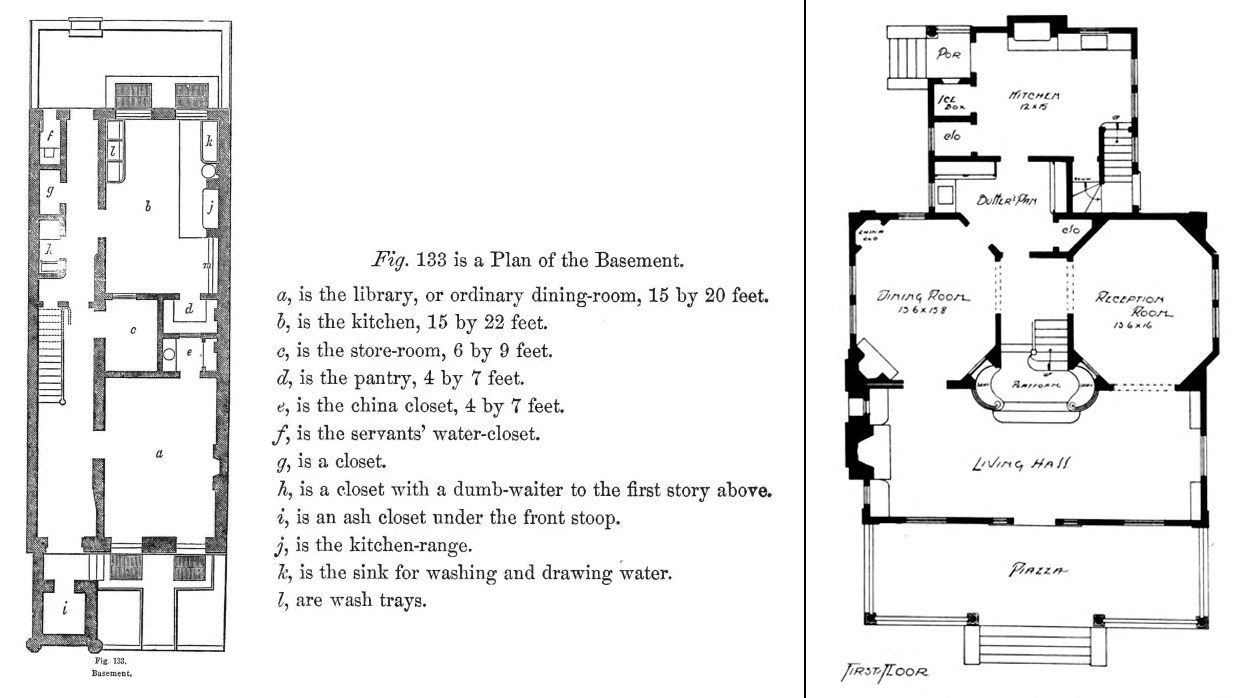
Many late 19th century upscale row houses had butler’s pantries too, even sans butler. The kitchen was always placed in the rear of the house. Many row houses had their dining rooms in the front of the garden floor. A butler’s pantry here was more of a staging area than a safe for precious objects. For ease of serving, the door between the pantry and the dining room was often a swinging door, so the servers could easily come and go, their arms full. The pantry provided a clear separation space between employer and staff.
The different courses in a meal were often individually plated. Soups could be put in bowls, and salads, the main meal, and desserts could be put on individual plates. Our modern “family style” meals, where the food is on the table and everyone passes the dishes around and serves themselves would have been considered low class, almost barbaric.
Row houses with large extensions often placed the formal dining room on the parlor floor where they were available for family meals as well as for entertaining. These dining rooms were often the most impressive room in the house, with lots of woodwork, coffered ceilings, stained glass, and other rich interior features. These houses had butler’s pantries as well: a room off the landing of the servants’ back stairs, just off the dining room. The dumbwaiter opened here, allowing the waiter or waitress to receive the food from the kitchen and prepare it for serving.
A small sink, the bowl often made of copper or German silver, was a helpful feature a floor above the kitchen’s running water. Wines could be decanted or prepared for pouring. The bowl was made of softer materials, which cut down on the breakage of fine crystal glassware or china pieces. This room, too, would be entered and exited via a swinging door, and everything ferried up and down by the dumbwaiter and staff.
A staff of several household servants, especially butlers and footmen, were the exception rather than the rule for many well-to-do people as America entered the 20th century. Butler’s pantries were still in older homes, but for most became storage spaces for seldom used items. The new middle and upper middle class housing built after 1930 often had a small food pantry off the kitchen, but mostly butler’s pantries were passé.
As houses were renovated over the century, the butler’s pantries were often torn out to make room for larger kitchens, closets, or bathrooms. In row house neighborhoods, butler’s pantries and pass-through dressing rooms on the bedroom floors have been the first things to go when turning a one-family house into three or four floor-through apartments. Servants’ stairs were closed up or removed and dumbwaiters were either taken out or became objects of conversation but not use.

The final blow to the butler’s pantry came when open plan became the most popular floor plan in the country. Inspired by the openness of loft apartments, walls and rooms are destroyed to have an open space from front to back. Old fashioned and anachronistic remnants of the age of servants become rubble in a dumpster.
Today, the pantry is back. Many new builds and renovations include some form of pantry in the kitchen. Homeowners enthusiastically enjoy having a room or storage space closed off from the kitchen by a door. In a time when many like to have bare countertops and minimal cabinetry, the pantry becomes a must-have and easily accessible storage space for both food and the tools needed to prepare it.
A modern form of butler’s pantry is also gaining popularity again. Home designers recommend having a pass-through between the kitchen and living spaces where food and drink can be prepared and served, or a coffee or drinks bar established. These rooms often have the same overhead cabinetry or shelving as the kitchen, with a long countertop, generally in stone, and a small prep sink with more cabinetry or maybe an under-counter refrigerator below. What do modern designers and decorators call this room? The butler’s pantry, of course. It’s become a new must-have for many.
But nothing beats the original in an old house. The presence of built-ins in rich unpainted wood, paned glass cabinet doors, long drawers below for linens, and a shelf large and deep enough to both store and display — who could ask for more than that? Many tears have been shed when seeing these original details are gone, while more than a few houses have been purchased in part because of an intact original butler’s pantry. This author has seen quite a few over the years, in townhouses and freestanding mansions, in and out of Brooklyn. Unfortunately, her own home does not have one. One can dream.
Related Stories
- What Was the Turkish Corner?
- The Story of Fretwork
- How the Victorians Brought Texture and Pattern to Walls
Email tips@brownstoner.com with further comments, questions or tips. Follow Brownstoner on X and Instagram, and like us on Facebook.
What's Your Take? Leave a Comment