
New Elevators Improve Accessibility at Sheepshead Bay Subway Station
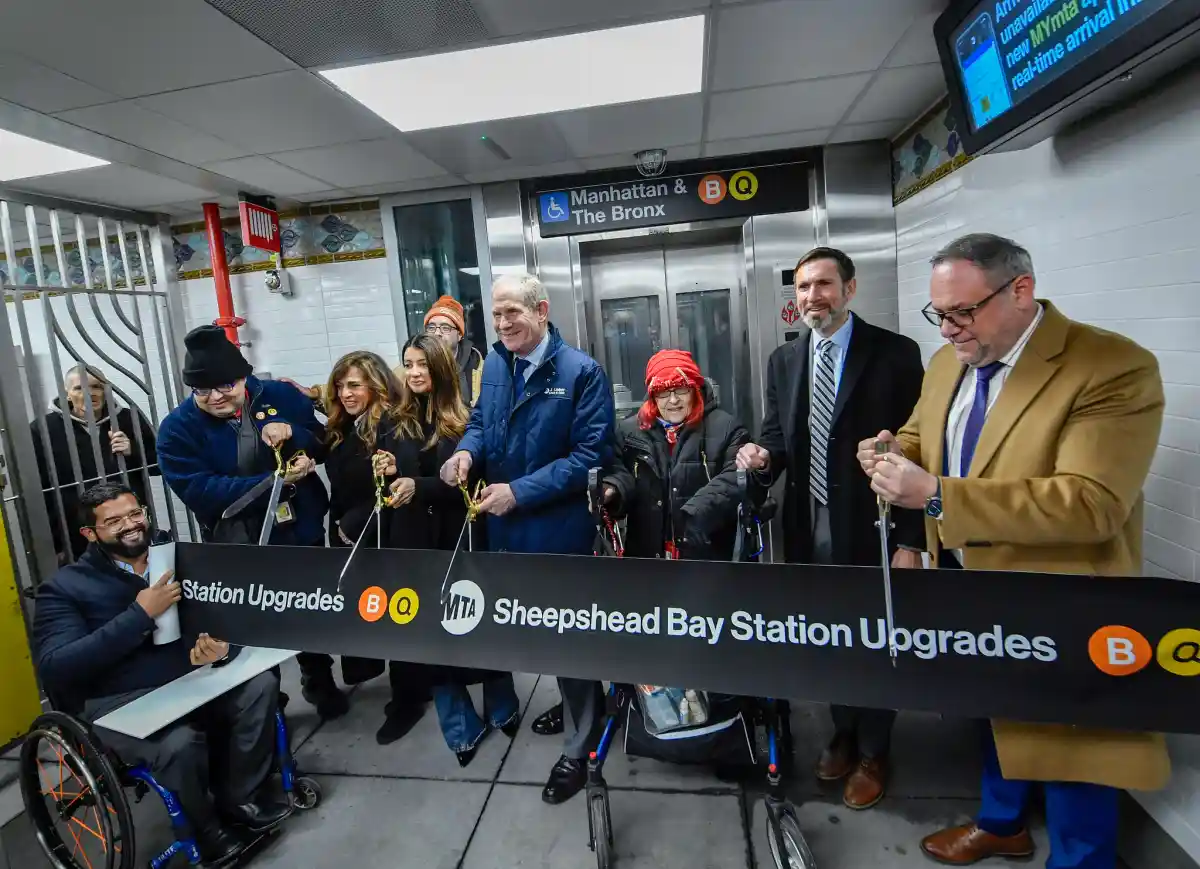
Officials unveiled new lifts between the street and platform on February 19, after about two and a half years of construction.

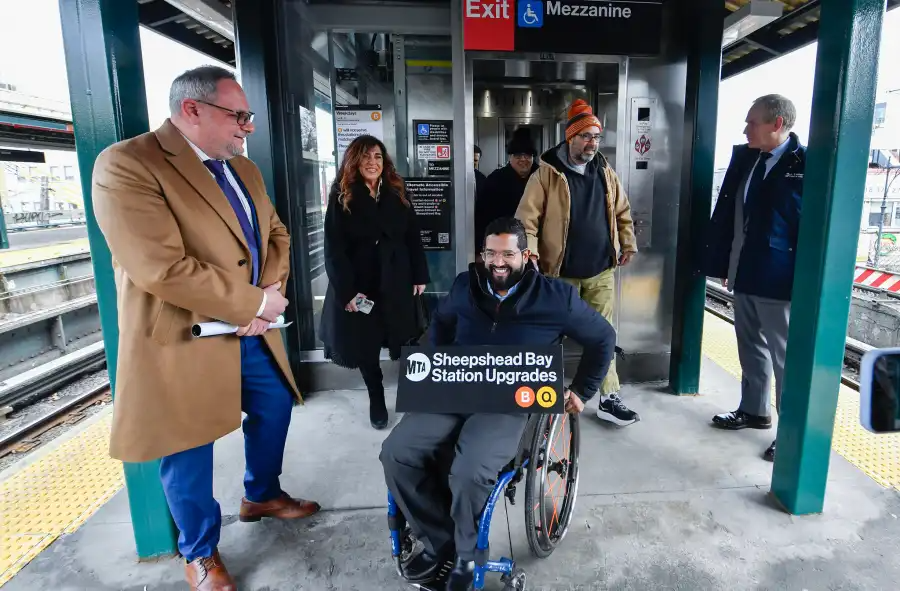
The MTA’s Chief Accessibility Officer, Quemuel Arroyo, tested the new lifts. Photo by Marc A. Hermann/MTA
by Kirstyn Brendlen, Brooklyn Paper
The MTA this month finished installation of two new elevators at the Sheepshead Bay subway station, making it finally fully accessible for all riders.
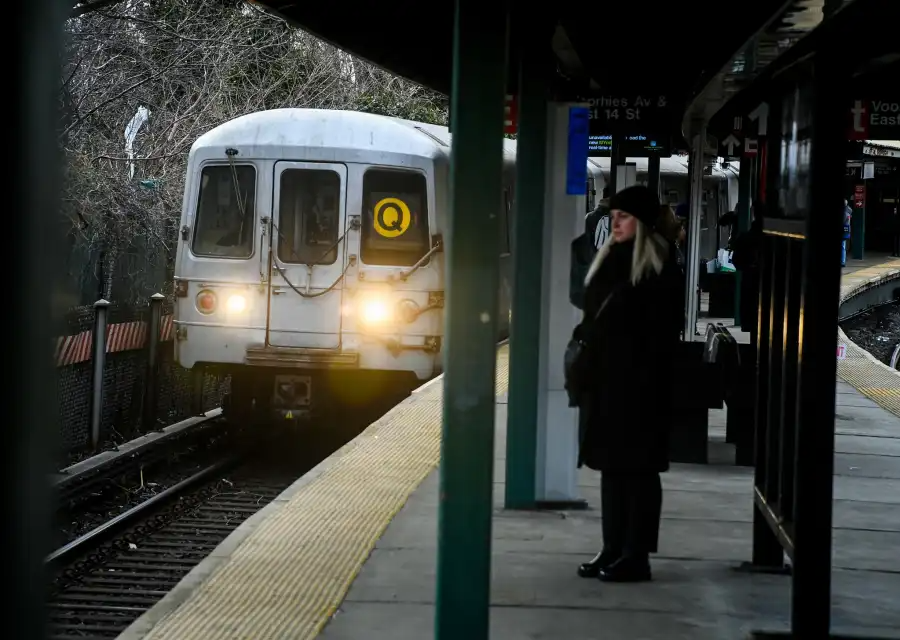
Officials unveiled new lifts between the street and platform on February 19, after about two and a half years of construction. To make the station completely compliant with the Americans With Disabilities Act, the MTA also added new raised boarding areas, which make it easier for people using mobility devices to enter and exit trains; and new tactile warning strips on the edge of the platform.
“Today’s MTA is on a mission to make old, neglected infrastructure new again,” said Janno Lieber, chair and CEO of the MTA, in a statement. “The Sheepshead Bay station is a perfect example – first opened in 1907, but now accessible to every New Yorker.”
The new elevators and machine room were built to be flood-resistant as part of the MTA’s climate resiliency program, as the area is prone to flooding.
The station’s revamp also included safety and “customer experience” upgrades.
It got a completely new entrance with additional turnstiles, exit gates, and staircases, per the MTA. Sidewalks beside the station entrance were widened, per the MTA, and ADA push buttons were added to the doors. New lights, Help Points, and a speaker system were installed, along with an enhanced CCTV system and an expanded fire prevention, detection, and alarm systems.

“Making Sheepshead Bay Station fully accessible means more residents can easily reach work, school, and even better – Coney Island,” said New York City Transit President Demetrius Crichlow, in a statement. “Accessibility upgrades deliver better trips for everyone whether you’re a parent with a stroller, someone using a mobility device, or even carrying gear for a day at the beach. We’re proud to celebrate another project that improves transit for the communities that rely on it.”
After decades of slowly bringing its 472 subway stations into ADA compliance, the MTA has kicked its accessibility project into high gear in recent years. Since 2020, it has completed accessibility upgrades at 39 stations, with dozens more under construction. At least a dozen stations will be made accessible under its 2025-2029 Capital Plan, including the Smith-9th Streets station in Gowanus — the tallest subway station in New York City. A legal settlement requires 95 percent of all stations to be fully accessible by 2055.
A total of 13 stations, including Sheepshead Bay, are set to receive accessibility upgrades as part of the same “package,” per the MTA. The work was awarded as a public-private partnership that required contractors to finance the project using equity and bonds, which would only be reimbursed if the project was built and kept to MTA standards.
“My constituents living in and traveling to Sheepshead Bay deserve safe, reliable, and fully accessible transportation when commuting throughout our city,” said state Senator Jessica Scarcella-Spanton. “The completion of upgrades at the Sheepshead Bay subway station is a long overdue investment that will make a real difference for the thousands of riders who rely on it each day to get to work, school, and home to their families … I look forward to seeing these enhancements bring greater peace of mind to Sheepshead Bay and to everyone who travels through this station.”
Editor’s note: A version of this story originally ran in Brooklyn Paper. Click here to see the original story.
Related Stories
- Brooklyn Subway Upgrades Will Speed Trains, Boost Accessibility
- MTA Explores How to Use AI to Monitor Thousands of Cameras in Transit System
- Could the IBX Be Fully Automated?
Email tips@brownstoner.com with further comments, questions or tips. Follow Brownstoner on X and Instagram, and like us on Facebook.



What's Your Take? Leave a Comment