
Landmarks Signals Support for Tower Addition to Fort Greene Church
The Commission expressed conditional support for a developer’s proposal to build a new residential tower on top of the Hanson Place Methodist Church.

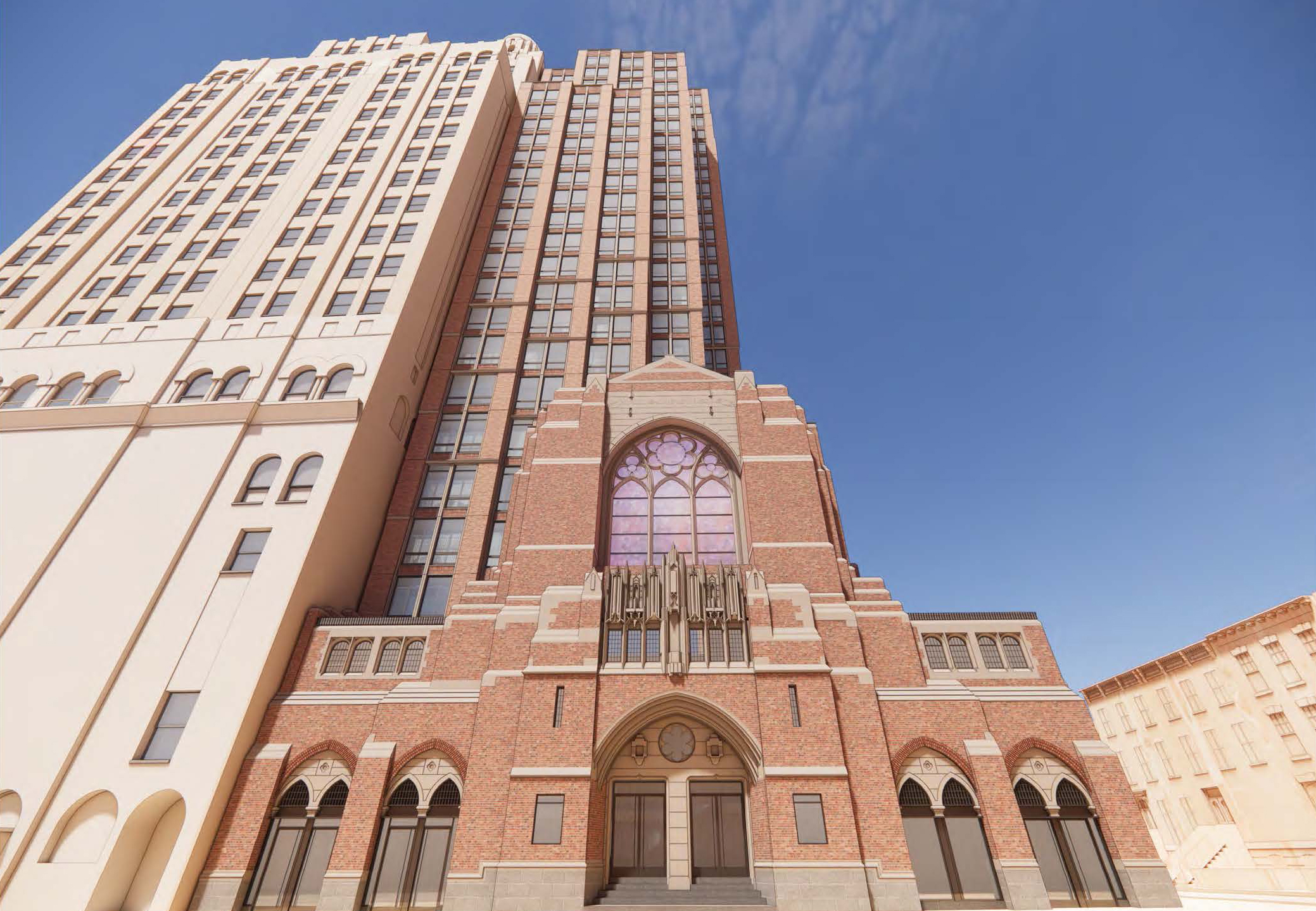
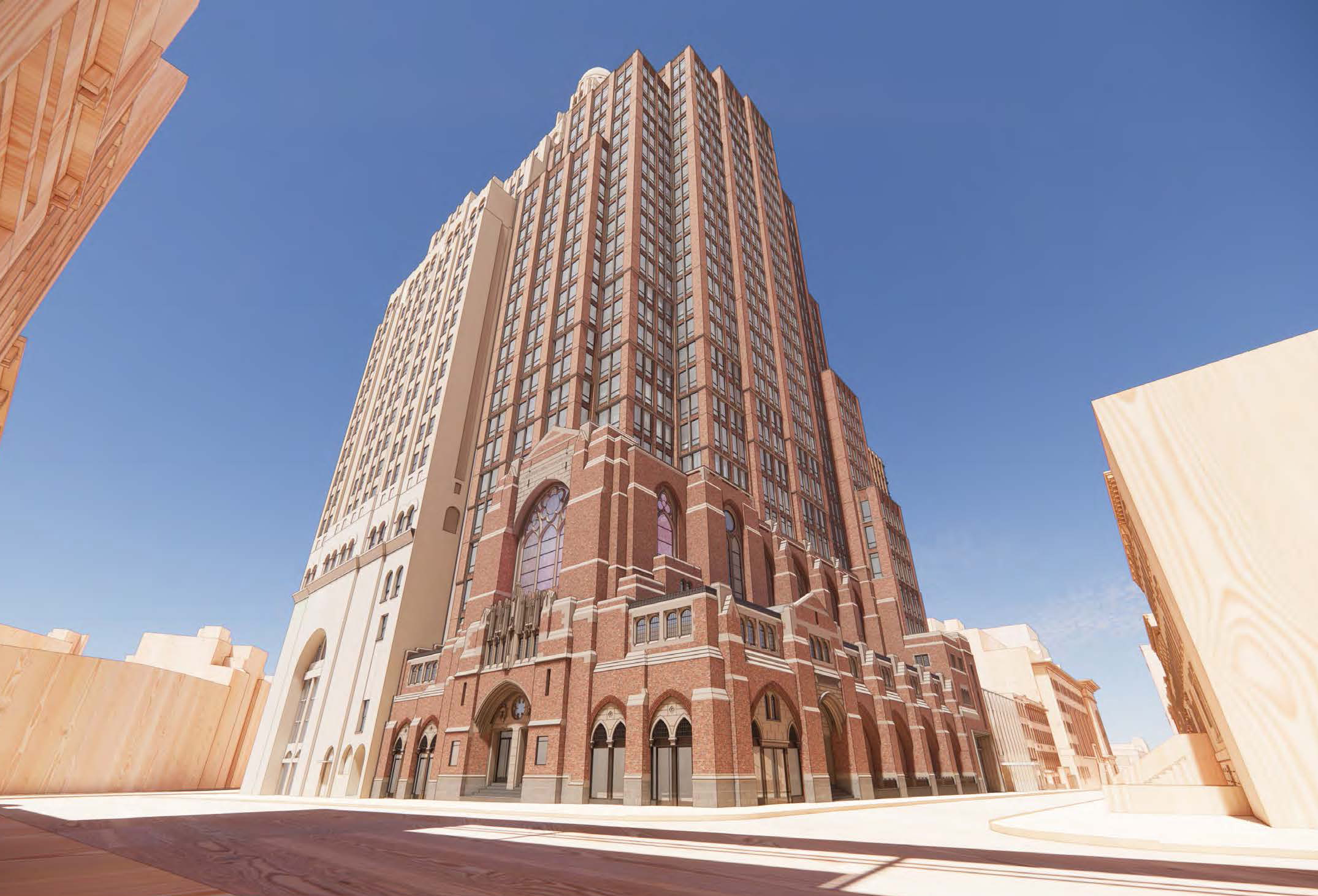
Rendering by FXCollaborative and ADP Architects via LPC
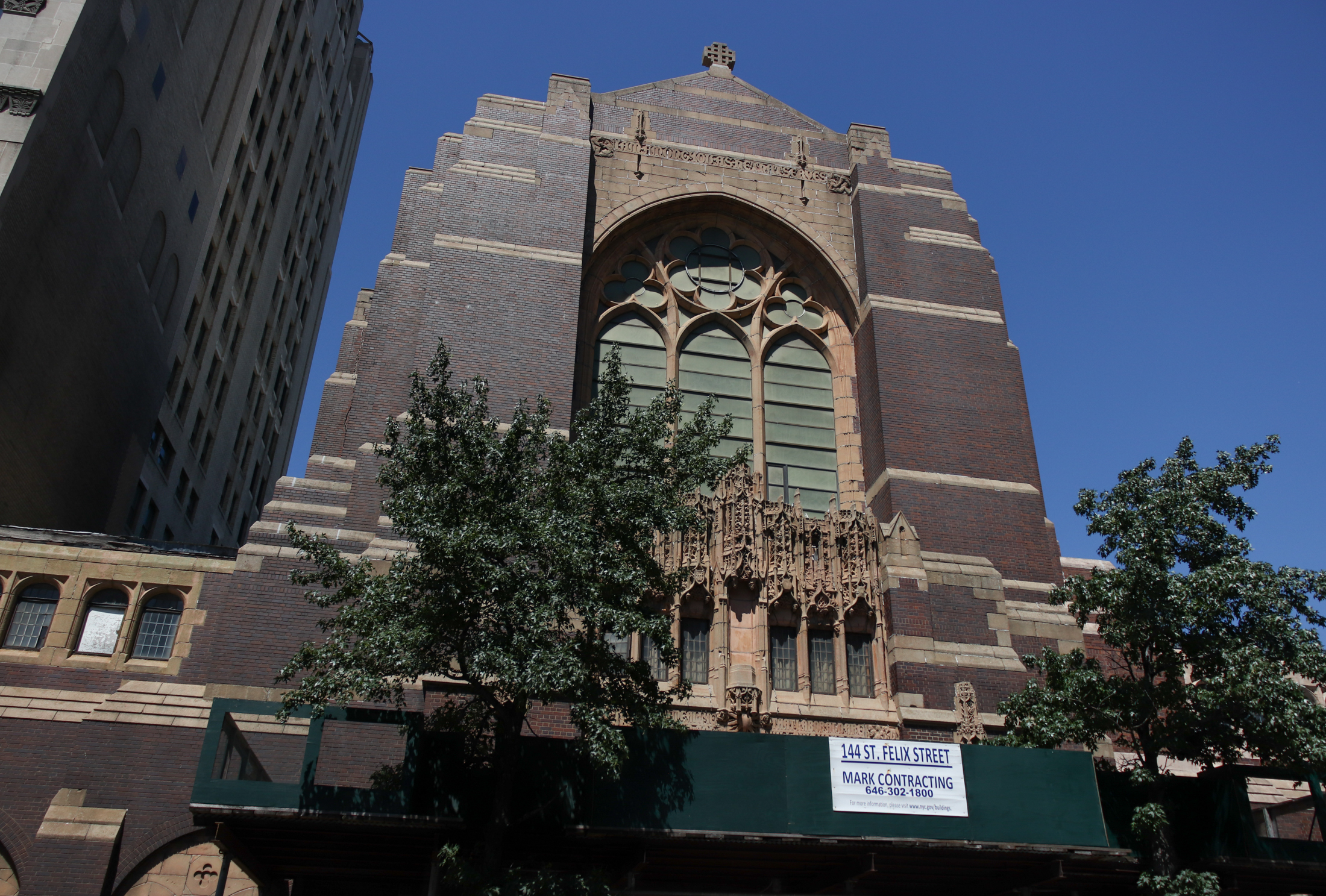
The Landmarks Preservation Commission has expressed conditional support for the conversion of Fort Greene’s Hanson Place Central United Methodist Church into the base of a 27-story residential tower, with most commissioners backing the overall concept while calling for revisions to better preserve the church’s identity.
At a January 13 meeting, some of the commissioners agreed the adaptive reuse of the deteriorating church at 144 St. Felix Street was appropriate, but said the current design needs refinement in how the new tower relates to the historic structure and the surrounding Brooklyn Academy of Music Historic District.
The meeting followed a contentious public hearing on December 5, when more than 80 people testified for and against the project. Forty-six speakers supported the proposal, largely citing the need for new housing and arguing the design respected the church, the neighboring Williamsburgh Savings Bank Tower, and the historic district. Thirty-three speakers opposed it, saying the tower was out of scale, obstructed views of the iconic clock tower, diminished the church’s architecture, and amounted to facadism.
At the January meeting, which was held after commissioners voted to have their discussion at a separate hearing following the lengthy testimony in December, the development team responded to the public’s concerns saying that the church is in poor condition and that restoring it without a substantial enlargement would not be financially feasible. They said stabilization and restoration would cost tens of millions of dollars and yield relatively few residential units if confined to the existing structure. The team also stressed that the proposal is unrelated to Watermark Capital’s Duffield Street project and should be evaluated on its own merits.
By law, the Landmarks Preservation Commission focuses largely on questions of architectural appropriateness for protected historic buildings rather than other considerations such as owner costs or citywide housing needs.
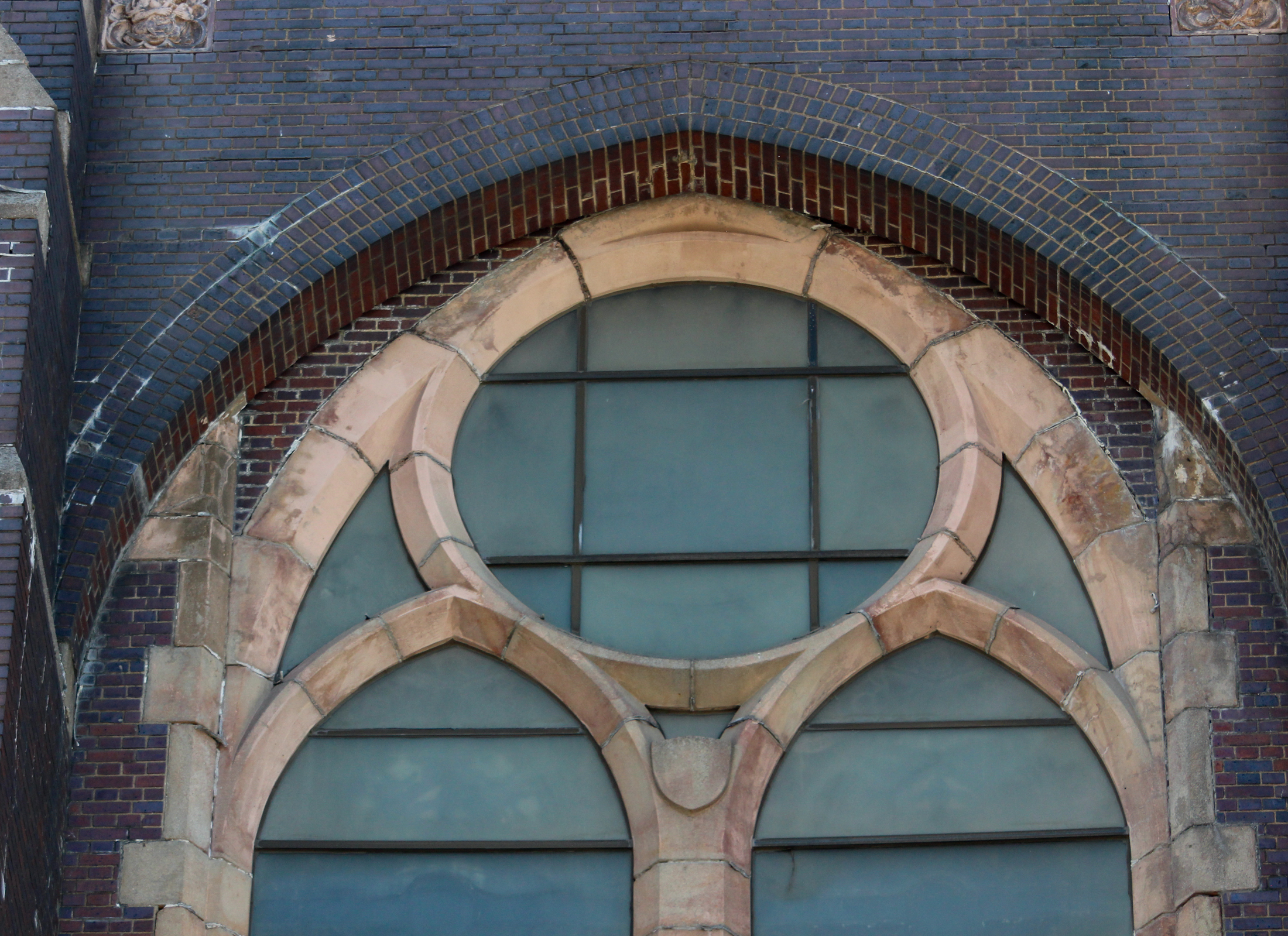
Developer Strekte is seeking approval to alter the 1930s neo-Gothic church, designed by Halsey, McCormack & Helmer, by demolishing portions of the structure, relocating architectural elements, and constructing the residential tower on top of the church. FXCollaborative and ADP Architects are leading the design. While the house of worship is not individually landmarked, the project requires LPC approval because it sits within the BAM Historic District.
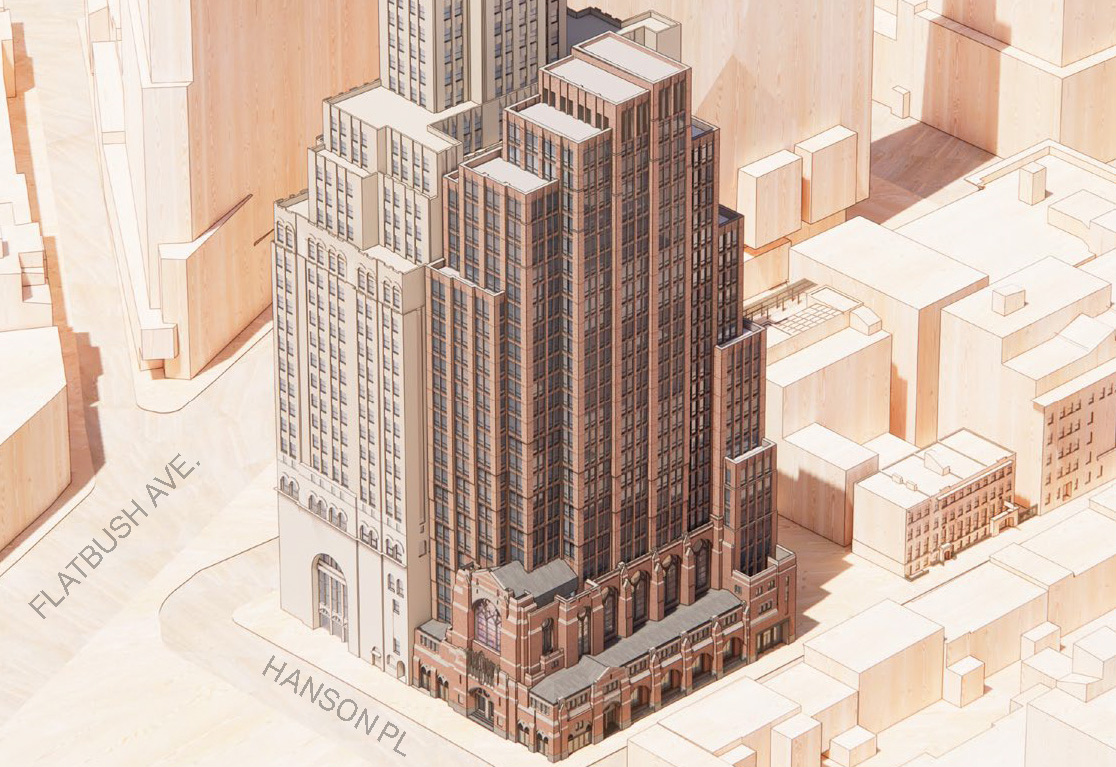
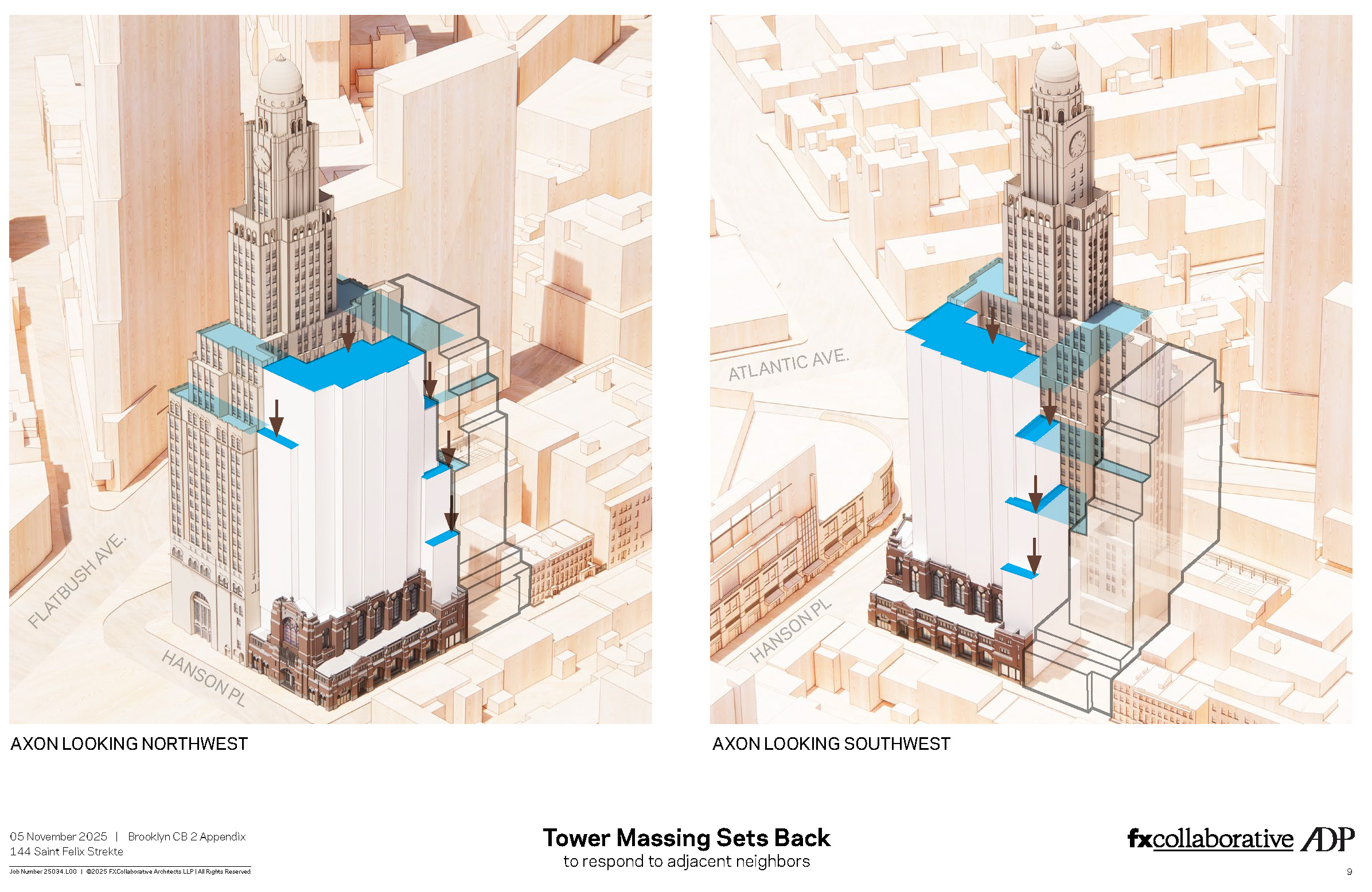
The proposal includes restoring the church’s St. Felix Street and Hanson Place facades; repairing masonry and ornamentation; preserving religious iconography; upgrading windows; and adding new retail and community space. The 27-story tower would step down along both streets and contain 240 apartments, including 50 to 60 permanently affordable units.
A member of the development team said at the recent hearing the firm did a study of how the building could be adaptively reused within its current footprint, but found it financially infeasible. “The yield of residential floor area is quite low, resulting in approximately 32 units, which is about 14 percent of what we are proposing in the application design. It also is grossly inefficient,” he said.
The team argued the proposed height and massing were appropriate for Hanson Place, a block they said was characterized by a mix of mid- and high-rise buildings shaped by transit infrastructure. They said the tower would be shorter than the Williamsburgh Savings Bank Tower, preserve visibility of its clock tower, and be set back. The design, they said, was intended to avoid competing with the landmarked bank building while creating a distinct identity based on the church’s proportions and materials.
“Architecturally, we believe this proposal is an appropriate balance of preservation and intervention,” a member of the team said.
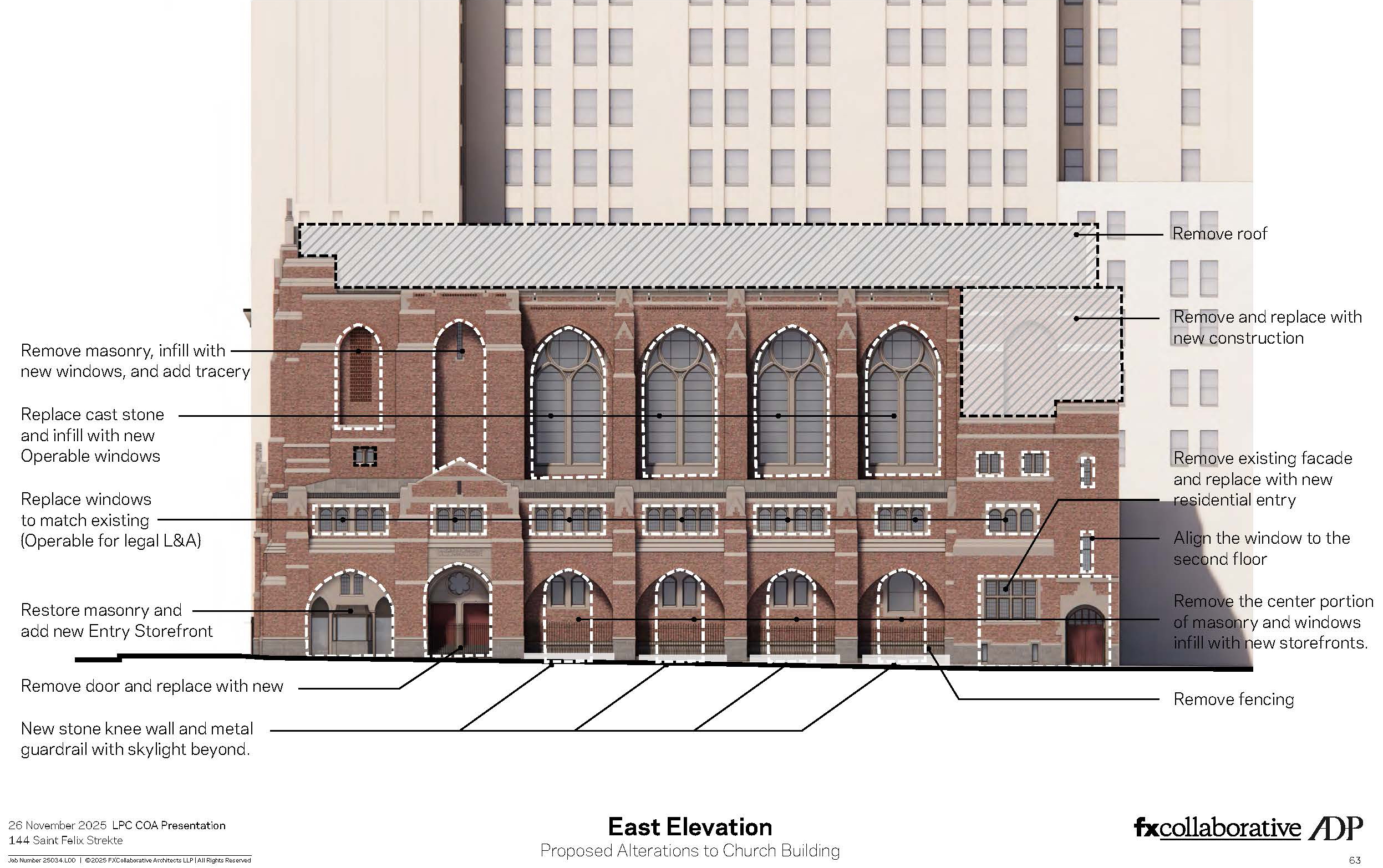
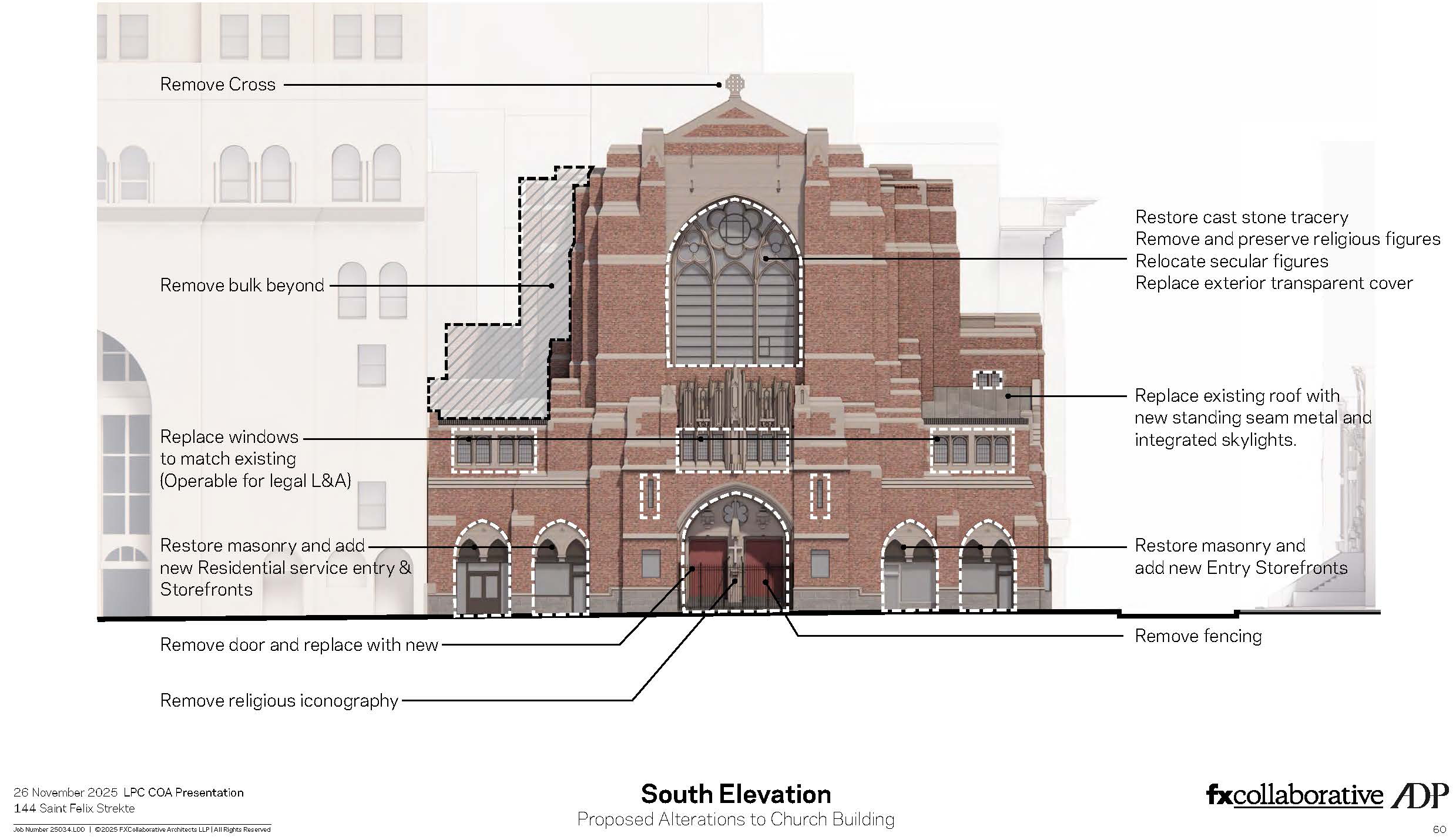
At the meeting, the commissioners agreed on the need for adaptive reuse, and most were supportive of the scale and massing proposed. Commissioner Frank Mahan called the project “simultaneously bold and nuanced.”
“I think that’s a testament to the skill and the facility with which the design has been approached,” he said. “I think the arguments for height and scale in general have been made well.”
However, Mahan said, there was “a little bit of a schizophrenic sort of identity of the proposal” and tension between “symmetry versus asymmetry” with the design appearing to draw simultaneously from the church and the Williamsburgh Savings Bank Tower, rather than clearly prioritizing one. He said the historic bank building was designed to be viewed from the two streetfront facades, not from the two lot-line facades, and the project at hand should relate more strongly to the church and the historic district for that reason.
Mahan also raised concerns about preservation details, particularly the limited number of stained-glass windows and historic doors being retained in place. He said more of those elements should be preserved to maintain the church’s status as a historic structure.
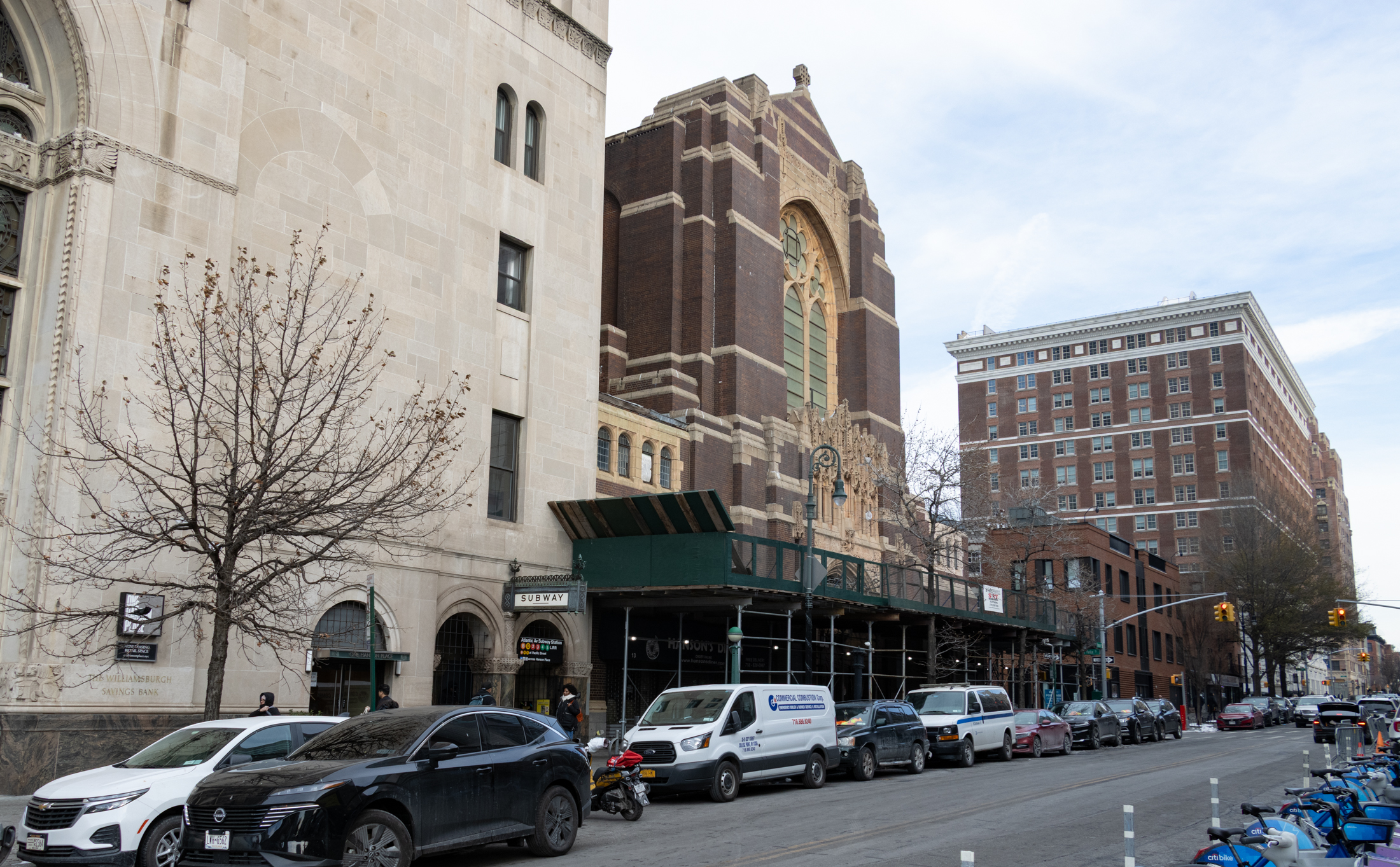
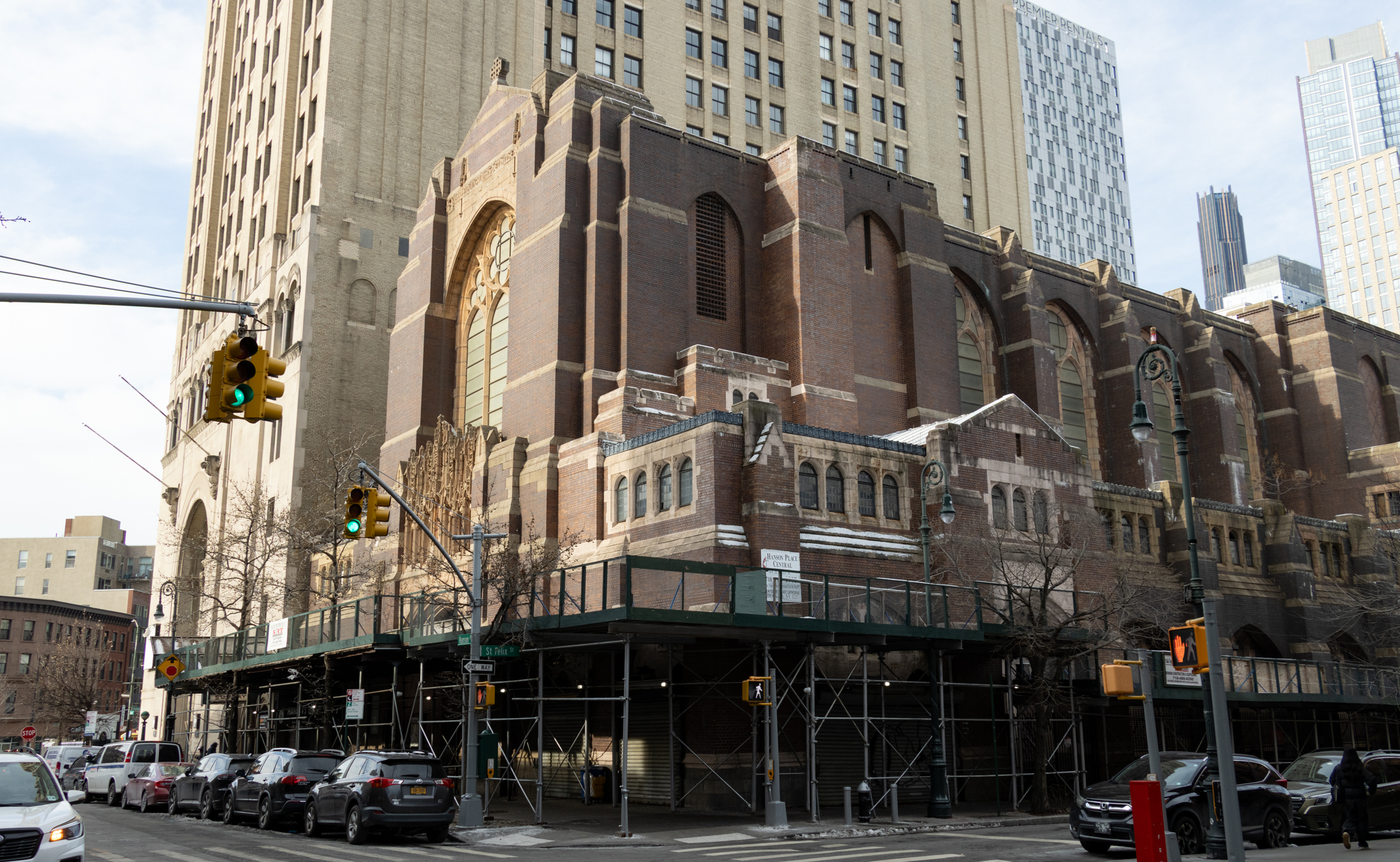
Commissioner Mark Ginsberg said the project fits into the broader citywide trend the LPC will have to contend with: How to manage the growing number of vacant and underused religious buildings as church attendance declines and buildings fall into disrepair.
Ginsberg said he leaned toward supporting this project, describing it as the glass “half full rather than half empty,” because a significant portion of the church would be retained rather than demolished. He said that rejecting the proposal outright could ultimately lead to further deterioration and a total loss of the building due to a lack of interest from developers. (Owners are required by law to maintain landmarked structures, although in practice many do not, despite fines.)
With that, Ginsberg suggested revisions, including pulling back portions of the northern bay and potentially reducing the building’s height slightly so it doesn’t rise above the shoulder of the adjacent bank building.
Other commissioners echoed support for the overall direction of the project while raising concerns about how clearly the church reads as a distinct historic building. Several said the materials risked making the tower appear as though it had “always been there,” blurring the distinction between old and new. They urged the design team to more clearly articulate the transition between the church and the tower and to preserve more original materials where possible.
Commissioner Michael Goldblum, however, took a markedly different position and questioned the fundamental premise of the proposal. Goldblum said his stance began with the nature of the historic district itself, describing St. Felix Street as a lower-scale block whose character should not be drastically altered without compelling justification.
“The economic case for the building says that a renovation within the volume is infeasible. I don’t exactly agree with the analysis that they made, and we haven’t really seen it in any great detail,” he said. “I think that the distance conceptually between an interior renovation of the existing volume and what’s proposed is light years.”
Goldblum said the commission’s prior review of the stalled 130 St. Felix Street project saw maintaining the street’s scale as a key concern, and he didn’t believe the developers had shown such a dramatic height increase was necessary from a landmarks perspective.
Goldblum also said the proposal overwhelmed the existing church, saying the scale of the addition effectively reduced the historic structure to a pedestal, adding concerns about facadism were likely given the imbalance between the remaining church and the new construction. “I don’t think the scale has been in any way examined, and I certainly think the scale has to be much more deferent to the scale of the block and the scale of the building,” he said.
On design, Goldblum said the attempt to reconcile the symmetry of the church with the massing and aesthetic cues of the Williamsburgh Savings Bank Tower missed the point of the district’s character. He said the church’s strength lied in its self-contained symmetry and indifference to its surroundings, and that the proposal tried unsuccessfully to align itself with both the church and the bank tower at once.
“The case has not been made to me that a tower is necessary here, and that that’s the best solution from a Landmarks perspective as opposed to from a real estate investment perspective for this site. I think the scale has to be aggressively questioned,” he said.
Despite Goldblum’s comments, acting LPC chair Angie Masters closed the hearing saying the commission was largely in support of the project, and adaptive reuse of churches in general. She added that this project needed more work in how the developers preserved aspects of the church, and said they could also examine the height of the tower at the request of some of the commissioners.
The project will return to LPC for a vote once revisions are made.
Related Stories
- Dozens Debate If Apartment Tower Would Diminish Landmarked Fort Greene Church
- Locals Push Back on 27-Story Tower Planned for Historic Fort Greene Church
- Fort Greene Church Inks Deal for $15 Million Sale Next to Stalled Controversial Condo Tower Site
Email tips@brownstoner.com with further comments, questions or tips. Follow Brownstoner on Twitter and Instagram, and like us on Facebook.
What's Your Take? Leave a Comment