
LPC Might Allow Tower That Doesn't Gut Duffield Street Houses
Landmarks praised revised plans for a tower behind the landmarked Duffield Street houses but said the proposal still needs work.

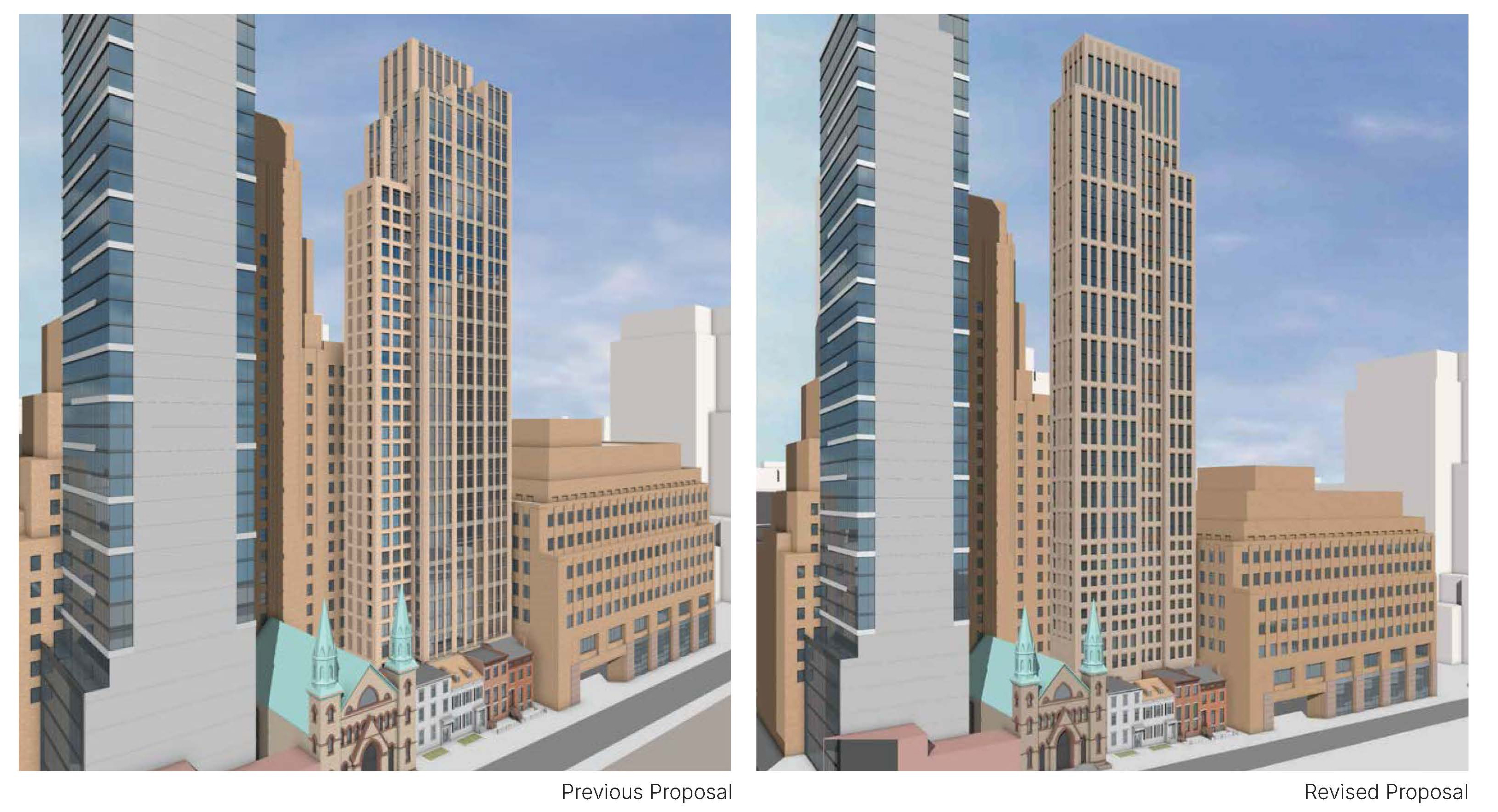
The new proposal for the Downtown Brooklyn tower reviewed by LPC on February 3. Rendering by Hill West Architects and Acheson Doyle Partners Architects via LPC
In a surprise change of course, the Landmarks Preservation Commission looks set to approve a new tower behind the row of four 19th-century landmarked houses on Downtown Brooklyn’s Duffield Street after developers pulled plans to gut the historic structures. However, the commissioners say the design team still has work to do.
At a February 3 meeting, architects Drew Hartley of Acheson Doyle Partners Architects and David West of Hill West presented revised plans to the commissioners, following an October 25 presentation where they were sent back to the drawing board with plans commissioners said “diminished severely” the existing landmarks through demolition and the cantilevering of the tower. The revised plans include preserving and restoring three of the four single-family townhouses as they are, while one, No. 188, will become the entrance to the new tower.
The revised plans site the tower behind the historic houses, 48 feet from the street line, instead of cantilevering above them. There will also be a recess at the base of the tower that creates five feet of space between 184 and 186 Duffield Street and the lobby and allows for the installation of a fire-rated wall (a legal requirement).
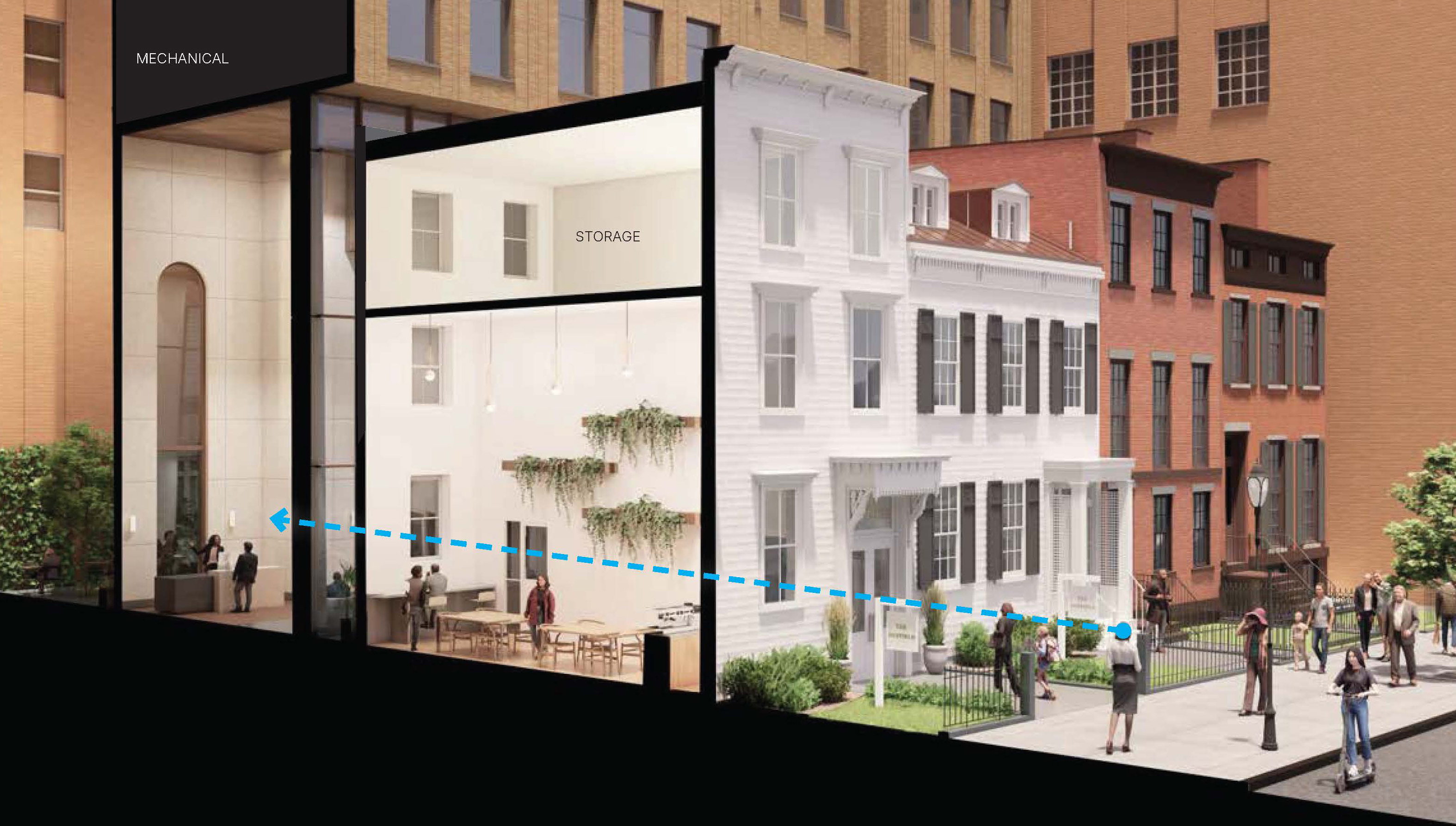
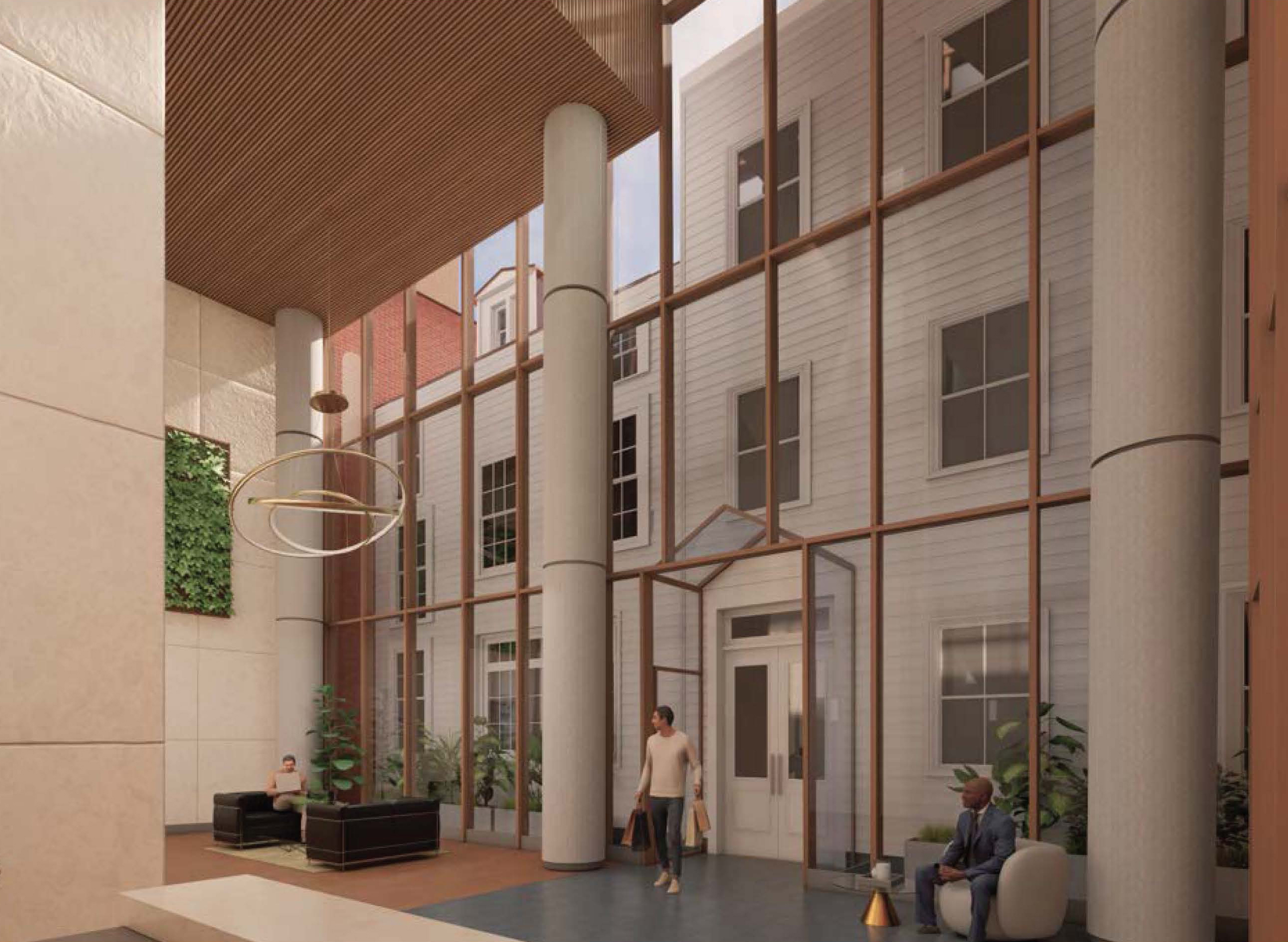
“I think the solutions being proposed are very creative to deal with a number of issues,” Commissioner Mark Ginsberg said, praising the setback, increased preservation efforts, and exposure of the ends of the row of houses at their corners.
Commissioner Frank Mahan also praised the creativity and supported the tower. However, he took issue with how it interfaced with the historic houses and called for more work on the facade design and articulation, including the side walls and placement of the fire-rated wall.
“I think given its presence on a landmark site, you know, we ought to insist on a facade design that really represents our best sort of aspirations for residential tower design today,” he said.
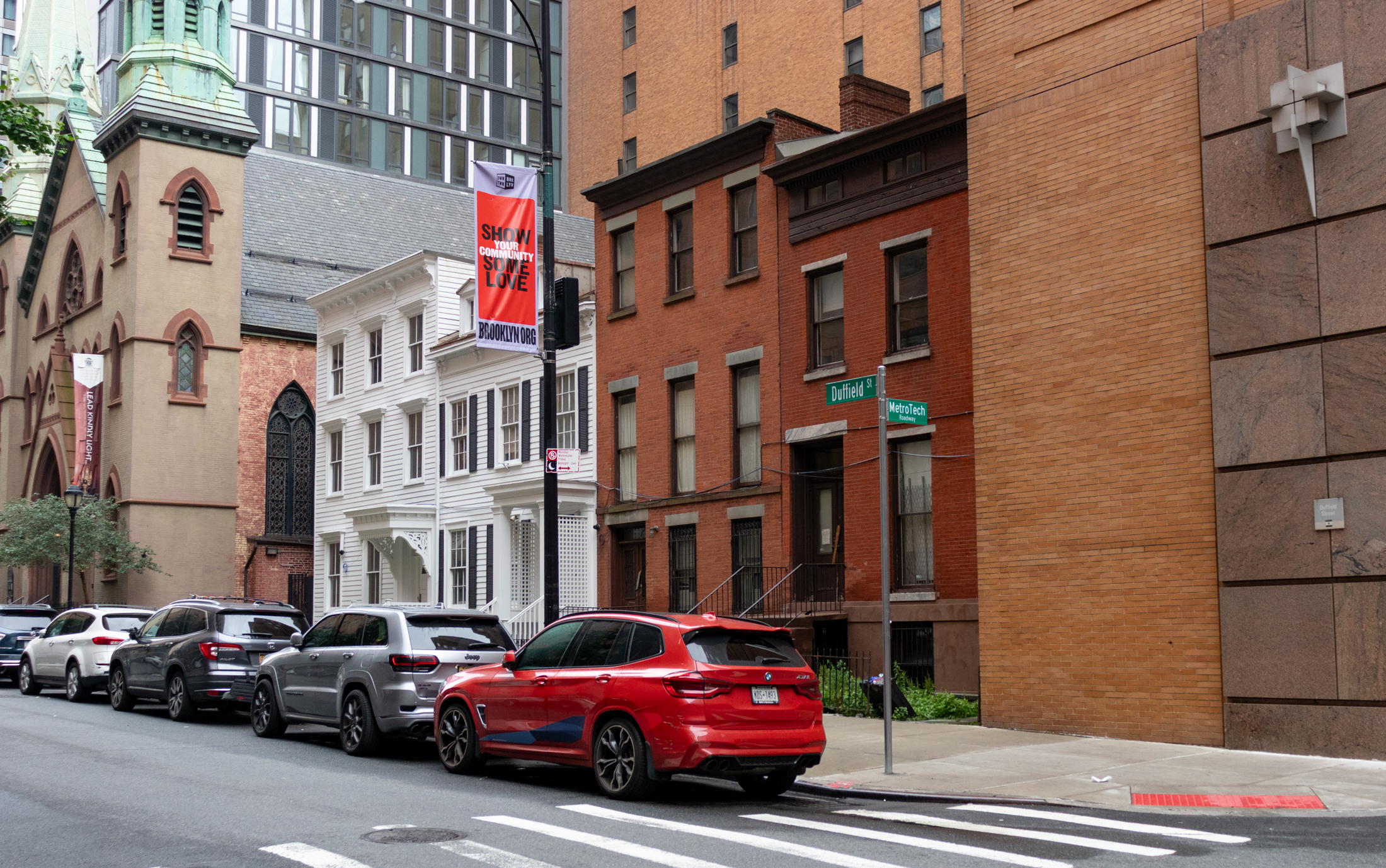
Hartley told the commissioners that since the October meeting, the design team had worked on plans that increased preservation of the townhouses at 182 through 188 Duffield Street, and said 182, 184, and 186 would now remain largely intact as single-family houses. The rear porches would still be removed, he added, saying they were later additions. As for 188 Duffield Street, it would be significantly altered inside to convert it into the entrance to the lobby and operate as commercial space (a zoning requirement).

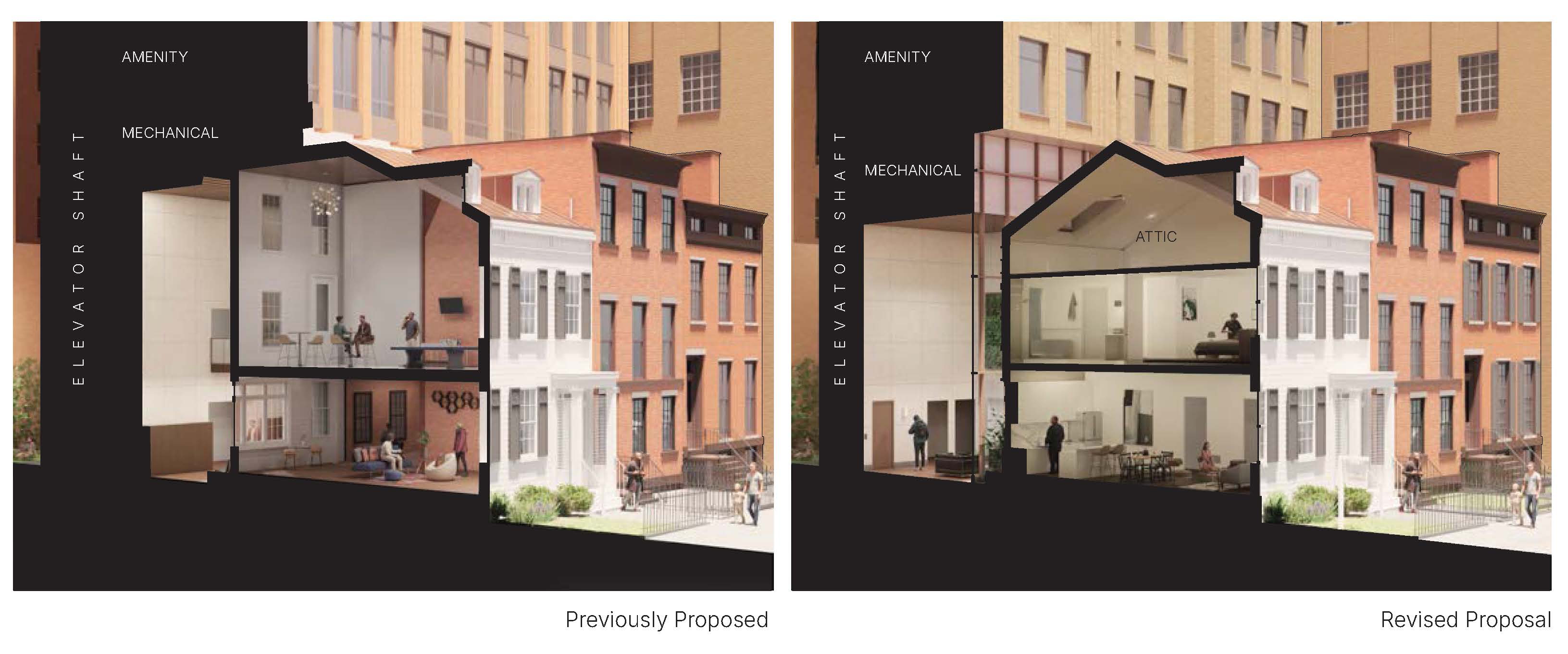
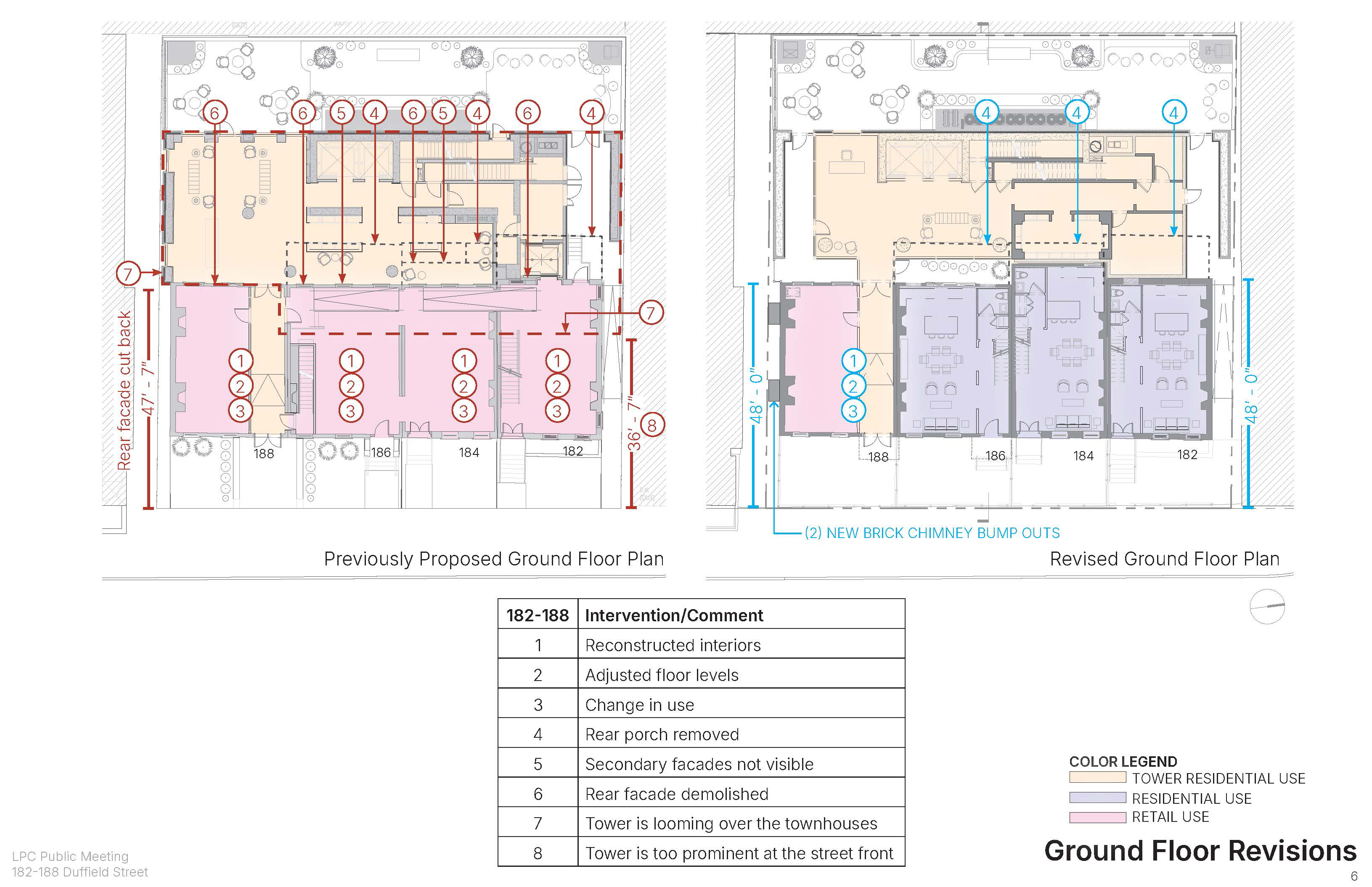
“These buildings really have been underused since they were moved here…we want to bring life back to them, occupy them with people and re-enliven this block of Brooklyn,” he said.
West said the revised plans call for a slimmer tower due to the 11-foot increase in the setback, but said it will still have 99 units and aim to use the 485x tax abatement program. The latter requires 20 percent of the units have to be affordable to households earning an average of 80 percent of Area Median Income. To have the same number of units, West said there will no longer be any three-bedrooms and the tower will now be 448 feet rather than 395 feet, a height he said was in context with the rest of the neighborhood.
Changes have also been made to the facade design to better integrate it with the houses, West said, including having single-height punched windows on the lower 10 floors that stretch out to larger windows as the building gets taller.
“As the building rises near the top, we provide step shoulders, reminiscent of the Art Deco massing exemplified by Walker and other skyscrapers in the area,” he said, adding the brick will be similar to that of the adjacent Walker building, aka the BellTel Lofts, and sourced from the same manufacturer.
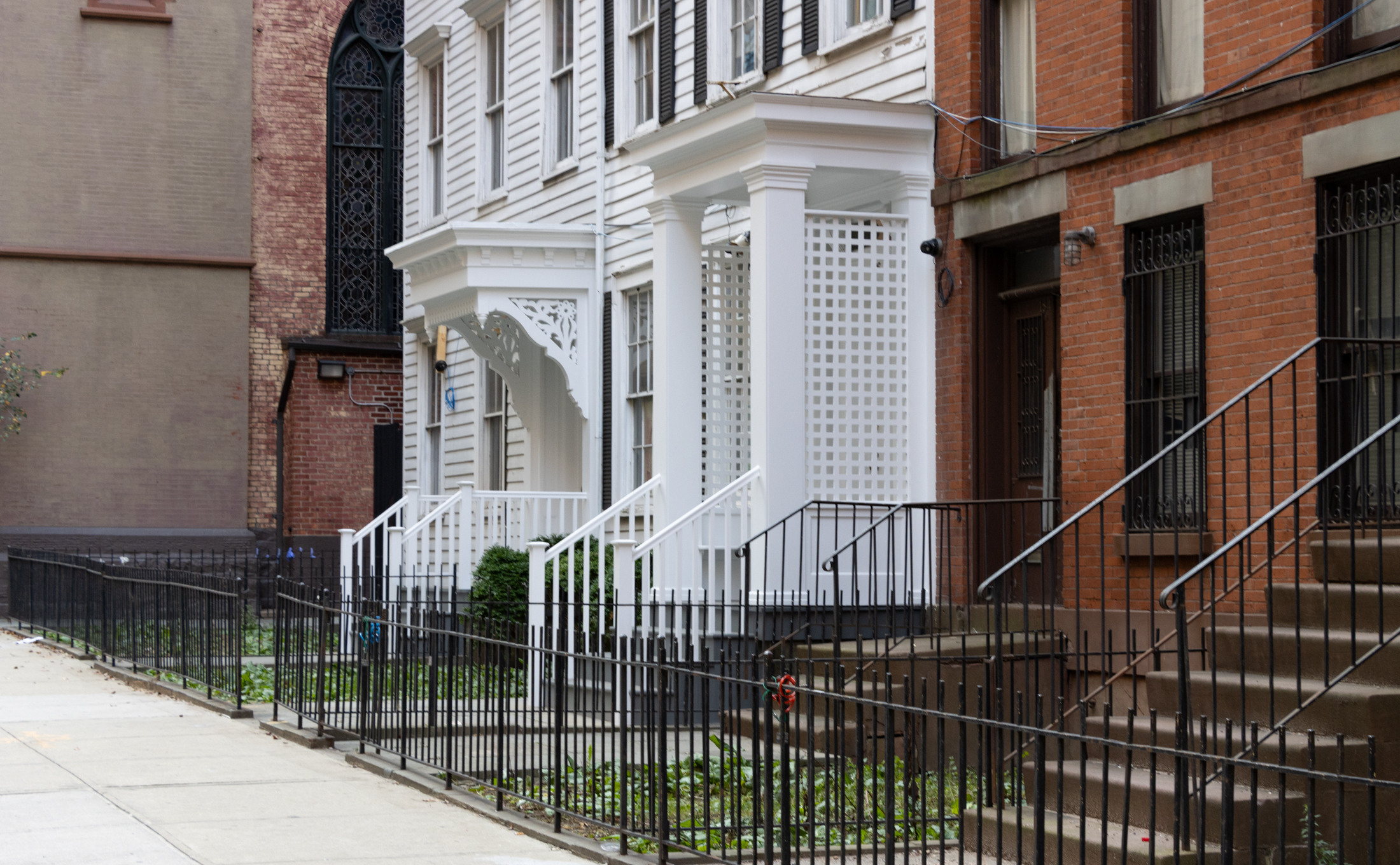
Overall, there was consensus amongst the commissioners that the tower could fit on the site given the setback and new massing. However, the majority of the commissioners agreed the facade needed more work and some thought the height also needed further analysis.
Commissioner Michael Goldblum said that while he thought the proposal worsened the experience of the landmarks and made “a bad situation worse,” it was “not so significantly so that I think it kind of changes the relationship of the buildings to their context.”
“I think that the setbacks have pushed this volume to probably the closest to the front that they could be and still have the buildings retain a sense of individuality and not become Potemkin fronts, which was the feeling I certainly had last time. I guess that’s really just about scale and proportion, and I think that that was successful,” he said. Goldblum did add he thought the tower should be reduced at least to the height of the BellTel Lofts.
Commissioner Stephen Wilder said in the previous plans, the relationship between the tower and the historic houses was “messy,” and he thought the setback and other tweaks had solved a lot of the earlier issues. However, he added “there could be more articulation on the actual facade.”
“It is weird because we’re treating it as secondary, but it’s not, it’s just a relationship. So it still needs to be approached with the level of care and design that I think complements these townhouses and not just as a backdrop,” he said.
The commissioners unanimously voted to send the plans back to the design team for further work, stressing the facade design, height, and firewall treatment needed to be reviewed.
LPC staff said following the October public hearing, where 16 members of the public spoke in opposition to the proposal, Council Member Lincoln Wrestler had written in sharing concerns about protections for the landmark buildings.
It also received letters recommending denial from Assembly Member Joanne Simon, Brooklyn Heights Association, Downtown Brooklyn Community Association, Historic Districts Council, New York Landmarks Conservancy, Victorian Society of New York, and 37 individuals, along with an online petition in opposition that had gathered 564 signatures. Staff said they also received one letter in support of the proposal.
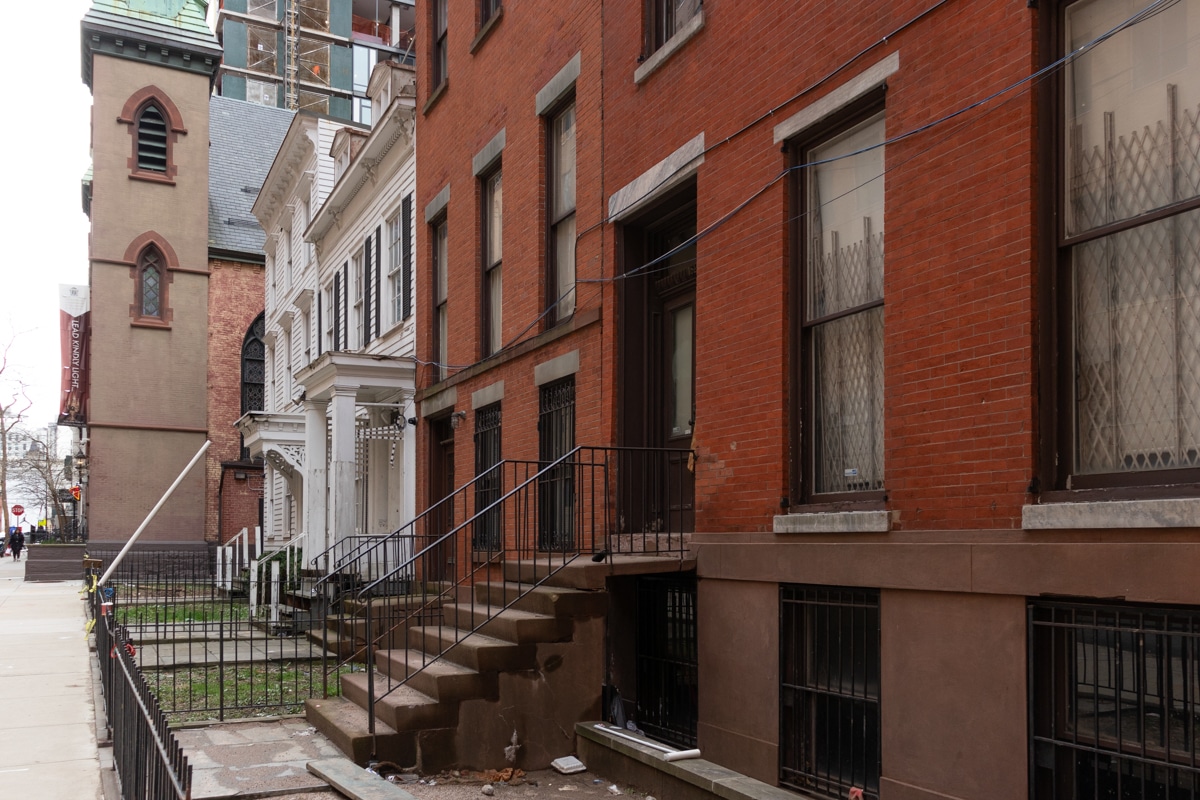
The four historic houses are rare survivors of a once-vibrant downtown residential community. Built between the 1830s and 1847, they were home to lawyers, teachers, builders, and merchants. Redevelopment beginning in the 1970s with Fulton Mall and continuing with MetroTech in the 1980s and a more recent Downtown Brooklyn rezoning erased most low-rise homes in the area.
Moved from Johnson Street in the 1990s and designated landmarks in 2001, the houses were owned by Forest City Ratner, which pledged to maintain them as part of its MetroTech development deal. In 2022, Watermark Capital Group bought the site through an LLC for $10 million, as Brownstoner reported at the time.
Related Stories
- LPC Rejects Plan That Would Gut DoBro’s Duffield Street Houses for 33-Story Towera
- Proposed DoBro Tower Would Block Neighbors’ Windows, Alter Landmark Row
- Developer Watermark Capital Plans 30-Story Tower for Landmarked Duffield Street Houses
Email tips@brownstoner.com with further comments, questions or tips. Follow Brownstoner on Twitter and Instagram, and like us on Facebook.

These buildings are not the old Penn Station. While the buildings are nice, some things need to go as a city grows. Just build housing and take some of the millions it would cost to preserve these buildings and put it into affordability.
As a longtime parishioner at historic St. Boniface next door, all I can think is, there goes the light for our OTHER stained-glass windows. We already lost the first side to the ugly high-rise on the corner. What a sleazy bait-and-switch those poor little houses turned into. They will be tiny ground-level masks for another monument to greed and ugliness. LPC, for shame.