
Planned Tower for Duffield Street Houses Lacks Identity, Needs Work, LPC Says
Commissioners sent the plans for the high-rise tower behind the landmarked Duffield Street houses back to the drawing board at its recent meeting.

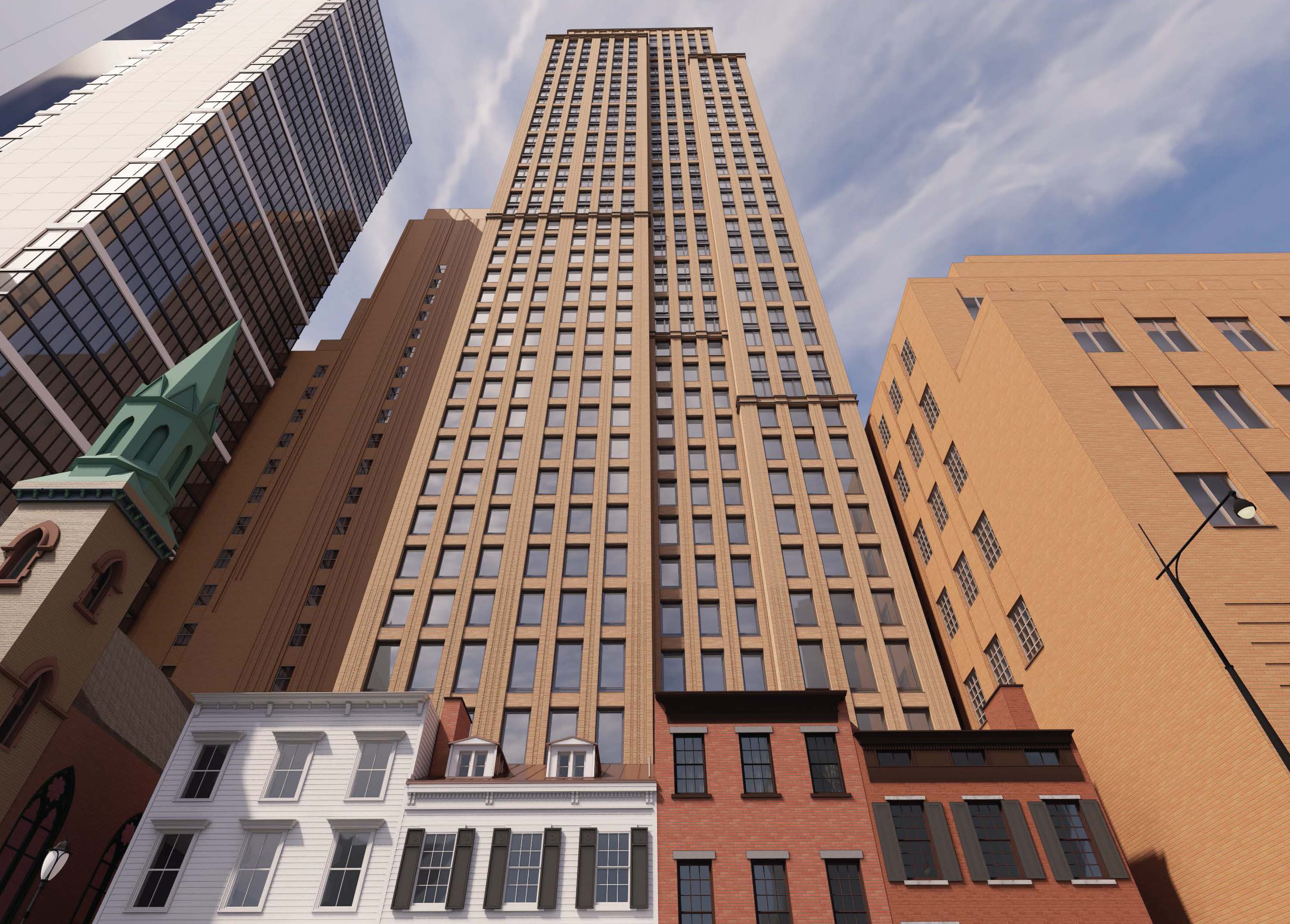
Rendering by Hill West Architects and Acheson Doyle Partners Architects via LPC
While a tower will likely rise behind the landmarked Duffield Street houses in Downtown Brooklyn, it won’t be the one most recently presented to the Landmarks Preservation Commission.
At their meeting on March 17, commissioners sent the design team for the project at 182 through 188 Duffield Street back to the drawing board saying the tower presented lacked identity and relation to the historic wood frame structures, and hadn’t been significantly improved following a February meeting where the commissioners asked for changes to plans.
“I have to say the modifications overall made I find to be so subtle to be almost not noticeable, in general, across the entire project,” Commissioner Frank Mahan said.
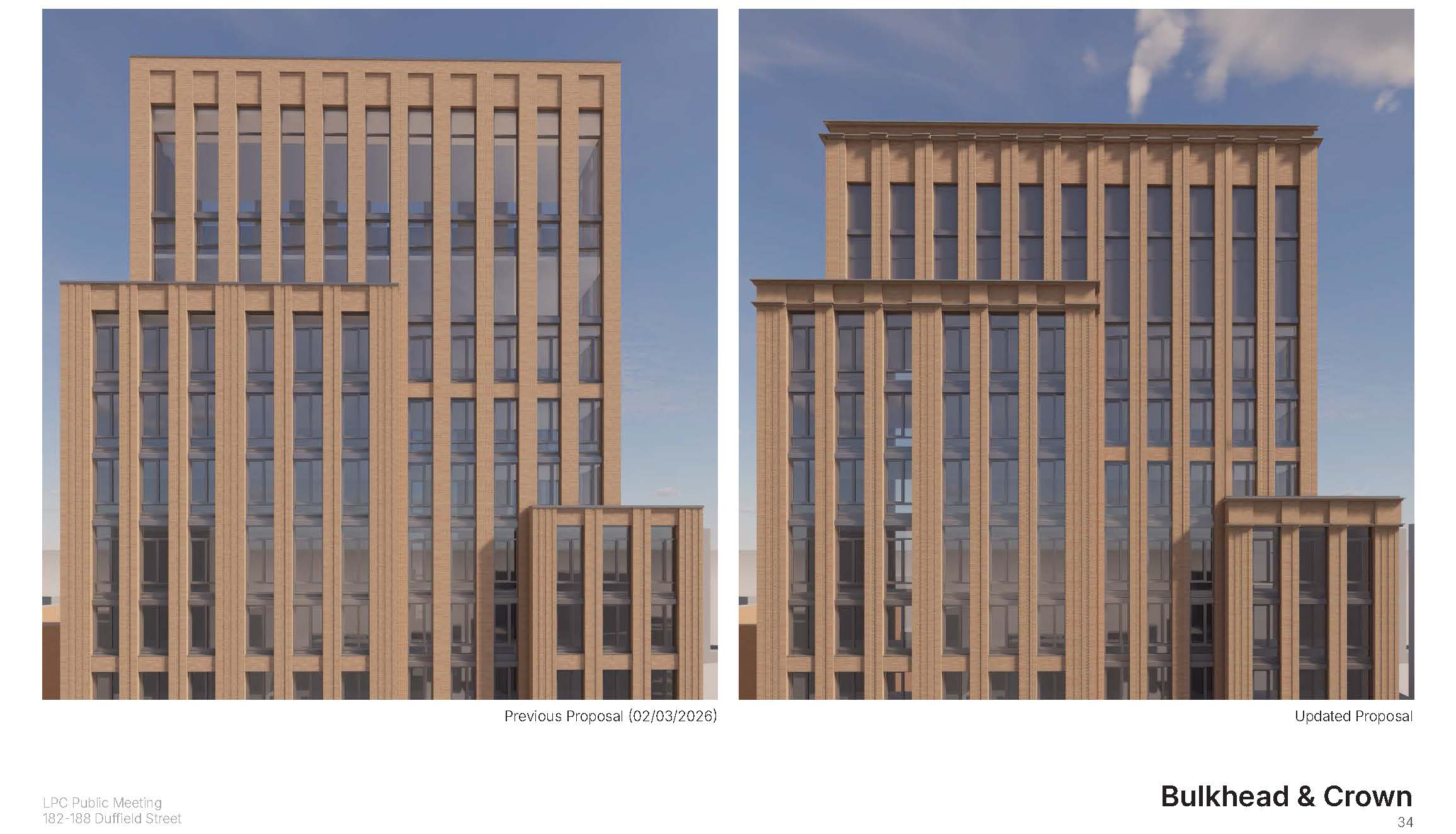
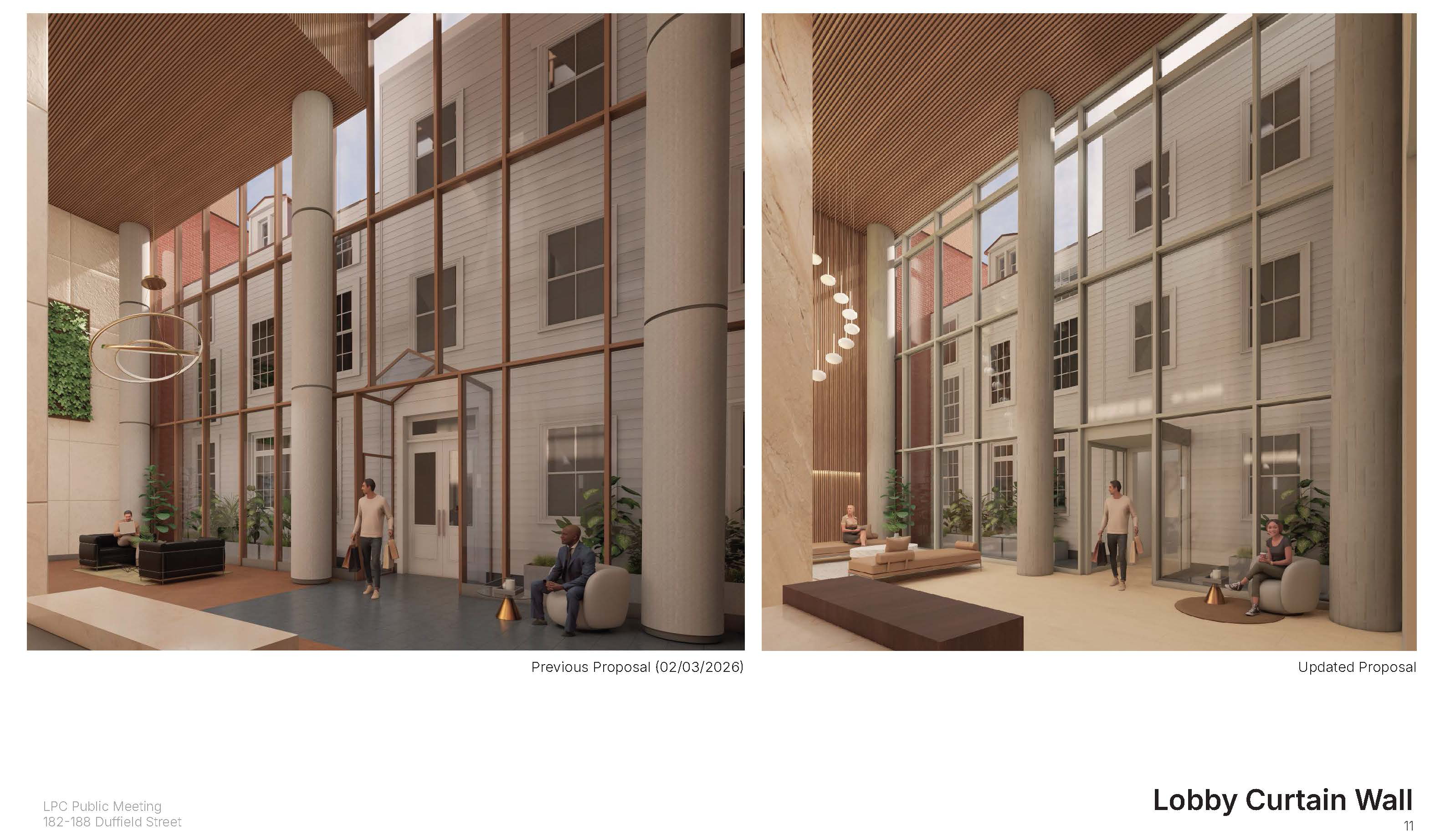
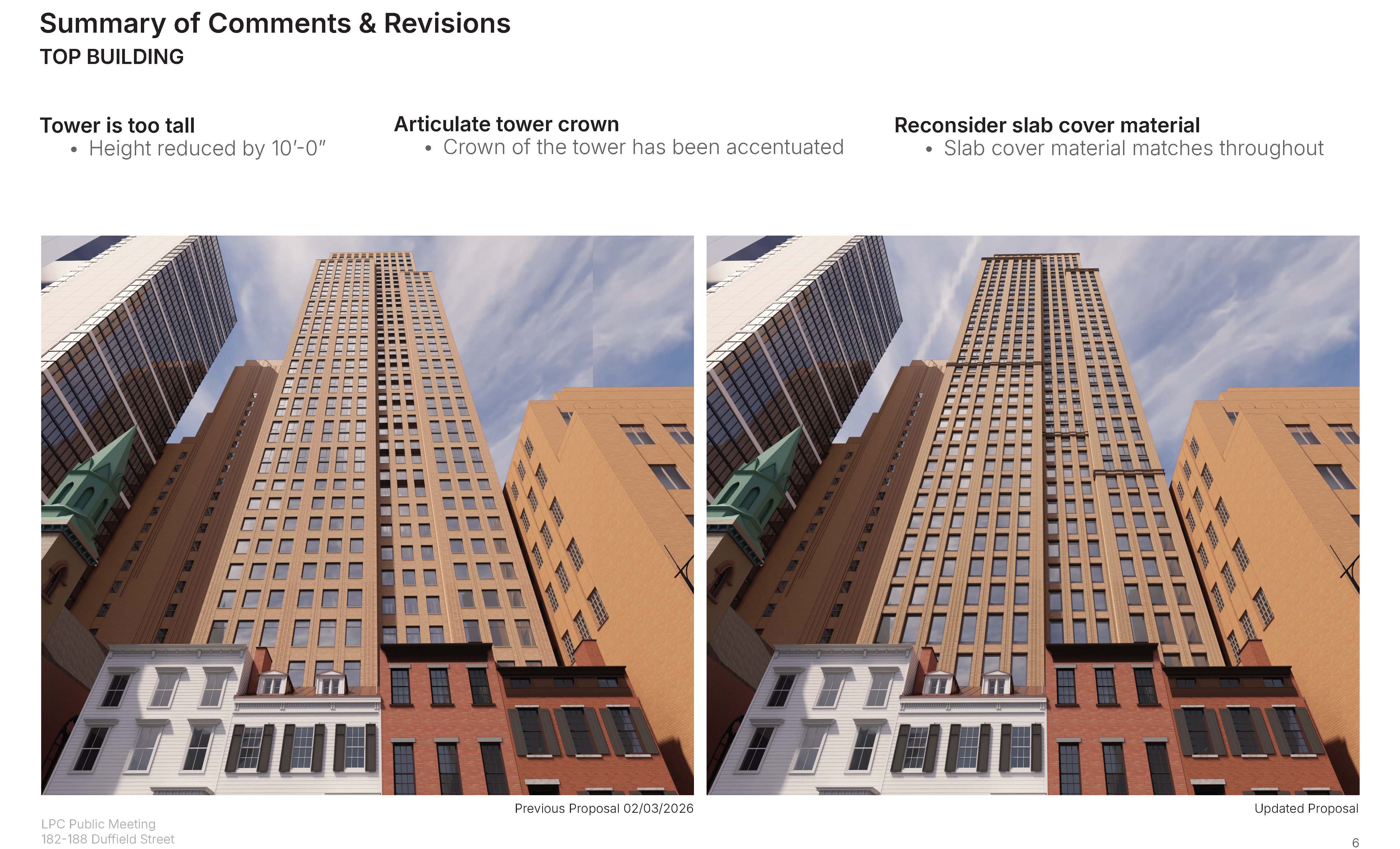
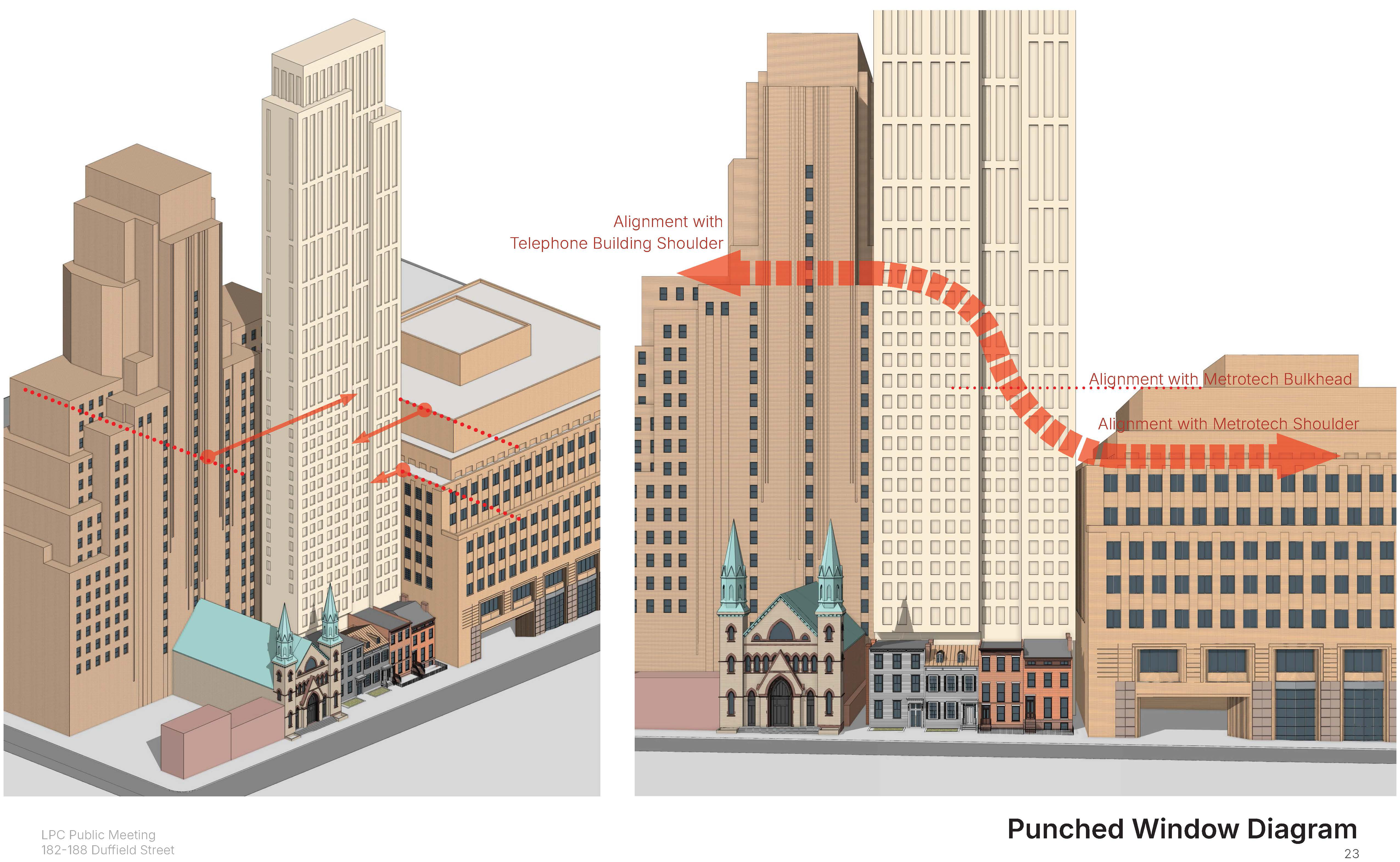
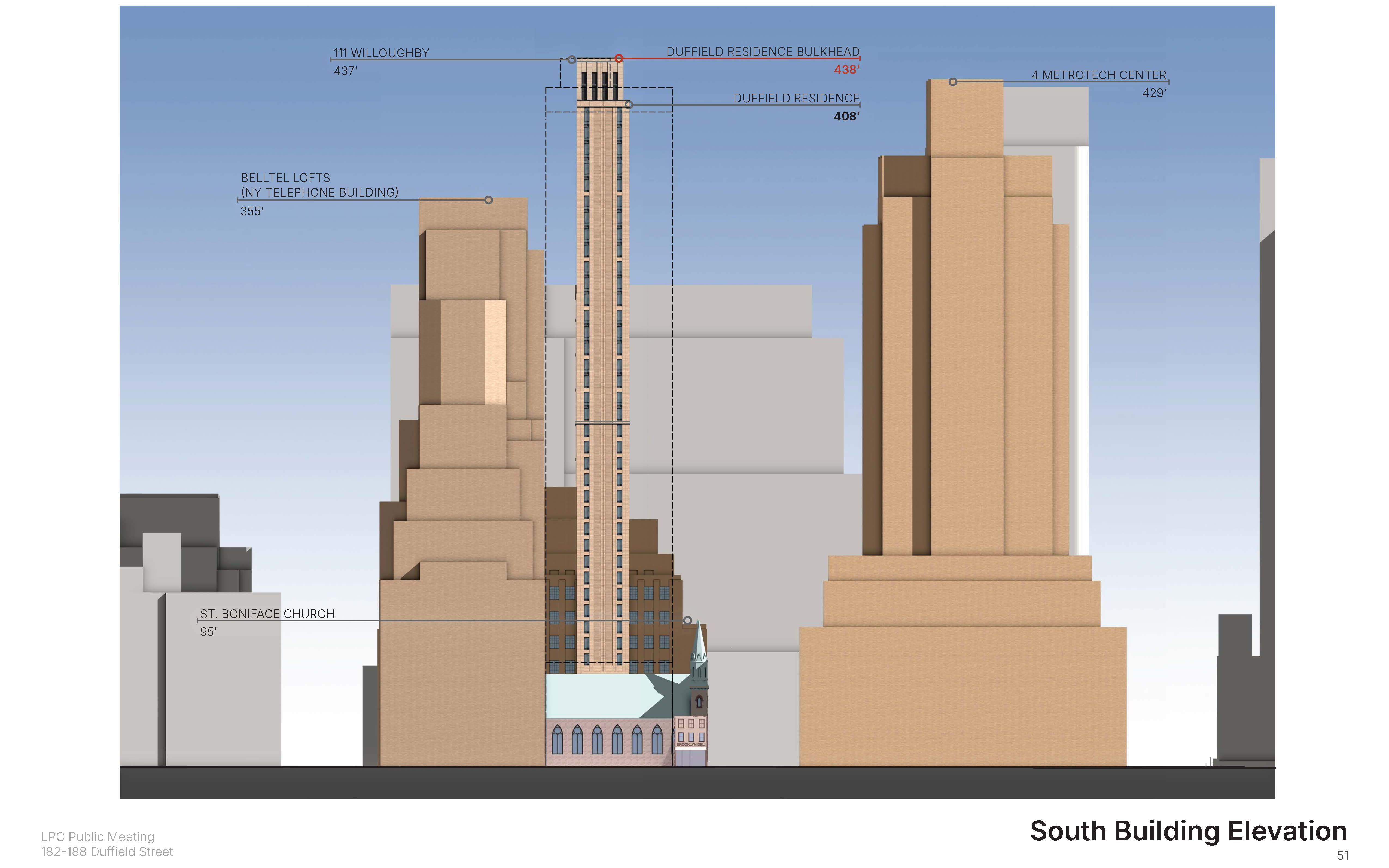
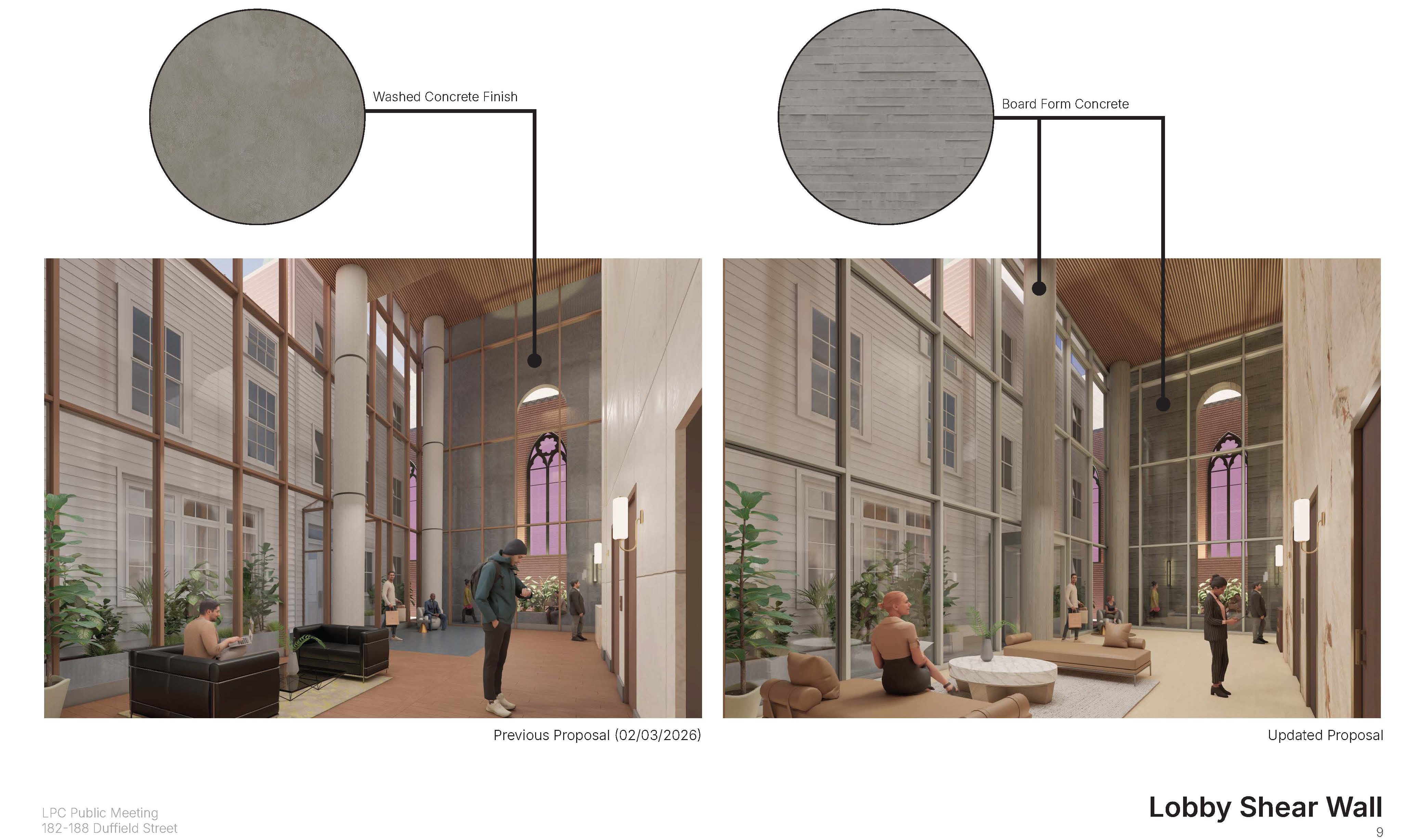
Architects David West of Hill West and Drew Hartley of Acheson Doyle Partners Architects presented the updated plans, which included a reduction in height of 10 feet due to a new HVAC system; changes to the window patterns on the facade; a change of color of the sheer wall and a redesigned firewall, both in the lobby; and changes to the vestibule connecting the lobby and historic houses. In regards to the building’s height, Hartley said the building related to those in the surrounding Downtown Brooklyn area.
“There’s a tower next door that is a similar height, the Metrotech building across the street…it’s a very similar height. And the total composition of this is, we feel strongly about it, that it’s contextual and fits on this site.”
While the commissioners decided at the February meeting a tower was appropriate for the site, after the design team backtracked on earlier unpopular plans to gut the houses for the tower, the majority said not enough work had been done on the tower’s design to give it a coherent relationship with the historic houses or the area as a whole. Most specifically took issue with the window design, addition of cornices along the facade, and the narrow courtyard in the lobby that sat between the historic houses and the new building.
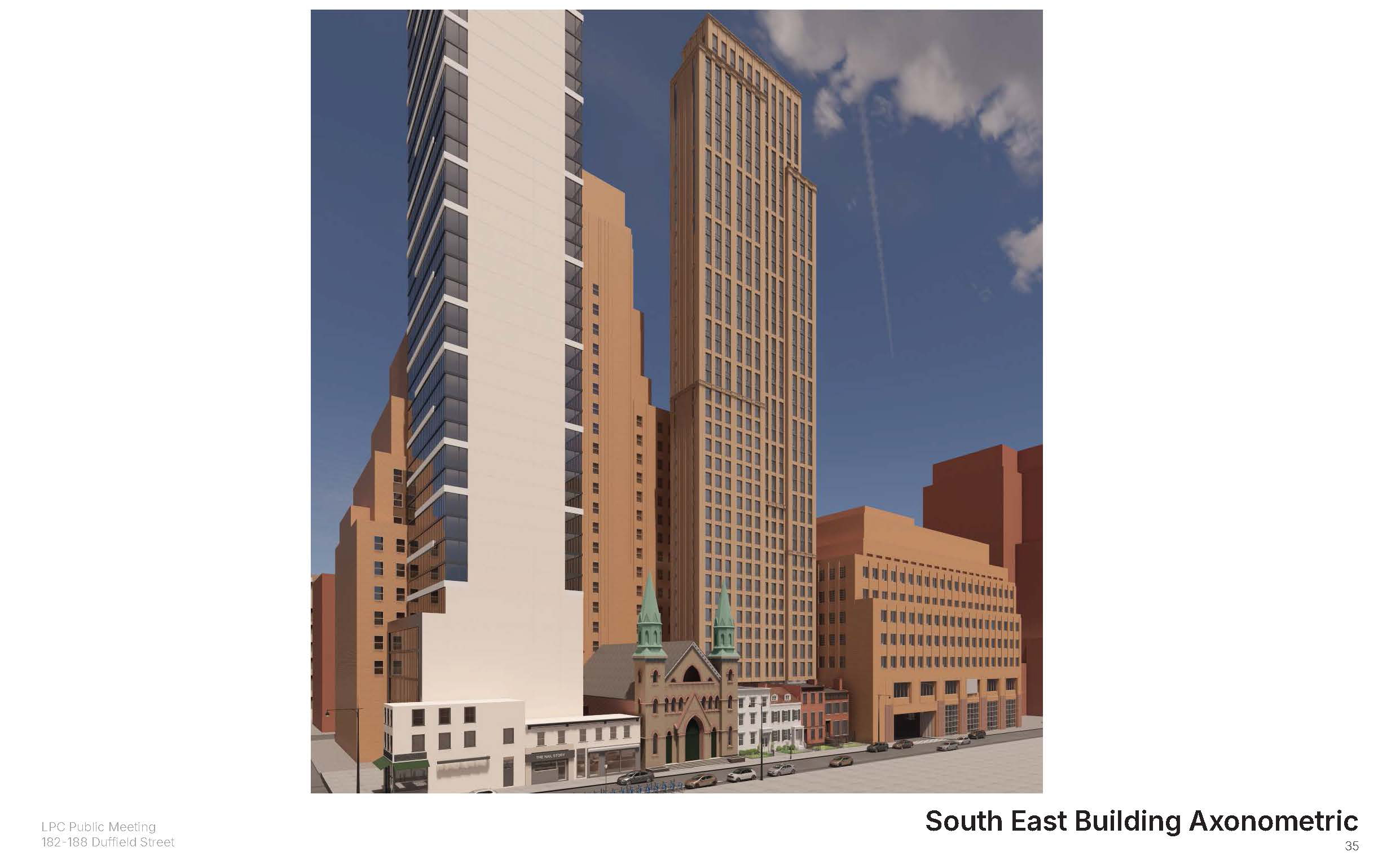
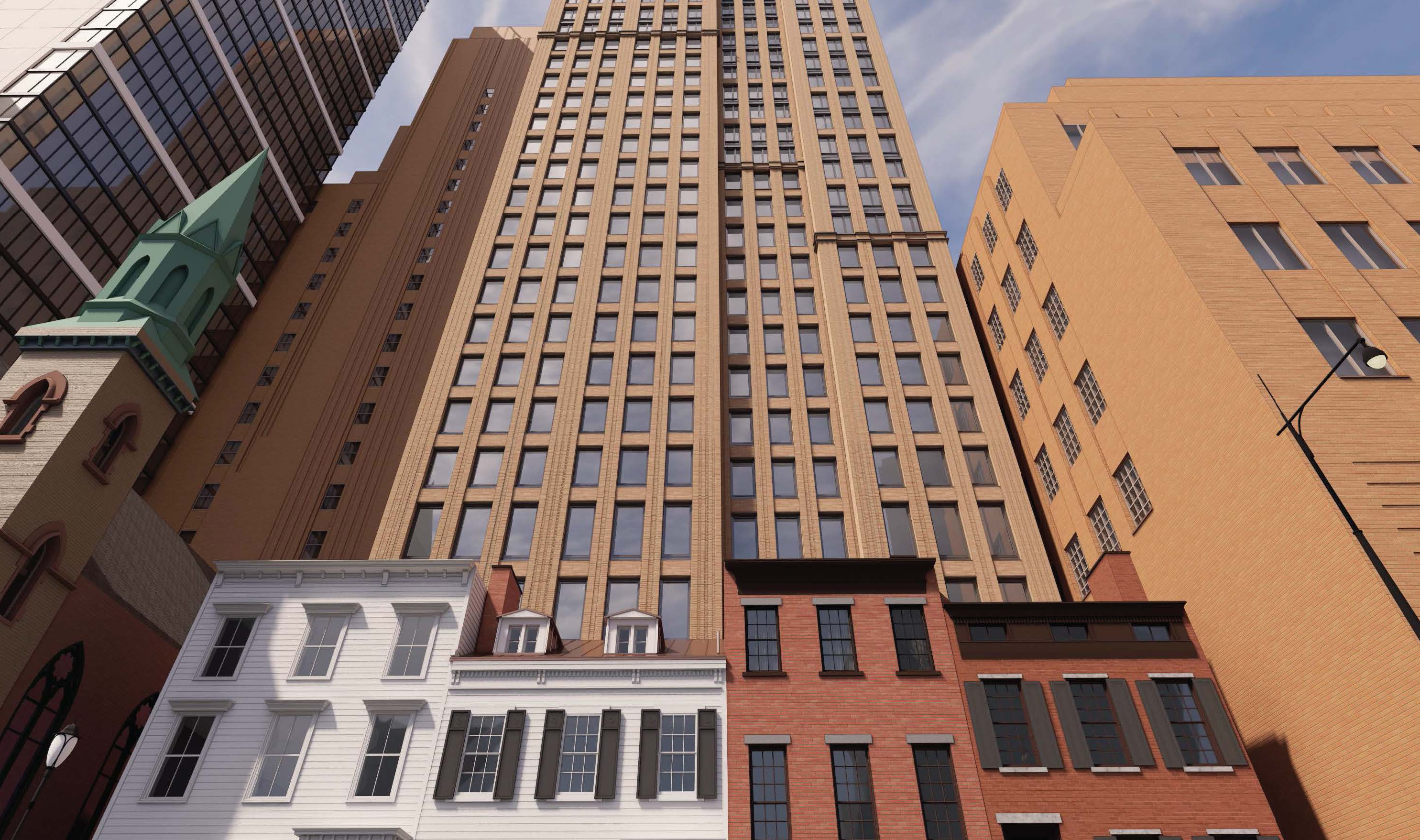
“I think it would be very productive if the applicant could speak to what is their idea for the new tower building? What is the design concept specifically, and what is its relationship to the landmark buildings?” Mahan said.
“In my view, a big building of anything near this scale in this rear yard is a big ask and so the tower design must, I think, respond with a clearly articulated idea about a nuanced relationship to the historic buildings.”
Commissioner Stephen Wilder said the design changes wouldn’t get anyone excited about the new tower rising behind the historic houses and he agreed with the opinions of other commissioners that the tower presented an opportunity to create its own identity. “I think that there needs to be just more work on the facade, I can’t say exactly what that is, but I think there needs to be more work on the facade…to make it actually complement the landmark buildings.”
Commissioner Everado Jefferson seconded the sentiment, saying: “How can they resolve a background building and a historic building, and say that they have some kind of relationship to each other? Right now they don’t. That’s a very difficult problem to do architecturally, but they have not done it yet.”
Meanwhile, Commissioner Michael Goldblum challenged the approach of adding a tower behind the landmarked buildings altogether, going back on his comments at the February meeting that he found the idea appropriate.
“The question that presented itself to me, that obviously didn’t present itself to me last time, is, when would an addition like this not be okay, just like no, on an individual landmark? Why is this okay on an individual landmark?”
He said he then questioned LPC’s standard and whether the tower would detract from the historic character of the buildings, saying “I can’t see an argument to say that it doesn’t.”
“I’m kind of troubled by the concept,” he said, ending his comments with “I’m having a hard time with this one today.”
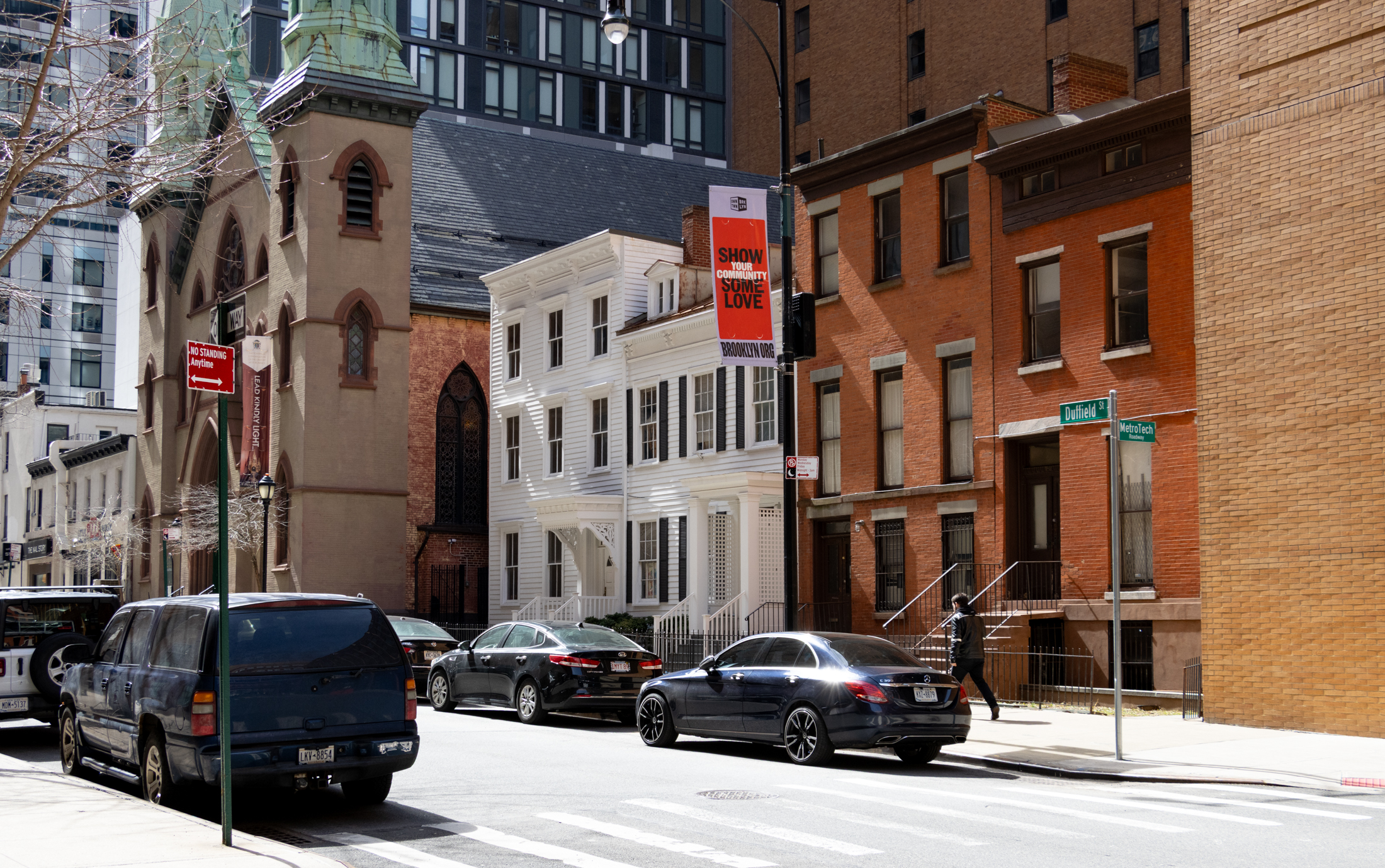
The meeting was closed with LPC Director of Preservation Cory Herrala saying the agency would work with the design team “on developing a narrative that addresses the design decisions that are being made” as well as other design revisions that had been asked for, particularly around the transition between the historic houses and the new building before bringing the plans back to the commissioners in the future.
Between the February 3 and most recent meeting on the tower, LPC got letters recommending denial from the Historic Districts Council, Victorian Society of New York, the Brooklyn Heights Association, the Downtown Brooklyn Community Association, and 17 individuals, a staff member said. It also got a letter recommending approval from the Roman Catholic Church of St. Boniface – the next door neighbor.
Related Stories
- LPC Might Allow Tower That Doesn’t Gut Duffield Street Houses
- LPC Rejects Plan That Would Gut DoBro’s Duffield Street Houses for 33-Story Tower
- Proposed DoBro Tower Would Block Neighbors’ Windows, Alter Landmark Row
Email tips@brownstoner.com with further comments, questions or tips. Follow Brownstoner on Twitter and Instagram, and like us on Facebook.
What's Your Take? Leave a Comment