
Building of the Day: 984 Bushwick Avenue
Brooklyn, one building at a time. Name: Freestanding house Address: 984 Bushwick Avenue Cross Streets: Grove Street and Greene Avenue Neighborhood: Bushwick Year Built: Unknown Architectural Style: Italianate Architect: Unknown Landmarked: No, but part of a proposed Bushwick Historic District The story: Bushwick Avenue began being developed in the 1850s. Formerly farmland, mostly owned by…


Brooklyn, one building at a time.
Name: Freestanding house
Address: 984 Bushwick Avenue
Cross Streets: Grove Street and Greene Avenue
Neighborhood: Bushwick
Year Built: Unknown
Architectural Style: Italianate
Architect: Unknown
Landmarked: No, but part of a proposed Bushwick Historic District
The story: Bushwick Avenue began being developed in the 1850s. Formerly farmland, mostly owned by Dutch farmers, Bushwick saw its first significant residential development coinciding with the large numbers of German immigrants who came here, beginning in 1848. They were fleeing the political upheavals tearing the country up as the city-states of Germany, Austria and Hungary tried to sort themselves out. The industrial center of Bushwick Avenue was north of Myrtle, and on the southern side, individuals and developers began building homes and churches.
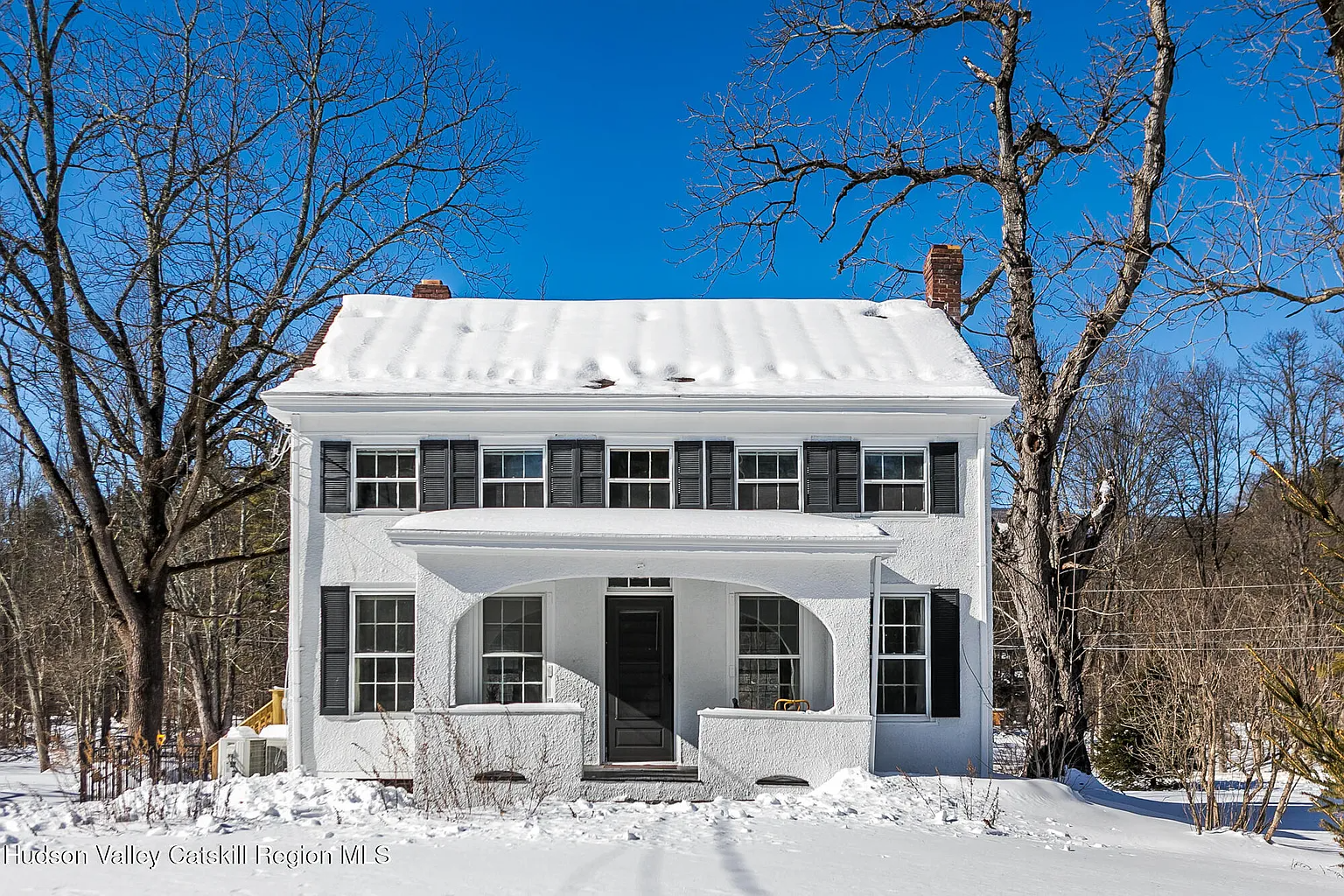
The house is an attractive Italianate villa style house with a side tower and a small entryway porch. It is wood framed, with a stucco overlay. The tower is a signature of the style, as is the cornice and the small attic windows. Italianate houses also had long windows like this house has. The style first became popular in the United States in the 1840s, and lasted in Brooklyn urban vernacular architecture well into the 1870s. Just from the development in the neighborhood, I wouldn’t be surprised if the house was built in the 1870s. But that is just conjecture and deductive reasoning.
There are no records for this house. The graduate students in the Columbia University Historic Preservation Program who researched this entire area in 2011 were not able to find any clues as to the date or architect, builder or first owner of the home. I couldn’t either. The first owners must have been a low-key, quiet bunch. They didn’t advertise their marriages, deaths or significant events. They didn’t throw any important parties, or get involved with politics, scandals or crime. They didn’t even get jury duty.
The address doesn’t come up in the newspapers until 1915. At that time, it belonged to Dr. John L. Bauer and his family. Dr. Bauer was a dentist, and his practice was here at home. In the month of March, 1915, Brooklyn’s dentists were plagued by a series of robberies. They were all preceded by the arrival of a young man who would come to them for dental care. He would sit in the chair, dental records were drawn up and examinations made. The young man, who had a large scar on his right hand, would then ask for an estimate. He promised to come back and left. Upon examining their stock after he left, all of the dentists who were robbed noticed that things were missing: always gold cavity material, sometimes instruments, even an overcoat and a valuable meerschaum pipe.
Since he had allowed several dentists to make written descriptions and diagrams of his teeth (in the days before x-rays), the police were able to ascertain that it was the same young man. One day in April detectives assigned to the case found a young man who fit the description loitering around the dentist’s shingle in front of Dr. Bauer’s house, getting ready to go in. They let him enter, and one of them followed him in. Dr. Bauer had just finished doing the dental records when the detective identified himself. The cavities and tooth damage to this patient matched all of the dental records they had collected. The man was arrested, and later confessed to the robberies. In a way, he had convicted himself.
Dr. Bauer had a successful practice, and he’s listed in the home from that incident in 1915 until at least 1931, when he was mentioned in the newspapers because he and his wife were summering in their country home, called “Ludingworth,” in Bay Shore, Long Island. His only other entry was also in 1915 when he was stopped for speeding his automobile on Bushwick Avenue. He was issued a summons, and beat the $25 ticket when it was discovered he was a doctor, but he didn’t use the old “speeding to a critically ill patient” excuse. The judge said he was encouraged by the doctor’s honesty. The good doctor probably forgot to correct the judge in his assumption that he was a medical doctor. Hey, $25 in 1915 was a lot of money!
(Photograph: Christopher Bride for PropertyShark)

Great story, I’m sure theres a dental pun somewhere, i’m just not that witty. Was it always a stucco facade or was that a more recent modification?
sidenote:
The city really needs to start cracking down on these illegal driveways, pretty sure you’re not allowed to park a car within a certain distance to the front of a house like that and the curb obviously has no cutout. There should be a front garden in that space. Queens has a worse problem with this, sad to see on such a great house.