
Stately Boerum Hill Public School Building Could Become Landmark
The Landmarks Preservation Commission voted to calendar the Public School 15 Annex at a meeting in early December.

The Public School 15 Annex this month. Photo by Susan De Vries
The three-story Romanesque Revival-style building for Public School 15 Annex in Boerum Hill looks likely to become the borough’s newest individual landmark following a unanimous vote by the Landmarks Preservation Commission.
The group voted on December 2 to calendar the James Naughton-designed circa 1889 building, once called one of the handsomest schools in the city according to an LPC researcher, for a public hearing on landmark status.
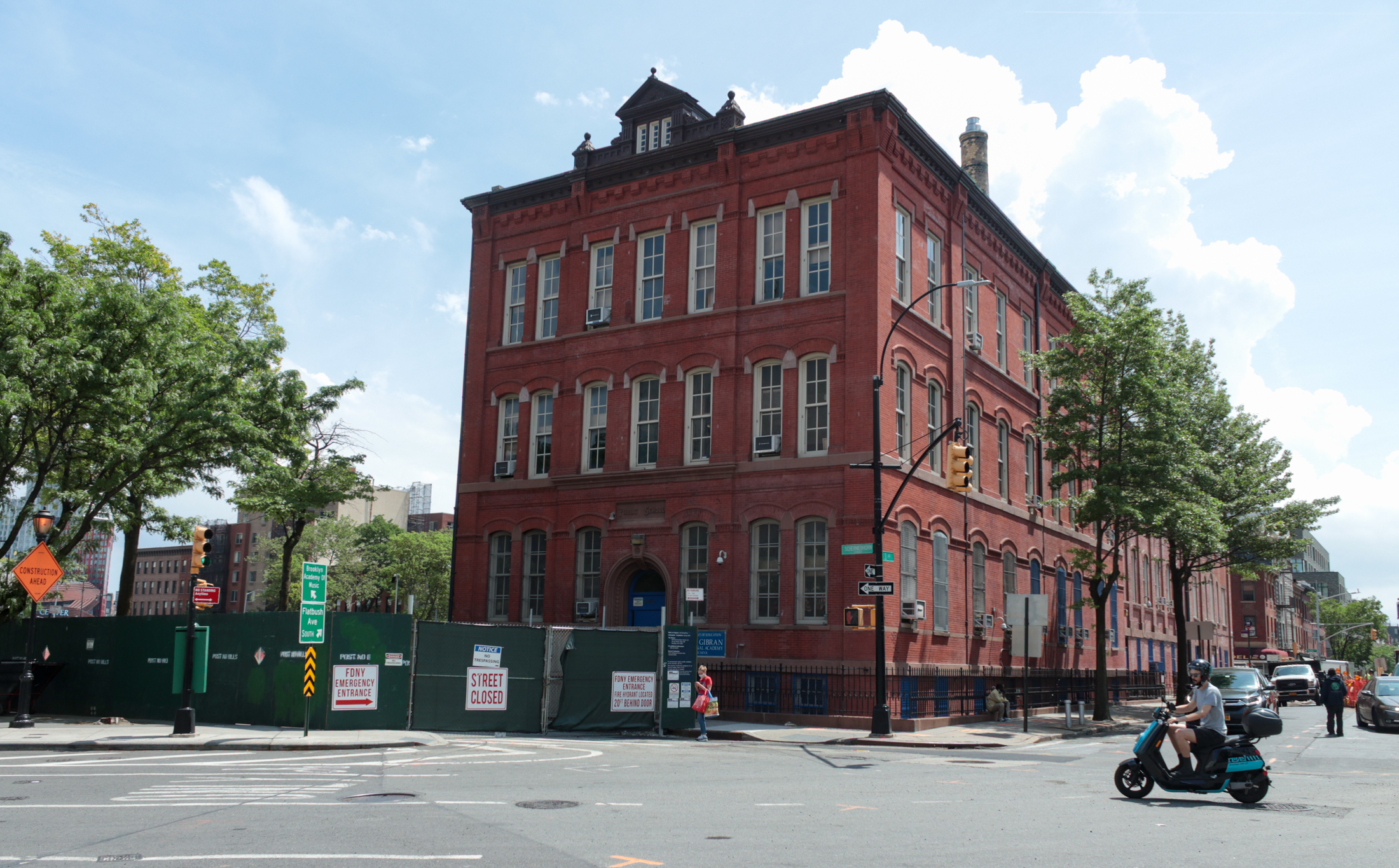
In recent years, the building at 362 Schermerhorn Street has housed the Khalil Gibran International Academy, the city’s first public school to have an Arabic and English dual language program.
The building once contained one of the city’s largest continuation schools, where it educated more than 7,000 young women a year in vocational and home economic skills.
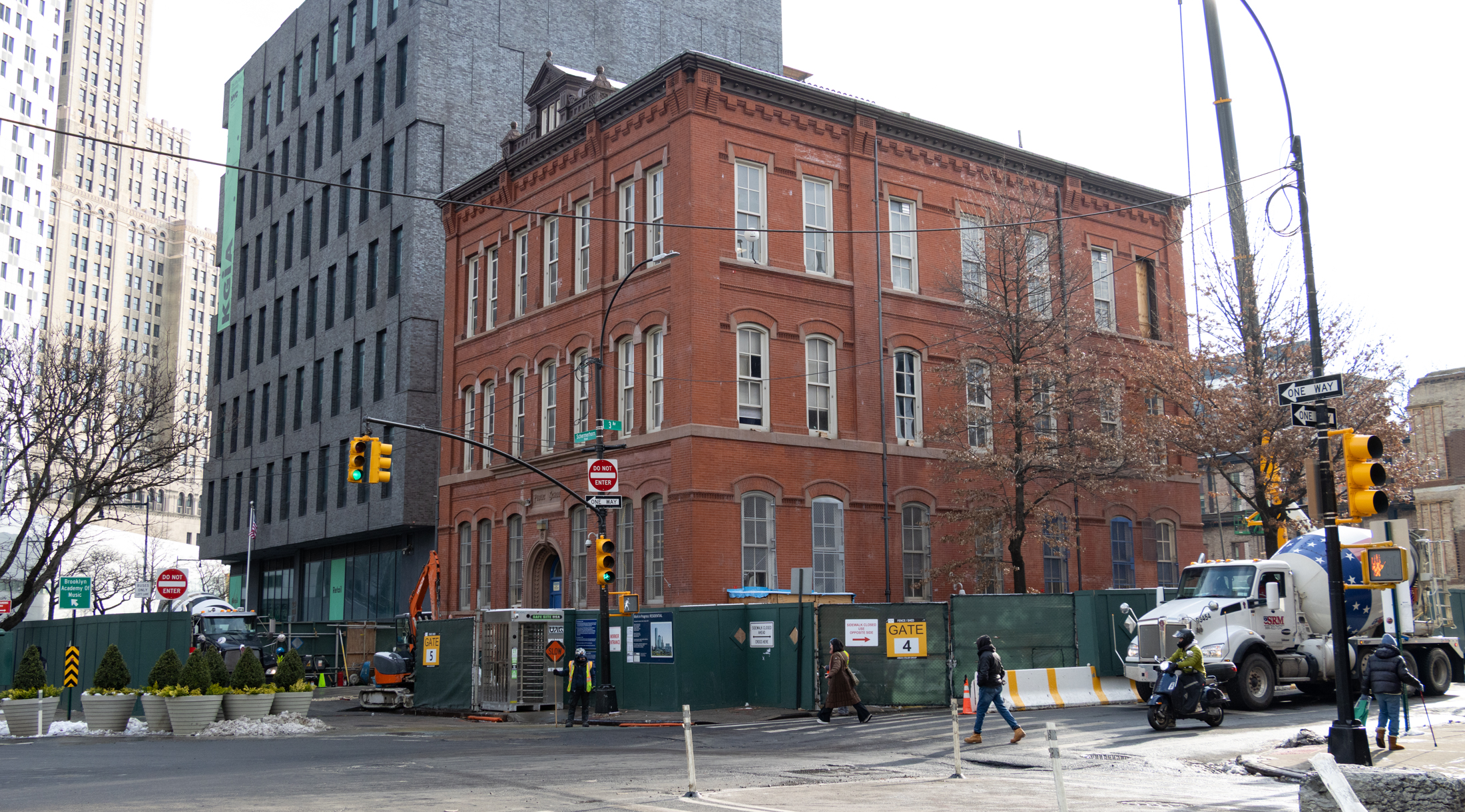
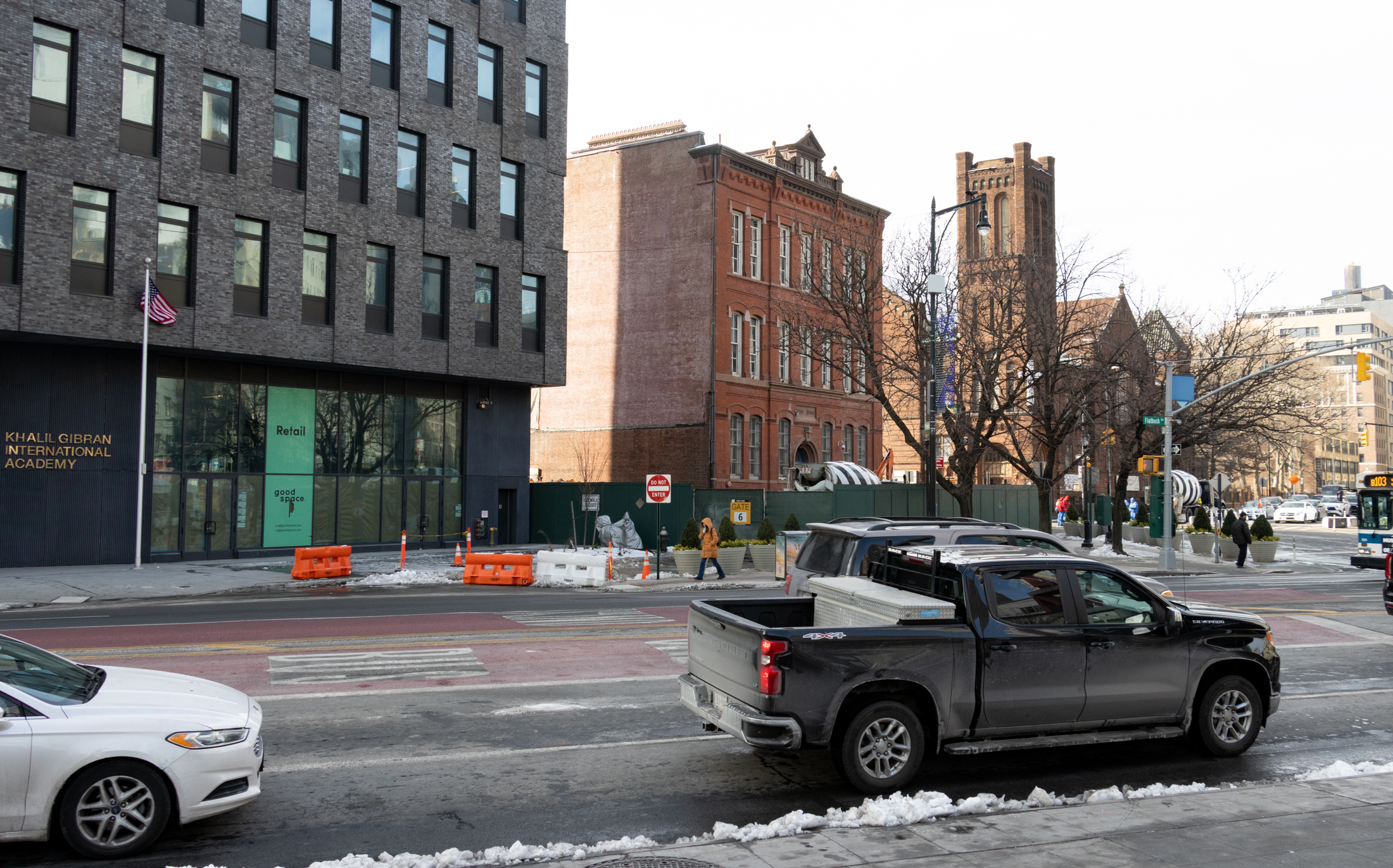
LPC researcher Sarah Eccles said the building represented “a unique blend of styles, not atypical in a late 1880s building.” When it was built in 1889, “it was described as quote, one of the handsomest schools in the city,” she added.
The three-story red brick structure on the corner of Schermerhorn and 3rd Avenue has an ornate facade and Queen Anne details. Some of its notable features are decorative brownstone brick corbelling, ironwork, and an original iron dormer that includes a pediment and finials, Eccles said.
It represents a distinctive design by Naughton, a prolific late 19th century superintendent of public school buildings in Brooklyn, she continued. Naughton constructed over 100 schools, of which Bushwick’s Public School 116, Ocean Hill’s Public School 73, and Boys High School on Marcy Avenue in Bed Stuy are already designated as landmarks.
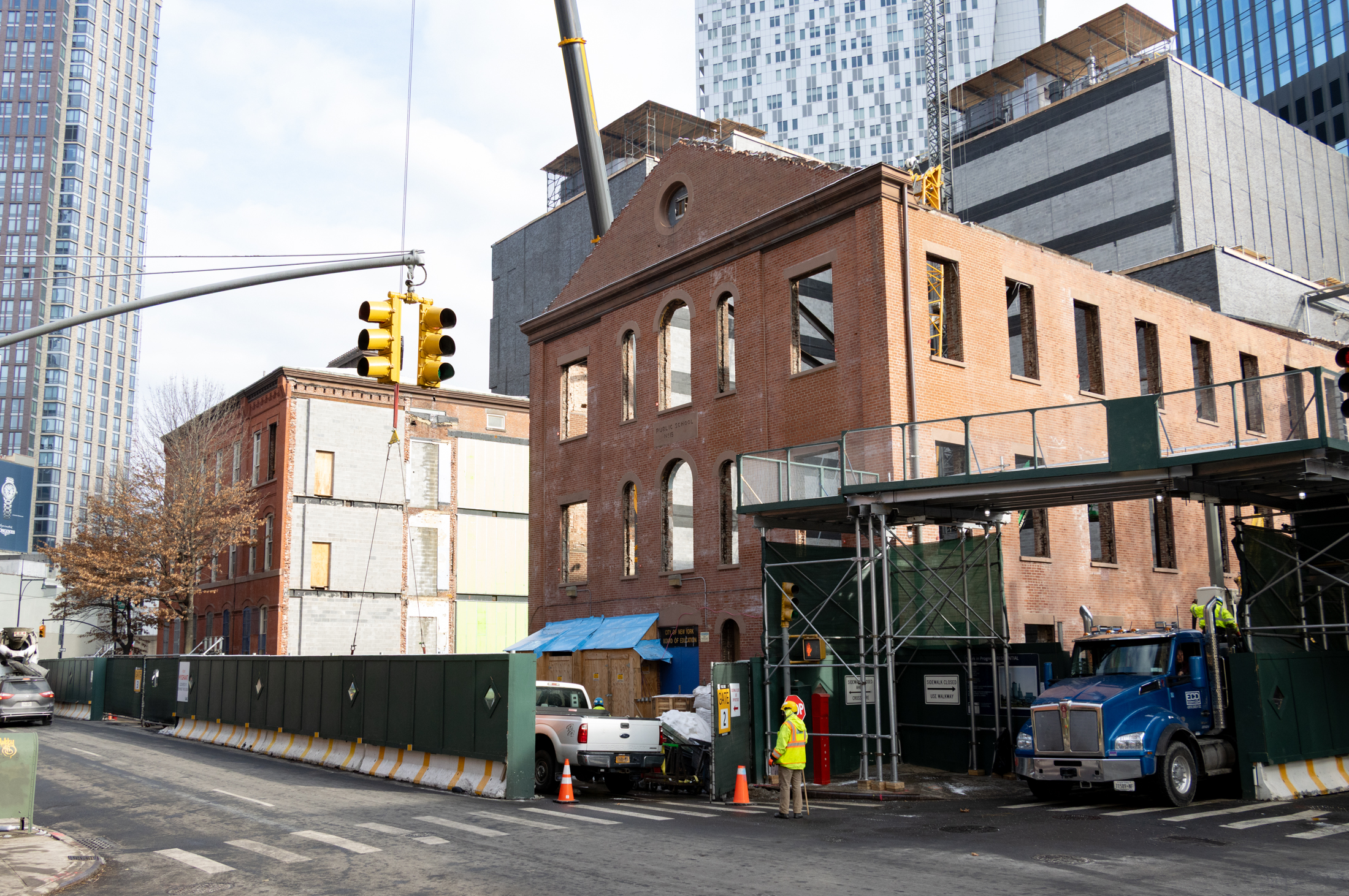

Public School 15 was built on the corner of 3rd Avenue and State Street in 1859 on what was then farmland, but by the late 1880s, as the area’s population boomed, it became overcrowded and alteration plans were made, including the addition of the Annex. When Naughton built the Annex in 1889, he said the borough’s schools lacked architectural style and he would build something the area could be proud of, Eccles told the commissioners.
At first it was used as an extension of Public School 15, but in the 1920s the girls continuation school established its headquarters there and subsequently took over the whole building by 1929.
In 1919, the governor at the time signed a law giving children the right to attend the continuation schools, which were a place for working boys and girls under the age of 18 to get a longer education. Eccles said “continuation schools were regarded as the forefront of democracy in the school system, as previously, only privileged children could continue their studies instead of going to work.”
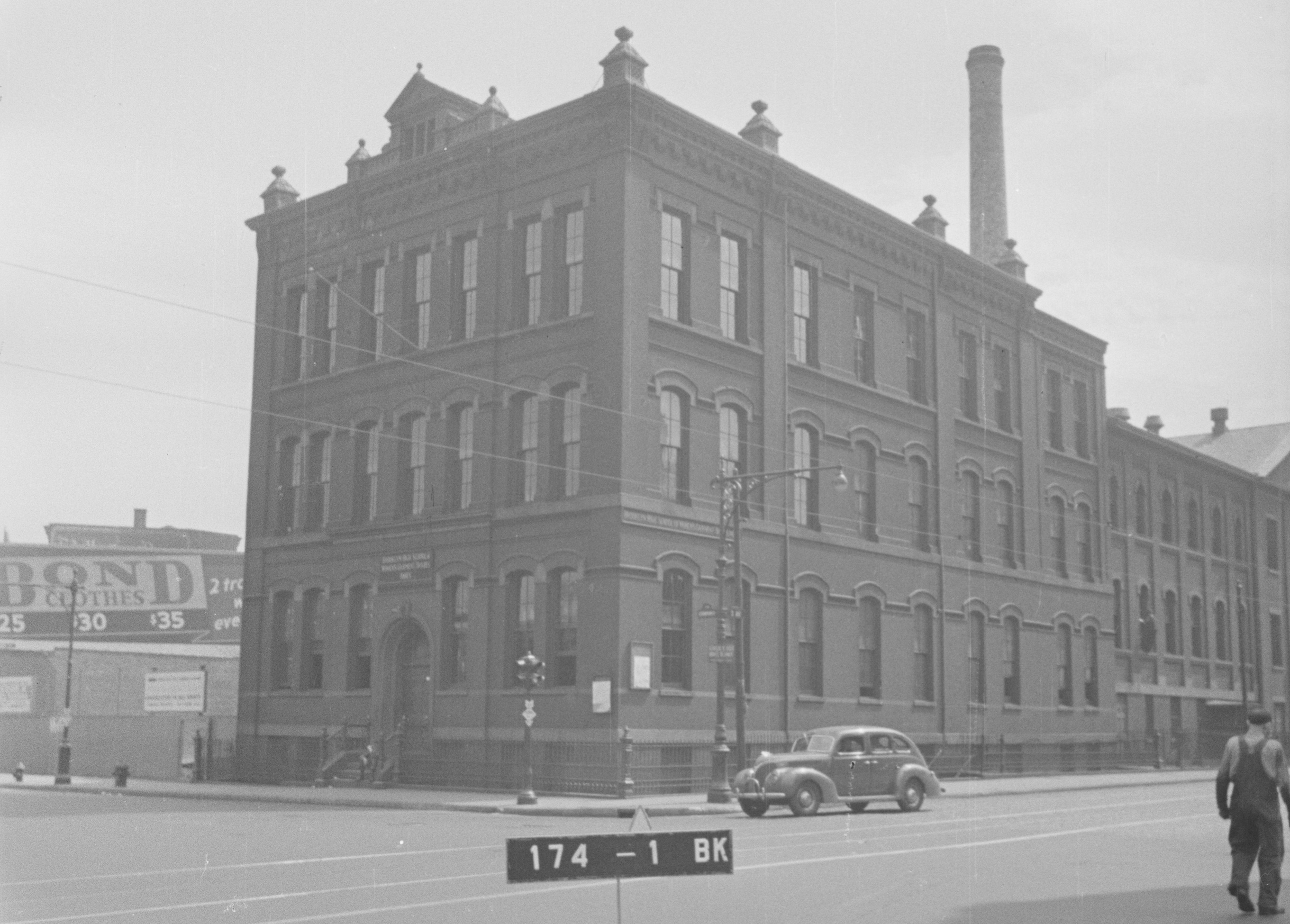
The girls’ continuation school educated around 7,000 young women each year in nursing, garment making, bookkeeping, homemaking, and beauty, Eccles said — “all the things a girl could and should know in the early 20th century.”
At the time, the area around the school was largely made up of immigrants from Lithuania, Italy, Poland, Ireland, and the Netherlands, and the students at the school reflected the neighborhood.
Through the Depression, the school offered women the opportunity to earn money and gain independence, and even had childcare for students with children, she said. During the 1930s, the school started to include vocational training in the evenings for both men and women, as well as English classes for adult immigrants.
In 1942, the school closed and was converted into an outpatient clinic facility for child psychology, run by the Department of Education. In the 1990s, it was turned into a business school, and in the 2000s it became the first public school in the city to offer an Arabic and English dual language program.

More recently, the site of Public School 15 and the Annex were included in a controversial rezoning for the new mega-development at 80 Flatbush Avenue by Alloy. As part of the development, which chiefly comprises residential towers, Alloy has built two new public schools in cooperation with the Educational Construction Fund. The developer is also preserving part of Public School 15 in the project and is fully preserving and adaptively reusing the Public School 15 Annex, Eccles told the commissioners.
“A reminder of late 19th century school design, the building still reflects its history as a space of opportunity and independence for girls, women, and immigrants,” Eccles told the commissioners, in urging them to consider the building for landmarking. She said the building had undergone only minor alteration in its 136-year history. These included some window updates, the addition of a fireproof safety door, and the removal of roof-line finials.
The commissioners unanimously supported adding Public School 15 Annex to the calendar. A public hearing will take place at some future date before the commissioners vote on landmarking.
[Photos by Susan De Vries unless noted otherwise]
Related Stories
- Affordable Housing Lottery Opens for Alloy’s First Boerum Hill Tower, With Studios From $763
- Construction Gearing Up at Controversial 80 Flatbush Development in Boerum Hill
- Demolition Begins at Future Site of Controversial 80 Flatbush Development in Boerum Hill
Email tips@brownstoner.com with further comments, questions or tips. Follow Brownstoner on Twitter and Instagram, and like us on Facebook.
What's Your Take? Leave a Comment