
Appreciating 186 and 188 Duffield
We happened upon this pair of pre-Civil War houses on Duffield Street yesterday and were stopped in our tracks. The Greek Revival houses, it turns out, were originally built in 1838 and 1839 by the Rev. Samuel Roosevelt Johnson around the corner on Johnson Street between Bridge and Lawrence Streets. When Metrotech was built in…


We happened upon this pair of pre-Civil War houses on Duffield Street yesterday and were stopped in our tracks. The Greek Revival houses, it turns out, were originally built in 1838 and 1839 by the Rev. Samuel Roosevelt Johnson around the corner on Johnson Street between Bridge and Lawrence Streets. When Metrotech was built in the early 1990’s, these two houses along with two brick ones at 182 and 184 (all of which have been designated landmarks) were moved to their current location on Duffield next to St. Boniface (photo on the jump). We noticed that Number 188 (at left) appeared empty and that the interiors had fallen into disrepair, despite the exterior being nicely maintained. It appeared that Number 186 was inhabited. The owner of all four is listed on Property Shark as the Duffield Street Housing Co., with offices at Metrotech. Not a huge leap to assume that Ratner controls them. If that’s the case, he certainly can’t plead indigence as an excuse for not restoring the interior of Number 188.
F.Y.I. – Second Item [NY Times] GMAP

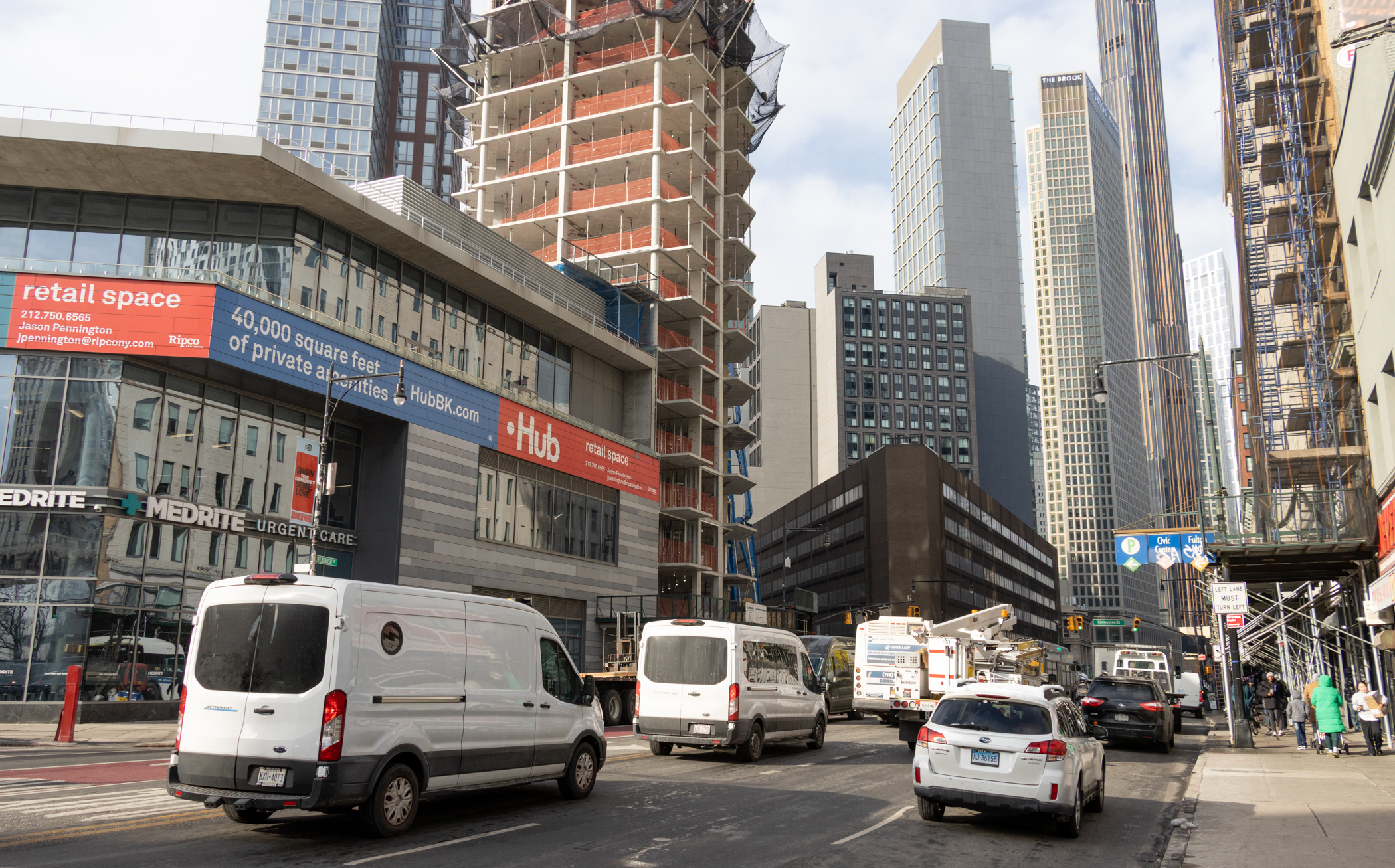
It’s possible that Ratner is the source of Brooklyn’s renaissance, though that’s hard to prove or disprove. But certainly MetroTech is a drag on the current economic development of the area, and Ratner unquestionable lied to the residents about the jobs that he would provide to the Fort Greene Houses. If you doubt that, talk to Mr. Ed Carter, one of the prominent residents of those buildings who heard all of Ratner’s promises.
The area may have been eerie and deserted, but so was Fort Greene and Williamsburg. Park Slope was also pretty dangerous back in the day.
The buildings that were homes of prominent abolitionists and probably part of the Underground Railroad are a few feet to the south, between Fulton & Willoughby. See the DailyGotham for a summary, or go straight to http://dailygotham.com/story/yero/edc_document_undermined_by_local_reporters_poetry
The area where MetroTech is located did have some interesting buildings, but it was 1/3 to 1/2 surface parking lots and unquestionably blighted. The area was rampant with drug dealing, prostitution and everything that goes along with that. Not to say that MetroTech is a model of good urban design, but get your facts straight 5:37.
You are dillusional (5:37). That area of downtown (b4 metrotech) was very deserted and eerie and unsafe at night. And not much better during day.
Major improvement.
And now we are seeing more interest and investment in area. New housing and expansion of university.
The area where metrotech is used to house a very nice and interesting mix of brick and frame buildings. And then sleaze-bag Mr. R got rid of all of the people there and moved them out, harrassed them, whatever. Some of the people got to move in to the bldg on Sterling and Vanderbilt, the old school house. I have no idea how those deals were structured. But they have created a horrible ghost town in the metrotech area after sunset and on weekends and it wouldda, shouldda, couldda been something much nicer along the lines of the vibe that happened in Williamsburg or DUMBO or Red Hook if it was just left alone by the city. NYC officials are so dumb. They espouse free market principals when it comes to tax breaks for developers but then when it comes down to trusting in a free market system they can’t stop themselves from meddling in everything and ruining what the market would have made it, which is more liveable, better used space.
It’s my understanding that these houses were part of the underground railroad. Can anyone verify?
I just mentioned moving the house in williamsburg in the previous post. This should be done more often to save older buildings.
It has been suggested, I’ve been told, that Mr. Ratner donate the adorable buildings to adjacent St. Boniface church, which could use them for educational and meeting facilities (and has a sterling track record for renovating their own property). So far, Mr. Ratner seems not to have cottoned to the idea; clearly he needs to watch “The Bells of St. Mary’s” to see how happy a similar move made Mr. Bogardus. (Or maybe we just need Ingrid Bergman to do the asking.)
These houses were relocated around 1998-1999. As far as I know, they have never been inhabited by anything but boxes and file cabinets. At one point they stopped cutting the grass for about a year and they started to look really bad…inside and out. They are very nice looking, but I’m not sure what the point if they are not being used for anything productive.
Most of the buildings are vacant and reportedly lack fundamental mechanical systems, or so I was informed when I inquired about space there.