
Landmarks Commission Gives Green Light to Fort Greene Church Tower
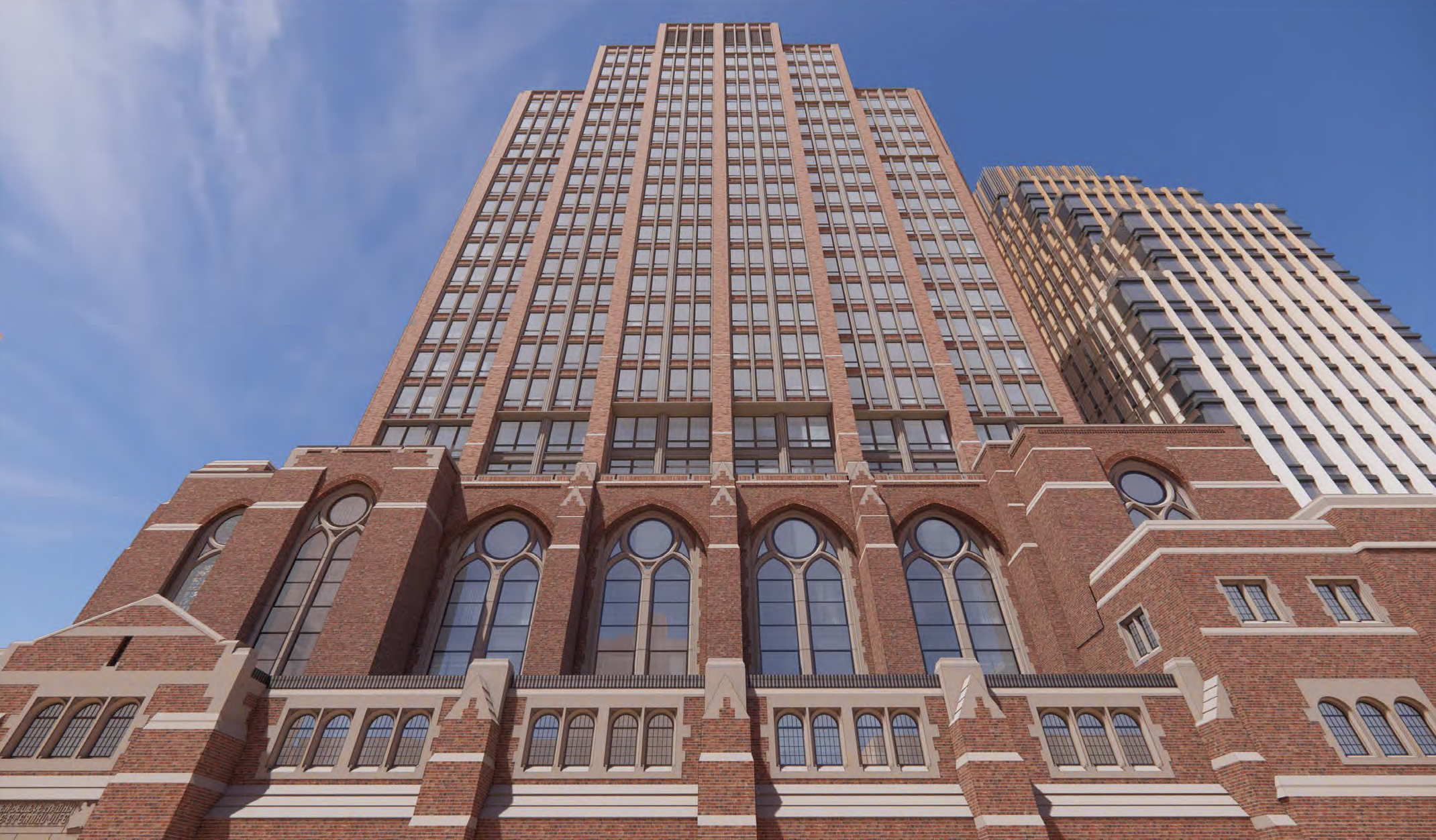
The approved plans would turn Hanson Place Methodist Church into the base of a 285-foot residential tower.

Rendering by FXCollaborative and ADP Architects via LPC
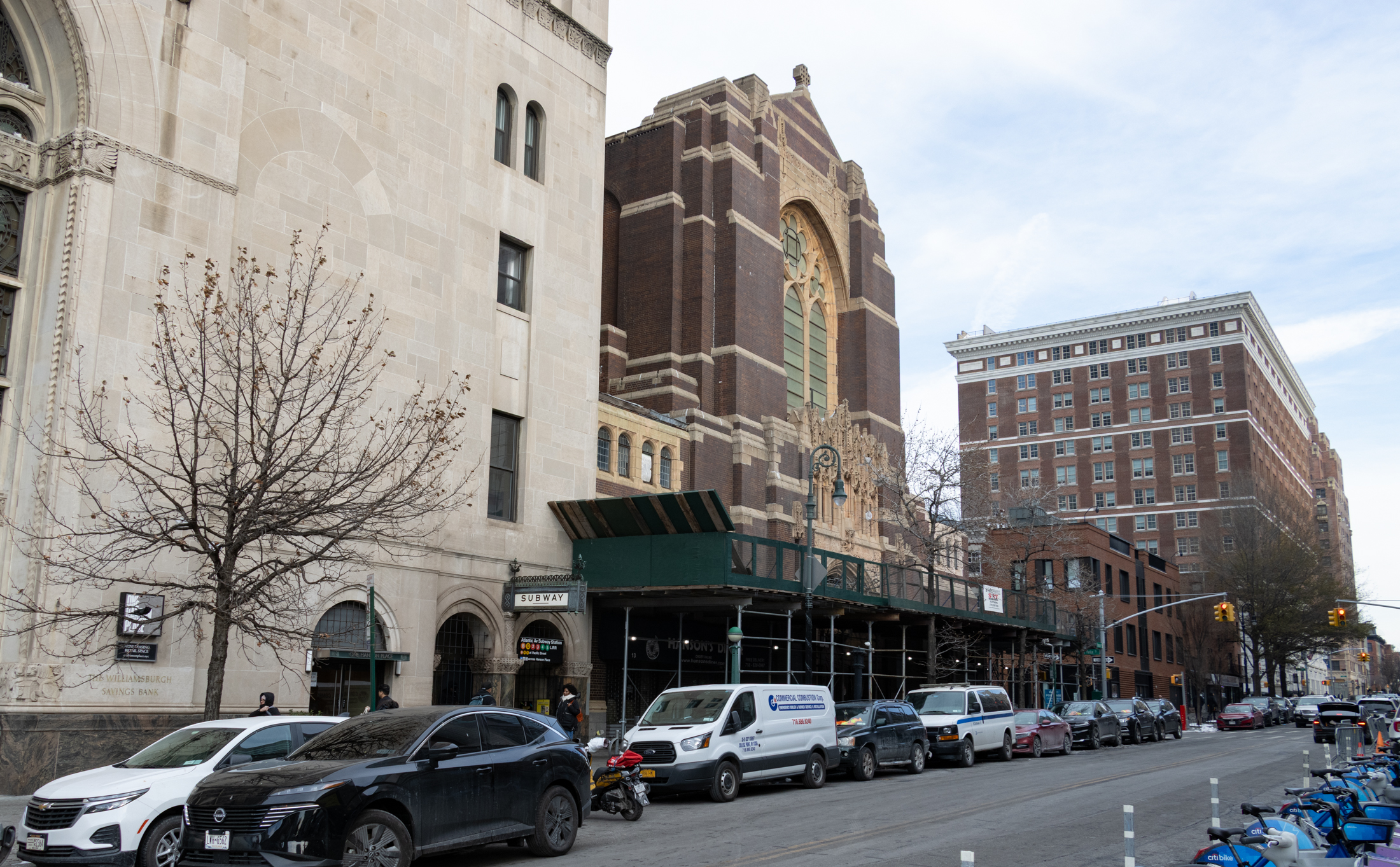
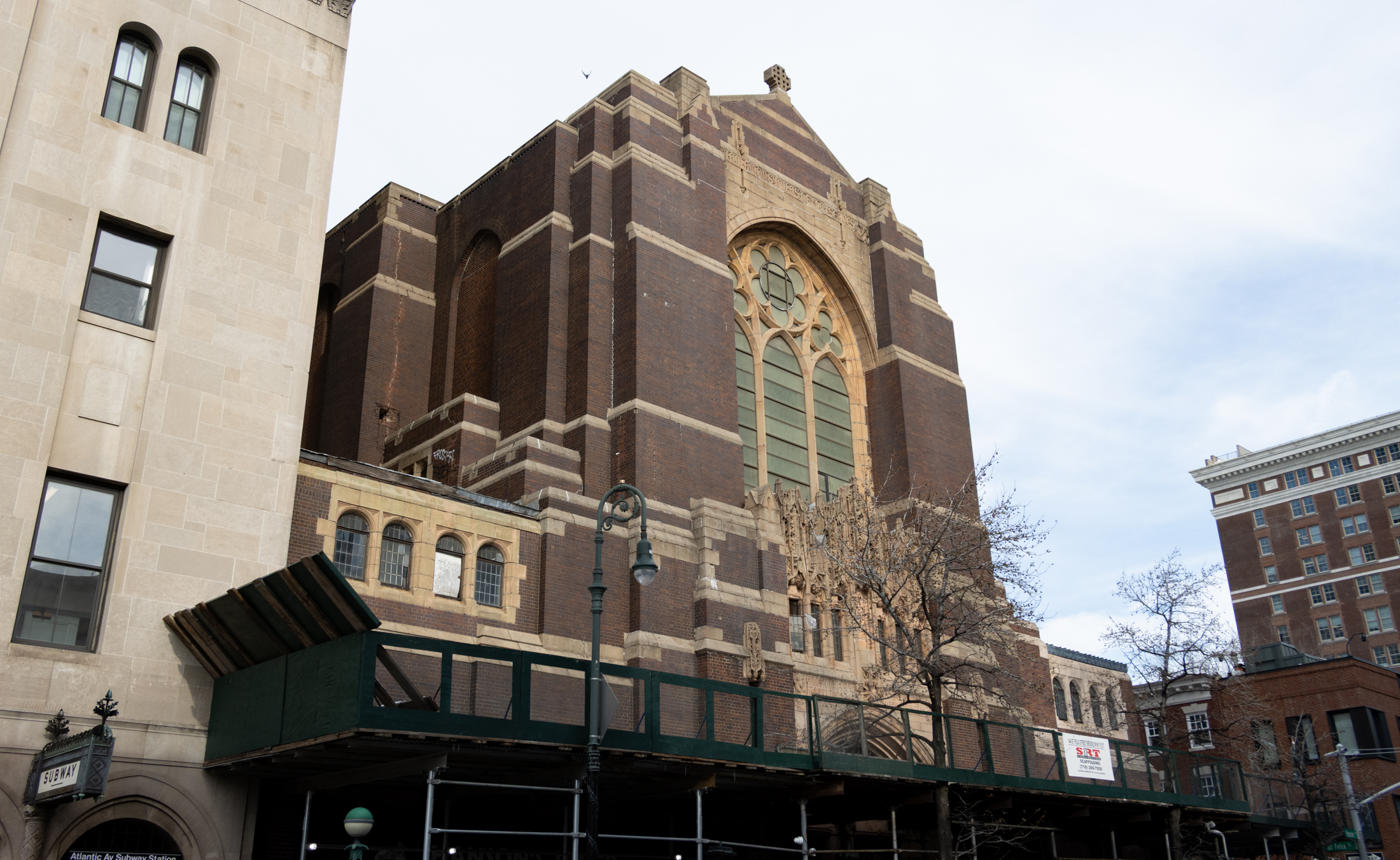
The Central United Methodist Church, on Hanson Place in Fort Greene, will likely see major transformation after the Landmarks Preservation Commission approved plans for a 285-foot apartment tower rising from its base.
At a Tuesday meeting, commissioners unanimously signed off on the revised plans for the adaptive reuse of the 1930s neo-Gothic church at 144 St. Felix Street after months of back and forth with the project’s design team, which includes FXCollaborative and ADP Architects.
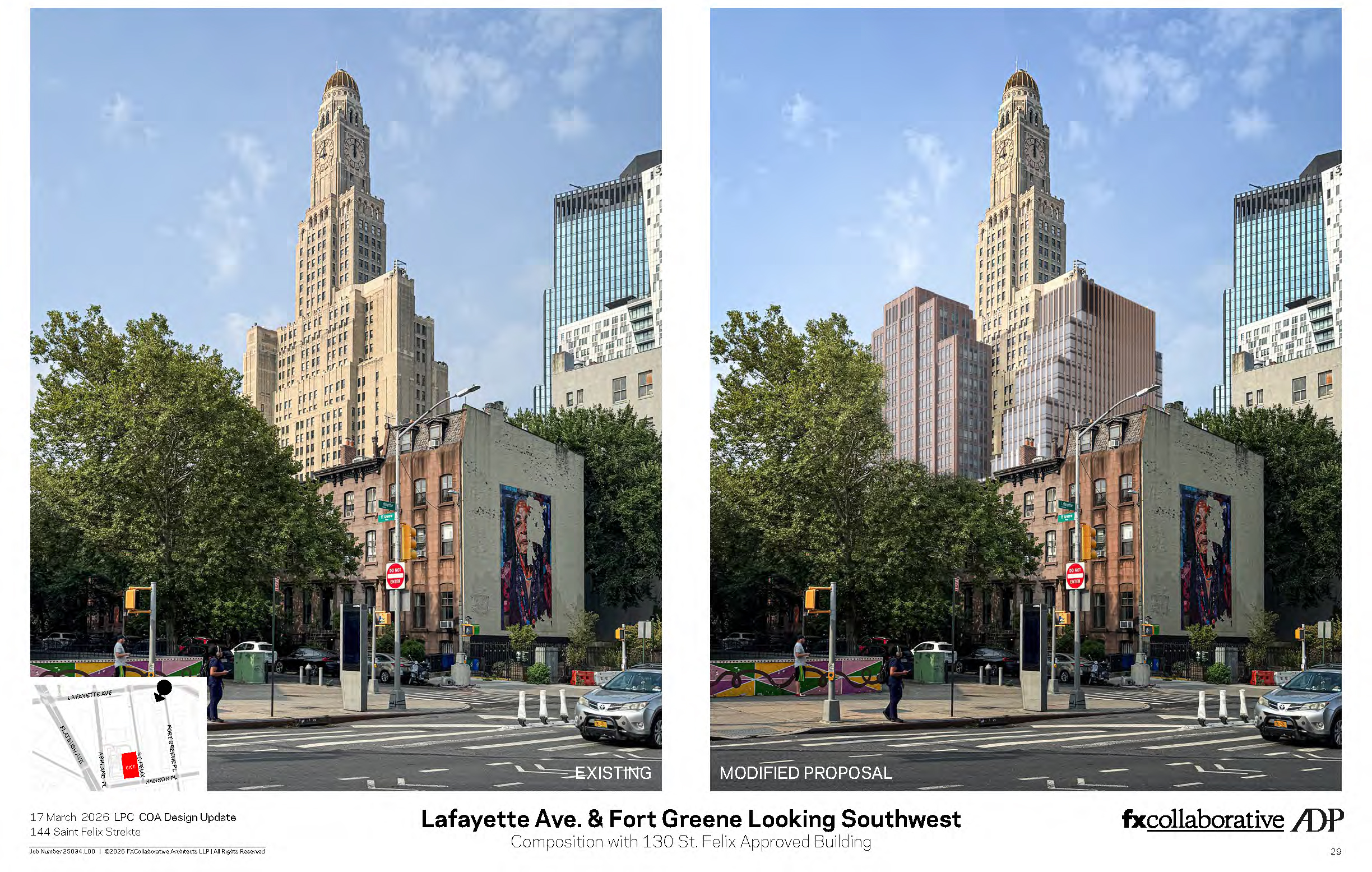
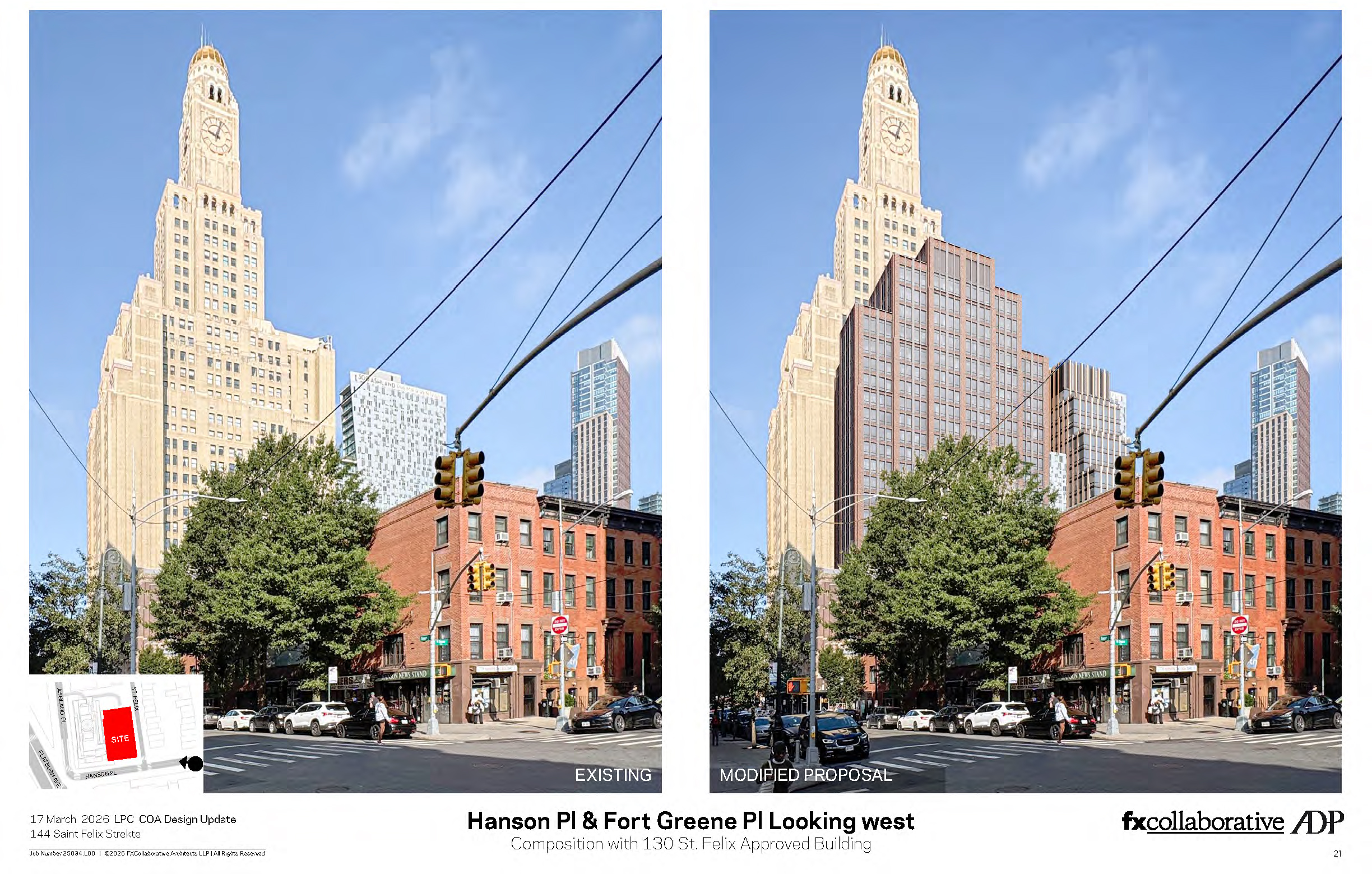
Most recently at a February meeting, LPC told the team to go back and work on the tower’s height and massing in relation to One Hanson Place (Williamsburgh Savings Bank Tower) and the proposed development at 130 St. Felix Street, among other things.
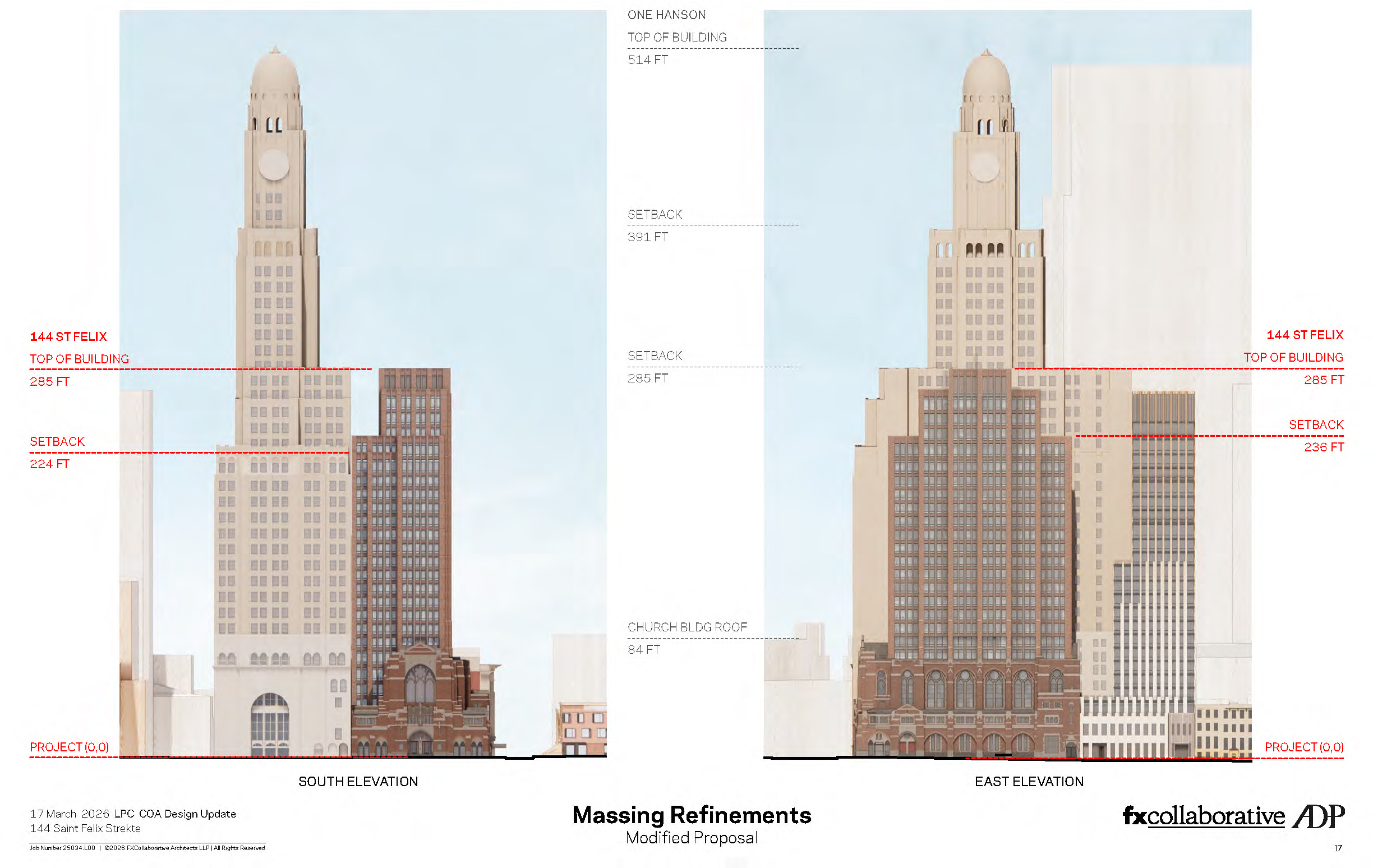
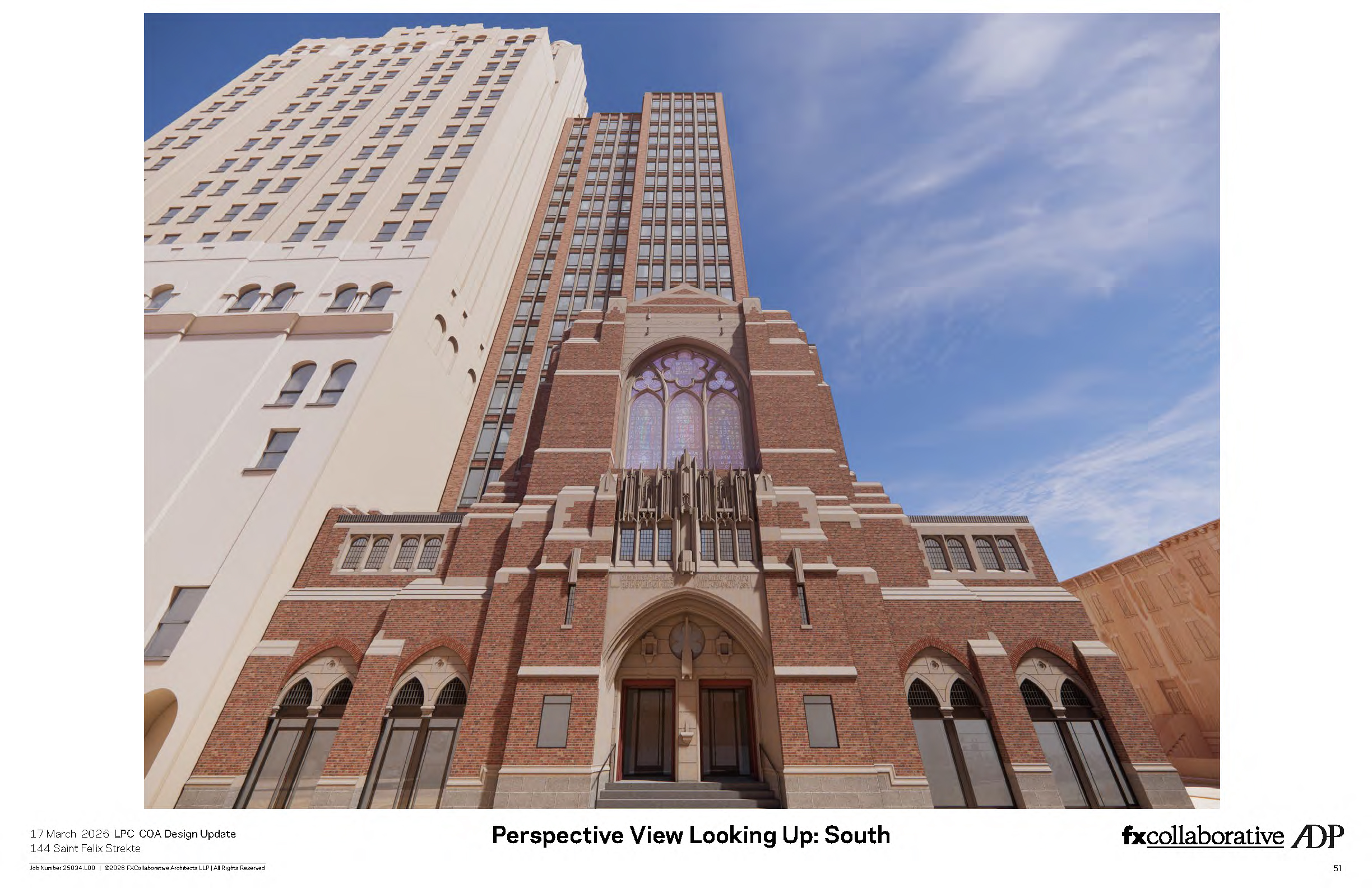
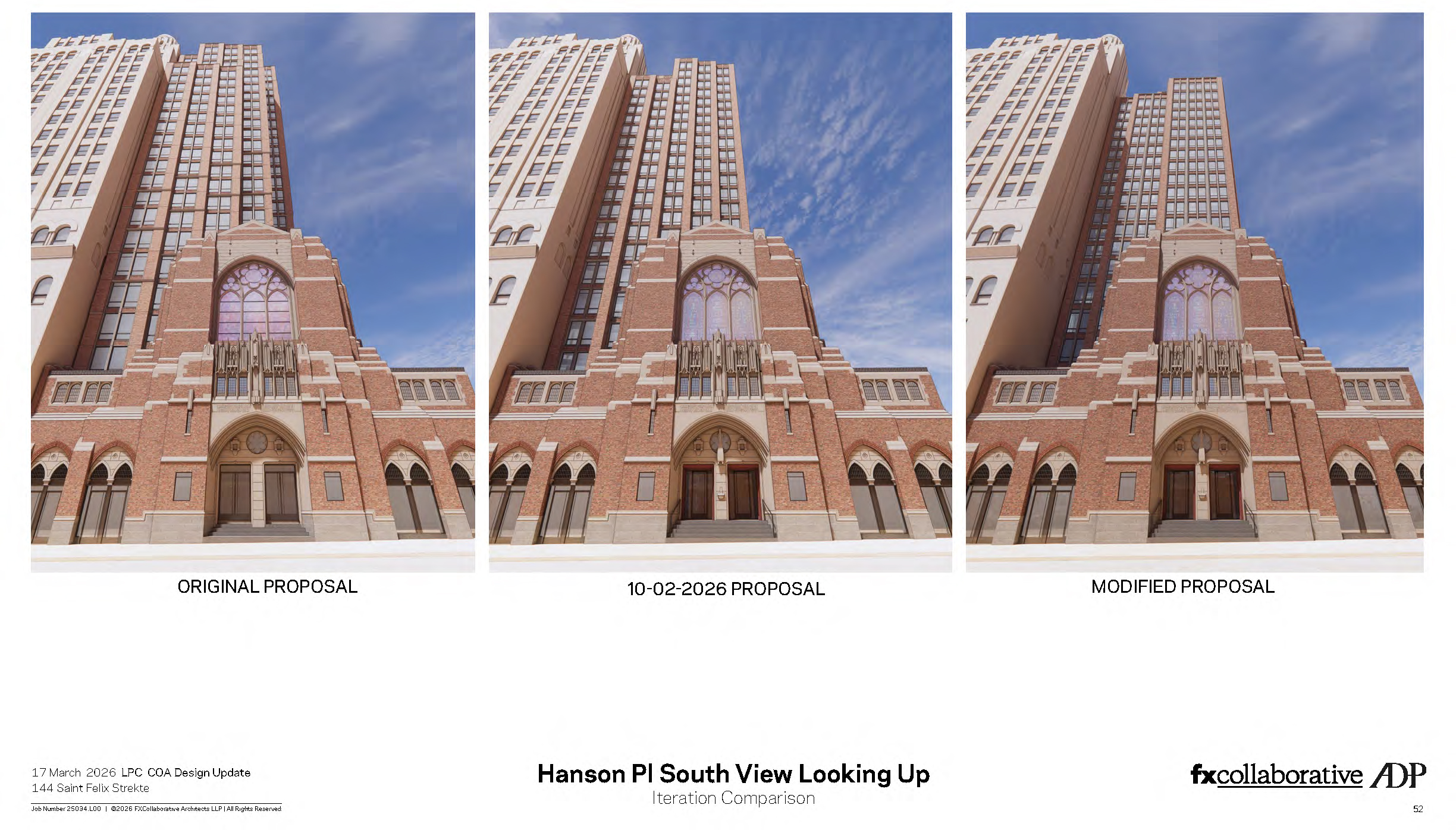
On Tuesday, they presented updated plans that lower the building’s height by 13 feet, align its massing with the church’s geometry, rebuild the north gable, and create a transitional gasket between the old and new structures.
“We are… thinking a lot about adaptive reuse standards for churches in this day and age, and I think that as protracted as this process worked out to be for this applicant, it should be looked at as a as a model for how to think about adaptive reuses for these challenging buildings,” Commissioner Michael Goldblum said.
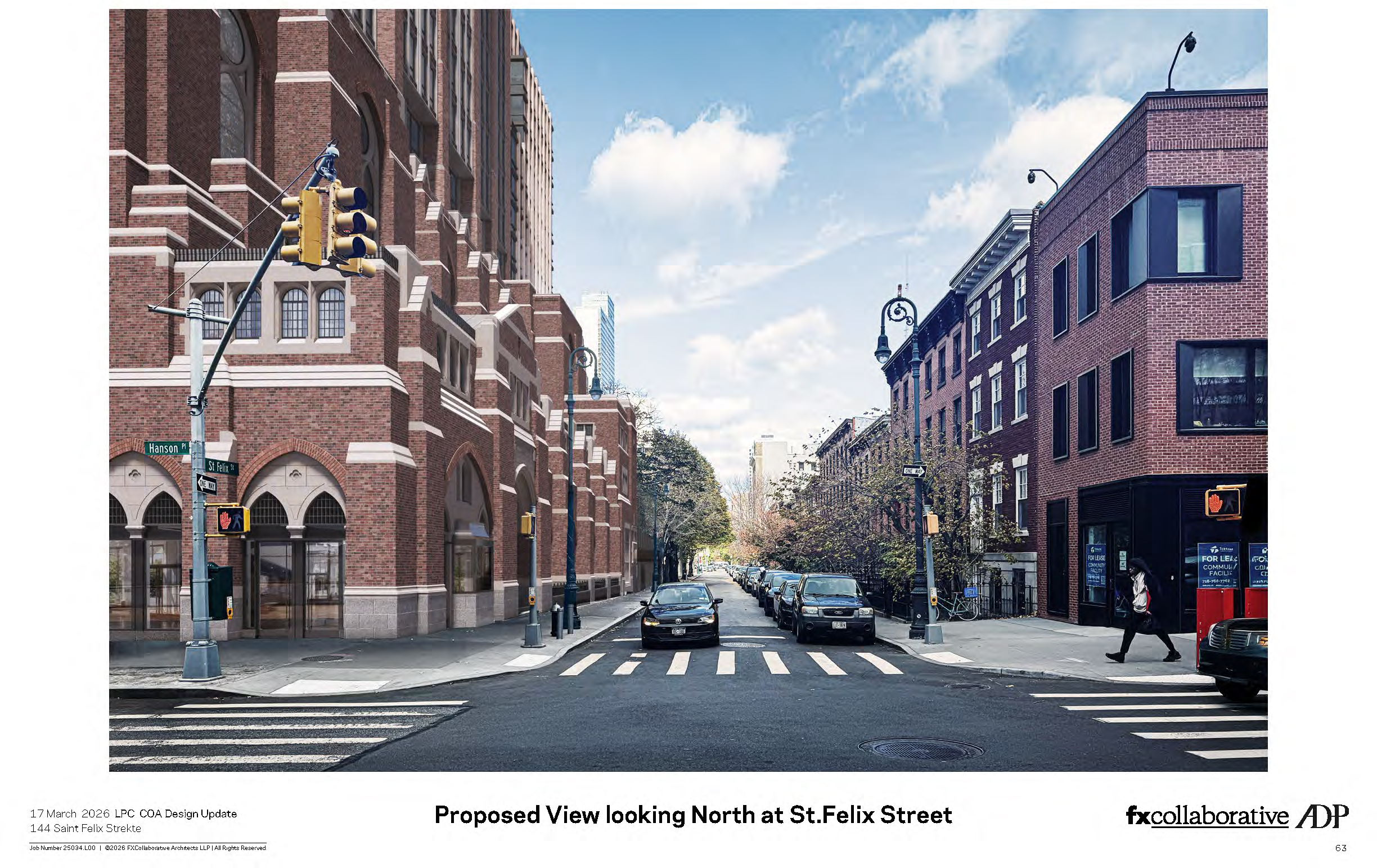
In December, LPC first considered developer Strekte’s request to alter the church, designed by Halsey, McCormack & Helmer, by demolishing portions of the structure, relocating architectural elements, and constructing the residential tower on top. The plan also includes restoring the church’s St. Felix Street and Hanson Place facades; repairing masonry and ornamentation; preserving religious iconography; upgrading windows; and adding new retail and community space.
The plans were met with strong community reaction, on both sides of the aisle, as well as numerous concerns from commissioners.
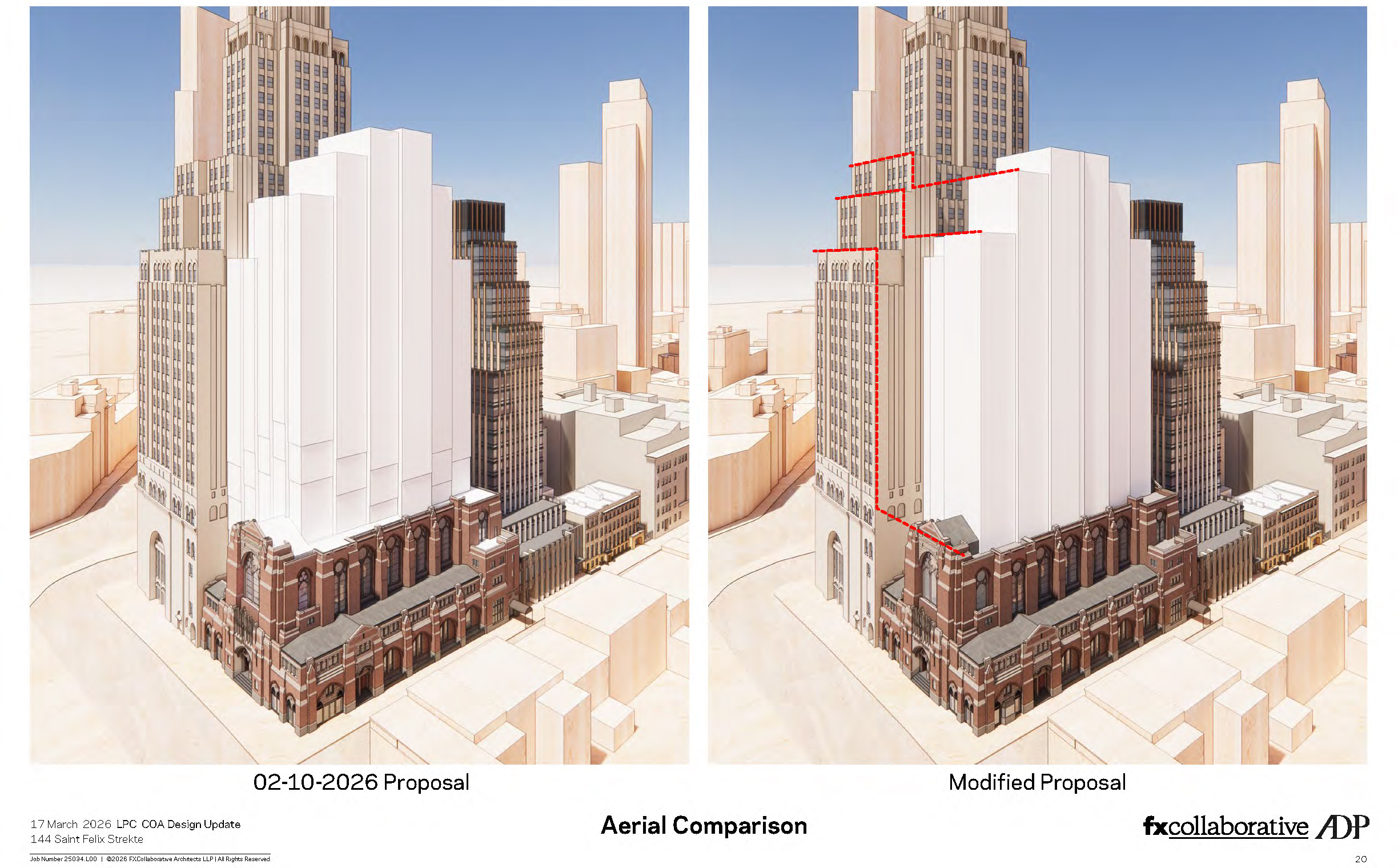
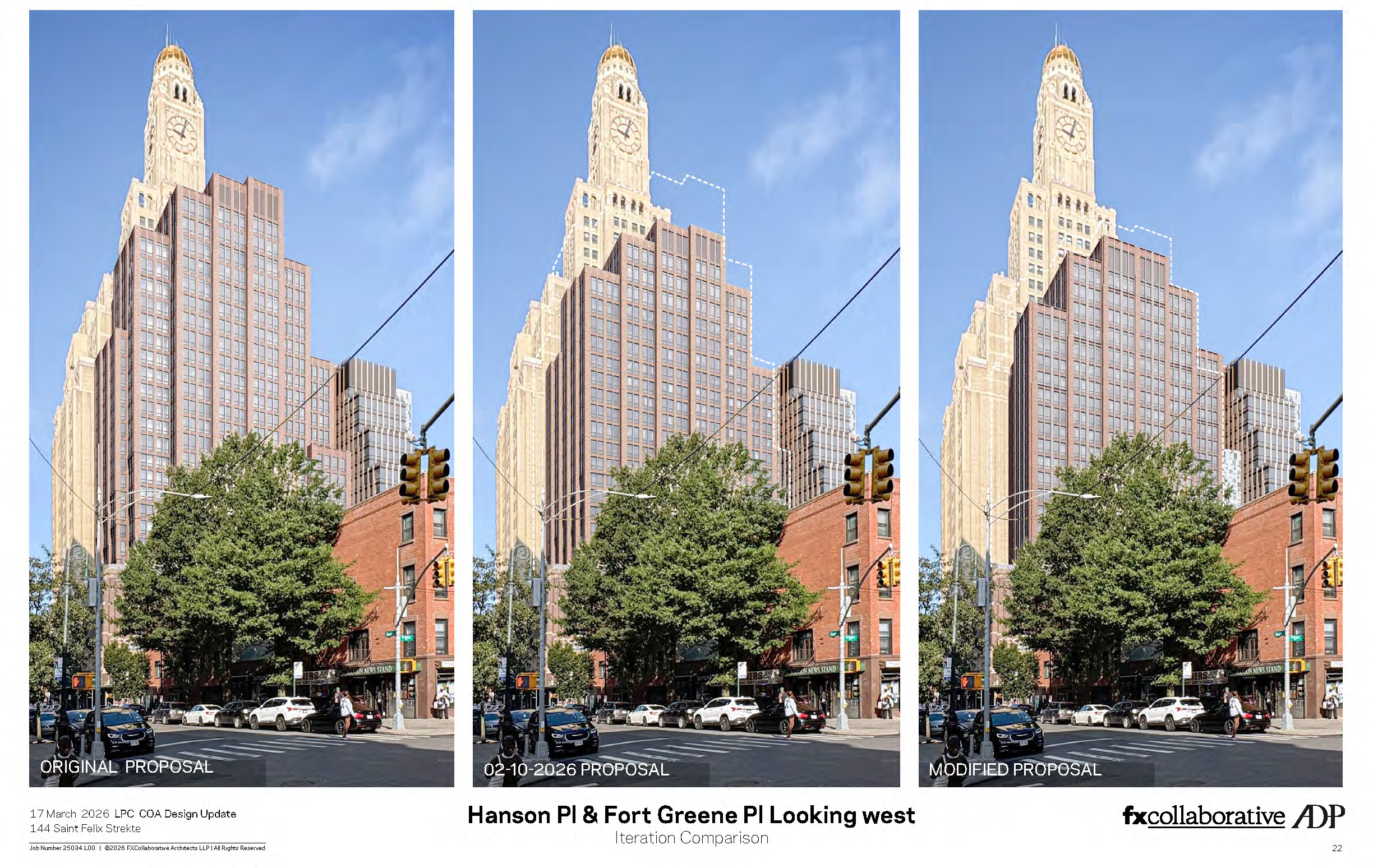
Over the past three months, the design team worked with LPC staff and presented updated plans to the commission multiple times, culminating in Tuesday’s meeting where commissioners said the revisions created a more appropriate project for the church structure and wider Brooklyn Academy of Music Historic District.
Going back to basics was key to the design team’s success, Commissioner Wellington Chen said. “I think now there’s a very clear rationale and history and track record for the future generation to look at this and just say, I understand how they derive at this form, which is very respectful of the base, which I like a lot, because the whole idea is the preservation of this gorgeous church.”
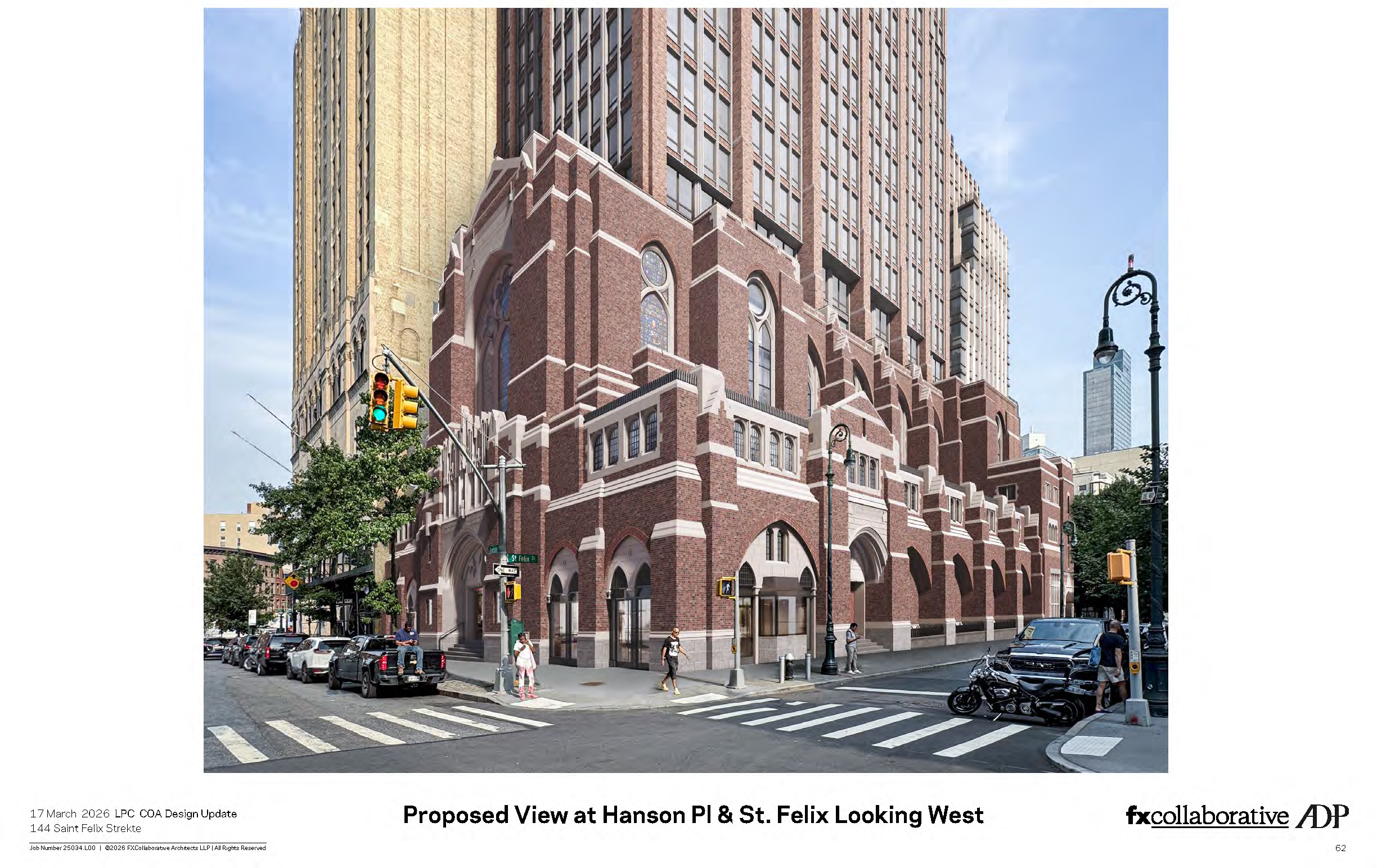
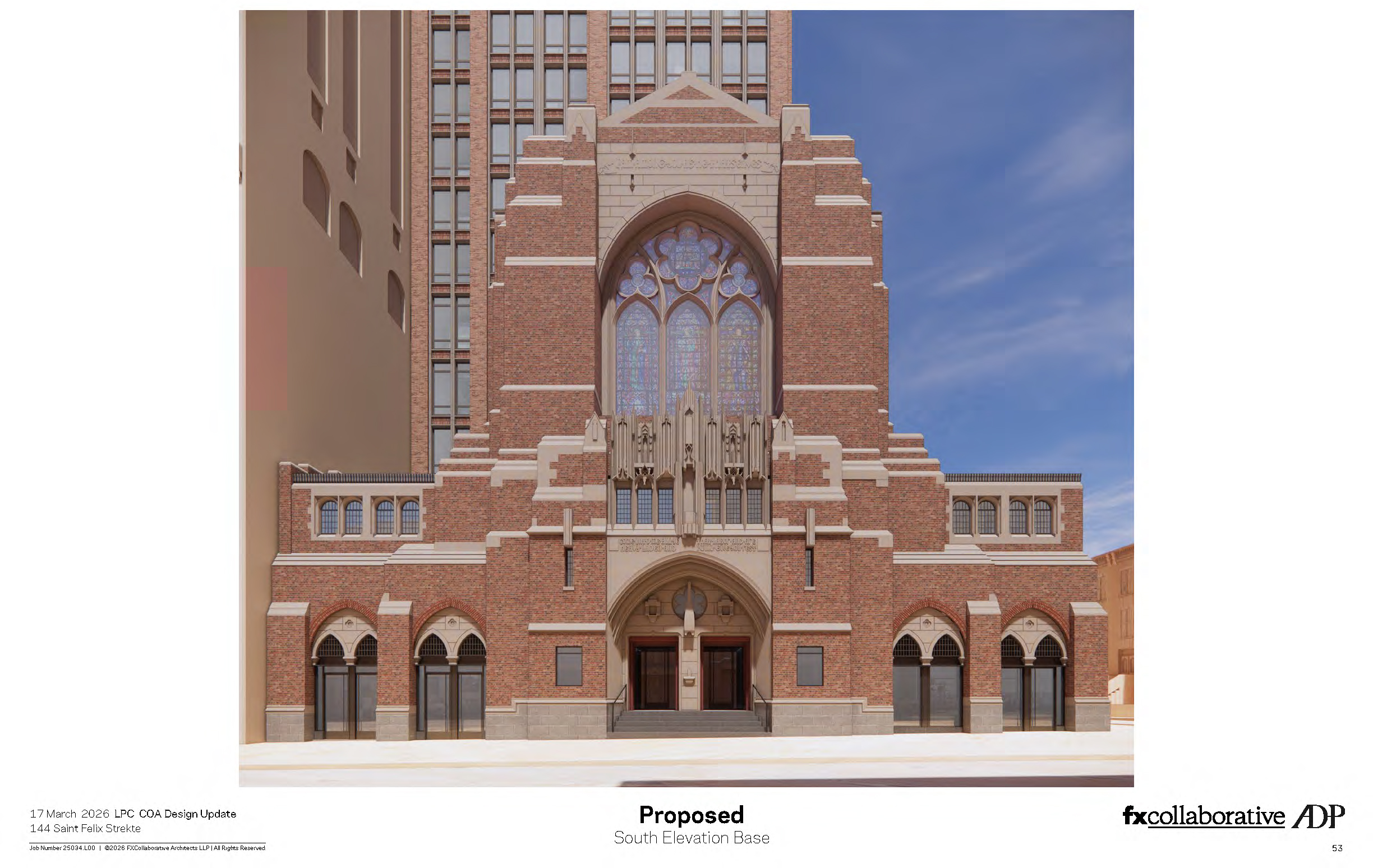
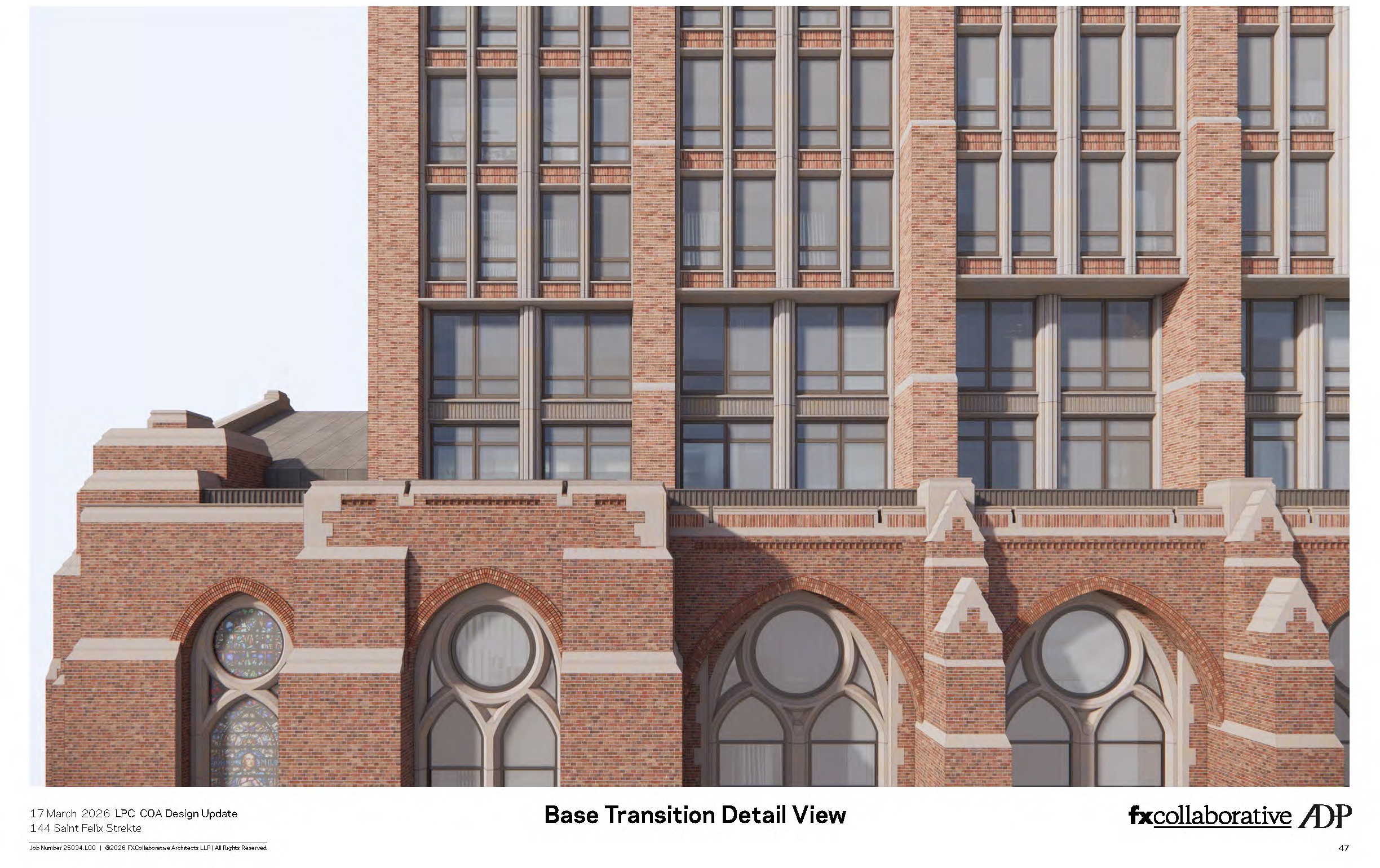
In approving the plans, the commissioners agreed the deterioration of the church and its long vacancy make adaptive reuse necessary, and agreed the updated plans preserved the church’s presence at the streetscape and fit with the overall historic district, by making itself secondary to One Hanson Place.
“As much as we would all love to see the church operating and functioning as its original design and construction was intended, I do think that being able to accommodate new construction to support housing and the growth of the city, we have to look at these types of changes to our historic fabric and districts,” Commissioner Stephen Chu said.
“I really do appreciate, however, how much the community and the district cherishes the presence of the church, and I do think that the proposal retains the physical presence and the significance and character that the church has to the district and the sense of streetscape and human scale.”
LPC Interim Chair Angie Masters called it a “great creative adaptive reuse” that address city issues, including what to do with beautiful religious properties with congregations that can’t afford upkeep, and “increasing housing and affordable housing as well.”
“I think that through this process and the multiple revisions this project has really developed into something so much better than what was initially presented,” Masters said.
While the project has the support of LPC, neighbors at One Hanson Place are far from happy. In a statement ahead of the meeting, they said the design team repeatedly failed to show why the project is appropriate for the historic district, which they stress is not in Downtown Brooklyn or on the Flatbush Avenue corridor.
The statement says the group welcomes adaptive reuse of the church, but wants something in line with the surrounding district that follows “other historic district precedents and the Commission’s regulatory framework.” The group calls the recent reduction in height “arbitrary,” arguing that One Hanson Place is not a lot line building and was instead designed to be surrounded by open space. They believe the church’s western facade, visible from Hanson Place, should be preserved as part of any adaptive reuse project.
In early 2024, the church’s congregation sold the property to an LLC for $15 million, citing dwindling membership and rising maintenance costs. The congregation already relocated services to Grace United Methodist Church in Park Slope, with the structure sitting vacant since 2019. The LLC originally included Wolf Landau’s Watermark Capital Group and two connected entities, Bambh and Strekte. Court documents show the deal unraveled. At a November community board meeting, representatives for Strekte said the firm had since acquired all rights to the property from Watermark.
To date, Strekte hasn’t applied for any alternation permits.
Related Stories
- Revised Fort Greene Church Tower Plan Needs Tweaks, LPC Says
- Landmarks Signals Support for Tower Addition to Fort Greene Church
- Dozens Debate If Apartment Tower Would Diminish Landmarked Fort Greene Church
Email tips@brownstoner.com with further comments, questions or tips. Follow Brownstoner on Twitter and Instagram, and like us on Facebook.
What's Your Take? Leave a Comment