Stop and Frisk Rises in Brooklyn

The use of controversial police tactic stop and frisk has decreased in the City after coming under increased scrutiny and a lawsuit, but spiked in select areas of Brooklyn, The New York Daily News reported. Specifically, stop and frisk was up 66 percent in Brownsville and 45 percent in East New York from 2011 to 2012. Its use in Bed Stuy increased 6 percent, 3 percent in Greenpoint and 2 percent in Bensonhurst, while it dropped precipitously in Williamsburg — by 44 percent. As has been the case for years, very few of those stops found actual law breaking: 89 percent of stops did not result in an arrest or summons, the Daily News reported. Those that did were mostly for marijuana; 12.6 percent of those stopped were carrying a gun or other weapon. Interpretations of the change in policing varied widely. “We are seeing the next chapter,” said John Jay College professor and former officer Eugene O’Donnell. “Good stop-and-frisk should be targeted. They’ve identified a pattern, a spike in crime, and they are throwing resources at it.” And, on the other side: “The Police Department continues, against any possible rational analysis of the data, to insist that the stop and frisk program is both necessary and effective, and to target young black and Latino New Yorkers, who are so innocent of any wrongdoing that they walk away without a summons,” said NYCLU Executive Director Donna Lieberman. What do you think? Is stop and frisk effective and constitutional, or are the police just harassing law abiding citizens who happen to live in the poorest parts of Brooklyn?
Stop and Frisk Is up in Brooklyn [NY Daily News]
Photo by jag9889
Brownsville Is Next, Opines Observer

Have any hipsters been sighted on Pitkin Avenue in Brownsville? No. But it won’t be long, according to the New York Observer. The evidence: “East Bushwick” is “again heating up,” and during the last boom, developers made it out as far as the Halsey Street L train stop. Plus, there was that DNAinfo story Friday about renters searching for more space and lower rents along the Crown Heights-Brownsville border. (That’s Pitkin Avenue above, which in the 1950s was one of Brooklyn’s biggest shopping districts, and the recently revamped Pitkin Theater, now Brownsville Ascend Charter School.) FWIW, our two cents: We live one stop away from Brownsville’s Broadway Junction, and plenty of “hipsters” or whatever you want to call them have moved here in the last year or so. So, yeah.
Closing in on Brownsville: Brooklyn Gentrification Nears the Final Frontier [Observer]
The Hot Seat: Rasmia Kirmani-Frye

Welcome to the Hot Seat, where we interview folks involved in Brooklyn real estate, architecture, development and the like. Introducing Rasmia Kirmani-Frye, the Director of the Brownsville Partnership. The Brownsville Partnership is a part of Community Solutions, a national not-for-profit organization whose mission is to strengthen communities to end homelessness.
Brownstoner: What neighborhood do you live in, and how did you end up there?
Rasmia Kirmani-Frye: I live in Fort Greene. I’ve lived in Brooklyn for about 20 years, and have lived all over. I started in Windsor Terrace, and then Sunset Park, Fort Greene, Crown Heights, and back to Fort Greene. I ended up in Fort Greene the first time when I came back from my PhD fieldwork on the West Coast and needed a roommate and somewhere to live – I totally lucked out on both! When my husband and I got married we needed to find a place and ended up two blocks away from where I was living the first time in Fort Greene – we love it. And I should add, my husband grew up in Bed-Stuy, on Putnam and Throop.
BS: Can you talk about the beginnings of the Brownsville Partnership, and how you became involved?
RKF: The Brownsville Partnership – an initiative of Community Solutions, a New York-based national not for profit – was launched in 2008 by Rosanne Haggerty. She and a team started working in Brownsville in 2005 doing community organizing. Rosanne met Brownsville’s unofficial “mayor” Greg “Jocko” Jackson – lifelong resident and agent of hope in Brownsville – and the Brownsville Partnership was born with Greg as the founding director. He passed away last May, but it’s his legacy of hope-in-action that we are carrying out [that] lives on. Prior to working at the BP, I was a community organizer in Brooklyn, and then consulted with community-based organizations in Brooklyn for the past 15 years. I became involved in January 2008. My long-time mentor, and founding president of the Times Square BID, Gretchen Dykstra, was working with Rosanne to conceptualize the work in Brownsville and, knowing that I have a long term love of Brownsville, she suggested I talk to Rosanne. I did and I met Greg, and I was totally inspired by both of them, and that was it. Love.
After the jump, how rapid gentrification in Brooklyn is changing Brownsville, hopes for the community in ten years, and Ras’s favorite spot in the neighborhood… (more…)
Destination Playground Planned for Brownsville

An unusual, tree-house-inspired playground is going into an existing park in Brownsville, the Architzer blog reported. It’s called the Imagination Playground, and its central feature is big building blocks made of blue foam, designed to encourage children to play creatively on their own. A similar playground already exists in Manhattan at the South Street Seaport, and others have been springing up around the country; the playgrounds and the blocks were designed and donated by architectural firm Rockwell Group. The multi-level space at Brownsville’s Betsy Head Park will incorporate sand and water, and a long, winding play ramp will weave through the surrounding trees, said the blog. (more…)
Community Board Approves Bike Lanes for Brownsville

This week Community Board 16 approved the DOT’s proposal for bike lanes in Brownsville. A representative at the nonprofit Community Solutions, which works in the neighborhood, said, “We have been working with the DOT and partner orgs for two years on this and we are thrilled that this is finally happening. It is another step forward as we work to create a safer, healthier and more prosperous Brownsville.” Streetsblog reported that 15 miles of Brownsville streets will get the green paint, including New Lots Avenue, Pitkin Avenue, Mother Gaston Boulevard, and a north/south lane pair on Hendrix Street and Schenck Avenue. Expect installation to happen this spring. The DOT will also install 600 bike racks around the neighborhood.
Bike Lanes Come to Brownsville [Community Solutions]
Brownsville Will Get Bike Lanes After Supportive Vote From CB 16 [Streetsblog]
Photo by the NYC DOT via Streetsblog
Focusing on Safety and Community in Brownsville
The Brownsville Partnership and the Municipal Art Society are hosting the first annual Brownsville HOPE Summit on Saturday, February 23rd. The summit kicks of a yearlong initiative that will engage residents in creating a safer, healthier and more prosperous neighborhood through local ideas and action. At the summit residents will have access to markers, flip charts, maps and photographs to identify underutilized neighborhood resources, troubled spots and opportunities for short-term improvements and long-term development. The idea is to come up with a blueprint that guides local initiatives for the rest of the year. You can check out all the details about the reception and the actual summit right here. The Brownsville Partnership, which is spearheading this event, is a network of residents, city and non-profit partners based in the neighborhood.
Affordable Homes Slated for Brownsville
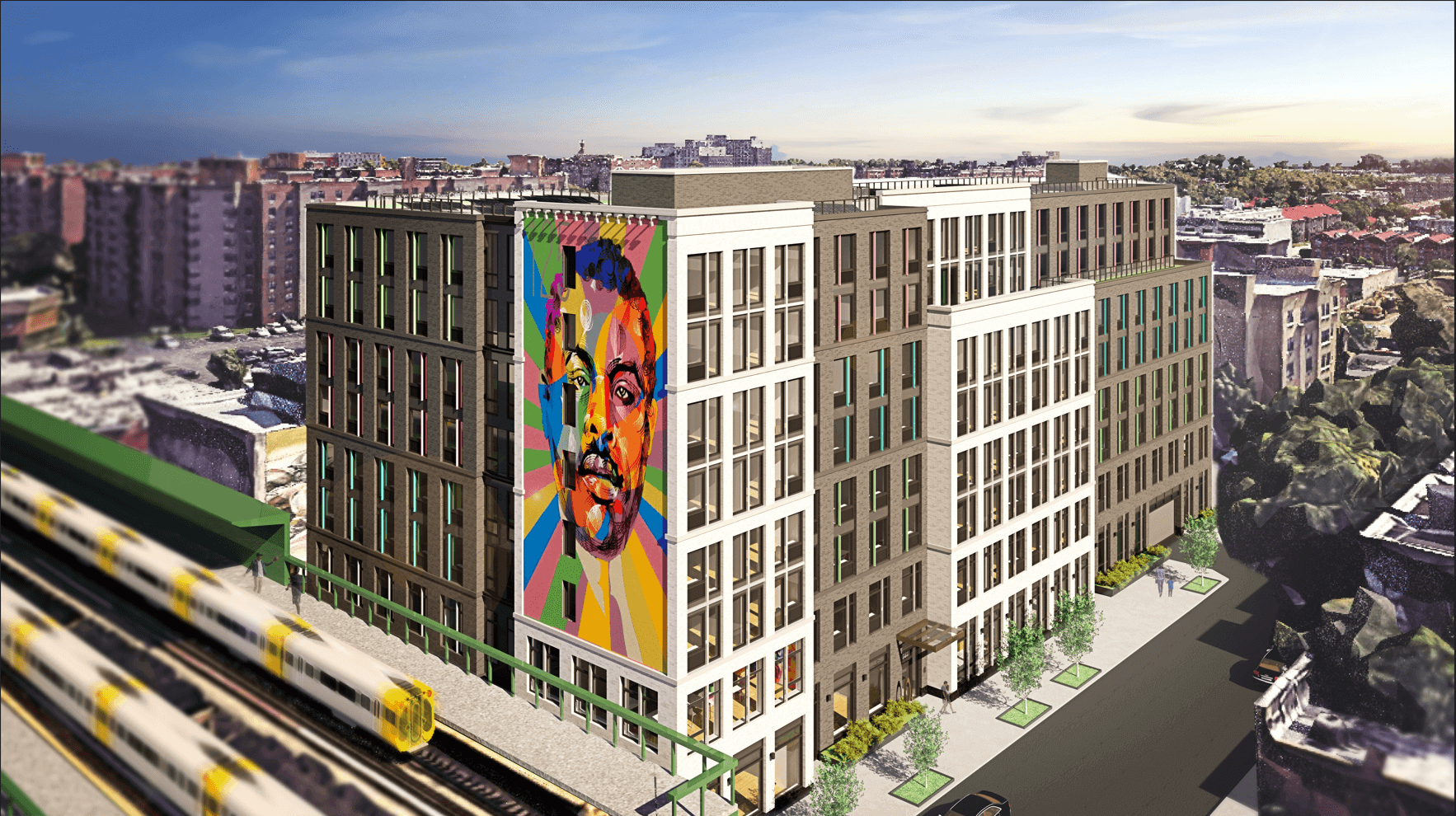
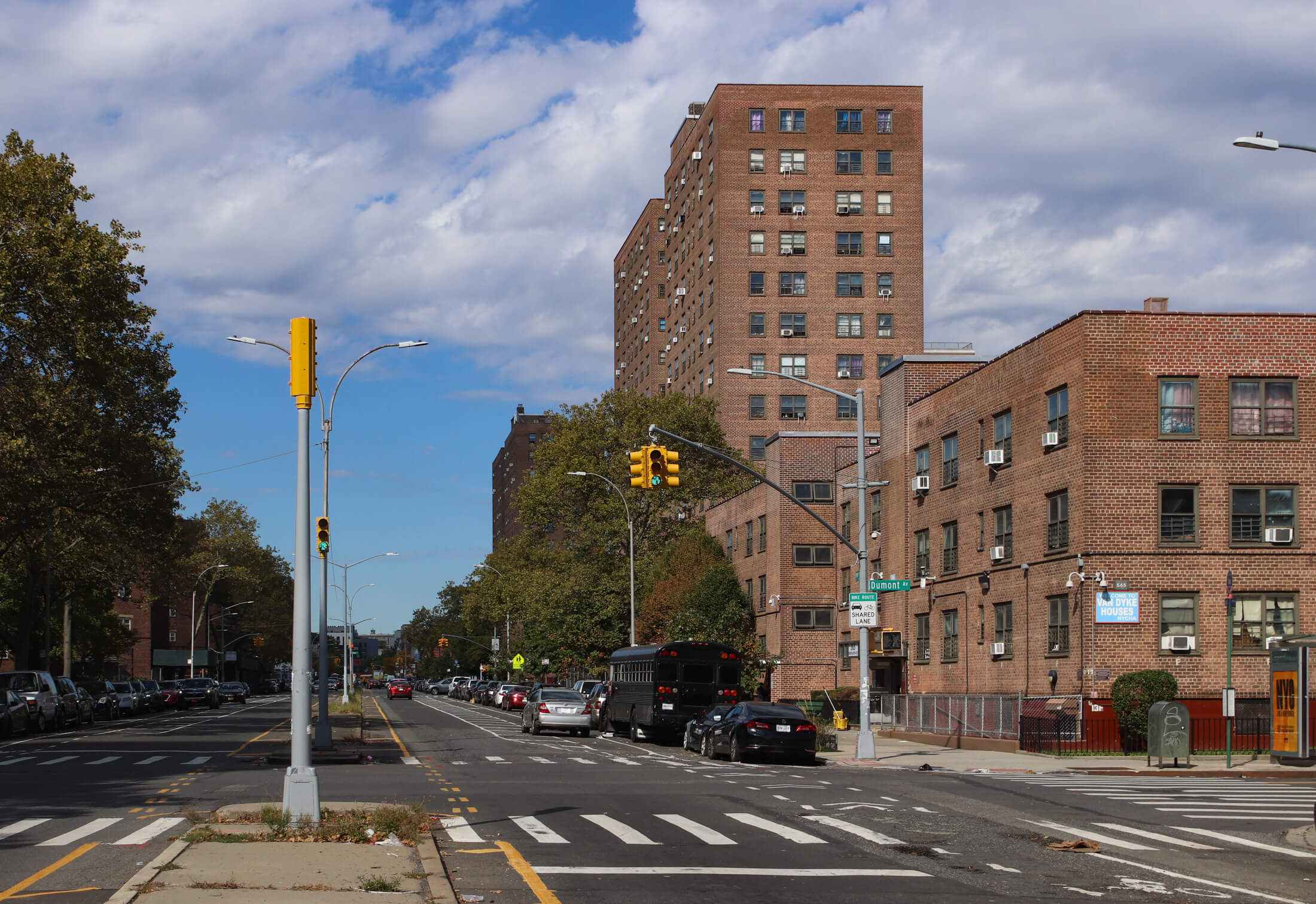
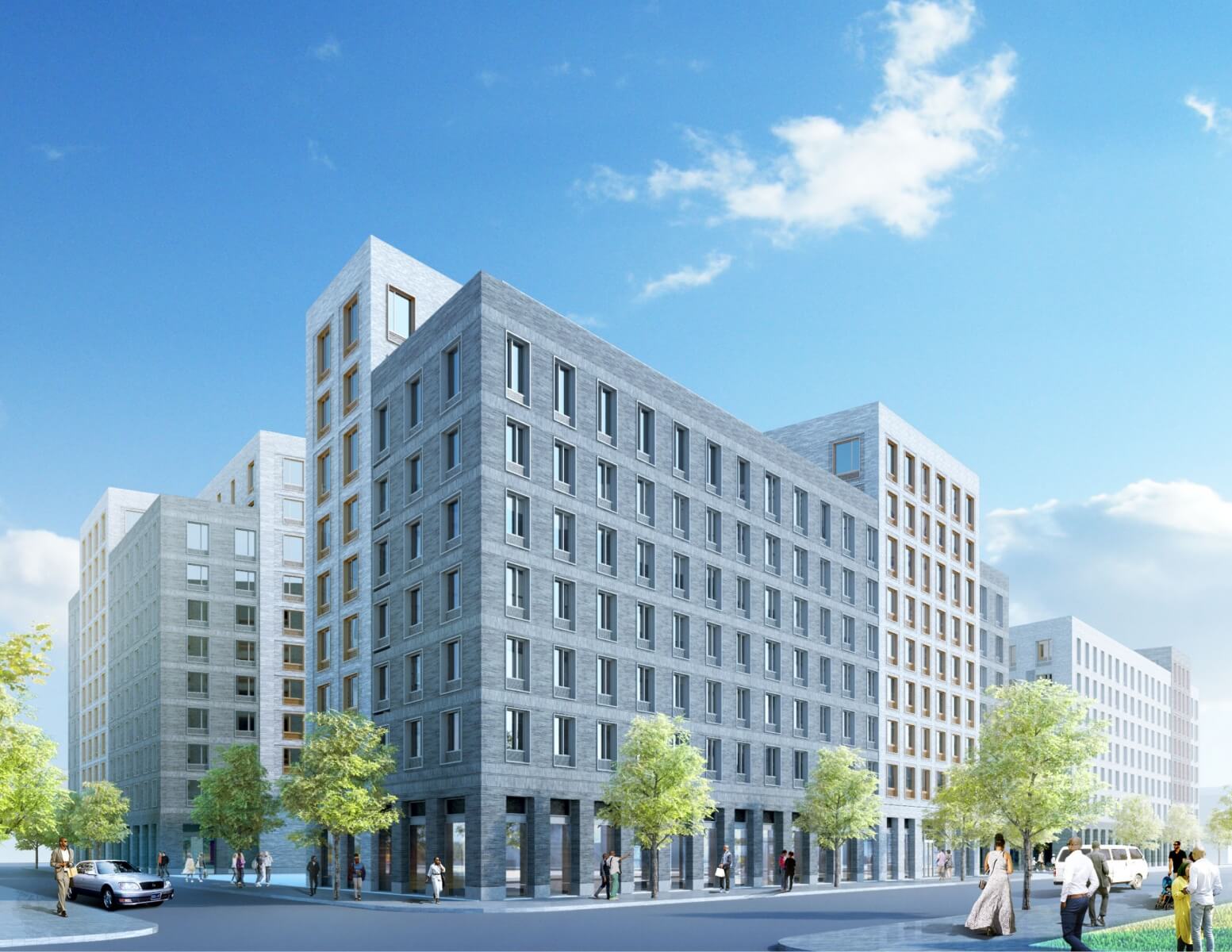
A parking lot on Mother Gaston Boulevard in Brownsville will be transformed into a 12-story apartment building with low-income and supportive housing, the New York City Housing Authority has announced. CAMBA Housing Ventures is the developer of the project. Above is a rendering of the building, known as the Van Dyke Supportive Housing Project, which will be located between Dumont and Livonia Avenues. The development will include 100 apartments consisting of 44 one-bedrooms and 56 two-bedrooms. At least 30 percent of the units will go to homeless families or those at risk for homelessness. A quarter will be set aside for NYCHA residents, and the rest will go to low-income families earning as much as 60 percent of the area median income, or $51,540 a year for a family of four. Also on site will be a mental health clinic, community space, and employment training. Nonprofit CAMBA, an affiliate of the developer, operates job training programs and plans to train NYCHA residents to apply for construction jobs on the project. CAMBA Housing Ventures has developed 396 units of housing in Brooklyn and has 459 more in development. Construction should wrap in the summer of 2014.
Rendering via CAMBA Housing Ventures
Building of the Day: 1501 Pitkin Avenue
Brooklyn, one building at a time.
Name: Former Loew’s Pitkin Avenue Theater, now Brownsville Ascend Charter School, and retail
Address: 1501 Pitkin Avenue
Cross Streets: Corner Saratoga Avenue
Neighborhood: Brownsville
Year Built: 1929-30, rebuilt 2010-12
Architectural Style: Art Deco with Mayan and Art Nouveau touches. Interior “Hispanic-Mooresque”
Architect: Thomas Lamb. Renovation: Kitchens & Associates and Anderson-Miller Designs
Other Work by Architect: Over 180 theaters across U.S., Canada and world. In Brooklyn: Loew’s Metropolitan, Loew’s Gates, RKO Bushwick, Strand, among others.
Landmarked: No
The story: The age of the great movie palaces is over. In the teens and into the 1930s, they were built to provide an escape into the fantasy world of live theater follies and Hollywood motion pictures, with exciting stories of beautiful leading ladies and handsome leading men. For your average person, the theater itself would be an escape, a fantasy building with exotic décor, padded and plush sets, gilded surfaces and bright lights. These palaces were everything a local dull, coldwater flat was not, an escape into another world. And no one built a fantasy theater like Thomas Lamb.
He was the best of a handful of theater architects and designers who made magic. Lamb was born in Scotland, and came to the U.S. as a child of 12. He got his architectural training at Cooper Union, and set his office up on 40th Street in the theater district. His first theater was for film mogul William Fox, in 1909. He would go on to be the architect of choice for the Loew’s, Fox, and RKO chains. His theater designs would grace cities around the world, with almost 50 here in New York, and theaters from Philadelphia to Toronto, Jakarta to London, Cleveland to Johannesburg. (more…)
Bike Lanes for East New York and Brownsville
Yesterday Streetsblog reported on DOT’s proposal for bike lanes in East New York and Brownsville. The pavement lines (there won’t be protected lanes) will be installed next year on two miles of Pitkin Avenue. This will be accompanied by community events like a helmet fitting and learn-to-ride workshop at an East New York elementary school. DOT also plans to install traffic measures on Pennsylvania Avenue, where there’s a high number of speeding cars and fatalities. The street will be resurfaced, DOT will reduce the number of lanes from three to two in each direction, and they’ll add median extensions and an extra-wide curb parking lane. Residents are also pushing for another bike lane on Mother Gaston Boulevard, where the neighborhood’s only bike shop is located, but DOT is not expected to present that proposal until a later time. Pretty awesome news for East New York, a neighborhood with virtually no bike lanes at this point.
East New York and Brownsville on the Cusp of Getting New Bike Lanes [Streetsblog]
Image by NYT DOT vis Streetsblog
Ribbon Cut at Brownsville’s New Affordable Development
Today’s the grand opening of the Hegeman, a supportive and low-income housing development now open at 39 Hegeman Avenue in Brownsville. The building houses 161 studio units for formerly homeless and low-income adults. It’s Common Ground‘s second housing development in Brownsville. It’s also a $43 million, LEED-certified design by Cook + Fox Architects featuring green elements like a green roof, solar panels, light and motion sensors, and low-flush toilets. Here are some cool details about the design from Architectural Record: “The architects relied on a non-intrusive aesthetic and lined the exterior of the building with red brickwork. They also installed large, modular windows to facilitate community engagement and reduce energy consumption… Building on the idea that sustainable design is both economically prudent and healthy for residents, the architects created an adjacent garden flanked by concrete paths crafted from permeable pavers made out of post-consumer recycled glass.” The Hegeman actually has two gardens: an enclosed ground-floor garden for building residents and, coming next year, a community garden on Thomas Boyland Street open to the Brownsville community. The building also employs and houses local residents. Check back here later for pictures from today’s ribbon cutting! GMAP
Pols, Parents Celebrate Rebirth of Pitkin Theater
The Art Deco Pitkin Theater in Brownsville, abandoned and disintegrating for many years, has been restored and is now home to the Brownsville Ascend Charter School and, soon, big-box retailers. Borough President Marty Markowitz and a festively dressed crowd of proud and excited parents and execs turned out Thursday afternoon to celebrate the ribbon cutting of this symbol of the past and the future of the neighorhood. Markowitz spoke about the dramatic changes in Brownsville, which he personally experienced, having worked down the block when he was a boy at the auto supply company AID when Pitkin Avenue was one of the busiest commercial strips in all of New York City. ”With Ascend, I do hope the culture of violence will disappear from our streets,” he said. “I hope the day will come soon when it is easier to buy a book on Pitkin Avenue than to buy a gun.” (more…)
The Pitkin Theater Conversion Is Complete
The $43 million renovation of Brownsville’s Pitkin Theater is all done! Plans to transform the decrepit theater into a charter school with retail space were announced July of 2010. Now Curbed reports that Poko Partners and the firm Kitchen and Associates finished the adaptive reuse project, giving 130,000 square feet over seven floors to Ascend Charter School, with a discount store at street level. The architecture firm restored the building’s exterior neo-classical and Art Deco features. The interior now has a gym, auditorium, science labs and art rooms. The ribbon cutting ceremony will take place Thursday, Sept. 13.
Decrepit Brooklyn Movie Theater Reborn as Charter School [Curbed]
Loew’s Pitkin to Be Converted to School, Retail [Brownstoner] GMAP (more…)
Habitat for Humanity Big in Bed Stuy
Habitat for Humanity is having a big impact in Bed Stuy, fixing up seven run-down tenements and turning them into affordable and “green” housing for low-income buyers. Apartments will cost from $98,000 to $250,000, and are available to first-time buyers who meet the low income requirements. Terms are sweet: 200 hours of sweat equity per person, a 1 percent down payment, and interest rates of 2 percent. Many of the buildings are LEED certified, with high-efficiency boilers and other cost-saving features. Pictured is 849 Halsey Street, which faces Saratoga Park on the Eastern edge of Bed Stuy. It is on track to be completed in August, as are buildings on Marion and Monroe streets, and owners will start moving in as early as September. Buildings on Ralph Avenue and Bainbridge Street were recently completed. Slated to open next year are apartments on Jefferson Ave. and Madison Street. All are part of Habitat-NYC’s 100 Homes in Brooklyn initiative to turn vacant buildings in Bed Stuy and Ocean Hill-Brownsville into affordable housing.
Habitat for Humanity Investing in 3 Bed Stuy Buildings [Brownstoner]
Habitat Brownsville Project a Game-Changer [Brownstoner]
Shootings in W’burg and Brownsville Over the Weekend
At 10:45 pm on Friday night on Bedford Avenue and North 9th St., in the middle of crowds of people on their way to bars and shows, a man was shot outside the bar Trix, the New York Times reports. Was it random? Did the shooter and the victim know each other? We don’t know, although the victim is expected to live. The 94th Precinct has a relatively low crime rate — only one murder last year — which explains why some bystanders didn’t even realize it was a shooting. Meanwhile, out in Brownsville last night, six people, including two children, were injured in a drive-by shooting. The Brownsville shooting took place in one of the NYPD’s Operation Impact Zones.
In a Neighborhood Unaccustomed to Violence, Disbelief Over a Shooting [NY Times]
Not All Brooklyn Nabes Benefiting from Boom
Given the soaring housing prices and thriving restaurant scene in Brownstone and North Brooklyn that receive so much attention from local and national press, it’s easy to forget that Brooklyn’s recent boom has been a rising tide that has not lifted all boats. The Times reports this morning on what the past two decades have been like in some of the lower-profile and less economically strong nabes. Take Brownsville, for example, which did not see a rise in income levels between 1990 and 2010 while areas like Park Slope saw the percentage of people earning $100,000 or more go from 28 percent to 43 percent. (Though it’s hard know how impressive that rise is without any citywide or national numbers to compare it to.) Similarly, while the number of people with graduate degrees in Williamsburg and Greenpoint quadrupled to 12 percent, the percentage in East New York and Starrett City held flat at 4 percent. “I’m glad Brooklyn is making a name for itself and it’s coming up, but if it’s coming up, it should be spread out,” said Joycelyn Maynard, who runs the almost 100-year-old Stone Avenue Library in Brownsville. Similar sentiments from Assemblyman and presumed Congressman Hakeem Jeffries: ““The sidewalk cafes are great but we need a blueprint for employment and housing opportunities that are desperately needed in parts of Brownsville and East New York.” A barbershop owner in Brownsville goes on record complaining about the lack of development dollars going into his neighborhood: “They’re putting money in those neighborhoods, but not in this one.” Meanwhile, not everybody wants their neighborhood overrun with organic food and New York Magazine cover stories. Some of the middle-class areas along Brooklyn’s southern shore like peace and quiet of the status quo. “I enjoy happening places and I would enjoy the restaurants, and I’m glad it’s getting to be on the map,” said Jennifer Avena, whose family has been in Gerritsen Beach for decades, of the Brownstone Brooklyn renaissance. “But keep it there.”
As Brooklyn Gentrifies, Some Nabes Being Left Behind [NY Times]
Photo by Katianna Tallarico
Closing Bell: ‘Brownsville has most police ‘stop-and-questions’ in city: NYCLU’
New Brownsville School, Bed-Stuy Condo Coming Soon
Today the Eagle has a story about how two projects spearheaded by the Carver Community Development Corporation in Brownsville and Bedford-Stuyvesant that involve a school and a condo are close to being realized. The first, the rehabilitation of the former Loew’s Pitkin Theater at 1501 Pitkin Avenue in Brownsville, is being turned into a school and will also have retail. It is slated to be finished next month, and the Eagle says it’s “the first major expansion of retail development on Pitkin Avenue in over 40 years.” The building will house the Brownsville Ascend Charter School. The theater had been closed for more than four decades and was in disrepair. Meanwhile, Carver reports that a condo called the Bradford, at 1560 Fulton Street/43 Albany Avenue in Bedford-Stuyvesant, is scheduled to be finished this summer and will have 96 affordable apartments plus retail. (We have been following its development progress closely.) The article says the “brand new six-story, 137,537-square-foot mixed-use residential building that is being constructed on formerly city-owned property will bring the first affordable housing to the area in 15 years.” Carver’s many development partners for the Loew’s rehab include Goldman Sachs, Seedco Financial, Empowerment Reinvestment Fund, Nonprofit Finance Fund and The Rose Urban Green Fund, while the development corp partnered with the Bedford-Stuyvesant Restoration Corp. and Goldman Sachs Urban Investing Group on the Bradford.
Community Foundation Invests in 2 Brooklyn Real Estate Projects [Eagle]
Another Side of East New York
Chris Arnade has lived in Brooklyn Heights for the past twenty years since receiving his Physics PhD from Johns Hopkins and beginning a career as a foreign exchange trader. He’s also been an avid photographer since childhood. For the past couple of years, Chris has been documenting his exploration of New York City on his Flickr blog, covering everything from pigeon keepers to drug addicts and prostitutes. While looking for a Daily Links photo recently we came across a series of photos Chris took of people in East New York and Brownsville last summer and thought it was an amazing contrast to the way these neighborhoods are often portrayed in the media. What was the impetus? “Last summer I read an article in The New York Times about the zip codes with the worst crime statistics and decided to spend some of the summer in one of them, 11233,” he told us. “I never had a bad experience, although I was stopped by the police a few times, making sure I knew what I was doing.” UPDATE: Come check out Chris’ photography at the Urban Folk Art Gallery on March 9, 101 Smith Street. Details here.
UPDATE 2/21/12: The New York Times ran an article about Chris’ photo series on the prostitutes of Hunts Point.
Brownsville’s Bleak Urban Landscape
The Times’ Gina Bellafante visited Brownsville for her latest “Big City” column, and her depiction of the neighborhood is grim: “I encountered people who felt not only that the quality of life had barely improved since the days of the crack epidemic in the ’80s and ’90s, but that in certain respects it had grown worse.” Bellafante notes that the neighborhood’s murder rate hasn’t fallen in the last few years, and that gang violence is a regular occurrence. Some neighborhood businesses say that they have trouble moving inventory like men’s clothing because “of a retracted drug trade that however insidious kept money in the neighborhood in motion.” There are some small, hopeful signs of change, according to the article, particularly the renovation of the long-vacant Loew’s Pitkin theater, which will house a charter school on its top floors and retail on the bottom floors.
Where Optimism Feels Out of Reach [NY Times]


May 21, 2013 | 09:56 AM