Zoning
April 24, 2008
Gowanus Rezoning on the Horizon

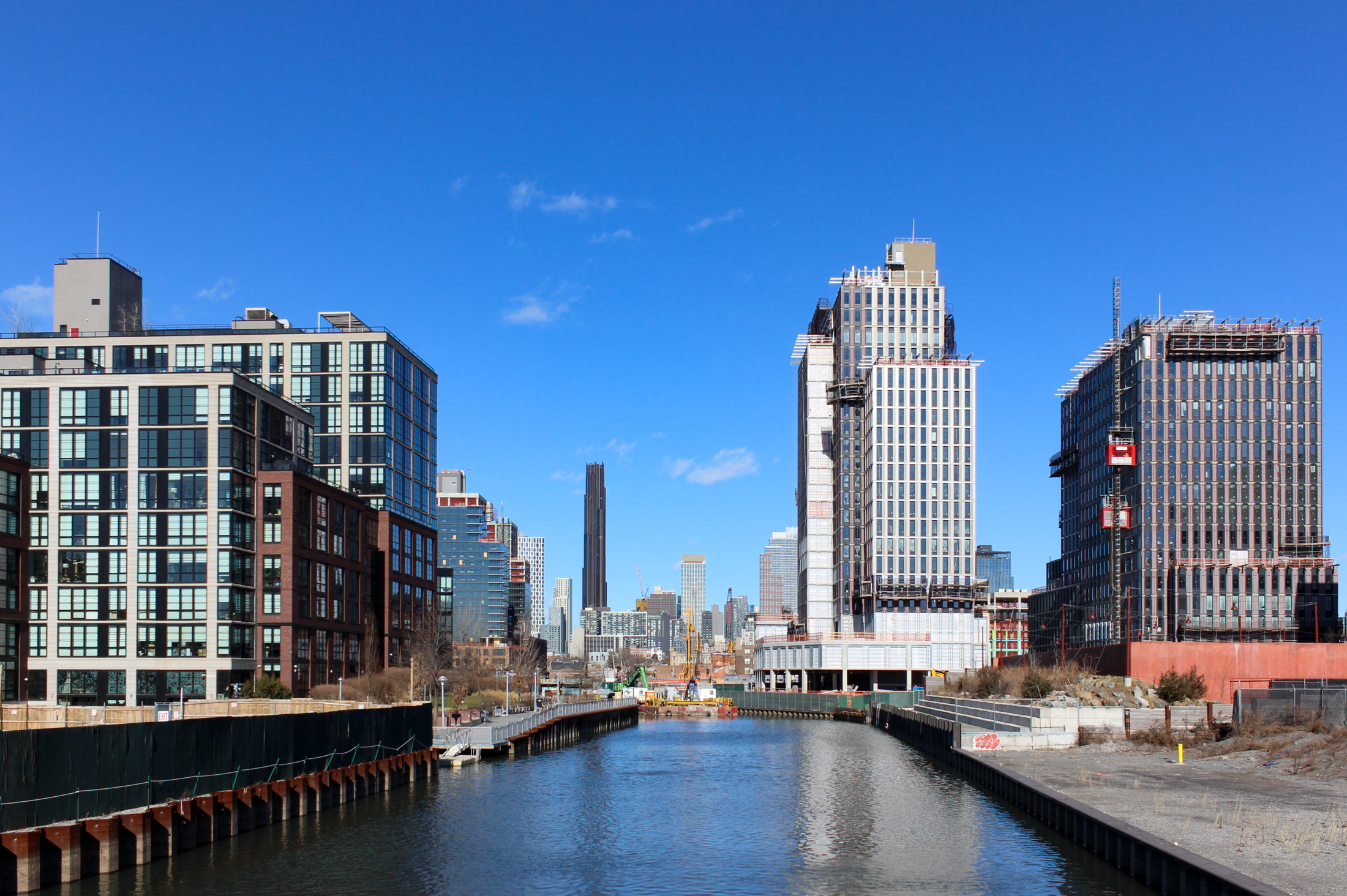
Plans for the rezoning of Gowanus, which have been brewing for more than a year now, are about to make their official debut. Yesterday Purnima Kapur, director of City Planning's Brooklyn Office, said that the draft rezoning plan for the Gowanus Canal Corridor will be unveiled next month. "What we're planning to do is go out to the community and start a discussion about the rezoning," says Kapur. The DCP official says that the rezoning plan will more or less adhere to the draft land-use framework released last January (as shown above), and that the department will propose rezoning about 25 blocks. "We studied 60 blocks," says Kapur, "and we came to the conclusion that two-thirds should remain manufacturing." Mixed-use zoning that allows for residential construction will mainly be proposed in the north section of the area under consideration, with the biggest chunk running from 3rd Street to Sackett between the canal and 4th Avenue. Per the draft framework, the rezoning will allow for the construction of building that are largely 6 to 8 stories with limited portions setback from the neighborhood allowed to rise between 12 and 14 stories next to the canal. Kapur says the department hopes to get community consensus on the draft proposal sometime over the summer and then begin working on an Environmental Impact Statement, which should take between 8 and 9 months to complete. If this timeframe is followed, the rezoning will be certified for ULURP sometime in early 2009, before there's a change in the current city administration. Kapur says she's excited about bringing the rezoning to fruition. "We were asked by the community board to look into the rezoning, which is how the whole process started," she says. "Gowanus is a unique area between two thriving communities, and it provides a potential for new uses that could build on its unique character."
Gowanus Rezoning: Complete Chaos [Brownstoner]
Gowanus Rezoning Proposal by Late Spring or Summer [GL]
Gowanus Canal Corridor Framework [nyc.gov]
April 9, 2008
Downtown Experiences Net Loss in Office Space

Downtown Brooklyn's rezoning was originally promoted to spur construction of new office towers, but there's actually been a net loss in Class B and C office space, as detailed in The Real Deal. Residential conversions at the former Williamsburgh Savings Bank building, now One Hanson Place, and the Verizon building in MetroTech, now BellTel Lofts, together have accounted for a loss of 908,000 square feet of office space. And countless other smaller buildings have been torn down or converted to residential use in the past four years as developers have taken advantage of more lucrative hotel, condo and rental projects. Meanwhile, three office projects totaling 217,000 square feet are under construction. Several brokers said they're concerned that pretty soon Downtown Brooklyn won't have enough Class B and C office space to meet increasing demand, since that type of space is generally added through renovation. Others, like City Point developer Paul Travis, said all the new residents moving to the area will make Downtown's Class A market, which has struggled over the years, more attractive to potential tenants. Developmental Darwinism at work, or poor planning?
Despite rezoning, a net loss of office space in Downtown Brooklyn [TRD]
Sales Going Well at BellTel Lofts [Brownstoner]
One Hanson Tower Units Hit Market [Brownstoner]
April 8, 2008
City Narrowing Its View of Carroll Gardens Streets
The Department of City Planning sent out an email yesterday saying it has commenced a 45-day public review for a zoning text amendment that'll mean new developments on a number of streets in Carroll Gardens can only rise a maximum of 55 feet. The text amendment, which comes out of concerns raised by Community Board 6, Councilman Bill de Blasio's office, ever-vocal neighborhood groups and Borough President Markowitz's office about out-of-scale development in Carroll Gardens, will affect 1st through 4th Place, Second Street, Carroll Street and President Street between Smith and Hoyt Streets. The streets are currently classified as "wide" for zoning purposes, which means developers can build 75 feet or more on many of them, but, following the amendment, will instead be considered "narrow," like much of the rest of the neighborhood. "This is the first of many steps to help preserve the streets of Caroll Gardens," said Councilman de Blasio in a statement. "This is a good indication that City Planning is serious about protecting and preserving our low density neighborhoods and I continue to be hopeful that City Planning will begin the downzoning study shortly." A map showing the area in question is on the jump.
Prelude to a Downzone in Carroll Gardens? [Brownstoner]
Carroll Gardens Narrow Street/Wide Street Zoning Text Amendment [nyc.gov]
"wide" Carroll Gardens Streets to Get Narrow [Gowanus Lounge]
Continue reading "City Narrowing Its View of Carroll Gardens Streets"
April 2, 2008
W'Burg Builders Sue, Say Rezoning Like Eminent Domain
Rezoning and eminent domain (and landmarking) have been the hottest topics in Brooklyn development over the years, and a group of Williamsburg property owners are saying they're one in the same. Dozens of property owners affected by last week's Grand Street rezoning are preparing to sue the city, as detailed in The Real Deal. The owners charge the proposal was ramrodded through the approval process to prevent their participation. One petitioner said eminent domain is almost better. "The government is required to compensate you for the loss at some sort of market rate," he said. "Whereas in zoning … there's no requirement for compensation and a very limited requirement for notice." John Isdith and his father, Carlos, pictured above, are among dozens of small-time developers who, now forced to reduce their project, said they're considering joining the suit. Do the two have similarities? Which is more unfairdownzoning or eminent domain?
Williamsburg Developers, Homeowners to Sue City [TRD]
Council Green-Lights Grand Street Rezoning [Brownstoner]
March 27, 2008
Council Green-Lights Grand Street Rezoning

Yesterday the City Council approved the rezoning of Grand Street in Williamsburg. The 13-block parcel was left out of the area's wider '05 rezone, and most new buildings on the street will now only be able to rise to about six stories. Gowanus Lounge notes that "the rezone could force the redesign of more than a dozen planned projects," including two planned, Karl Fischer-designed buildings that were supposed to be 10 and 15 stories high. Good thing or bad?
Rezoning of Burg's Grand Street Approved [Gowanus Lounge]
Grand Street Rezoning Approved [WGPA]]
Will Burg's Grand Street Rezoning Chop Karl Fischer Towers? [Curbed]
Grand Street Rezoning [NYC.gov]
Update on Williamsburg/Greenpoint Rezonings [Brownstoner]
Maps from City Planning.
March 26, 2008
Inclusionary Zoning: What's Lost and What's Gained?

The Furman Center released a big report yesterday about how inclusionary zoning affects prices and development. In other words, the report looked into whether incentivizing the creation of affordable housing puts an undue strain on developers, forcing them to raise prices for market-rate units or scrap would-be projects. The study focused on how inclusionary zoning has worked in San Francisco, D.C., and suburban Boston areas, and it more or less concluded that it does not sink development or cause unnatural price hikes. "Our analysis refutes the 'sky-is-falling' cries from IZ opponents; we find no evidence that IZ programs have reduced housing production in the San Francisco area, and find evidence of only slight effects on production in the Boston area," said Vicki Been, Director of the Furman Center, in a statement. "However, we found that IZ policies have produced only a modest number of affordable housing units, suggesting that IZ by itself is not a panacea for a community's affordable housing challenges." Indeed, the current practice of simply requiring a small percentage of affordable housing in an otherwise market-rate development—which is one of the main ways New York City is addressing its affordability crisis—is something, but it's hardly everything.
Report on the Impact of Inclusionary Zoning Programs [Furman Center]
Photo by Housing Here and Now.
March 13, 2008
Update on Williamsburg/Greenpoint Rezonings

The Department of City Planning has a couple of rezoning actions in the works for Williamsburg and Greenpoint. First up, the Planning Commission recently approved the a zoning amendment for Grand Street, a 13-block parcel left out of the area's wider 2005 rezone. New developments on Grand will mostly be limited to 50 feet in height, pending the City Council's approval of the change. The second rezoning action on DCP's plate will cover a much larger swath of the two neighborhoodsin East Greenpoint, a 170-block area east of the BQE, roughly from Maujer Street north to the Newtown Creek. No info about this possible rezone on Planning's website yet, but public review might begin by fall and it would impose contextual zoning on streets that are already residential.
Burg Downzone in the Works [Brownstoner]
Rezoning East Greenpoint [WGPA]
Real Estate Round-Up [Eagle]
Photo by typografuk.
March 4, 2008
Planning Reveals More Deets About Dumbo Rezoning Plan

The Department of City Planning’s draft rezoning plan for Dumbo—which made its debut last week—seems like it’s come out of nowhere, but in fact it’s been in the works for nearly two years. Planning put the rezoning drive on hold while the LPC worked on making the area a historic district, and now that historic designation’s happened (pending Council approval), the city is once again gunning to rezone Dumbo. We spoke to Purnima Kapur, the director of City Planning's Brooklyn Office, about the draft rezoning proposal. (Gowanus Lounge also chatted with Kapur yesterday; as GL notes, it seems clear that "the Department is pushing to explain its proposal.") Takeaways:
-Scope: The draft proposal encompasses a 12-block area generally bounded by John Street and the East River to the north, Bridge Street to the east, York Street to the south and Anchorage Place and the Manhattan Bridge to the west.
-Mixed-Uses: The DCP proposal is mixed-use and concentrates bulk (R8A zoning) along Jay Street and works its way down in density as it reaches Vinegar Hill, which has lower-rise buildings.
-Timeline: Planning is beginning its public outreach process. Once consensus is reached, environmental assessment can begin. “We’re hoping to have certification by the fall,” says Kapur, to begin ULURP.
-About that Other Proposal: The Dumbo Neighborhood Association’s rezoning proposal, which was released last week and covers a much larger swath of the neighborhood than the city’s, took Planning by surprise, but “Our proposal is not that different from theirs,” says Kapur. One big difference is that DNA wants to have heavy manufacturing zoning mixed in with residential uses. “We've concentrated on promoting an appropriate mix of complementary uses in an area where the underlying zoning is no longer reflective of the mix of existing land uses and where there were vacant or underutilized buildings,” says Kapur. “We did not include areas where there are active industrial or utility uses.”
-Why the Controversial Walentas Dock St. Site Isn't Included: "The reason it's not in our proposal is because it's under single ownership and it is non-contiguous with our study area. In addition, because of proximity to the Brooklyn Bridge, it’ll require a site-specific review which cannot be achieved in an area-wide rezoning,” says Kapur. “The public will have an ample opportunity to examine and comment on the applicant’s proposal.”
Post-Landmarking, Dumbo Rezoning Talk Begins [Brownstoner]
Brooklyn Planning Director Explains Dumbo Rezoning [GL]
DNA Throws Its Dumbo Rezoning Plan Into the Ring [Brownstoner]
Dock Street Protesters: 20% There on Signatures [Brownstoner]
February 27, 2008
DNA Throws Its Dumbo Rezoning Plan Into the Ring

Just moments ago at the Dumbo Neighborhood Association meeting, Paul Graziano (who's also president of the Historic Districts Council) presented a more comprehensive and nuanced plan for the rezoning of the neighborhood than is expected from City Planning tomorrow. As reported earlier, City Planning is expected to limit the scope of the rezoning to a ten-block area bounded by York, Bridge and John Streets and the Manhattan Bridge and to apply a single R8A zoning; the DNA's proposal looked at the entire area, from Vinegar Hill up to the Brooklyn Bridge (which is particularly important to those worried about David Walentas' plans for his Dock Street project). The DNA plan uses a combination of manufacturing and residential zones and aims at keeping new buildings contextual in terms of height and density. On the residential side, this translates into a mixture of R6B, R7B, R8A and R8B; these zonings have building height limits of 50 feet, 75 feet, 120 feet and 75 feet respectively. "This plan better protects the area in terms of creating contextual zoning both for historic preservation and new development," said Graziano. The extent to which City Planning takes DNA' recommendations into consideration remains to be seen.
Post-Landmarking, Dumbo Rezoning Talk Begins [Brownstoner]
Post-Landmarking, Dumbo Rezoning Talk Begins

The Department of City Planning is beginning discussions about rezoning Dumbo, according to an article in the Architect's Newspaper. The rezoning push follows LPC’s designation of the neighborhood as a historic district a couple of months ago and the Planning Commission’s vote yesterday to approve that designation (the Council still needs to give its blessing to the new district). It’s unclear exactly what Planning will propose for the rezoning, though a couple of sources told the Architect’s Newspaper that it might be rezoned R8A, which would allow for 10-12 story residential buildings. “It’s looking like they want a high-density residential neighborhood,” said Simeon Bankoff, executive director of the Historic Districts Council. “What will happen to the remaining factories and illegal lofts, we don’t yet know.” The area in question “is generally bounded by Bridge Street to the east, the Manhattan Bridge to the west, John St and the East River to the north, and Front Street to the south,” said a Planning official, and “it aims to preserve the mixed-use character of the neighborhood, allow for residential conversion of existing loft buildings, promote new construction at densities consistent with the built character of the area, and provide incentives and opportunities for affordable housing development in Dumbo.” Councilman David Yassky says “there is a desperate need for rezoning” in the area in order to address issues like affordable housing, the neighborhood’s many illegal loft conversions, and to bring amenities like schools and groceries to Dumbo. This is exactly the news that HK Management has been waiting for at 205 Water Street.
Breaking: City to Rezone Dumbo [Architect's Newspaper]
Dumbo Designated as Landmark District [Brownstoner]